My 80-Year-Old Mother Came Home from a Friend’s House Looking Terribly Weak—But Her Black Suitcase Revealed a 50-Year-Old Secret
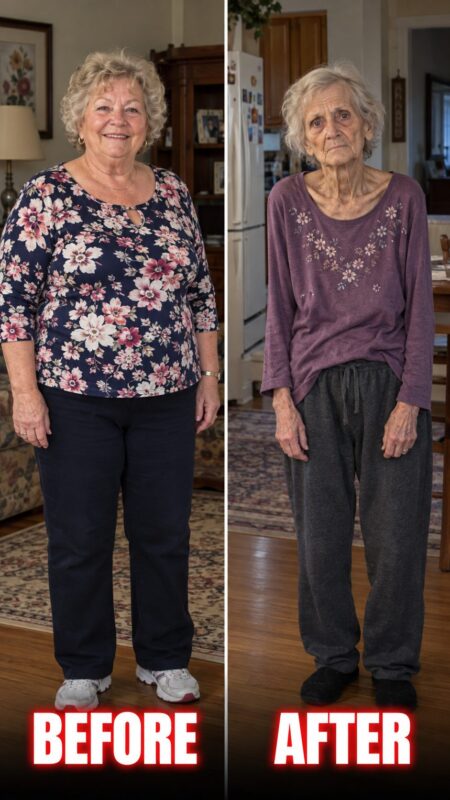
I knew something was wrong the moment I spotted my eighty-year-old mother at the train station. Just seven days earlier, she’d left home smiling, excited to reunite with an old friend. Now she looked so exhausted that I barely recognized her.
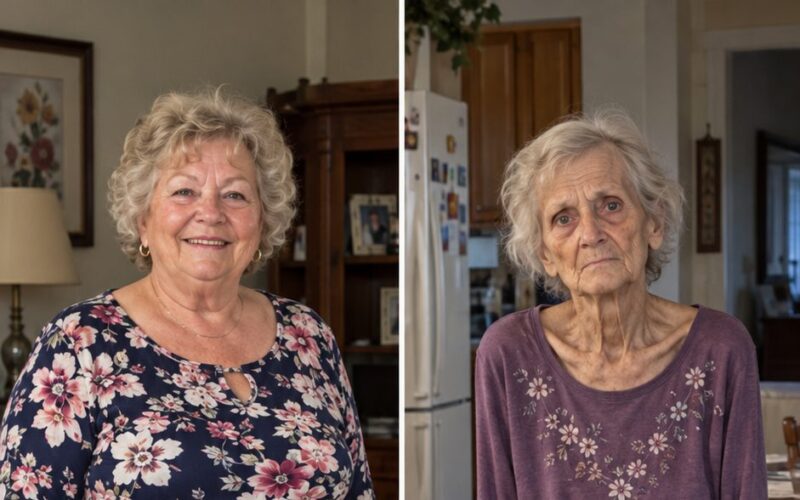
Her cheeks were hollow, her hands trembled, and an unfamiliar black suitcase seemed almost too heavy for her to move.
“Mom, what happened to you?”
“Nothing, Laura,” she whispered. “It’s been a tiring week.”
But she wouldn’t meet my eyes.
Three days later, I opened that suitcase and discovered something that completely changed the story of my childhood.
My mother, Evelyn, had always been full of energy. Even at eighty, she maintained her garden, baked homemade pies, and refused to miss our weekly family dinners.
When she told me she planned to visit Margaret, a childhood friend she hadn’t seen in twenty years, I was delighted.
But the woman I collected from the station was nothing like the one who’d left.
“Where’s your blue suitcase?” I asked.
“The zipper broke. Margaret gave me this one.”
Her answer came too quickly.
That evening, Mom pushed her food around her plate before announcing she needed to lie down.
Worried, I called the number she’d left for Margaret.
A man answered.
“I’m sorry,” he said. “Nobody named Margaret lives at this address.”
A cold feeling settled in my stomach.
The following morning, I noticed a train ticket tucked into Mom’s coat pocket. It showed that she’d changed her original travel plans.
Beside it was a luggage tag with someone else’s name.
Ellen.
Who was Ellen? And why was Mom hiding what had happened during her trip?
I knew I shouldn’t search through her belongings, but concern finally outweighed my hesitation.
I unzipped the black suitcase.
Inside were loose-fitting clothes, a digital camera, a thick envelope, and a faded yellow sweater small enough for a child.
Beneath the sweater was a miniature wooden rolling pin.
I picked it up.
For some reason, my eyes filled with tears.
Then I switched on the camera.
The first pictures showed Mom helping an elderly woman sit upright in bed. Others captured medicine bottles, handwritten care instructions, and a small bedroom filled with medical equipment.
But the last photograph left me speechless.
A young woman stood in front of a white cottage, smiling beside a little girl in a yellow sweater.
The little girl was me.
I recognized the woman almost immediately.
“Aunt Maggie?”
Memories I hadn’t visited in decades suddenly came rushing back.
The smell of freshly baked apples. A flour-covered kitchen table. A gentle voice praising my crooked little pastries.
I remembered feeling safe in that woman’s arms.
But why had she vanished from my life?
“Laura?”
I turned.
Mom stood in the doorway, staring at the photograph.
“Where did you find that?”
“In your suitcase. Mom, I need to know who this woman really was.”
She sank into the nearest chair.
For several moments, she couldn’t speak.
Finally, she whispered, “Margaret was more than my friend. For a while, she was almost a second mother to you.”
I stared at her.
“When your father left, you were four years old,” she continued. “We had almost nothing. I cleaned offices in the mornings and worked at a restaurant in the evenings. Margaret looked after you whenever I couldn’t be home.”
“For how long?”
“Nearly two years.”
My throat tightened.
“She taught you to read, made your favorite meals, and sat with you whenever you were frightened. She carved that little rolling pin herself because you were always trying to help her bake.”
“Then why did she disappear?”
Mom’s expression crumpled.
“Because I couldn’t accept that I needed her. I was ashamed that someone else was doing things I thought only your mother should do. So I slowly stopped visiting and answering her letters.”
“You pushed her away because she helped us?”
“I know how terrible that sounds now.”
She wiped her eyes.
“I’ve regretted it for almost fifty years.”
Before I could say anything else, Mom pressed a hand to her forehead.
“Laura, I don’t feel well.”
A moment later, she nearly collapsed.
I rushed her to the hospital, where doctors diagnosed severe dehydration and exhaustion.
During her recovery, she finally told me what had really happened.
Margaret was seriously ill and could no longer manage everyday tasks alone. Her daughter, Ellen, had been trying to care for her while juggling work and family responsibilities.
When Mom arrived, she immediately offered to take over some of the caregiving.
She prepared meals, washed clothes, helped Margaret move around, and stayed awake whenever her old friend needed assistance.
But Mom had pushed herself far beyond her limits.
She barely slept. She forgot meals. And when Ellen urged her to rest, she refused.
“I thought this was my chance to make up for everything,” Mom confessed.
“Mom, you could have ended up seriously ill.”
“I know.”
“Margaret helped us because she loved us. She never asked you to repay her.”
Mom looked away.
“I wish I’d understood that years ago.”
After she recovered enough to return home, we sat together at the kitchen table and opened the envelope from her suitcase.
Inside were old photographs, birthday cards, and letters Margaret had kept for decades.
One letter was dated shortly after my fifth birthday.
Dear Evelyn,
Please don’t apologize for working so hard to give Laura a good life.
You are her mother, and no one can replace you. I’m simply grateful that you’ve allowed me to love her, too.
Those afternoons in my kitchen aren’t a burden. They’re among my happiest memories.
One day, I hope you’ll understand that friendship isn’t measured by what we owe each other.
With love, Margaret.
Mom read the letter twice.
Then she began sobbing.
“All these years,” she whispered, “I thought she must have resented me.”
I wrapped my arms around her.
“She loved both of us, Mom. That’s all.”
Two weeks later, when Mom was feeling stronger, we traveled to see Margaret together.
Ellen greeted us warmly, explaining that she’d already arranged additional professional help so her mother would have the support she needed.
When we entered Margaret’s bedroom, the elderly woman slowly lifted her head.
Her eyes settled on me.
“Laura?”
I smiled through my tears.
She reached out a trembling hand.
“My goodness. My little baker has grown up.”
I sat beside her and held her hand.
Somehow, the familiar scent of vanilla reminded me of the kitchen where I’d spent so many happy afternoons.
We talked for hours.
Margaret remembered how I’d insisted on adding too much cinnamon to every pie, how I’d once fallen asleep holding my tiny rolling pin, and how I’d proudly announced that I would open my own bakery someday.
Mom laughed at stories she’d never heard before.
And for the first time, I saw her look at Margaret without the weight of guilt in her eyes.
Over the following months, we became part of one another’s lives again.
Mom visited regularly, but she also rested, ate properly, and accepted help when she needed it.
Ellen no longer had to manage everything alone.
And I finally understood why certain childhood memories had always felt incomplete.
One rainy Sunday, several months later, I walked into my kitchen and stopped in the doorway.
My mother was teaching my daughter how to prepare an apple pie.
Flour covered their hands, and laughter filled the room.
On the counter lay the little wooden rolling pin Margaret had protected for almost half a century.
“Grandma,” my daughter asked, “why is this rolling pin so tiny?”
Mom smiled.
“Because it was made for a little girl who loved baking almost as much as you do.”
“Was that little girl Mommy?”
“Yes, sweetheart.”
“Who made it?”
“A wonderful woman who helped our family when we needed her most.”
I watched my daughter carefully roll out her pastry, using the same little tool I’d held nearly fifty years earlier.
That was when everything finally made sense.
I’d believed the black suitcase contained evidence of something frightening.
Instead, it held the missing chapters of our family’s history.
My mother had spent decades feeling ashamed of accepting kindness, while Margaret had spent those same years cherishing the memories they’d created together.
Neither woman could recover the time they’d lost.
But they could make the most of the time they still had.
That old suitcase didn’t simply reveal a secret. It brought a forgotten love back into our family and taught us something worth passing down to every generation: the greatest kindness is given freely, without conditions, without expectations, and without ever asking to be repaid.