My Family Pretended I Was Dead for Eight Years—Then I Returned and Exposed Their Terrible Secret
For eight years, my parents threw me out of the house whenever my brother’s girlfriend visited.
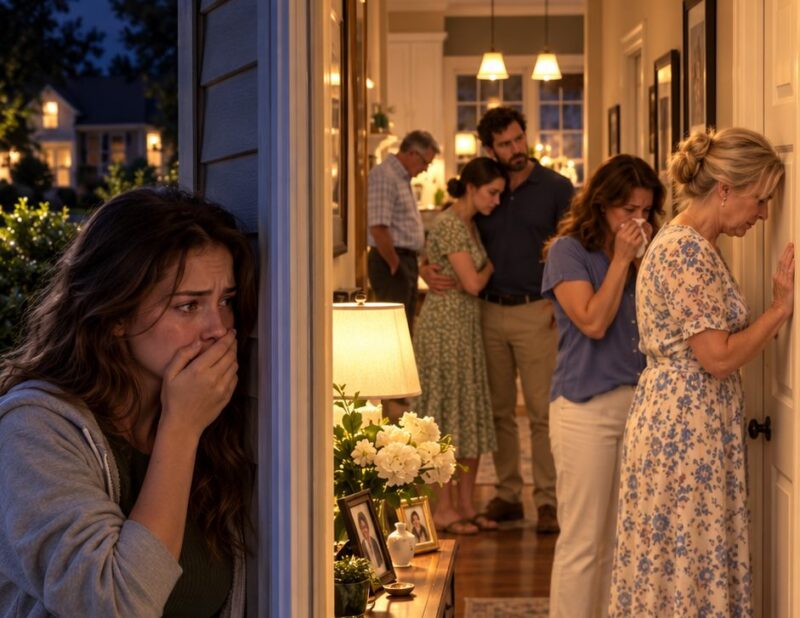
“She’s from an influential family,” my mother reminded me. “We can’t afford to have you ruin everything.”
My father never bothered to explain.
“Take your belongings and disappear until Monday.”
I followed their orders, convinced they were embarrassed by my troubled past. But when I discovered a photograph of my own gravestone, I realized that my family had done something far worse than reject me.
They had convinced everyone that I had died twelve years earlier.
My name is Anastasia Dunaway. The deception began in 2014, after I returned home from a lengthy hospital stay.
My older brother, Mitch, had just begun dating Avery Lockheart. Her parents were prominent members of the wealthy Mountain Brook community in Alabama.
My mother seemed determined to impress them at any cost.
Before Avery’s first visit, she removed every picture of me from the living room, concealed my medication, and announced that I needed to leave.
“It’s only for the weekend,” she promised.
I went to stay with Ruth Tidwell, my best friend’s grandmother, who owned a small peach orchard.
Unlike my parents, Ruth never made me feel unwanted.
She gave me meals, a comfortable place to sleep, and something even more valuable: a sense of purpose.
One morning, while we were tending damaged trees, she showed me how to check whether a seemingly dead branch was still alive.
She carefully scraped away a little bark, exposing a thin green layer beneath it.
“Remember this, Anastasia,” she said. “A tree isn’t finished just because someone thinks it is.”
At the time, I didn’t realize how much those words would eventually mean to me.
The weekends away soon became a humiliating routine.
Whenever Avery planned to visit, my mother demanded that I leave before eleven in the morning.
She installed a lock on my bedroom door, removed anything that might reveal my presence, and even began charging me $400 in monthly rent.
I was paying to live in a home where I wasn’t always welcome.
Every forced departure went into a little yellow notebook.
A date. A mark. Another weekend spent pretending I had no family.
Over the years, I found work at a garden center and became fascinated by the art of grafting fruit trees.
I learned how to join healthy branches to established rootstocks, restore struggling plants, and encourage new growth.
Eventually, I began dreaming of a career at a large orchard in Washington State.
Meanwhile, my relatives continued erasing me from their lives.
When my grandmother died, my name was deliberately omitted from her obituary.
My parents also prohibited me from attending the funeral.
“Avery will be there with her parents,” Mom said. “You know the arrangement.”
I assumed they had invented some harmless explanation for my absence.
Perhaps they had told Avery I lived in another city.
Maybe they’d said I worked abroad.
I never imagined the truth.
Everything changed on April 16, 2022.
That afternoon, I returned home unexpectedly because I’d forgotten my medication.
As I approached the house, I noticed Avery’s mother standing near my bedroom.
Through a window, I saw her gently touch the locked door and lower her head.
She appeared to be praying.
My mother stood beside her, pretending to wipe away tears.
The strange scene left me deeply unsettled.
Why would Avery’s mother pray outside my bedroom?
And why did Mom look like she was attending a memorial service?
That evening, after everyone had gone, I began looking through a collection of photographs.
One picture caught my attention.
It showed a beautiful white-flowering dogwood beside a polished granite stone.
I recognized the tree immediately.
I’d sold that very dogwood to Avery through the garden center.
But when I looked more closely at the stone, my entire world seemed to tilt.
The engraved words read:
IN LOVING MEMORY OF
ANASTASIA DUNAWAY
1995–2014
My hands began trembling.
The stone carried my full name, my birth year, and a year of death.
Except I hadn’t died.
I’d spent the past eight years working, paying rent, and being ordered out of my own home.
And suddenly, everything made sense.
Avery’s mother wasn’t simply visiting a room that belonged to an absent daughter.
She believed she was paying her respects to someone who had passed away.
My brother’s wealthy girlfriend thought he’d suffered the terrible loss of a sister.
And my parents had supported that fiction for years.
They hadn’t told the Lockhearts I lived somewhere else.
They had turned me into a dead person while I was still living under their roof.
I didn’t confront them that night.
Instead, I gathered my personal documents, medication, savings, and the yellow notebook I’d kept since the deception began.
Before leaving, I unlocked my bedroom and left the door wide open.
Then I sent one message to my parents.
“You’ve spent years pretending I’m dead. From now on, you can live without me for real. Don’t try to find me.”
I counted the marks in my notebook before placing it in my bag.
There were 211.
Two hundred and eleven times my parents had sent me away to protect a lie.
That night, I left Alabama.
Ruth helped connect me with her friend Ingred, who managed an orchard in Washington.
Ingred offered me a job, and I accepted without hesitation.
For the first time in years, nobody expected me to hide.
My coworkers knew my name.
They respected my experience.
When I made a mistake, they helped me improve instead of treating me as an embarrassment.
I worked hard, developed new grafting techniques, and gradually took on greater responsibilities.
Eventually, I became assistant orchard manager.
The orchard became my refuge, and the people there gave me something my own family never had: the freedom to belong.
Four years passed.
Then, in 2026, the secret finally began to unravel.
Avery’s mother decided to create a scholarship honoring my supposed memory.
She wanted to help young women overcome difficult circumstances, inspired by the tragic story she’d been told about me.
While gathering information, she contacted one of my former teachers.
The teacher was stunned.
“Anastasia Dunaway?” she asked. “But she’s alive. I heard she’s working in Washington.”
At first, Avery’s mother thought there had been a misunderstanding.
Then she began checking.
Within days, the Lockhearts learned that the young woman they’d mourned for twelve years was alive.
My mother called me almost immediately.
I hadn’t spoken to her in four years.
For one foolish moment, I wondered whether she might finally apologize.
Instead, she launched straight into another demand.
“Anastasia, you need to help us,” she insisted.
I said nothing.
“Tell them you disappeared after leaving the hospital in 2014. Say we had no idea where you were or whether you were alive.”
I couldn’t believe her audacity.
After everything she’d done, she still expected me to protect her reputation.
“You want me to lie again?” I asked.
“Just this once,” she pleaded. “Think about what this could do to our family.”
I ended the call.
Not long afterward, Mitch contacted me.
Unlike our mother, he finally admitted the truth.
Years earlier, Avery had confided in him about losing her brother.
Hoping to make her feel that they shared a similar experience, Mitch told her he’d also lost a sibling.
He claimed his younger sister had died in 2014.
At first, he thought it was a small lie that would never matter.
But as the relationship grew more serious, the story became impossible to escape.
Avery wanted to meet his parents.
Her family wanted to express their condolences.
And Mitch was terrified that telling the truth would cost him everything.
So he confessed to our parents.
Rather than make him admit his deception, they agreed to support it.
They removed my photographs, concealed my belongings, and invented explanations whenever anyone asked about me.
Eventually, they even allowed Avery’s family to create a memorial.
All to preserve Mitch’s relationship and the social connections that came with it.
For eight years, my parents had sacrificed my dignity to protect their son’s fabricated tragedy.
When Easter approached, I made a decision.
I would return to Alabama.
But this time, nobody would decide whether I was allowed to be seen.
On Easter morning, I arrived at the church where the memorial dogwood had been planted.
The sun was just rising, and the tree’s white blossoms glowed in the early light.
I stood beside the granite stone bearing my name.
There was something almost surreal about reading my own memorial inscription while listening to birds sing overhead.
Then I heard someone approaching.
My mother stopped several feet away.
The moment she recognized me, her expression changed from confusion to horror.
“Anastasia?” she whispered.
I turned toward her.
“What are you doing here?” she demanded.
I glanced at the gravestone.
“I thought it was time people met the woman you’ve been mourning.”
Mom looked around nervously.
“Please,” she said. “Don’t make a scene.”
I shook my head.
“The scene was created twelve years ago. I’m only telling the truth.”
Later that morning, Avery’s mother stood before the congregation and explained what she’d discovered.
The young woman whose memory they had honored was alive.
The story of her death had been fabricated.
And the people responsible had allowed an entire family to grieve someone who had never died.
A stunned silence settled over the room.
My mother immediately attempted to defend herself.
“I never specifically told anyone that Anastasia was dead!”
Avery’s mother looked directly at her.
“You stood beside me at that memorial,” she said quietly. “You watched me cry for your daughter, knowing she was alive. You never corrected me.”
Mom had no answer.
Then my father stood.
His voice sounded uncertain.
“That’s Anastasia,” he said. “She’s my daughter.”
For twelve years, he’d helped conceal that simple truth.
Once, hearing him acknowledge me would have meant everything.
Now, I understood that his recognition couldn’t undo the years I’d lost.
I hadn’t returned to beg for acceptance.
I’d come to reclaim my own story.
After the truth became public, the memorial stone was removed.
Someone contacted me to ask what should happen to it.
“Give it to my mother,” I replied. “It’s a reminder of the years she chose a lie over her daughter.”
I returned to Washington a few days later.
Mitch began making sincere attempts to repair our relationship.
He apologized without excuses and accepted that rebuilding trust would take time.
My mother, however, continued insisting that she’d only been trying to protect the family.
I stopped arguing with her.
I finally understood that I didn’t need her apology to move forward.
Weeks later, Ruth’s granddaughter sent me a photograph.
She had taken several cuttings from the dogwood that once stood beside my false gravestone.
Each cutting had begun producing fresh, healthy growth.
All of them were green.
I stared at the photograph for a long time.
Then I opened the yellow notebook I’d carried with me from Alabama.
There were the 211 marks.
Each one represented a day when my family had treated me as though I didn’t deserve to exist in their world.
I picked up a pen and wrote a single word beneath the final mark.
GREEN.
And suddenly, I remembered Ruth standing beside that damaged peach tree all those years earlier.
“A tree isn’t finished just because someone thinks it is.”
My family had spent eight years making me disappear.
They’d even placed my name on a gravestone.
But no matter how determined they were to erase me, something inside me had continued growing.
I’d survived their rejection, built a career, and found people who appreciated me for who I was.
They had written the ending of my story without my permission.
But I was still alive—and the best chapters of my life were only beginning.