My Late Wife Left Behind a Letter I Was Never Meant to Read—And It Changed Everything I Believed About Being a Father
Lena’s confession left me speechless.
I stared at her, trying to understand what she’d just revealed.
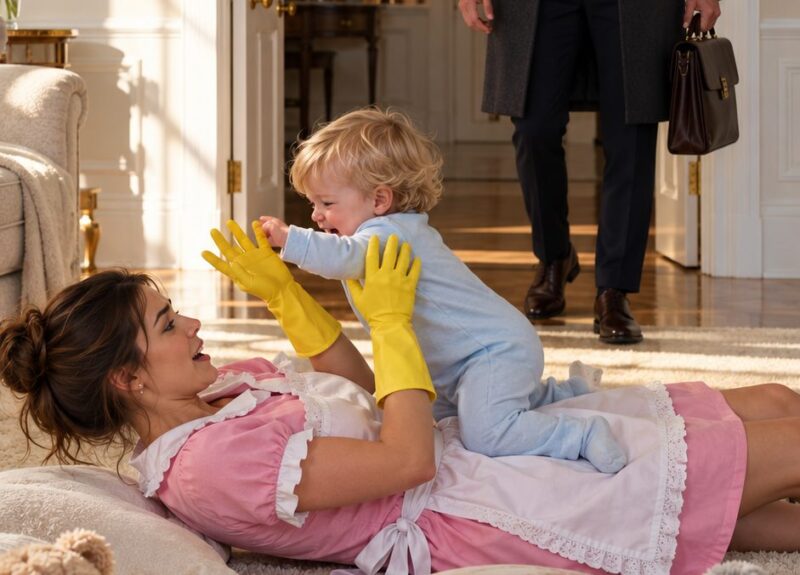
“What exactly are you saying?” I finally managed to ask.
She glanced toward the nursery before reaching into her purse.
“There’s something you should have received a long time ago, Mr. Caldwell.”
She withdrew a cream-colored envelope. Its edges were slightly worn, but the handwriting on the front was unmistakable.
It belonged to Emily.
My late wife.
“Where did you get this?” I asked, my voice trembling.
“My mother worked at the hospital during Emily’s final weeks. She was one of the nurses who cared for her. They became close, and before Emily passed away, she entrusted my mother with this letter.”
Lena hesitated.
“She wanted you to have it.”
I took the envelope, hardly daring to breathe.
For an entire year, I’d avoided anything that reminded me too strongly of Emily. Her favorite perfume still sat untouched on her dressing table. Her books remained exactly where she’d left them.
But now, holding something she’d written specifically for me, I felt desperate to hear her voice again.
I carefully unfolded the letter.
My darling Daniel,
If you’re reading this, then I didn’t get the chance to tell you everything I wanted to say.
There are so many things I wish we could have discussed. So many ordinary moments I thought we’d have together.
But there’s one thing I need you to understand.
My hands began to shake.
I know you’ve always believed that providing for your family is the greatest responsibility a man can have. You’ve worked harder than anyone I’ve ever known, and I’ve always admired your determination.
But I’m frightened that one day our sons will grow up in a beautiful house, surrounded by expensive toys and every comfort imaginable, without understanding what it feels like to have their father’s undivided attention.
I stopped reading.
The words seemed to reach straight into the part of my heart I’d spent the past year trying to shut away.
I forced myself to continue.
Margaret has already begun criticizing the way I care for the boys.
She says I hold them too often. She claims I’m teaching them to be dependent and that children need firm discipline rather than endless affection.
Sometimes she makes me feel as though loving our babies is somehow a weakness.
Please, Daniel, don’t allow her to make you believe that.
Our children are not problems to be managed. They’re little people who need to feel safe, cherished, and understood.
When they’re frightened, they need comforting arms. When they fall, they need someone to help them stand again. When they’re happy, they need someone who will share their joy.
And if I’m not there, I need you to be that person.
By then, tears were running freely down my face.
You don’t need to know every answer. You don’t need to be strong every second of the day.
You simply need to show up.
Put your work aside sometimes. Read them stories. Make them laugh. Hold them when they cry.
Let them remember your voice, your kindness, and the way you made them feel loved.
Please promise me something, Daniel.
Don’t let our sons grow up believing they have to earn their father’s attention.
Let them know they’ve had his love from the very beginning.
All my love, always,
Emily.
I lowered the letter.
For several moments, I couldn’t speak.
I remembered all the evenings I’d remained at the office long after everyone else had gone home.
All the business dinners I’d attended because I considered them too important to miss.
All the mornings I’d walked past the nursery without stopping because I had another meeting to prepare for.
I’d told myself I was doing it for my children.
But Emily had understood what I couldn’t see.
I was building a future for two little boys while missing the childhood unfolding right in front of me.
I pressed the letter to my chest.
“Why didn’t anyone give this to me?” I whispered.
Lena looked away.
“My mother tried.”
I raised my head.
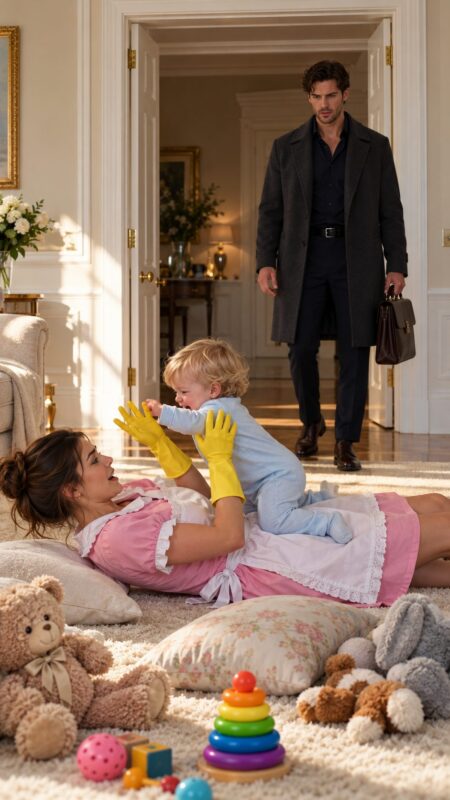
“What?”
“After Emily’s funeral, she contacted the house. Margaret answered. My mother explained that she had some personal things Emily wanted you to receive.”
“And?”
“Margaret said you weren’t willing to accept anything connected to your wife. She told my mother you were struggling with grief and that bringing up Emily would only make things worse.”
I stared at her.
“She said that?”
Lena nodded.
“My mother tried calling again, but Margaret told her not to contact you anymore.”
An awful realization settled over me.
Margaret hadn’t merely taken charge of the household.
She’d placed herself between me and everyone who might have questioned the way she ran it.
She had controlled which messages reached me, which concerns I heard, and which truths remained hidden.
Yet I couldn’t place every ounce of responsibility on her shoulders.
I’d given her that power.
I had been so determined to escape my grief through work that I’d stopped asking what was happening in my own home.
That night, I barely slept.
I sat in Emily’s old armchair, reading her letter again and again.
At dawn, I walked into the nursery.
Nico and Noah were still sleeping.
Their small hands rested on their blankets, their faces peaceful in the soft morning light.
For the first time in months, I didn’t feel the urge to rush somewhere.
I pulled up a chair and simply watched them.
Then I made myself a promise.
Things were going to be different.
Not someday.
Not when business slowed down.
Starting that very morning.
Margaret would have no further place in our household. Any information relevant to the investigation into her behavior would be handed to the authorities.
And I would take responsibility for raising my sons instead of expecting someone else to do it for me.
Later, I found Lena in the kitchen, cutting fruit into small pieces for the boys’ breakfast.
“Can we talk?” I asked.
She set down the knife.
“Of course, Mr. Caldwell.”
“I owe you an apology.”
Her expression changed.
“You don’t have to—”
“Please. Let me finish.”
I took a breath.
“You spent months looking after my children while I barely understood what they needed. You saw things I should have noticed. You protected them when I wasn’t paying attention.”
Lena remained silent.
“I can’t change what happened, but I can change what happens next. And whatever you choose to do, I want you to know how grateful I am.”
She looked toward the nursery.
“Those boys mean a great deal to me.”
“I know they do.”
“But gratitude isn’t what I’m looking for.”
“What is?”
She met my eyes.
“I want to be certain they’ll never feel forgotten again.”
Her answer stayed with me.
Because it was such a simple request.
And because it was exactly what Emily had asked of me.
“They won’t,” I said. “I know words aren’t enough, so I’m going to show you.”
And for once, I meant to follow through.
Over the next several weeks, my life changed in ways I never would have imagined.
I appointed a trusted executive to manage more of the company’s daily operations and stopped scheduling unnecessary evening meetings.
I turned down invitations I’d once considered essential.
I learned that being unavailable for a business call wasn’t the end of the world.
And, slowly, I began discovering the two little boys who had been growing up almost without me.
Noah adored picture books about animals.
He would point at every dog, cat, and bird, waiting for me to make the appropriate sound.
Nico, meanwhile, found nearly everything funny except mashed carrots.
The first time I offered him a spoonful, he wrinkled his nose, pushed my hand away, and looked personally offended.
Lena laughed so hard she had to sit down.
I started looking forward to breakfast.
I looked forward to bath time, even when half the water ended up on the floor.
I looked forward to the quiet minutes before bedtime, when the boys were sleepy enough to curl against me while I read.
Those moments were ordinary.
And that was what made them extraordinary to me.
I’d spent years believing happiness was something you achieved after reaching the next milestone.
A larger company.
Another successful investment.
A more impressive house.
Now I was finding it in a room filled with stuffed animals and scattered building blocks.
Still, earning my sons’ trust required patience.
Whenever Noah became upset, his first instinct was to look for Lena.
When Nico woke from a nap feeling unsettled, he held out his arms to her instead of me.
It hurt.
But I knew I had no right to resent it.
Lena had been there.
I hadn’t.
So I refused to rush them.
I sat beside them while they played.
I comforted them when they allowed me to.
I celebrated the smallest signs that they were beginning to trust me.
One evening, Noah climbed into my lap and rested his head against my chest.
He didn’t ask for Lena.
He didn’t seem uncertain.
He simply settled against me as though it was the most natural thing in the world.
I held him quietly, afraid that moving might interrupt the moment.
A few days later, Nico reached for my hand while we were walking through the garden.
That tiny hand wrapped around my fingers, and something inside me finally began to heal.
Months passed.
One afternoon, I came home earlier than expected and heard laughter coming from the backyard.
I stepped outside.
The boys were running across the grass, chasing soap bubbles that floated above their heads.
Nico tried to catch one with both hands, lost his balance, and landed on his bottom.
For a second, he looked surprised.
Then he began laughing.
Noah laughed with him.
Lena stood nearby, smiling.
When she noticed me, however, her expression grew thoughtful.
“Mr. Caldwell, there’s something I’ve been wanting to discuss.”
My stomach tightened.
“Is something wrong?”
“No. Not exactly.”
She glanced toward the twins.
“I’ve been thinking about whether I should continue working here.”
The words caught me off guard.
“You want to leave?”
“I’m not sure.”
“Have I done something to make you uncomfortable?”
She shook her head.
“Quite the opposite. You’ve changed so much these past few months.”
“Then what’s troubling you?”
Lena took a breath.
“I love Nico and Noah. I’ve cared for them for so long that they feel like family. But they’re also becoming more attached to you, and that’s exactly how it should be.”
I watched the boys race after another cluster of bubbles.
“They’ve already lost one parent,” she continued. “I don’t want them growing up believing their father needs someone else to love them on his behalf.”
I was quiet for a moment.
Then I nodded.
“You’re right.”
She looked surprised.
“A year ago, I probably would’ve offered you more money to stay and told myself I’d solved the problem,” I admitted.
“And now?”
“Now I understand that I can’t hire someone to be their father. That’s my responsibility.”
Lena smiled.
“That’s all I’ve wanted you to understand.”
I turned toward my sons.
Nico had discovered a fallen leaf and was proudly showing it to his brother.
Noah examined it with great seriousness before dropping it and running toward me.
“Dada!”
His little voice rang through the garden.
I crouched, and he hurried into my arms.
Lena watched us with tears shining in her eyes.
“Perhaps,” she said softly, “I don’t need to worry quite so much anymore.”
Eventually, we agreed that she would remain with us.
But we reorganized everything.
Her working hours became reasonable, we hired additional childcare assistance, and I made it clear that she was always welcome to speak openly about any concerns.
More importantly, I stopped depending on her to manage every part of my sons’ lives.
I wanted them to know that when they woke in the morning, their father would be there.
That he would help them get dressed, share meals with them, and listen to their excited attempts at conversation.
That he would comfort them when they were upset and celebrate with them when they discovered something new.
And, little by little, those promises became habits.
When the twins’ second birthday approached, I considered organizing an enormous party.
It would have been easy.
I could have hired the best caterers, filled the garden with elaborate displays, and invited half the city.
But then I remembered Emily’s letter.
So I chose something different.
We planned a small gathering in the backyard.
A few balloons decorated the terrace. Colorful ribbons hung from the trees, and a table was filled with homemade treats.
Only the people who truly cared about the boys were invited.
There were no photographers, no extravagant performances, and no expensive gifts intended to impress the adults.
Instead, there were games, laughter, and two very excited little boys who couldn’t understand why everyone kept singing to them.
I spent the afternoon sitting on the grass, helping them open presents and rescuing runaway balloons.
At one point, Nico tipped a cup of juice onto my shirt.
Everyone froze for a moment.
Then I looked at the stain and laughed.
A year earlier, I might have been irritated.
Now I could only think how lucky I was to be there.
As the afternoon drew to a close, Lena disappeared into the kitchen.
A few minutes later, she returned carrying the birthday cake.
It was covered in pale blue frosting, with two candles standing in the center.
The boys spotted her immediately.
“Mama! Mama!”
Lena stopped.
Her eyes widened, and for a moment, she looked as though she might cry.
They had called her that before, but hearing both voices together in front of everyone made the moment especially emotional.
She placed the cake carefully on the table.
Then Nico turned toward me.
“Daddy!”
He lifted both arms.
I picked him up, and he wrapped his little hands around my neck.
Noah hurried over, demanding to be included.
I lowered myself onto the grass so I could hold them both.
Their laughter filled my ears.
For a moment, the world around us seemed to disappear.
There was no business waiting for my attention.
No meeting I needed to attend.
No urgent call pulling me away.
There were only my sons.
And I was exactly where I belonged.
That evening, after the last guest had left, I helped the boys get ready for bed.
We read their favorite story twice because Noah insisted I’d skipped a page the first time.
Nico fell asleep halfway through the second reading.
I tucked their blankets around them and kissed their foreheads.
Then I went downstairs.
In my study, Emily’s photograph stood beside a small vase of fresh flowers.
I opened the drawer where I kept her letter.
Its folds had softened from the number of times I’d read it.
I placed it beside her photograph and sat down.
For a long while, I looked at the woman whose absence had changed our lives forever.
“You knew, didn’t you?” I whispered.
“You knew exactly what they would need.”
My throat tightened.
“I thought protecting our future meant working harder. I was so determined to give them everything that I nearly missed the one thing they needed most.”
I glanced at her smiling face.
“I can’t give them their mother back. And I’ll always wish you were here to see them grow.”
I paused.
“But I can make sure they never have to wonder whether their father loves them.”
Just then, I heard a faint voice through the baby monitor.
“Daddy?”
Then another.
“Daddy!”
I smiled.
The old version of me might have asked someone else to check on them.
He might have convinced himself that whatever he was doing was too important to interrupt.
But I wasn’t that man anymore.
I left the study and walked upstairs.
When I entered the nursery, Noah was sitting up in his crib, holding his favorite stuffed rabbit.
Nico was awake too, watching the doorway.
Both faces brightened when they saw me.
“Here I am,” I whispered.
I settled into the rocking chair with Noah in my arms while Nico watched sleepily from his crib.
Then I switched places, holding Nico until his eyes began to close.
I stayed until both boys were sleeping peacefully.
As I watched them, I finally understood something that no amount of money or success had ever taught me.
A child’s happiest memories aren’t necessarily made during expensive vacations or surrounded by extraordinary gifts.
Sometimes they’re created during the smallest moments.
A familiar voice at bedtime.
A comforting embrace after a frightening dream.
A father sitting on the floor, making silly animal noises just to hear his children laugh.
Emily had understood that love wasn’t measured by what we could purchase.
It was measured by the care we gave and the time we chose to share.
For so long, I’d been chasing a future I thought would make my family happy.
Now I knew that the life I’d been searching for had been waiting inside my own home.
My sons didn’t need me to give them the entire world.
They needed to know that, whatever the world brought their way, they would never have to face it without their father’s love.