My Son Tried to Spend $38,000 of My Money on Mother’s Day—He Had No Idea I Owned the Restaurant
My son refused to spend Mother’s Day with me, claiming he had plans with his wife’s family. So I reserved a table for one at an upscale Italian restaurant. As I was leaving, I discovered him hosting a lavish celebration for his in-laws. Then I heard him instruct the manager to charge the entire $38,000 bill to my account. What my son didn’t know was that I owned the restaurant—and I’d already uncovered $74,600 missing from my finances.
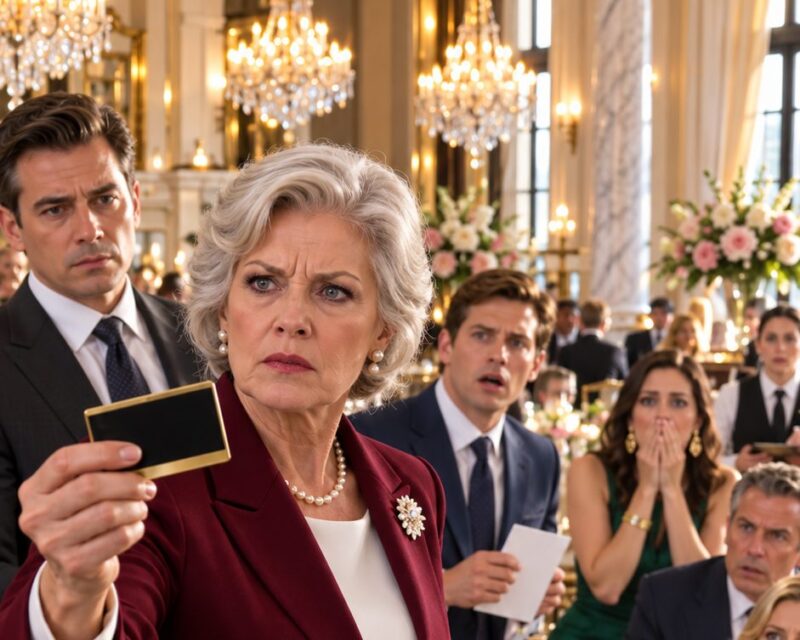
My name is Margaret Whitmore. I’m sixty-eight, widowed, and apparently no longer important enough to be included in my son’s family gatherings.
Three weeks before Mother’s Day, I called Adam.
“Would you and Vanessa like to come over for dinner on Sunday? I thought we could celebrate together.”
Before he could answer, Vanessa took the phone.
“We already have plans with my parents, Margaret. It’s an important family event.”
I hesitated.
“Am I not part of the family?”
She gave an irritated sigh.
“Please don’t start making us feel guilty.”
Adam never called back.
On Mother’s Day, I refused to sit at home feeling unwanted. I dressed nicely, put on my favorite pearl earrings, and drove to Bellavita, one of Boston’s most exclusive Italian restaurants.
I enjoyed a peaceful meal, ordered dessert, and paid my eighty-six-dollar bill.
But as I approached the entrance, I heard a familiar voice.
Adam.
He was standing beside Vanessa, her parents, and several relatives near the private dining area.
His smile disappeared when he noticed me.
“Mom? What are you doing here?”
“Having dinner,” I answered.
Vanessa glanced toward my empty table.
“By yourself? That’s rather embarrassing.”
I smiled.
“I’ve discovered that peaceful company is better than unpleasant company.”
I was about to leave when Adam approached the floor manager.
“Charge the entire reception to membership account 000147. Margaret Whitmore.”
I stopped walking.
The manager, Sofia, looked uncomfortable.
“Sir, a transaction of thirty-eight thousand dollars requires the account holder’s authorization.”
Adam confidently produced a document.
“Here. My mother signed it. I manage her financial affairs.”
Vanessa leaned forward.
“Margaret has become forgetful lately. We take care of these things for her.”
I turned around.
“Is that what you’re telling people now?”
Adam stiffened.
“Mom, please don’t interfere.”
“Interfere with someone spending my money?”
Vanessa’s father, Graham Price, stepped forward.
“Margaret, this reception has already been arranged. There’s no reason to create an unpleasant situation.”
I looked at the authorization form.
The signature at the bottom resembled mine.
But I hadn’t signed it.
And I knew exactly where they’d copied it from.
Six weeks earlier, my accountant had discovered suspicious payments totaling $74,600.
Every transfer had gone to Price Premier Events, the struggling event-planning company owned by Vanessa’s parents.
Each payment carried a forged authorization.
I’d quietly hired investigators and asked my legal team to preserve the financial records.
Until that moment, I hadn’t known how deeply Adam was involved.
Now I had my answer.
I held out my hand.
“Adam, let me see that paper.”
He hesitated.
“There’s nothing wrong with it.”
“Then you won’t mind showing me.”
I examined the document.
“When did I supposedly sign this?”
“March eighteenth,” he replied. “At your house.”
I nodded slowly.
“How interesting. I was in Switzerland that week.”
Vanessa immediately interrupted.
“You probably signed it electronically and forgot.”
“Then you should have no difficulty producing the electronic records.”
Neither answered.
I photographed the document.
Graham folded his arms.
“Frankly, Margaret, perhaps someone younger should be handling your money.”
I looked him directly in the eyes.
“Mr. Price, getting older doesn’t mean becoming incompetent.”
Then I turned to Sofia.
“Please ask Anthony Romano to come here.”
Adam gave a satisfied smile.
“Good. The managing director can explain everything.”
I returned his smile.
“Yes. I believe he can.”
Twelve minutes later, Anthony entered the dining room.
The moment he saw me, he approached warmly.
“Mrs. Whitmore! Happy Mother’s Day. I didn’t realize you were dining with us this evening.”
“Thank you, Anthony. Unfortunately, we have a serious problem.”
Adam interrupted.
“My mother doesn’t understand the membership agreement. Could you explain that I’m authorized to use her account?”
Anthony’s expression changed.
“Mr. Whitmore, I suggest you stop making claims you cannot substantiate.”
Graham frowned.
“Why are you speaking to her like she’s the owner?”
Anthony looked genuinely surprised.
“Because she is.”
The room became silent.
Vanessa gave a nervous laugh.
“What are you talking about?”
Anthony straightened.
“Margaret Whitmore is the chairwoman of Bellavita Hospitality Group. She owns sixty-one percent of the company’s voting shares.”
He paused.
“That makes her our controlling shareholder.”
Adam stared at me.
“Mom… you own this place?”
“Along with six other restaurants,” I replied.
Vanessa’s mouth fell open.
Graham slowly lowered himself into a chair.
I continued.
“Your father and I opened our first restaurant twenty-seven years ago. We worked fourteen-hour days, washed dishes ourselves, and nearly lost everything twice.”
I looked at Adam.
“After your father died, I hired experienced managers and stepped away from daily operations.”
“I thought you sold the business,” he whispered.
“You never bothered to ask.”
For years, Adam had assumed my comfortable retirement came from investments and his father’s life insurance.
He had never shown much interest in the company we’d built.
Until he believed he could use its money.
I turned to Anthony.
“Decline the thirty-eight-thousand-dollar charge. Suspend all business dealings with Price Premier Events pending the investigation. Preserve every relevant invoice, contract, and payment record.”
Anthony nodded.
“Immediately, Mrs. Whitmore.”
Graham suddenly changed his tone.
“Margaret, there’s no need to be so harsh. We’re family. Surely we can work this out privately.”
I raised an eyebrow.
“Family? That’s interesting. Earlier, I wasn’t even welcome at your celebration.”
Vanessa stepped forward.
“You’re deliberately humiliating us.”
“No,” I replied calmly. “You arranged an expensive party and tried to make me pay for it without my permission.”
Then I turned to Adam.
“Did you know about the previous transfers?”
He looked away.
“Adam, answer me.”
After a long silence, he nodded.
“Yes.”
My chest tightened.
“Did you know the signatures were forged?”
Another pause.
“Yes, Mom.”
I closed my eyes.
For a moment, I saw the little boy who used to run into my arms after school.
The child who made me Mother’s Day cards from construction paper and insisted I was the most wonderful woman in the world.
Now that same boy stood before me admitting he’d helped steal from me.
“Why?” I whispered.
Adam’s voice cracked.
“Vanessa’s parents were about to lose their business. They needed money.”
“Then why didn’t you ask me?”
“Because I knew you’d say no.”
I shook my head.
“You didn’t know what I would say. You never gave me a choice.”
He looked desperate.
“Mom, I was trying to help my family.”
“And what am I, Adam?”
He had no answer.
Anthony returned and confirmed that the charge had been blocked.
Vanessa grabbed Adam’s arm.
“We’re leaving.”
Sofia stepped forward.
“Of course. But the food and beverages already served must be paid for separately.”
Graham reluctantly pulled out his credit card.
I turned toward the exit.
Behind me, Adam suddenly shouted:
“Mom! You’re really choosing money over your own son?”
I stopped.
Slowly, I faced him.
“No, Adam. You chose my money over your mother. I’m simply refusing to let you do it again.”
Then I walked away.
The following months were some of the hardest of my life.
The investigation uncovered forged documents, unauthorized transfers, and financial arrangements Adam had helped conceal.
The evidence was submitted to the authorities.
Nine months later, Adam pleaded guilty to fraud and forgery.
He received probation, a suspended prison sentence, and an order to repay the stolen money.
Price Premier Events lost its contracts and eventually shut down.
Vanessa filed for divorce.
I took no pleasure in watching their lives unravel.
Adam was still my son.
I still remembered teaching him to ride a bicycle, staying awake when he was sick, and cheering at his school graduations.
But love couldn’t erase what he’d done.
And pretending nothing had happened would only allow the betrayal to continue.
For months, I struggled with guilt.
Had I spoiled him?
Had I failed to teach him the difference between generosity and entitlement?
I couldn’t answer every question.
But I knew that being a mother didn’t require me to surrender my dignity.
The following Mother’s Day, I returned to Bellavita.
This time, six close friends accompanied me.
We gathered around a beautifully decorated table, shared delicious food, exchanged flowers, and laughed about memories stretching back decades.
Nobody expected expensive gifts.
Nobody asked for access to my accounts.
Nobody made me feel like an inconvenience.
They were simply happy I was there.
After dessert, Anthony approached.
“Mrs. Whitmore, shall I charge tonight’s dinner to your membership?”
I smiled.
“Yes, Anthony. You have my permission.”
My friends burst into laughter and raised their glasses.
“To Margaret!”
I looked around the table and felt something I hadn’t experienced in a long time.
Peace.
I thought about my late husband and the business we’d built together.
We had worked so hard because we wanted Adam to have opportunities we’d never enjoyed.
But somewhere along the way, he’d mistaken our generosity for an unlimited right to take whatever he wanted.
That realization hurt.
Yet it also taught me something important.
My son tried to spend $38,000 celebrating his mother-in-law while leaving his own mother to eat alone. He thought my age made me powerless, and he assumed my money was his to control.
What he didn’t understand was that I had spent decades building more than a successful business.
I had built a life that belonged to me.
And I wasn’t going to let anyone take that away.
At sixty-eight, I finally understood that being a loving mother doesn’t mean accepting disrespect, excusing dishonesty, or paying for someone else’s betrayal.
Sometimes the most difficult lesson a parent can teach an adult child is that love may remain, even when trust is broken.
And sometimes the greatest Mother’s Day gift is realizing that your worth was never determined by whether your children chose to celebrate you.