The truth came out on Thanksgiving because of one innocent question.
I was standing near the entrance of Aunt Patricia’s house with my nine-month-old daughter, Lily, sleeping against my chest when Grandma Margaret studied me for several seconds.
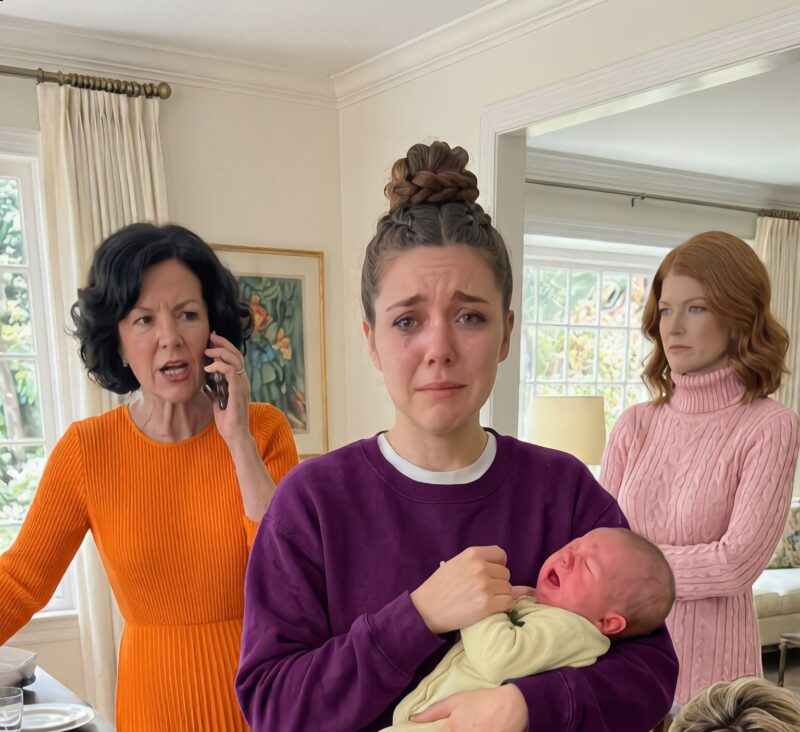
Her gaze moved from my old sweatshirt to Lily’s secondhand blanket.
Then she frowned.
“Claire, what happened to the $180,000 I sent you?”
For a moment, I thought I had misunderstood her.
The room seemed to fall silent around us.
I tightened my arms around Lily.
“What money, Grandma?”
Across the hallway, Patricia stopped moving.
My mother, Denise, suddenly became very interested in the floor.
Grandma had traveled from Boston to Denver to spend Thanksgiving with the family. We had barely spoken during the previous two years, especially after my husband, Evan, died in a highway accident.
Those months after his death had nearly broken me.
I was grieving while raising a newborn and trying to stay ahead of hospital bills, rent, utilities, and groceries.
Eventually, there was nothing left to cut from my budget.
I sold my wedding ring.
I stretched every container of formula as far as possible.
I sometimes went without dinner so Lily would have everything she needed.
When the rent was late, I swallowed my pride and asked my landlord for another week.
Yet according to Grandma, I should never have been struggling at all.
She believed she had given me enough money to start over.
“I haven’t received anything from you,” I said. “I swear.”
Patricia recovered quickly.
“This is obviously some kind of banking mistake,” she said.
Grandma looked at her but said nothing.
Instead, she stepped away and called her attorney.
That phone call changed everything.
By that evening, we had confirmation of three transfers totaling $180,000.
None of them had reached my personal bank account.
The money had been deposited into an account registered to Claire Bennett Relief Fund LLC.
I had never heard of it.
The company had been formed only forty-eight hours before Grandma sent the first payment.
My name and personal information had been used to establish it.
But someone else controlled it.
Patricia.
Grandma stared at her.
“Explain this.”
Patricia immediately claimed that she had created the account for my benefit.
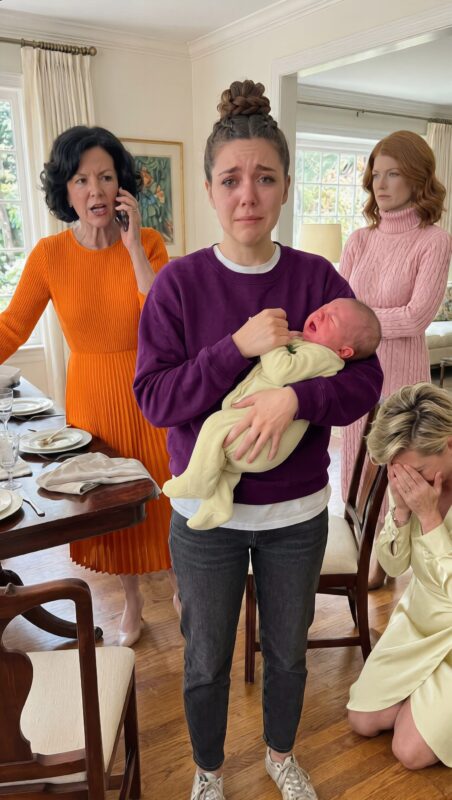
She said I had been emotionally devastated after Evan’s death and couldn’t be trusted to make responsible financial decisions. According to her, she had simply stepped in to “protect” the money until I became stable again.
For a few minutes, she almost sounded convincing.
Then we saw the transactions.
There was a major kitchen renovation.
Thousands of dollars in credit card payments.
Expensive furniture.
Restaurant bills.
Tuition payments.
Luxury shopping.
And a Lexus.
I stared at the records in disbelief.
While I had been searching discount stores for diapers and putting Lily to sleep in a used crib, my aunt had been renovating her kitchen and driving a new vehicle with money Grandma had intended for us.
Patricia eventually stopped pretending.
“I’ve spent my entire life watching everyone rescue Claire!” she snapped. “She was always the one everyone felt sorry for. Why shouldn’t I get something for once?”
Grandma didn’t raise her voice.
She didn’t need to.
She turned toward her attorney.
“Start legal proceedings.”
The first documents were filed the following Monday.
I thought the worst discovery would be the money.
I was wrong.
The financial investigation uncovered an entire system of deception that Patricia had maintained for almost two years.
She hadn’t simply taken Grandma’s money.
She had carefully isolated me from the people who might have discovered what she was doing.
After Evan’s death, I had written Grandma three letters.
Not one had reached her.
Patricia had told Grandma that I didn’t want contact with the family and needed to be left alone.
Meanwhile, she told me something completely different.
According to Patricia, Grandma was embarrassed by my situation and believed I had made poor decisions with my life.
I believed her.
Grandma believed her too.
My mother had been manipulated in another way.
Patricia convinced Mom that Grandma was regularly sending me money. Whenever Mom saw me struggling, she assumed I was simply managing that support badly.
Other relatives heard that I had become bitter and ungrateful after Evan died.
Everyone had been given a different version of the same lie.
And Patricia had positioned herself at the center of all of them.
Investigators eventually established exactly how she had created the false company.
She had used my legal name, Social Security number, and an old address.
The most painful detail came later.
Out of the entire $180,000, only $800 had actually been used for Lily and me.
It paid for one grocery delivery shortly after my daughter was born.
That was it.
Then the investigators recovered Patricia’s emails.
Any argument that she had acted with good intentions disappeared immediately.
In one message, she warned her husband never to discuss Grandma’s financial assistance when I was present.
Another instructed my mother to discourage me from calling Grandma directly.
The isolation hadn’t happened accidentally.
Patricia had planned it.
When we eventually entered mediation, her attorney tried to shift the conversation toward reconciliation.
He spoke about damaged families, second chances, and forgiveness.
Grandma interrupted him.
“Your client took money intended for a widow and her baby. Please don’t explain family loyalty to us.”
Patricia looked across the table at me.
“You must hate me.”
I considered the question for a moment.
Then I told her the truth.
“I was too busy keeping my daughter fed to waste time hating you.”
Three months later, Patricia pleaded guilty to felony theft and identity theft.
The court ordered restitution and repayment of legal expenses.
Her Lexus was surrendered.
Liens were placed on her property.
Part of her future income would go toward repaying what she had taken.
My mother faced a different kind of reckoning.
She hadn’t stolen my identity or touched Grandma’s money.
But she had seen me struggling and never questioned the explanation she had been given.
One evening, she appeared outside my apartment holding homemade soup.
Her eyes were red.
“I failed you,” she said. “I should have asked questions. I should have protected you. There isn’t an excuse.”
I waited for her to defend herself.
She didn’t.
So I stepped aside and let her enter.
That wasn’t forgiveness.
Not yet.
But it was the first honest moment we had shared in a long time.
Grandma stayed in Denver for the next six months.
Together, we secured my personal information and repaired the damage Patricia had caused.
Grandma paid my overdue rent directly instead of allowing anyone else to handle the money.
When I decided to enroll in a medical billing certification program, she watched Lily while I studied.
Gradually, my life began to change.
For the first time since Evan’s death, I wasn’t waking up every morning wondering which bill I could postpone.
I finished the program and earned my certification.
Soon afterward, I found a remote position that allowed me to work while caring for Lily.
Eventually, we left our cramped apartment and moved somewhere safer.
Lily finally had a bedroom of her own.
Months later, an envelope arrived from Patricia.
I almost threw it away without opening it.
Instead, I read the letter once.
She admitted that jealousy had fueled what she had done.
One line stayed in my mind long after I finished reading:
“I needed to believe you were weak because the alternative was admitting what kind of person I had become.”
I folded the letter and put it away.
I never responded.
For years, I had thought closure meant receiving the perfect apology or finally saying everything you wanted someone to hear.
I no longer believed that.
Sometimes closure is quieter.
Sometimes it means deciding that the person who hurt you doesn’t get another chapter of your life.
One year after that disastrous Thanksgiving, Grandma came to visit again.
This time, she handed me a folder filled with legal documents.
She had established a protected trust for Lily.
She had also created a separate fund for my education, emergencies, and, eventually, a down payment on a home.
Everything had been structured so that no relative could interfere with it.
Inside the folder was a handwritten note from Grandma.
The final paragraph said:
“I can’t restore the time that was taken from you. But I can make sure your future belongs to you.”
That evening, I watched Lily race through our apartment, laughing as she ran toward me and wrapped both arms around my legs.
Our kitchen had groceries.
Our bills were current.
The apartment was warm.
The door locked securely behind us.
For the first time in a very long while, I wasn’t afraid of what tomorrow might bring.
In the back of my closet, I still had the faded sweatshirt I’d worn the day Grandma asked about the missing money.
I could have thrown it away.
I chose not to.
It reminded me of the moment a carefully constructed lie finally began to collapse.
Not because Patricia confessed.
Not because investigators discovered the truth.
Not because someone exposed her plan.
It happened because Grandma asked one ordinary question.
And I gave her the only answer I had:
“Grandma, I never received that money.”