For Months, My Husband’s Best Friend Drove Our Daughter to Ballet Lessons—Then I Discovered Where He Was Really Taking Her
For nearly thirty years, I considered Derek part of our family.
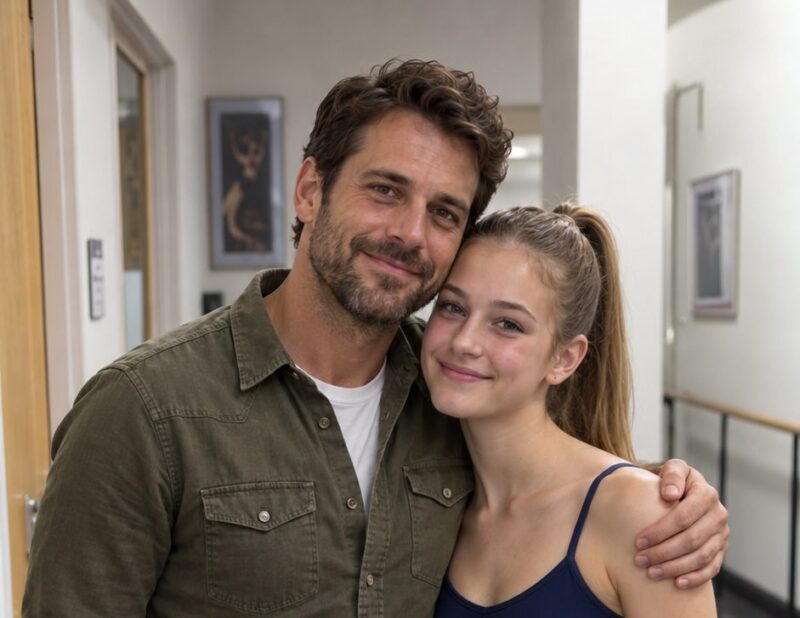
He was my husband’s oldest friend, the man who never missed a birthday, always showed up for holiday dinners, and had known our daughter, Audrey, since the day she was born.
If someone had told me that Derek would one day betray us, I would have laughed at the suggestion.
But sometimes, the people who hurt us most are the ones we’ve trusted for so long that we’ve forgotten how to question them.
And Derek knew exactly how to use that trust against us.
It all began when our sixteen-year-old daughter received the opportunity of a lifetime.
Audrey had been obsessed with ballet since she was five.
While other children were playing outside, she was practicing pirouettes in front of our hallway mirror. She spent her birthday money on dance shoes and watched recordings of professional performances until she could recognize entire routines by heart.
Her dream was simple: someday, she wanted to become a professional ballerina.
So when a prestigious dance academy offered her a scholarship, our entire family celebrated.
There was only one complication.
The academy was an hour away, and my husband and I both worked schedules that made regular transportation difficult.
We were considering how to manage the journey when Derek offered a solution.
“I can drive her,” he said casually over Sunday dinner.
My husband looked surprised.
“Three times a week? That’s a lot of driving.”
Derek waved away his concern.
“What’s family for? I’ve watched that girl grow up. Besides, I enjoy the company.”
Audrey practically jumped out of her chair.
“Really, Uncle Derek?”
He smiled.
“Of course, sweetheart. We’ll make it work.”
I still remember how relieved I felt.
We had found a way for our daughter to pursue her dream without placing additional pressure on our already busy schedules.
Or so I thought.
For the first month, everything went beautifully.
Every evening after practice, Audrey burst through the front door, talking excitedly about her instructors, new choreography, and the friends she was making.
Sometimes she practiced her routines in the kitchen while I prepared dinner.
She was exhausted but happy.
Then, gradually, that happiness disappeared.
At first, the changes were small.
Audrey began coming home unusually quiet.
When I asked about her lessons, she offered vague answers.
“Fine.”
“Nothing special.”
“Just the usual.”
Then she stopped practicing at home.
Her ballet shoes, once carefully cleaned and arranged beside her bed, remained stuffed inside her bag.
One Saturday morning, I found her sitting by the living-room window, watching the rain.
“Don’t you have choreography to practice?” I asked.
She shrugged.
“Maybe later.”
But later never came.
A few days afterward, she announced that she wouldn’t be performing in the academy’s upcoming recital.
I nearly dropped the laundry basket I was carrying.
“Audrey, you’ve been talking about that recital for months!”
“I changed my mind.”
“Why?”
“Because I did, Mom.”
Her response was unusually sharp.
Before I could ask another question, she disappeared upstairs.
That evening, I told my husband I was worried.
He sighed.
“She’s sixteen. Maybe the pressure is getting to her. Give her some space.”
I tried.
But every day, my daughter seemed to retreat a little farther into herself.
Then something happened that made it impossible for me to ignore my concerns.
One Thursday evening, Derek brought Audrey home later than usual.
I was in the kitchen when I heard their voices outside.
At first, I assumed they were saying goodbye.
Then Audrey raised her voice.
“You promised you’d explain everything to Mom!”
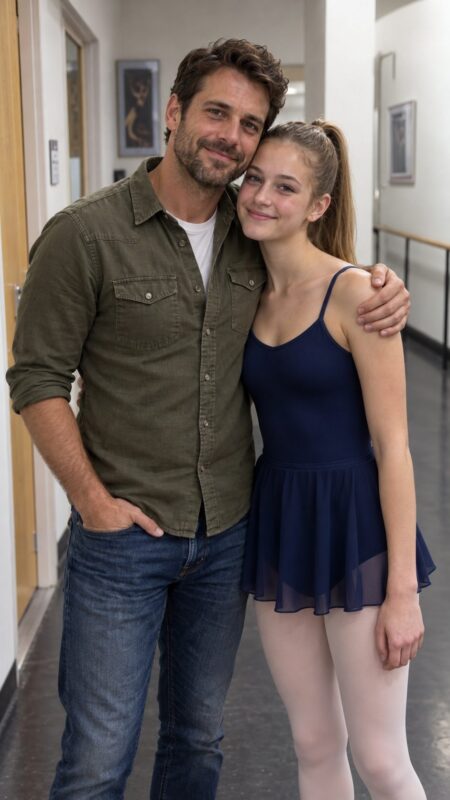
I froze.
Derek answered in a low, irritated tone.
“Audrey, we’ve already discussed this.”
“But she keeps asking questions!”
“Then stop giving her reasons to ask!”
There was a brief silence.
Then Audrey said something I’ll never forget.
“I don’t want to do this anymore.”
My heart began pounding.
I opened the front door.
“What’s going on?”
Derek immediately straightened.
“Nothing, really. Just a little disagreement.”
“About what?”
He gave an awkward laugh.
“She wanted to stop for something to eat, but I told her it was too late.”
I looked at Audrey.
Her eyes were red.
She didn’t say a word.
Derek quickly said goodbye and returned to his car.
As he drove away, I turned toward my daughter.
“Audrey, what was that about?”
“Nothing, Mom.”
“Sweetheart, I heard you arguing.”
She looked at me with an expression that was part fear, part exhaustion.
“Please don’t make me talk about it.”
Then she hurried inside.
That night, I heard her crying behind her bedroom door.
I knocked softly.
“Audrey? Can I come in?”
“No.”
“Whatever is troubling you, we can work through it together.”
For a moment, I thought she might open the door.
Instead, she whispered, “I wish everything could go back to normal.”
Those words stayed with me long after the house fell silent.
The next morning, I made a decision.
I was going to visit the ballet academy.
I didn’t tell Derek.
I didn’t tell Audrey.
I simply drove there during her scheduled lesson, determined to find out what was happening.
When I entered the building, music drifted through the corridors.
Behind a wall of glass, students were rehearsing a beautiful contemporary routine.
I watched them for several minutes, searching for my daughter.
She wasn’t there.
I checked another studio.
Still no Audrey.
Finally, I approached a woman standing near the reception desk.
“Excuse me, I’m looking for my daughter, Audrey Bennett. She’s enrolled in the scholarship program.”
The woman introduced herself as Ms. Alvarez, one of Audrey’s instructors.
The moment I mentioned Audrey’s name, her expression changed.
“Mrs. Bennett?”
“Yes.”
She glanced toward the empty hallway.
“I thought someone had already spoken to you.”
A terrible feeling settled in my stomach.
“Spoken to me about what?”
She hesitated.
“Would you mind coming into my office?”
I followed her, struggling to keep my growing panic under control.
Once we were seated, she opened a file on her computer.
“Audrey hasn’t been attending classes regularly for nearly three months,” she explained.
I stared at her.
“That isn’t possible.”
“I’m afraid it is.”
“But she leaves home with Derek three evenings a week. He drives her here.”
Ms. Alvarez frowned.
“Mr. Derek? The gentleman who accompanied her when she requested to withdraw?”
I felt the blood drain from my face.
“Withdraw?”
She turned her computer screen toward me.
There it was.
A withdrawal request.
A statement explaining that Audrey had experienced an ankle injury and that our family could no longer afford the expenses associated with her continued training.
And a record showing that Derek had submitted the paperwork.
Ms. Alvarez explained that the academy had initially requested parental confirmation. Derek had claimed he was handling the matter for our family, and Audrey had eventually confirmed that she intended to leave.
Then Ms. Alvarez opened another document.
It was a letter confirming the termination of Audrey’s scholarship.
My hands began trembling.
“We never asked for any of this,” I whispered.
The instructor looked genuinely distressed.
“I’m very sorry. I believed your family had made this decision together.”
I shook my head.
“No. We had no idea.”
She hesitated again.
“Mrs. Bennett, there is something else.”
I looked up.
“Audrey told me she needed to find work.”
“Work?”
“She mentioned helping with an after-school program at a community center. She said her family was experiencing serious financial difficulties.”
I could barely process her words.
“She told you that?”
Ms. Alvarez nodded.
“She seemed convinced that continuing ballet would place an unbearable burden on your household.”
Then she added something that made my entire body go cold.
“She was worried that you might lose your home.”
I sat motionless.
Our home?
Yes, my husband had undergone surgery the previous year.
Yes, we’d faced medical expenses and had needed to adjust our household budget.
But our financial situation was under control.
We weren’t facing foreclosure.
We weren’t even close.
And we had certainly never asked our teenage daughter to contribute to our bills.
Someone had filled Audrey’s head with frightening lies.
And suddenly, I had a terrible suspicion about who that person was.
I thanked Ms. Alvarez and drove home.
I barely remember the journey.
All I could think about was Audrey.
For nearly three months, she’d been carrying a burden that wasn’t hers to carry.
And we’d had no idea.
When she returned home that evening, I asked her to join me in the living room.
“Audrey, we need to talk.”
She stopped in the doorway.
“About what?”
“I went to your academy today.”
Her expression changed instantly.
She looked as though she might faint.
“Mom, I can explain.”
“Then please do.”
Tears gathered in her eyes.
“Are you angry?”
“Not with you, sweetheart. But I need to know what’s happening.”
She sat down, twisting her fingers together.
For several seconds, she said nothing.
Then the truth began to emerge.
It had started shortly after my husband’s surgery.
During one of their drives, Derek had asked Audrey whether she understood how expensive medical treatment could be.
She’d admitted that she didn’t know much about our finances.
That’s when he began telling her stories.
He claimed our debts were mounting.
He said my husband was struggling to keep up with payments.
He insisted we were hiding the truth because we didn’t want her to worry.
At first, Audrey hadn’t believed him.
But Derek continued bringing up the subject, week after week.
Eventually, he told her that we might lose our house.
“He said Dad was embarrassed,” Audrey whispered. “He told me you were both trying so hard to keep everything normal for my sake.”
I clenched my hands.
“What else did he say?”
Her voice cracked.
“He said ballet was expensive. That even with my scholarship, there were extra costs. He said I could make a difference if I stopped dancing for a while.”
I struggled to remain calm.
“And you believed him?”
She nodded, crying.
“He’s Uncle Derek. Why would he lie?”
That question nearly broke me.
Why would he lie?
Because he knew we trusted him.
Because he’d spent decades earning a place in our family.
Because Audrey had never been given a reason to question his intentions.
“He helped me find work at the community center,” she continued. “At first, I volunteered. Then they offered me a paid position after school.”
“And the money?”
“I’ve been saving it. I was going to give it to you when I had enough.”
She covered her face.
“I thought if I could help with the bills, maybe Dad wouldn’t have to worry so much.”
I moved beside her and wrapped my arms around her shoulders.
“Oh, Audrey.”
She began sobbing.
“I’m sorry I stopped dancing. I know you were proud of me.”
I held her tighter.
“Honey, you have nothing to apologize for.”
But she shook her head.
“I still wanted to go back. And I felt so selfish for wanting that when I thought we were losing everything.”
I could hardly bear hearing those words.
My beautiful, hardworking daughter had been made to feel guilty for wanting a future she’d worked years to achieve.
And Derek was responsible.
When my husband came home, I told him everything.
At first, he seemed unable to understand what I was saying.
Then I showed him the documents I’d received from the academy.
He read them silently.
Once.
Then again.
Finally, he looked at me.
“Derek did this?”
I nodded.
His face hardened.
“Call him.”
Derek arrived less than an hour later.
He walked into our living room wearing the same familiar smile he’d worn at countless family gatherings.
“What’s all this about?” he asked.
My husband placed the academy documents on the coffee table.
“Sit down.”
Derek’s smile faded.
“What’s going on?”
“Explain why my daughter hasn’t been attending ballet.”
For a moment, Derek said nothing.
Then he shrugged.
“She needed a break. I thought you knew.”
“You thought we knew?” I repeated.
He glanced at me.
“Audrey was overwhelmed. I was trying to help.”
My husband pointed toward the paperwork.
“Then why did you tell her we were about to lose our house?”
Derek shifted uncomfortably.
“Look, maybe I exaggerated a little.”
“A little?” I exclaimed. “You convinced our daughter to abandon her scholarship!”
He sighed.
“I was trying to teach her that life isn’t always about getting what you want.”
My husband stood.
“Don’t insult my intelligence.”
Derek stared at him.
“You’ve known me for thirty years.”
“Exactly,” my husband replied. “Which makes this even worse.”
Then my husband asked a question that changed everything.
“Does this have something to do with the money you owe me?”
Derek’s expression froze.
I looked between them.
Several years earlier, my husband had lent Derek a considerable sum to help him through a difficult period.
We’d never pressured him for repayment until recently, when the medical expenses from my husband’s surgery made replenishing our savings more important.
My husband had started asking Derek to repay what he could.
And Derek had apparently decided that manipulating our daughter was easier than admitting he couldn’t pay us back.
After several tense minutes, he finally confessed.
He’d exaggerated our financial problems deliberately.
He wanted Audrey to believe we were struggling so badly that her ballet training was an unacceptable expense.
He hoped that, by encouraging her to give it up, he could reduce what he portrayed as pressure on our household.
More importantly, he hoped we would stop asking for repayment if our daughter began contributing money and cutting expenses.
He’d used our child as a shield against his own financial obligations.
I stared at him, struggling to comprehend the selfishness of what he’d done.
“You let her believe we might lose our home,” I said quietly.
Derek lowered his eyes.
“You don’t understand how desperate I was.”
I felt anger rising in my chest.
“Desperate? Our daughter has been crying herself to sleep because she thought she was failing us. She gave up something she loved because you frightened her!”
He had no answer.
My husband walked toward the front door.
“Leave.”
Derek stood.
“Come on. We’ve been friends for thirty years.”
My husband opened the door.
“And you threw those thirty years away.”
Derek left without another word.
That was the last time he entered our home.
In the days that followed, my husband sought legal advice about the unpaid loan and Derek’s role in Audrey’s withdrawal.
But our greatest concern wasn’t the money.
It was our daughter.
That night, after Derek left, we found Audrey sitting on her bedroom floor.
Her ballet shoes rested in her lap.
She was slowly tracing the worn ribbons with her fingers.
When we entered, she looked up nervously.
“Is Uncle Derek angry with me?”
I felt my heart sink.
“Why would you think that?”
“Because I told you everything.”
My husband sat beside her.
“Audrey, you did exactly the right thing by telling us the truth.”
She lowered her gaze.
“I didn’t want to cause trouble.”
“You didn’t cause any of this,” he assured her.
She was quiet for a moment.
Then she whispered, “Are we really going to be okay?”
I knelt beside her.
“Yes, sweetheart. We’re going to be okay.”
“But what about the hospital bills?”
“We’ve been managing them,” my husband explained. “We have a plan, and our home is safe.”
Audrey stared at him.
“So I didn’t have to quit ballet?”
“No,” he said softly. “You never had to quit.”
Her face crumpled.
“I thought I was helping.”
My husband gathered her into his arms.
“You were trying to help, and that shows how much you care. But you should never have been put in that position.”
She began to cry.
“I missed it so much, Dad. Every single day.”
He kissed the top of her head.
“I know, sweetheart.”
“What if it’s too late to go back?”
I took her hand.
“Then we’ll find another way forward. But we’re not giving up without trying.”
The next morning, I contacted Ms. Alvarez.
I explained what had happened and asked whether there was any possibility of reinstating Audrey’s scholarship.
The instructor listened carefully.
When I finished, she said something I’ll always remember.
“Mrs. Bennett, talent like Audrey’s doesn’t disappear because of a difficult few months. Let me see what I can do.”
Over the following weeks, Ms. Alvarez worked with the academy’s administration to review Audrey’s circumstances.
We submitted the necessary paperwork, explained the misleading information surrounding her withdrawal, and provided documentation confirming that Audrey had not suffered an injury serious enough to prevent her from training.
Eventually, we received the news we’d been hoping for.
Audrey’s scholarship would be restored.
When I told her, she stood motionless for several seconds.
Then she whispered, “You’re serious?”
I smiled.
“Completely serious.”
She threw her arms around me.
For the first time in months, I heard the joyful laugh I’d missed so much.
Returning wasn’t easy.
Her classmates had continued training while she’d been away.
Some routines were unfamiliar.
Certain techniques that once felt effortless now required extra practice.
And Audrey worried constantly about falling behind.
One evening, I found her sitting on the floor after practice, looking frustrated.
“I’m not as good as I used to be.”
I sat beside her.
“You’ve been away for a while. Give yourself time.”
She shook her head.
“What if I never catch up?”
“Then you’ll discover a new path. But one difficult day doesn’t decide your future.”
She considered my words.
Then she stood, turned on the music, and began practicing again.
Little by little, things improved.
The dance shoes came out of her bag.
Music returned to our living room.
She began sharing stories about her lessons over dinner.
And the sadness that had settled over our home slowly faded.
Six months later, Audrey was chosen to perform a solo at the academy’s annual showcase.
On the night of the recital, my husband and I arrived early.
We found our seats near the front of the auditorium, both of us more nervous than we cared to admit.
When the lights dimmed, I reached for his hand.
Then Audrey appeared onstage.
She wore a pale-blue costume, her hair neatly secured, her expression focused.
For a brief moment, she searched the audience.
When she spotted us, she smiled.
The music began.
And our daughter danced.
She moved with a confidence I hadn’t seen in nearly a year.
Her movements were graceful, controlled, and full of emotion.
I watched every second, remembering the frightened girl who had once sat crying on her bedroom floor, convinced that her happiness was somehow hurting her family.
Now she was standing beneath the lights, doing what she loved.
My husband squeezed my hand.
“Look at her,” he whispered.
I nodded, unable to speak.
By the time Audrey completed her final movement, tears were streaming down my face.
The audience burst into applause.
Audrey bowed, smiling so brightly that I could see her happiness from across the auditorium.
After the performance, she hurried toward us.
“Did you see?” she asked breathlessly. “I didn’t miss a single step!”
My husband laughed.
“We saw everything!”
She hugged him, then turned to me.
“Mom, were you proud?”
I wrapped my arms around her.
“More than you can imagine.”
She smiled against my shoulder.
Then I gently pulled back and looked into her eyes.
“But Audrey, there’s something I want you to understand.”
“What?”
“We were proud of you long before tonight.”
Her expression softened.
“We were proud when you earned that scholarship. We were proud when you struggled to find your confidence again. And even when you weren’t dancing, even when you felt lost, we never stopped being proud of the person you are.”
Her eyes filled with tears.
“But I gave up.”
“No, sweetheart,” I said. “Someone convinced you that you had to choose between your dreams and your family. You were trying to protect us. That doesn’t make you a failure.”
She hugged me again.
“I love you, Mom.”
“I love you too.”
Later that evening, as we drove home, Audrey sat in the back seat talking excitedly about the next routine she wanted to learn.
My husband glanced at me and smiled.
For the first time in months, our family felt whole again.
We couldn’t change what Derek had done.
We couldn’t recover the months Audrey had spent worrying about problems that weren’t hers to solve.
And we couldn’t erase the pain of discovering that someone we’d loved like family had betrayed our trust.
But we could make sure our daughter never doubted one thing again.
Her dreams were not a burden. Her happiness was not selfish. And our love for her would never depend on how much she was willing to sacrifice.
That experience taught us something far more important than the value of money or the danger of misplaced trust.
A child should never have to give up being a child to solve an adult’s problems.
When Audrey stepped back onto that stage, she didn’t simply reclaim her place in the world of ballet.
She reclaimed the confidence, freedom, and joy that someone had nearly taken from her.
And as I listened to her laughter from the back seat that night, I realized something.
The greatest thing we had restored wasn’t her scholarship. It was her belief that she deserved a future filled with possibilities—and that she could pursue it without ever having to earn her parents’ love.