For three decades, I lived with the belief that Robert had chosen freedom over us.
One week before our wedding, he disappeared without saying goodbye, leaving me behind with the ten children he had once asked me to help raise.
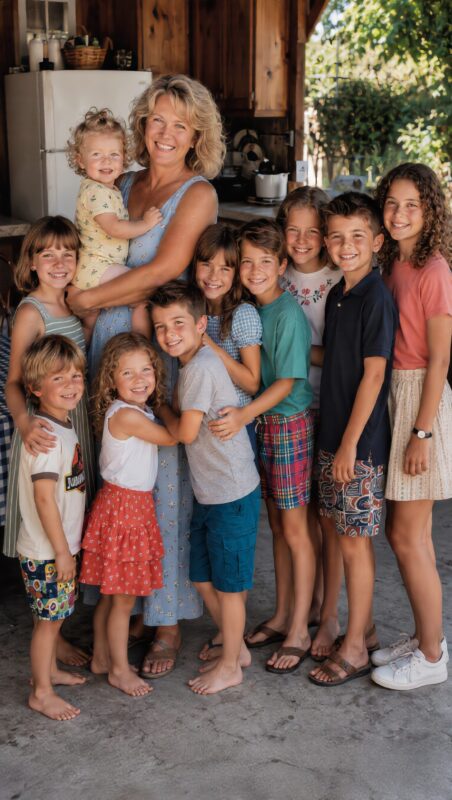
Thirty years later, a stranger knocked on my door.
He was an attorney, neatly dressed, carrying a worn envelope in one hand.
“Margaret?”
“Yes.”
“My name is Mr. Johnson. I represented Robert for many years.”
Hearing that name after so long made the room seem strangely still.
My children were gathered in the dining room behind me. Calling them children felt almost ridiculous now. They were grown, many with families of their own, but in my mind I could still see the frightened faces that had watched me from the staircase on the morning their father vanished.
I gripped the edge of the door.
“Is Robert alive?”
The attorney hesitated.
“No. He died recently. But he left something for you.”
He held out the envelope.
“He specifically instructed me not to deliver this until thirty years had passed since he left.”
I recognized Robert’s handwriting immediately.
My hands began to shake.
Thirty years earlier, I had been thirty-two and convinced that I understood exactly what my future would look like.
Then I met Robert.
He was a widower trying to manage a household of ten children while working enough hours to keep food on the table. His life was noisy, disorganized, exhausting—and somehow irresistible to me.
I fell in love with the whole family before I realized what was happening.
Amanda, the eldest, had taken on far too much responsibility for someone her age. Derrick was forever repairing broken toys, chairs, and bicycles. Sue could talk her way through an entire afternoon. Jacob and David, the twins, treated ordinary life like one endless contest.
Four more boys supplied enough noise for an entire neighborhood.
Then there was Sophie.
She was the youngest.
The first time she accidentally called me “Mama,” she covered her mouth in embarrassment.
I hugged her.
After that, she never stopped.
Six months into our relationship, Robert gathered everyone around the kitchen table.
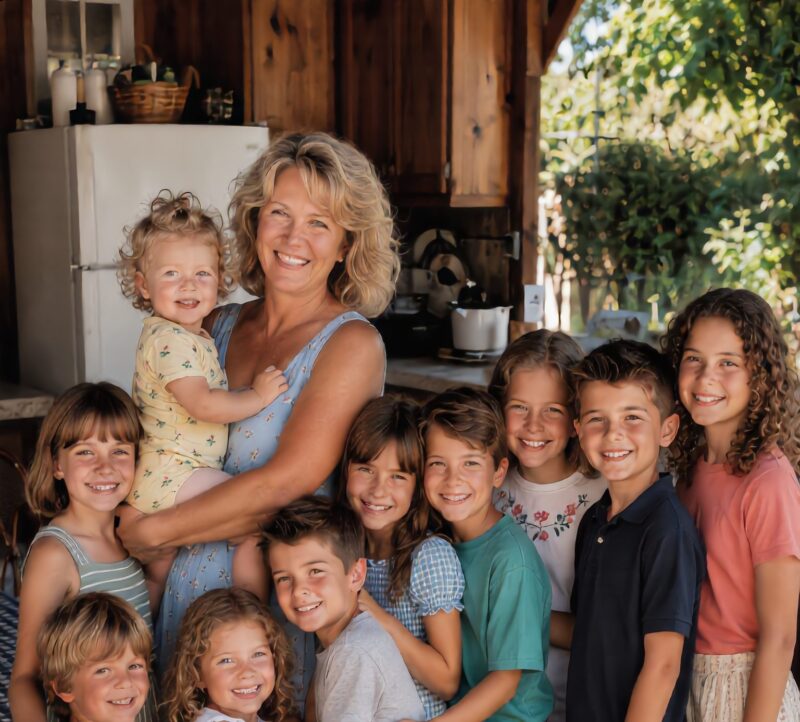
Then he took my hand.
“Margaret,” he said, “will you marry all of us?”
The children went silent.
I laughed through my tears.
“Yes.”
For a while, everything seemed settled.
Then Robert began to change.
He grew thinner. Headaches became frequent. Some evenings, he could barely keep his eyes open through dinner.
Whenever I asked whether something was wrong, he gave me the same explanation.
“Too much work.”
I believed him.
I shouldn’t have.
Seven days before our wedding, I woke to find his truck missing.
By afternoon, I discovered that his phone had been disconnected.
There was no suitcase.
No explanation.
No goodbye.
Only a folded piece of paper beneath the sugar bowl.
I still remember every word.
“I’m sorry. I can’t do this anymore.”
For years, that sentence haunted me.
My mother arrived as soon as she heard.
“You have to leave, Margaret,” she told me. “These children have relatives. They aren’t your responsibility.”
Then she said something I never forgot.
“You still have time to build your own family.”
I looked past her.
Ten children were standing on the staircase.
They had already lost their mother.
Now their father was gone too.
I knew what they expected.
Another goodbye.
Instead, I said, “This is my family.”
I fought for legal guardianship.
People thought I had lost my mind.
Perhaps there were days when I wondered the same thing.
Money disappeared almost as quickly as I earned it. I spent my days working in a fabric warehouse and my evenings sewing uniforms for extra income.
Something was always broken.
Someone was always hungry.
There was always another school expense, doctor’s visit, leaking pipe, missing shoe, or overdue bill.
If one child caught a cold, half the household soon had it.
Privacy vanished.
Sleep became optional.
Yet something unexpected happened amid all that chaos.
We learned how to carry one another.
Amanda took over dinner when I worked late.
Derrick kept the house from falling apart.
Sue organized laundry and helped the younger children with homework.
Everyone contributed something.
Eventually, a judge made our relationship official.
The ten children Robert had left behind legally became mine.
And then, almost without my noticing, childhood ended.
Amanda became a pediatric nurse.
Derrick turned his talent for fixing things into an auto repair business.
Sue became a teacher.
Jacob and David both pursued engineering.
The others found their own paths, built careers, married, and began bringing babies back to the house that had once seemed too small for all of us.
Sophie became a social worker.
When I asked why she had chosen that profession, she smiled.
“Because scared children need someone who stays.”
I had to leave the room before she saw me cry.
I never married.
People occasionally asked whether I regretted that.
I didn’t.
My house had never lacked love.
And now Robert’s letter was resting in my hands.
I opened it.
The truth began with a diagnosis.
Shortly before our wedding, Robert had learned that he was seriously ill. His doctors believed he might have only a short time left.
There was one possibility: an experimental treatment.
It might save him.
It might do nothing.
Instead of telling me, Robert panicked.
He imagined our wedding followed by hospital rooms, enormous medical bills, and his funeral. In his mind, I would become a widow almost immediately, responsible for ten grieving children and whatever debts remained.
So he made a decision for all of us.
He ran.
The cruel note had been intentional.
Robert wanted me furious.
He believed hatred would be easier to survive than grief.
But then came the part none of us expected.
Robert didn’t die.
The treatment succeeded.
Nearly two years later, he returned.
Not to the door.
Only to the street.
He parked where he could see the house without being noticed.
He watched Amanda come home carrying groceries.
He saw Derrick outside helping his younger siblings.
Then Sophie appeared.
She ran toward me across the yard.
“Mama!”
Robert wrote that his hand was already on the truck door.
For several minutes, he considered walking back into our lives.
Then he stopped.
From where he sat, he saw children who were no longer waiting for someone to rescue them.
They had a home.
They had structure.
They had become a family again.
And they had me.
Robert feared that returning would tear open everything that had begun to heal. There might be custody battles. Anger. Questions nobody knew how to answer.
And his doctors still couldn’t guarantee that the illness would never return.
So he made another choice.
He drove away.
This time, he stayed gone.
Robert never married anyone else and never had more children.
He eventually built a modest business and began setting aside money. Over the years, those savings became a trust intended for the children he had left behind.
He also kept track of them from afar.
He knew when they graduated.
He knew what careers they chose.
He knew when they married.
He even knew about his grandchildren.
The final lines of his letter were the hardest to read.
“You became the parent they needed when I was too afraid to be one. I have no right to ask you to justify what I did. I only hope you might someday find room to forgive me.”
I lowered the letter.
Nobody at the table moved.
Thirty years of anger suddenly felt different.
For most of my life, I had secretly wondered what had been wrong with me.
Why hadn’t Robert loved me enough to stay?
Now I finally understood.
That had never been the real question.
Robert hadn’t left because he felt nothing.
He had left because fear had distorted love into something destructive.
That knowledge did not erase what he had done.
Good intentions could not restore thirty lost years.
They could not give his children back the birthdays, graduations, weddings, and ordinary afternoons their father had missed.
His decision had hurt us.
Deeply.
But I no longer wanted his mistake to occupy another year of my life.
I folded the letter carefully.
Then I picked up my cup.
“I forgive him.”
Amanda’s eyes filled with tears.
I raised the cup slightly.
“To Robert. May he finally be at peace.”
Amanda walked around the table and embraced me from behind.
Then she lifted her glass.
“No,” she said gently. “First, to you.”
Sophie smiled.
“To Mama.”
One by one, the others raised their glasses.
Ten voices filled the dining room.
“To Mama.”
I looked around the table.
At the children I had once been warned not to raise.
At their husbands and wives.
At grandchildren laughing in the next room.
For years, I had thought Robert’s disappearance had robbed me of the life I should have lived.
I finally saw it differently.
The life I received was nothing like the one I had planned.
It was more difficult.
More chaotic.
More demanding.
But it was also richer than anything my younger self could have imagined.
Thirty years earlier, ten frightened children had needed someone who would stay.
I chose them.
And every day since, in a thousand different ways, they had chosen me too.