My parents ignored nine calls from my hospital bed because they were too busy helping my sister arrange furniture in her new house.
By the time they finally came to see me, I had already rewritten my estate plan.
I remember the number perfectly.
Nine.
The clock hung directly across from my bed, and every time I reached for the phone, I saw the minutes crawl forward.
I called my mother.
Then my father.
Then the family group chat.
Again.
And again.
And again.
Most of the calls went to voicemail.
Some were simply ignored.
Eventually, my mother sent one short message.
We’re at Lauren’s. Is this really urgent?
I stared at the screen while a nurse checked the IV running into my arm.
The previous day, a delivery truck had blown through a red light and crashed into my car.
I had undergone surgery.
My injuries were serious.
The doctors had warned me that the first twenty-four hours after the operation would be especially important.
So yes.
It was urgent.
But Lauren had just moved into a large suburban house in Ridgefield.
She had a bright white kitchen, an empty nursery, freshly painted walls, and a husband who somehow always disappeared when something heavy needed to be carried.
My parents had told me they were only going over for a couple of hours.
They stayed all day.
At 6:40 that evening, my phone lit up with a new social media post from Lauren.
“Couldn’t have survived moving day without these two!” she said cheerfully into the camera.
Then she turned it toward our parents.
Dad was carrying a lamp across the living room.
Mom was fluffing pillows on the couch.
Neither looked remotely worried about me.
I watched the clip once.
Then I pressed the call button beside my bed.
Not because I needed pain medication.
Not because something was wrong with the monitors.
When Nurse Marisol came in, I handed her my phone.
“Can you call the number saved under Harding & Vance — Estate?”
She looked at me carefully.
“You want to do that now?”
“Yes.”
My voice was weak.
My decision was not.
By 8:15 p.m., Julian Vance was sitting beside my hospital bed with a leather folder open across his lap.
He had been my estate attorney since I sold my medical software company two years earlier.
My family knew I had become financially successful.
They did not know the full extent of it.
They also did not know that much of my estate still included them.
Julian adjusted his glasses.
“Miranda, these are major changes. You can wait until you’re stronger.”
I shook my head.
“I’ve waited long enough.”
So he read every amendment aloud.
My parents were removed from my will.
Lauren was removed too.
Their access to my emergency financial accounts was canceled.
The lake house my parents had always assumed would stay in the family would be donated.
The education trusts they talked about for Lauren’s future children were terminated.
The honorary board positions on my foundation they had proudly mentioned to friends were gone.
By the time Julian finished, nothing remained the way it had been that morning.
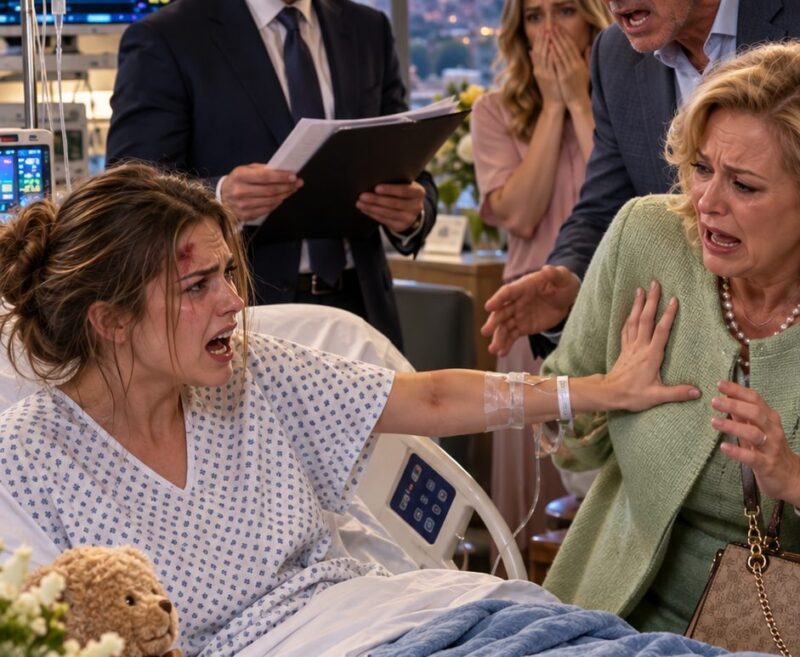
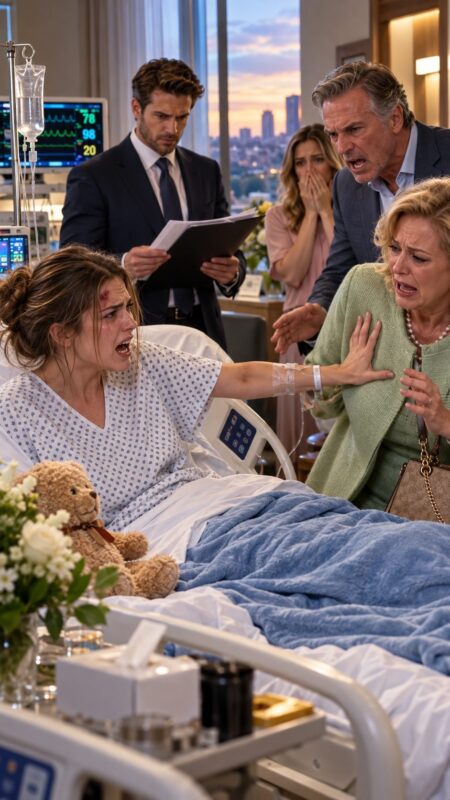
At 10:03 p.m., the door opened.
My mother walked in carrying coffee.
My father followed behind her.
“Miranda,” Mom said, sounding irritated and relieved at the same time. “You frightened us.”
I looked at them.
“No,” I said. “I frightened myself.”
Dad’s eyes moved to Julian.
“What is he doing here?”
Julian closed the folder.
“Miranda asked me to update her estate plan.”
The room became completely still.
Mom lowered her cup.
“What did you change?”
I answered before Julian could.
“Everything that involved you.”
Their expressions changed immediately.
I explained it all.
They were no longer beneficiaries.
Lauren’s future children would not receive the trusts my parents had already begun treating like family property.
The lake house would go to an organization that supported families caring for seriously ill relatives.
The money and positions once reserved for my family would instead expand my foundation’s emergency medical programs.
Dad stared at me.
“You changed all of that because we missed a few phone calls?”
A few.
That was what he called nine attempts to reach them from a hospital bed.
I looked toward the machines beside me.
“I almost died yesterday.”
Mom’s face tightened.
“We didn’t realize it was that serious.”
“You never bothered to find out.”
That was what hurt most.
I had not needed them to fix anything.
I had not needed money.
I had not even needed them to rush to the hospital.
I had simply needed them to answer.
Lauren arrived less than half an hour later after Mom called her.
She came into the room already angry.
“You’re seriously cutting everyone off because you’re jealous I bought a house?”
Normally, I would have defended myself.
Explained.
Argued.
Tried to make them understand.
This time, I did none of that.
I turned to Julian.
“Is everything complete?”
“Yes.”
“Then I want to sleep.”
They left one at a time.
My recovery lasted months.
Physical therapy was painful and slow, but eventually I regained my strength.
And something unexpected happened during that time.
My life became quieter.
Not lonely.
Quiet.
I stopped chasing approval.
I stopped trying to prove I deserved a place in my own family.
I focused on healing.
Then on work.
Then on my foundation.
Eventually, I created a new program.
I called it the Nine Calls Fund.
Its purpose was simple.
It helped families stay close to hospitalized loved ones when money, work, transportation, or housing would otherwise force them away.
The fund paid for temporary lodging.
Meals.
Transportation.
Emergency rent.
Childcare.
Whatever stood between someone and the hospital room where they needed to be.
One year after my accident, I returned to the hospital for a foundation visit.
Nurse Marisol met me near the lobby.
She smiled when she saw me and handed me an envelope.
“This is from the first family the fund helped.”
Inside was a handwritten letter from a single mother whose teenage daughter had required emergency surgery.
Because of the fund, she had stayed at the hospital instead of going back to work out of fear they would lose their apartment.
At the bottom of the letter, she had written:
“Thank you for giving me the chance to stay with my daughter when she needed me most.”
I read the sentence once.
Then again.
And I cried.
Not because my parents had ignored nine calls.
That pain no longer owned me.
I cried because their silence had become something useful.
They lost an inheritance that night.
But other families gained time.
Time beside a hospital bed.
Time holding a hand.
Time choosing the person they loved over the bills waiting at home.
Nine unanswered calls had once made me feel abandoned.
In the end, they became the reason someone else did not have to feel the same way.