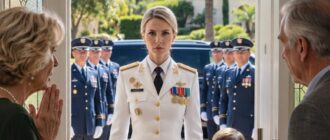
“I HAVE TEN MINUTES TO FIND A BRIDE!”
An hour before the ceremony, his fiancée disappeared. In desperation, he turned to the last person anyone would expect—the hotel housekeeper. What began as a transaction became something neither of them could have scripted.
The air conditioner in the presidential suite of Hotel Casagre purred quietly, but to Manuel Fonseca it felt deafening. The message glowing on his phone drowned out every other sound.

*I’m sorry. I can’t marry you. I’m already at the airport. Please don’t try to find me.*
Isabela Montoya—heiress, perfect match, strategic alliance—had vanished sixty minutes before the vows.
Below, the garden glittered with precision: white floral arches, gilded chairs, crystal glasses catching the sun. Two hundred guests waited. The governor. International investors. His formidable mother, Dolores, seated front row, prepared to witness her son’s final step into untouchable prestige.
Manuel tugged at his silk tie until it felt suffocating. He had closed multimillion-dollar deals without hesitation. He had built an empire before thirty. Yet this—this public humiliation—terrified him more than bankruptcy ever could.
A vacuum cleaner whirred faintly from the corridor.
The suite door stood partially open. A petite woman in a gray housekeeping uniform paused at the entrance, pushing a cart.
“Excuse me, sir. Final inspection before the ceremony.”
Her voice was calm. Ordinary. Grounded.
“Come in,” Manuel said hoarsely.
Silvia Pacheco stepped inside, unaware she was walking into a storm. She was tired—two shifts back-to-back, rent overdue, and a grandmother in Naucalpan whose arthritis medication consumed most of Silvia’s earnings. Her business degree had never translated into opportunity; survival had.
She froze when she saw him—ashen, shaking.
“Are you unwell?”
He stared at her, noticing details he might once have ignored: steady eyes, unpainted face, quiet strength.

“My fiancée left,” he said abruptly. “There are two hundred people downstairs. If I cancel this wedding, I become a headline. A failure. My competitors will feast on it.”
Silvia listened, sympathetic but cautious. “I’m sorry, sir. That must be painful.”
“Marry me.”
The words hung between them.
She blinked. “Excuse me?”
“Just for today. For appearances. We maintain the illusion for a few months, then separate discreetly. I’ll compensate you.”
“You’re serious.”
“One hundred thousand pesos.”
The number echoed in her mind. Surgery for her grandmother. Security. Breathing room.
“Upfront,” she replied carefully. “And my grandmother knows the truth.”
“Agreed.”
Minutes later, Silvia stood in a simple white gown left behind as a backup. When she stepped out of the bathroom, Manuel forgot, briefly, that this was a bargain.
She looked composed. Authentic. Radiant in a way no arrangement could manufacture.
“Remember,” she said quietly, “this is a contract.”
The ceremony unfolded amid whispers. Guests exchanged startled glances, but no one dared challenge the spectacle. Dolores observed the new bride with surgical scrutiny.
When it was time for vows, something unexpected surfaced.
“Thank you for standing beside me today,” Manuel said, voice steady despite the lie beneath it.
Silvia met his gaze. “I promise to face whatever comes—with honesty.”
The words felt heavier than either intended.
They were pronounced husband and wife.
That night, she moved into his sleek Polanco penthouse—glass walls, cold marble, silence too large for comfort. They agreed on terms: six months. Boundaries. No emotional entanglements.
Yet daily life blurred lines.
Silvia opened curtains that had never been drawn. Filled empty cabinets with groceries instead of champagne. Placed plants by the windows.
One evening, Manuel returned early, frustrated from a failed negotiation. The scent of simmering tomatoes and cilantro greeted him.
“You cook?” he asked.
“If you keep living on takeout, you’ll collapse before forty,” she replied lightly.
They ate at the kitchen island. He closed his eyes at the first spoonful, remembering simpler years before ambition devoured everything.
Conversations deepened.
She confessed her abandoned dream of starting a catering business.
He admitted he once wanted to design buildings, not boardrooms.
They began laughing. Watching films. Sharing space without pretending.
Dolores noticed the shift.
“Be careful,” she warned her son. “Sometimes the roles we play stop being roles.”
Six months later, the past resurfaced.
Isabela called. She wanted another chance.
Before Manuel could decide, a tabloid detonated the truth: the runaway bride, the payment, the housekeeper turned wife. Headlines screamed betrayal.
Lawyers proposed damage control—deny it. Discredit Silvia. Protect the brand.
Silvia packed her suitcase quietly.
“You should do what protects your empire,” she said.
He looked at her as though seeing the choice clearly for the first time.
“And lose the one honest thing in my life?”
The next morning, Manuel faced the press alone.
“Yes,” he said plainly. “My fiancée left. Yes, I asked Silvia to marry me out of desperation.”
Gasps filled the room.
“But what began as fear became clarity. She reminded me that success without integrity is hollow. I love my wife. Not because it was arranged—but because she chose to stay when walking away would have been easier.”
Silvia stepped forward, tears unhidden. He took her hand, not as a performance—but as a decision.
The fallout was immediate. Stocks dipped. Partnerships dissolved. Speculation raged.
They downsized to a smaller home with a garden where Grandma Julia could sit in the sun. Manuel restructured his company with fewer compromises. Silvia enrolled in culinary school.
A year later, they hosted a quiet gathering in that same garden—no spectacle, no politics, no strategy. Just family.
“I once believed I had ten minutes to save my life,” Manuel said, raising a glass. “I didn’t realize I was about to begin it.”
Silvia, wearing a simple linen dress and expecting their first child, smiled.
“Sometimes,” she said softly, “the worst day of your life is the doorway to the best one.”
For the first time, Manuel no longer feared losing everything.
He had already found what mattered.