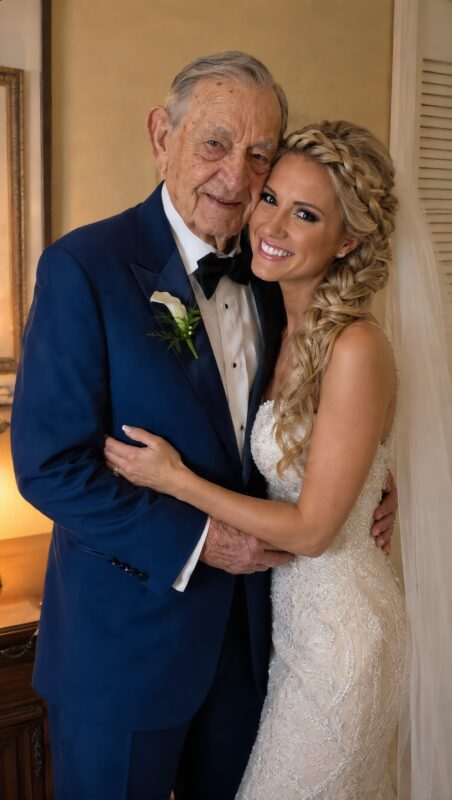
I thought marrying a rich seventy-eight-year-old would solve every problem I had. Then, before our wedding ceremony was even over, Walter stood in front of everyone and announced that the fortune I expected to inherit wasn’t actually his.
At twenty-nine, I had mastered one skill: quitting.
I had worked in retail, advertising, event planning, and even spent three miserable weeks trying to sell luxury apartments. Nothing lasted.
My parents had stopped finding it amusing.
“You need to build a future,” Dad told me.
“I am building one,” I replied. “I just need to marry a man who already finished his.”
Dad nearly choked on his coffee.
Then I met Walter.
Our first encounter happened at a restaurant where I was having lunch with a friend. Walter was seated nearby when his hand shook and sent a glass sliding toward the edge of his table.
I caught it.
He looked at me with amused blue eyes.
“Fast hands.”
“Expensive carpet,” I answered.
He laughed.
Several days later, flowers appeared at my apartment with a handwritten dinner invitation.
Walter wasn’t merely wealthy. He seemed to belong to a world where money operated silently in the background.
His jackets were tailored. Someone drove him around in a Bentley. He knew restaurant owners by name and casually mentioned houses his family had once owned across Europe.
I became fascinated.
Within two months, Walter proposed.
The diamond certainly didn’t hurt my decision.
Neither did his description of the family estate—a twelve-bedroom mansion surrounded by gardens and old trees.
In my imagination, my future immediately appeared: breakfast on terraces, enormous closets, vacations abroad, and absolutely no Monday mornings.
Then Walter’s glamorous life began shrinking.
The Bentley disappeared first.
Walter started taking taxis.
Next, he mentioned that several financial accounts were temporarily unavailable.
Soon, I was paying for our meals.
Then he asked me for $800 to buy his wedding suit.
I stared at him across my kitchen table.
“You own a mansion and you’re borrowing money from me for trousers?”
Walter calmly sipped his tea.
“There is an explanation.”
“Wonderful. I’d love to hear it.”
“Not yet.”
My parents became convinced something was wrong.
Dad finally cornered me.
“Forget his house. Forget the car. Forget whatever you think is waiting in his bank account. If Walter had nothing, would you still marry him?”
For once, I didn’t have a clever response.
But the strange thing was, Walter having less made our time together better.
We started walking through the city instead of being driven around.
We bought groceries and attempted recipes neither of us understood.
Walter introduced me to black-and-white movies. I introduced him to cheap street food.
We spent entire evenings talking.
Without the Bentley, expensive restaurants, and obvious displays of wealth, there was nowhere for Walter himself to hide.
And I discovered I genuinely enjoyed the man underneath all of it.
A few days before our wedding, an envelope arrived.
Inside was an old brass key.
No note.
No explanation.
I assumed Walter had finally decided to reveal some secret property.
I was completely wrong.
During our wedding ceremony, just before we exchanged rings, Walter asked for the microphone.
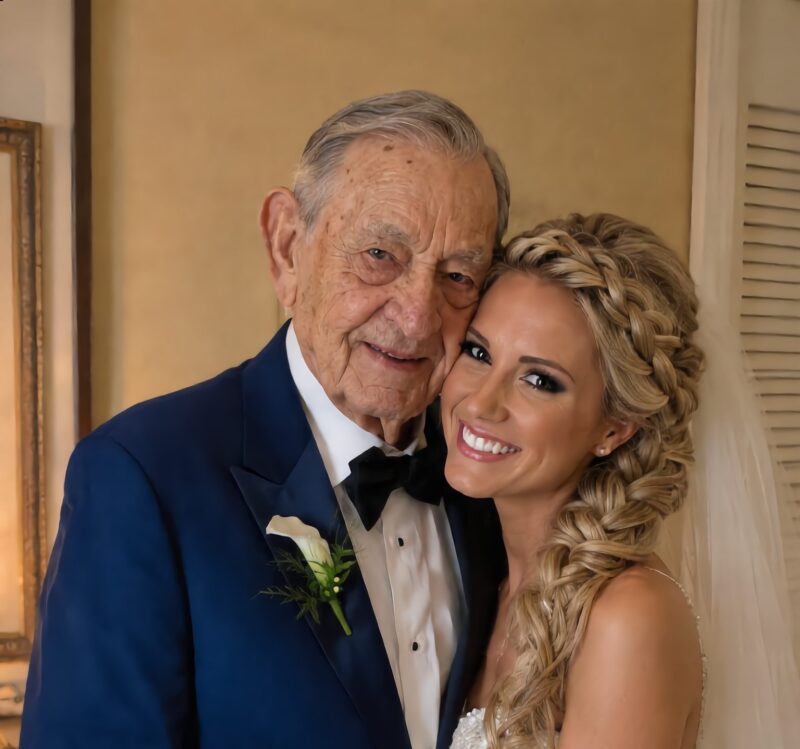
He looked at our guests and then at me.
“Sally deserves to know what she’s actually marrying.”
My stomach tightened.
“The fortune associated with my family does not belong to me.”
Whispers moved through the room.
Walter’s attorney approached carrying a worn leather folder and placed it in my hands.
I opened it.
There were no deeds.
No bank statements.
No list of investments.
Instead, the first page read:
THE WALTER FAMILY STEWARDSHIP CHARTER.
I kept turning pages.
Every section contained another responsibility.
Spend time with retired employees.
Meet scholarship candidates personally.
Help apprentices find mentors.
Visit workers facing difficult circumstances.
Attend retirement celebrations.
Learn names—not titles.
I leaned toward Walter.
“Where’s the part about the mansion?”
He smiled.
“You don’t get the house until you understand the people who made it possible.”
Several guests laughed.
I didn’t.
Not yet.
Walter explained that his grandfather had begun with almost nothing, working from a rented bakery kitchen before slowly building the company.
As the business expanded, his grandfather became increasingly uncomfortable with the idea that future generations might inherit wealth without understanding where it came from.
So he placed most of the family’s assets into a trust.
The family could oversee them.
They could benefit from them.
But they were expected to serve the community surrounding the business.
I remembered Walter’s stories about sailing.
“What about your yacht?”
He flipped to the last page.
There wasn’t one.
My father laughed so loudly people turned around.
Then Walter explained the Bentley.
He hadn’t sold it because he needed money. He had donated it to a technical school where students could learn automotive engineering.
Part of the mansion was also being converted into apartments for former employees who needed affordable housing.
Suddenly, another thought occurred to me.
“My eight hundred dollars.”
Walter reached into his jacket.
“The suit cost six hundred.”
He handed me two hundred dollars.
I stared at the bills.
Then at him.
“You planned all this?”
“I needed to know whether you’d still be standing here when the decorations disappeared.”
That should have offended me.
Maybe it did.
But I also remembered our walks, our burnt dinners, our ridiculous movie arguments, and the evenings when Walter had listened to me more carefully than anyone ever had.
Somewhere during those weeks, I had stopped waiting for his money to return.
I looked at the folder again.
“So what am I supposed to do first?”
Walter tapped the opening line.
Learn people’s names.
I closed the folder.
“All right.”
Marriage became an education I had never expected.
Walter took me to factories instead of resorts.
We ate breakfast with employees before their shifts.
I sat with scholarship applicants and listened to teenagers explain what an education could change for their families.
At first, I counted every obligation.
Three visits completed.
Two dinners attended.
Five interviews finished.
Then the numbers stopped mattering.
I met a retired machinist who carried photographs of his grandchildren everywhere because few people ever asked to see them.
I met a young engineering student whose grandmother remembered Walter sitting beside her broken furnace for hours until a repairman arrived.
I heard stories Walter had never told me.
Slowly, the charter stopped feeling like a contract.
I began visiting people without checking whether it counted toward anything.
I remembered birthdays.
I called retirees who lived alone.
I learned which employees had children graduating and which families were struggling.
Years earlier, I couldn’t keep a job because everything eventually bored me.
Now hours disappeared while I listened to people talk.
One afternoon, Walter placed the old brass key on the table between us.
I recognized it immediately.
“You’re finally going to tell me what this opens?”
“The employee break room at the first factory.”
I laughed.
“That’s the big mystery?”
“For me, it was.”
Walter explained that his grandfather had given him the key when he was a young man.
Walter had expected access to an office.
Instead, his grandfather ordered him to clean the break room every Saturday.
For a year.
Only afterward was Walter given greater responsibilities.
I turned the key over in my hand.
“Why give it to me now?”
Walter smiled.
“Because you haven’t asked me what something costs in a very long time.”
I kept that key.
Years later, Walter died quietly after a long, full life.
I expected his funeral to be filled with executives and wealthy acquaintances.
Some came.
They occupied a few rows.
The rest of the church belonged to everyone else.
Factory workers, cleaners, bakers, office assistants, mechanics, apprentices, teachers, scholarship recipients, retirees, widows, grandchildren.
People Walter had remembered.
And, by then, people I knew too.
That evening, I went alone to the company’s oldest factory.
The enormous family mansion was visible on the hillside, its windows glowing against the dark sky.
At twenty-nine, I would have stared at it and imagined owning every room.
That night, I barely noticed it.
I walked through the quiet factory and checked the employee break room before leaving.
Then I switched off the lights.
The old brass key turned easily in the lock.
Standing there, I understood how completely Walter had changed the meaning of wealth for me.
I had once chosen him because I imagined his fortune would open every important door in my life.
Walter never gave me that fortune.
He gave me the key to something better.
Because the richest person isn’t necessarily the one who owns the biggest house.
Sometimes it’s the person who spends a lifetime making sure other people have doors they can walk through.