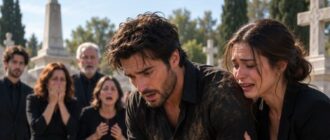
My Dad Took $250 From Me Every Month for Five Years—After His Death, I Found Out Where It All Went
For five years, my father made me hand over $250 every month just to live under his roof. I worked myself to exhaustion, gave up my dream of producing music, and gradually stopped seeing him as the loving father I once knew. Then, days after we buried him, his oldest friend placed a battered box in my hands. Inside was a key that led me to a secret my father had kept until his final days.
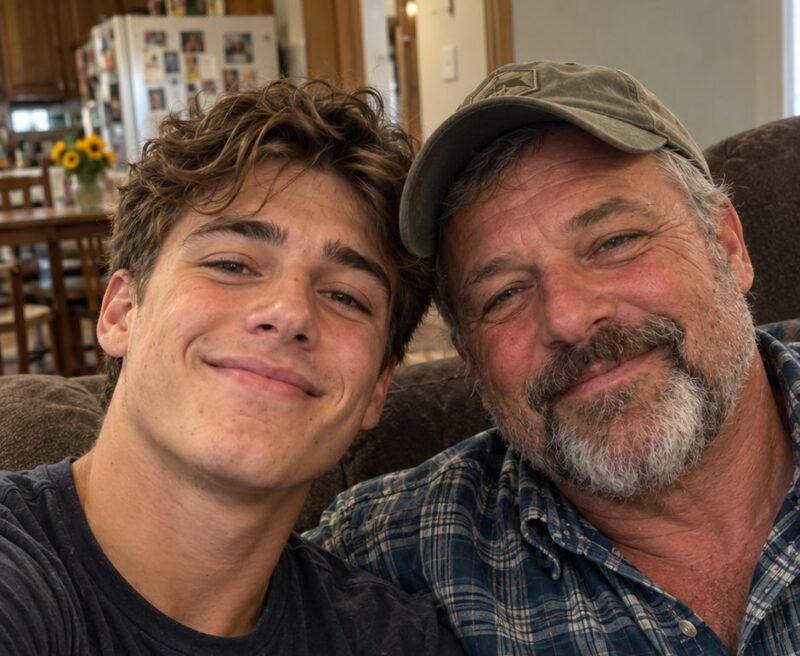
When I was a child, music was the heartbeat of our home.
My mother loved singing while she cooked, and my father would accompany her on his guitar. Sometimes, the three of us stayed awake long past my bedtime, laughing and singing our favorite songs.
Everything changed when Mom died. I was only nine.
After losing her, Dad seemed to shut down emotionally. He worked longer hours, barely spoke during dinner, and never touched his guitar again.
He made sure I had clothes, food, and a warm bed. But the father who used to laugh with me had disappeared.
At sixteen, I stumbled across a dusty album filled with photographs of Dad performing with a rock band.
In every picture, he looked confident and happy.
“Why did you give it up?” I asked him.
He barely glanced at the photographs.
“Because dreams don’t cover the electricity bill.”
His answer hurt more than he realized.
I had already fallen in love with music production. I spent countless hours studying recording techniques, creating melodies, and imagining myself working in a professional studio.
But whenever I shared my plans, Dad dismissed them.
“Get a proper career,” he said. “Music won’t keep a roof over your head.”
Then came my eighteenth birthday.
Instead of the encouragement I’d hoped for, Dad gave me an ultimatum.
“From now on, you’re paying $250 a month to stay here.”
I thought I’d misheard him.
“You’re seriously charging your own child rent?”
“You’re not a child anymore. Responsibility starts somewhere.”
I had no choice but to accept.
My part-time job at the grocery store turned into a relentless cycle of extra shifts. After paying Dad, buying groceries, and covering transportation, I could barely afford anything for myself.
Every dollar I saved for recording equipment seemed to disappear.
Whenever I tried working on music at home, Dad complained.
“Stop wasting your evenings on that nonsense!”
Eventually, I packed away my equipment.
By twenty-three, our relationship had become painfully distant. We lived in the same house, yet sometimes went days without a real conversation.
Then cancer entered our lives.
Dad’s health declined faster than anyone expected. There were things I wanted to say, questions I wanted to ask, and arguments I wished we could finally resolve.
But time ran out.
After his funeral, I returned home feeling strangely empty.
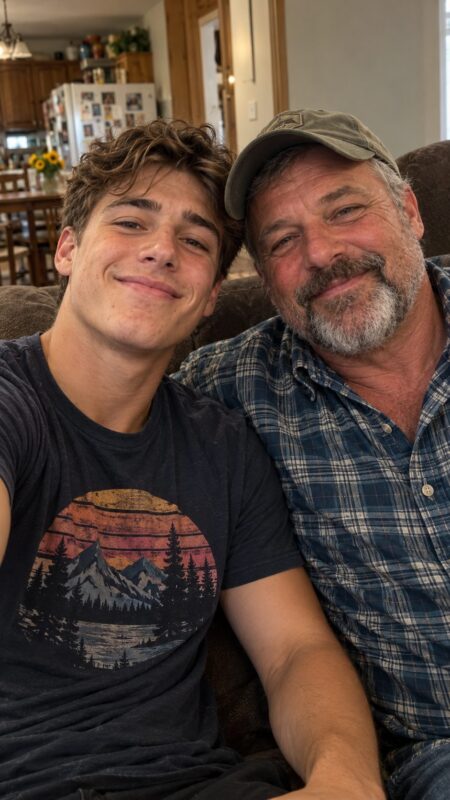
That evening, someone knocked on the door.
It was Frank, Dad’s closest friend and former bandmate.
He was holding a cardboard box that looked decades old.
“Your father made me promise you’d receive this,” he said.
I lifted the lid.
Inside were backstage passes, yellowing photographs, guitar picks, and an old leather vest I recognized from Dad’s band pictures.
Hidden beneath them was a brass key attached to a piece of paper bearing an address.
I looked at Frank.
“What am I supposed to do with this?”
“Go there,” he replied. “Your dad wanted you to see it for yourself.”
The address took me to a quiet industrial street outside town.
An ordinary brick building stood at the end of the road. Its windows were dark, and nothing indicated what was inside.
I unlocked the entrance and stepped into the darkness.
When I found the light switch, I stopped breathing for a moment.
Before me stood a fully equipped recording studio.
Acoustic panels covered the walls. Professional microphones hung from adjustable stands. A mixing console dominated the main desk, surrounded by monitors, keyboards, and carefully arranged instruments.
Everything appeared ready for someone to begin recording.
Then something near the desk caught my attention.
It was my old guitar.
I hadn’t seen it in years.
The instrument had once developed a crack along its body, and I had assumed Dad had thrown it away during one of his arguments about music.
Instead, someone had repaired it beautifully.
I touched the polished wood, struggling to understand what was happening.
On the desk lay a USB drive.
A handwritten label read: Our Music.
I connected it to the computer.
The first video showed Dad performing with his old band. He was younger, energetic, and smiling beneath bright stage lights.
Then came another recording of him laughing with his friends during rehearsal.
I watched in silence, realizing how little I knew about the life he’d lived before becoming my father.
Suddenly, the screen went dark.
A new video began.
Dad appeared in a chair inside the studio.
He looked exhausted. His face was thinner, and his voice sounded weak.
“Hi, son.”
My chest tightened.
“I don’t know how to begin this, so I’ll start with the truth. I owe you an apology.”
He paused.
“After we lost your mother, I was scared of everything. Scared of raising you alone. Scared of failing you. Scared that one day you’d look at me and realize I wasn’t the father you deserved.”
He swallowed.
“So I convinced myself that being strict would make you stronger.”
His eyes lowered.
“When you told me you wanted a future in music, I remembered every rejection and disappointment I’d faced. I thought I could spare you that pain by making you choose something safer.”
He shook his head.
“But protecting someone isn’t the same as controlling their life. I understand that now.”
I felt tears gathering in my eyes.
“I watched you lose your excitement for music, and I knew I was responsible. Instead of admitting I was wrong, I kept telling myself I was doing what was best for you.”
He looked around the room.
“That’s why I started building this studio. Frank and the others helped me. I wanted to give you the opportunity I was too afraid to let you pursue.”
The camera widened, revealing Frank and two of Dad’s former bandmates standing behind him.
Frank spoke gently.
“We promised your father we’d help you learn everything you need to know.”
Dad managed a faint smile.
“This studio belongs to you. You can record music here, build a business, or take an entirely different direction. For once, I want the decision to be yours.”
Then his expression grew serious.
“Before I finish, there’s something in the bottom drawer of the mixing desk. Please open it.”
He stared directly into the camera.
“I wasn’t good at telling you how I felt. But there was never a day when I wasn’t proud to be your father.”
His voice broke.
“I love you, son. I’m sorry it took me so long to say everything you needed to hear.”
The recording ended.
For a long time, I couldn’t bring myself to move.
Finally, I reached beneath the desk and opened the drawer.
A small wooden chest sat inside.
I lifted its lid and discovered dozens of neatly arranged envelopes.
Each had a month and year written across it.
I opened one.
Inside were two $100 bills and a $50 bill.
I checked another.
The same amount.
Then another.
Every envelope contained exactly $250.
I counted them.
Sixty envelopes. Sixty rent payments. Fifteen thousand dollars.
Dad had saved every cent I’d given him during those five years.
At the bottom of the chest lay a handwritten letter.
“Son,
If you’ve found this money, you’ve probably realized what I’ve been doing.
I started collecting rent because I thought it would teach you independence. I intended to return every dollar someday.
But I made you feel like a burden in your own home, and I regret that more than I can explain.
When I saw how much you loved music, I should have helped you pursue it. Instead, I allowed my own failures to dictate your future.
This money is yours. The studio is yours, too.
I hope they give you a fresh start, but I know they cannot replace the years when you needed a father who believed in you.
Please don’t feel obligated to follow my dreams or make up for my mistakes.
Live your own life. Make your own choices. And never let fear decide what you’re capable of becoming.
Love always, Dad.”
I read the letter twice.
Then I sat in the chair where he had recorded his final message.
For years, I had interpreted his demands as proof that he didn’t care about my happiness.
Now I understood that he had been trying, in his own deeply flawed way, to prepare something extraordinary for me.
But the truth didn’t erase the pain.
I still remembered the arguments, the missed opportunities, and all the evenings when a few encouraging words from him would have meant more than any amount of money.
I wished he had trusted me enough to explain his intentions while he was alive.
I wished I had known how frightened he was.
Most of all, I wished we had spoken honestly before it was too late.
As evening settled outside, I reached for the guitar resting beside the desk.
The strings felt unfamiliar at first.
I adjusted the tuning, sat beneath the soft studio lights, and began playing a melody I hadn’t heard in years.
It was the song Mom used to sing while Dad played along.
With every note, memories returned: her voice drifting from the kitchen, Dad laughing when he missed a chord, and the three of us singing together without worrying about tomorrow.
When the song ended, I remained seated in the silence.
Then I turned toward the empty chair.
“I wish you’d told me sooner, Dad.”
I placed the guitar on my lap and looked around the studio he had built for me.
“I would have loved to make music with you again.”
That night, I recorded my first song in years.
I named the track One More Song.
My father left me a studio and $15,000 in savings. But the one thing I wanted more than anything was something money could never buy: one last chance to sit beside him, pick up our guitars, and play together.