My relatives branded me a thief over two hundred pesos and drove me, five months pregnant, to an abandoned ranch deep in the Zacatecas wilderness. They left me there with a trunk and the expectation that no one would ever hear my side of the story.
They were wrong.
A widowed landowner found me before the desert could claim me. And when the same relatives appeared months later, hoping to take my newborn daughter and gain access to her future inheritance, the secret they had buried finally came back to destroy their story.
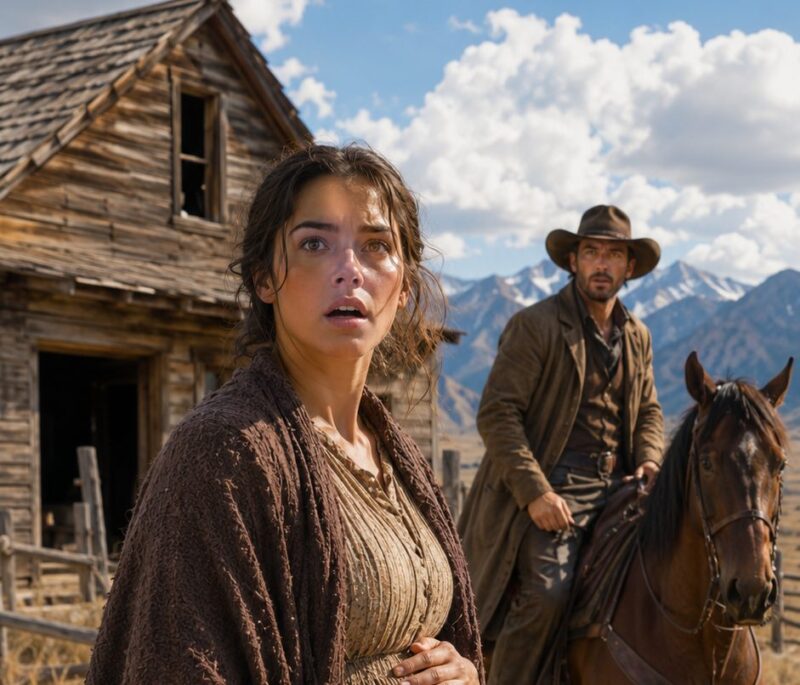
It happened in November 1907.
I was Refugio, twenty years old, pregnant with my first child and grieving the sudden death of my husband, Marcelino. A cattle accident had taken him before he ever had the chance to meet our baby.
After his death, I had nowhere to live.
My uncle Herculano allowed me to stay at his ranch, though he made it clear that charity had limits. I earned every meal by cooking, washing clothes, cleaning rooms, and helping with whatever work my pregnancy allowed.
Then two hundred pesos vanished from Herculano’s room.
Suspicion fell on me almost immediately.
One evening, my cousin Wenceslao arrived with two men.
“Pack your things.”
I stared at him.
“Why?”
“You know why.”
“I didn’t take that money.”
He wouldn’t even look at me.
“My father says you can’t remain here.”
“Where am I supposed to go?”
Wenceslao glanced at my swollen belly.
“Somewhere has been arranged.”
They put my trunk in a wagon and drove me far beyond the roads I recognized.
By sunset, we reached Rancho del Ahorcado.
The place had been deserted for years. Part of the roof had collapsed, the well was nearly useless, and weeds had swallowed the courtyard.
They unloaded my trunk.
Then they left.
No food.
No horse.
No explanation.
For the next week, survival became my only concern. I collected whatever water I could and ate cactus when hunger became unbearable.
By the eighth morning, I no longer had the strength to travel anywhere on foot.
That was when Fortunato Reyes found me.
He owned Rancho San Gabriel several miles away and had been widowed years earlier.
When he saw my condition, his expression hardened.
“Who brought you here?”
“My family.”
“Why would they abandon a pregnant woman?”
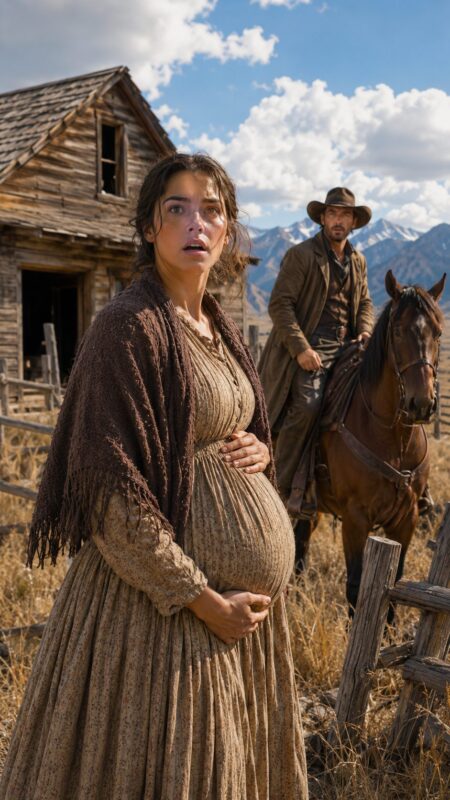
“They say I’m a thief.”
Fortunato held out his hand.
“Did anyone prove it?”
“No.”
“Then their accusation means nothing to me.”
He took me to San Gabriel.
A doctor was summoned. I was given clean clothes, proper meals, and a quiet room where I could recover.
Fortunato never demanded payment or gratitude.
Several weeks later, however, he asked to speak privately.
He proposed marriage.
He was careful to explain exactly what he meant.
He wasn’t asking me to replace Marcelino or pretend to love someone I barely knew. Marriage would simply give me protection and provide my child with a secure home.
“You would remain free to make your own decisions,” he told me. “I ask only that we treat each other with respect.”
I had learned how rare safety could be.
I accepted.
My family responded by spreading an uglier version of events.
According to them, I had stolen Herculano’s money and then seduced a wealthy widower to escape the consequences.
I might have spent years living beneath that accusation if I hadn’t overheard one conversation.
I was passing a storehouse when I recognized Wenceslao’s voice.
“You were supposed to destroy the receipts.”
Then Ceferina answered.
“You were supposed to make sure everyone blamed Refugio! How could I know Fortunato Reyes would find her? Now she has San Gabriel, and her child could inherit everything.”
I stopped breathing.
Suddenly, every piece fit together.
Ceferina had stolen the two hundred pesos to settle a debt.
Wenceslao had helped cover her tracks.
And they had chosen me as their scapegoat because a penniless widow was unlikely to fight back.
They had underestimated me.
I found the merchant who had accepted Ceferina’s payment. His records still existed, including a receipt carrying her signature.
Then I located a former employee of Herculano’s ranch.
He remembered seeing Ceferina leave Herculano’s room shortly before the money was reported missing. Beneath her shawl, she had been hiding a small pouch.
I now possessed enough evidence to challenge the accusation.
But if Wenceslao learned about it, I feared it would disappear.
So I chose an unusual hiding place.
Guadalupe’s cradle.
My daughter had been born by then, healthy and strong.
Fortunato had made her cradle himself from timber Marcelino had stored before his death. On one side, he carved a small star.
Behind that star, I concealed copies of the receipt and witness statement.
Then came Guadalupe’s baptism.
My relatives arrived without an invitation.
Wenceslao didn’t even pretend he had come to celebrate.
Before our guests, he declared that Herculano’s family intended to seek custody of Guadalupe.
The reason became obvious soon enough.
They had heard that my marriage could make her an heir to San Gabriel.
I brought Guadalupe’s cradle into the room and placed it near the district judge.
Wenceslao stared at me.
“You have no right to keep this child away from her family.”
I almost laughed.
“You left her mother in an abandoned house without food or clean water.”
“That has nothing to do with the child’s future.”
“It has everything to do with it.”
Ceferina folded her arms.
“And you think an old cradle changes anything?”
“No.”
I turned toward the judge.
“But what’s hidden behind the star might.”
The carved piece was removed.
The documents appeared.
Ceferina’s confidence vanished.
The merchant examined the receipt and confirmed that the signature was hers.
Their custody demand was immediately suspended while the evidence was reviewed.
That night, a message arrived from Wenceslao.
“What else did you hide?”
I answered simply.
“The part of the truth you failed to bury.”
Then I mentioned something I wasn’t even certain existed.
“You still haven’t found what Marcelino left beneath the last board.”
Afterward, those words wouldn’t leave my mind.
Why had Marcelino saved that particular timber?
Fortunato and I examined the cradle carefully.
One plank underneath had been fitted differently.
Fortunato loosened it.
An envelope fell into his hand.
I recognized the handwriting before he gave it to me.
Marcelino.
Inside were records showing that my husband had known about Ceferina’s debt before his death. He had also written and signed an account describing Wenceslao’s attempts to conceal the problem.
The evidence was devastating.
But another folded sheet lay underneath.
It wasn’t meant for a judge.
It was addressed to our child.
Marcelino had written the letter while I was pregnant. He knew ranch work could be dangerous, and he wanted our baby to have something from him if he never came home.
He wrote about the future he imagined.
About holding his child.
About teaching her to ride.
And about how deeply he already loved the baby he had never seen.
Halfway through, the words blurred through my tears.
I lowered the letter.
Fortunato was sitting across from me with Guadalupe asleep against his chest.
He didn’t speak.
He simply stayed beside me while I cried for the man I had lost and the daughter Marcelino had never been able to hold.
The next morning, we took everything to the district judge.
My family’s accusation finally collapsed.
My name was cleared.
Their attempt to obtain custody of Guadalupe failed, while Herculano’s missing money and other financial matters became the subject of further investigation.
Months later, Ceferina came to San Gabriel alone.
She stood outside my door with tears in her eyes.
“I was desperate,” she whispered. “Please forgive me.”
For a long moment, I said nothing.
Then I answered.
“I may forgive you someday.”
She stepped forward hopefully.
I didn’t move.
“But forgiving you doesn’t mean trusting you again.”
I closed the door gently.
Life continued.
Years passed, and San Gabriel changed with them.
There were good harvests and difficult ones, new horses in the corrals, long summer evenings, and a little girl whose laughter seemed capable of filling the entire ranch.
Fortunato never asked Guadalupe to forget Marcelino.
Quite the opposite.
He made sure she knew his name.
He told her about the man who had dreamed of becoming her father and showed her the cradle made from the wood Marcelino had saved.
When Guadalupe was six, she caught me reading the old letter beside a window.
She climbed onto my lap.
“Was Papa Marcelino waiting for me?”
“Yes.”
“Even though he’d never seen me?”
I nodded.
“He loved you before he knew what you looked like.”
Guadalupe thought about that.
Outside, Fortunato was repairing a section of fence.
She pointed toward him.
“What about Papa Fortunato?”
I looked through the window at the man who had once found a frightened widow at an abandoned ranch and asked for nothing before helping her.
“He met us when our lives were broken,” I said. “And he decided we were worth staying for.”
Guadalupe ran outside.
Fortunato turned just in time to catch her as she jumped into his arms.
I watched them from the window.
For years, I had remembered Rancho del Ahorcado as the place where my family abandoned me.
Eventually, I began remembering it differently.
They believed they were sending me somewhere I would disappear.
Instead, they unknowingly sent me toward the person who would help me rebuild everything they had tried to destroy.
We never threw away Guadalupe’s cradle.
The little carved star remained on its side, long after she became too big to sleep in it.
It reminded us that Guadalupe had been fortunate enough to receive two very different kinds of a father’s love: Marcelino loved her before he ever saw her, while Fortunato met her after she entered the world and chose, day after day, to remain.
And I learned something of my own.
There are moments when losing your home, your reputation, and the people you thought were family feels like the end of everything.
But an ending and a beginning can sometimes look exactly the same.
You only discover the difference after you’ve survived it.