Overture to an Underground Storm
The Grand View Ballroom in Columbus shimmered with a display of deliberate opulence and a chill, mirror-like brilliance. Soaring crystal chandeliers scattered light across polished surfaces, while perfectly arranged tables, covered in immaculate white linens, stood in rigid harmony. A gentle live orchestra and flawlessly executed service created an atmosphere of celebration that felt almost removed from everyday reality. Everything had been designed with meticulous precision, each detail quietly reinforcing the wealth and standing of those gathered.

Yet Julia Miller felt entirely disconnected from it all. Ten years into her marriage, she still had no true place within her husband’s family, existing instead as a polite outsider—acknowledged, but never fully accepted. Over time, she had adapted by becoming nearly invisible: speaking softly, avoiding disagreement, drawing as little attention as possible, and carefully steering clear of her husband’s stern and emotionally distant mother, Margaret, whose authority shaped every corner of the family dynamic.
That evening, Julia arrived at the formal event with her eight-year-old daughter, Mia. The girl was doing everything she could to meet the silent expectations surrounding her. She sat quietly, moved carefully, and spoke with restraint, as though flawless behavior might finally earn her a place of acceptance. Beneath her composure, there lingered a fragile hope of receiving even the smallest sign of approval from her grandmother, a woman known for her cold reserve.
But childhood perfection is fragile. In a brief, unintended moment, Mia bumped into Margaret’s plate, and part of the meal spilled across the woman’s immaculate dress. It was over in an instant—a harmless mistake, the kind children make without meaning or intent.
Still, the room changed at once. A heavy silence swept through the ballroom, as though the air itself had tightened. What should have been dismissed as trivial quickly escalated. Margaret’s composure broke; she erupted in anger, publicly scolding the child and then turning her fury on Julia. Her voice carried accusations of disrespect, poor upbringing, and disregard for family expectations.
The festive mood collapsed immediately. Conversations stopped mid-sentence, guests froze in discomfort, exchanging uneasy looks or turning away altogether. The atmosphere grew tense and suffocating, the celebration dissolving into visible embarrassment and conflict.
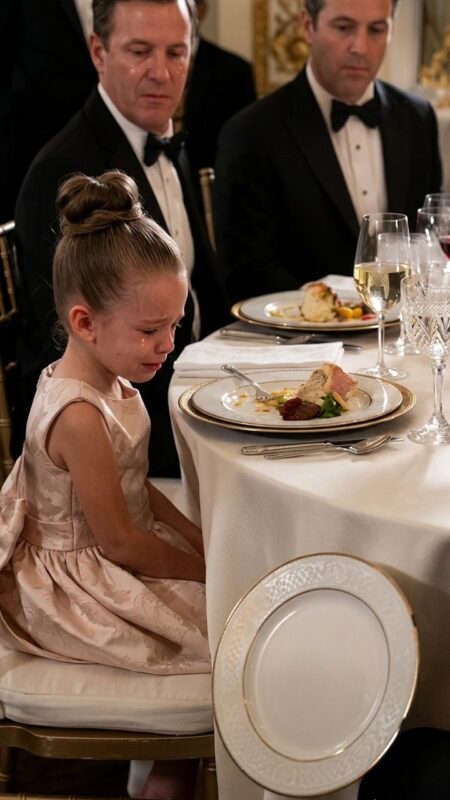
Julia stepped forward, trying to calm the situation. She apologized quickly, explaining that it had been nothing more than an accident, and instinctively shielded her daughter from the escalating confrontation. But her attempt only deepened the tension.
Margaret intensified her accusations, now claiming Julia had deliberately dishonored the family, ignored tradition, and failed to understand her role within it. Her words rang out clearly across the hall, drawing unwanted attention from every corner. Murmurs spread among the guests as the evening transformed into an uncomfortable public scene.
When David, Julia’s husband, finally intervened, she felt a flicker of relief. For a moment, she believed he might stand beside her, protect their daughter, and end the humiliation. But that hope collapsed quickly. Yielding to his mother’s influence, he sided with the family he had grown up in, repeating the accusations and stating that Julia herself was responsible for ruining the evening.
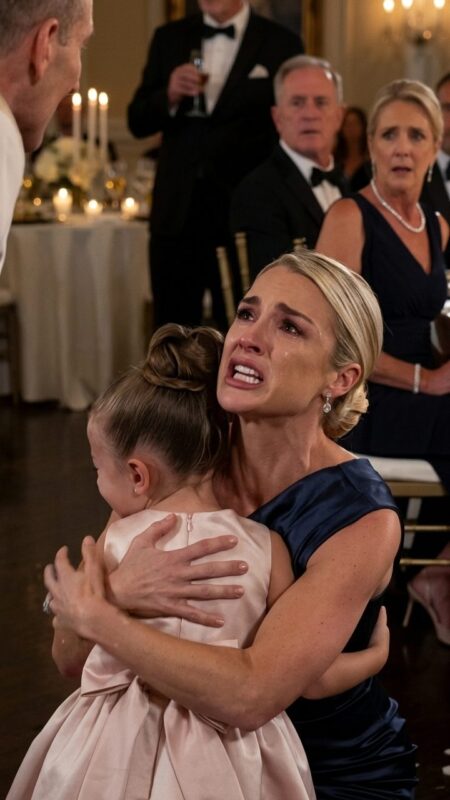
The words struck deeper than anything before them. The one person she had trusted most had turned away at the very moment she needed him.
Something inside Julia quietly broke. A decade of endurance, compromise, and silent acceptance suddenly felt meaningless. For the first time, she saw the reality of the family without illusion—cold, unsoftened, and unmistakably clear.
Without speaking, she took her daughter’s hand. In that moment, she understood with final certainty that nothing would ever return to what it had been. The evening had crossed an invisible line—quiet, but permanent—between the life she had endured and the life that now lay ahead.