People smirked when my card failed at the checkout while I was buying baby food—but what happened afterward left the entire store speechless.
I’m 72 years old, and not long ago, I believed my life had settled into its final chapter. I imagined quiet mornings, simple routines, and peaceful days. I never expected to be raising an infant again.
But everything changed six months ago.
That morning seemed ordinary. I was in the kitchen preparing breakfast when my daughter Sarah came downstairs holding her newborn, Lily. She gently placed the baby in her bassinet, kissed her softly, and told me she needed to step out to clear her mind.
I nodded, thinking nothing of it.
She never came back.
The next day, I found a note—brief and heartbreaking:
“Mom, I can’t do this. Don’t look for me.”
I tried everything. I called her endlessly, reached out to the authorities, even contacted Lily’s father. No one stepped in. No one stayed. In the end, it was just me and a two-week-old baby.
Since then, survival has become my daily routine. Nights are sleepless, days are measured in pennies. My late husband’s pension stretches only so far, and every purchase requires careful thought. I’ve learned to compare prices down to the smallest detail just to make sure Lily has what she needs.
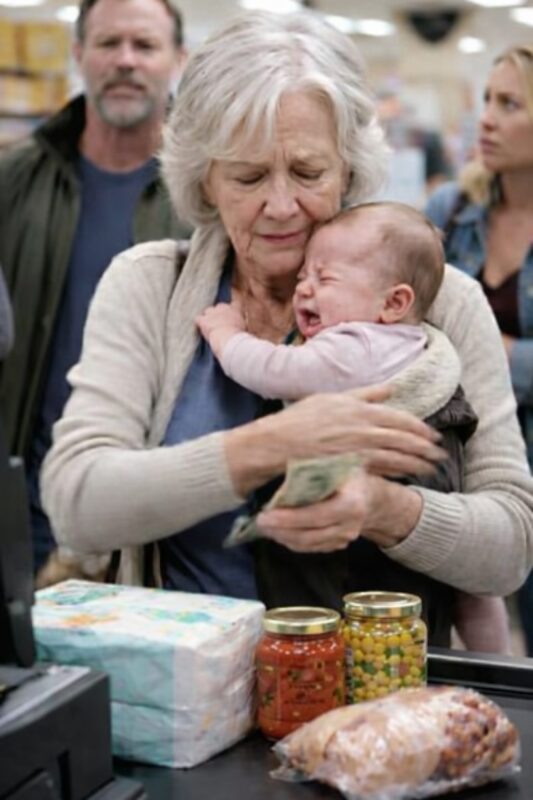
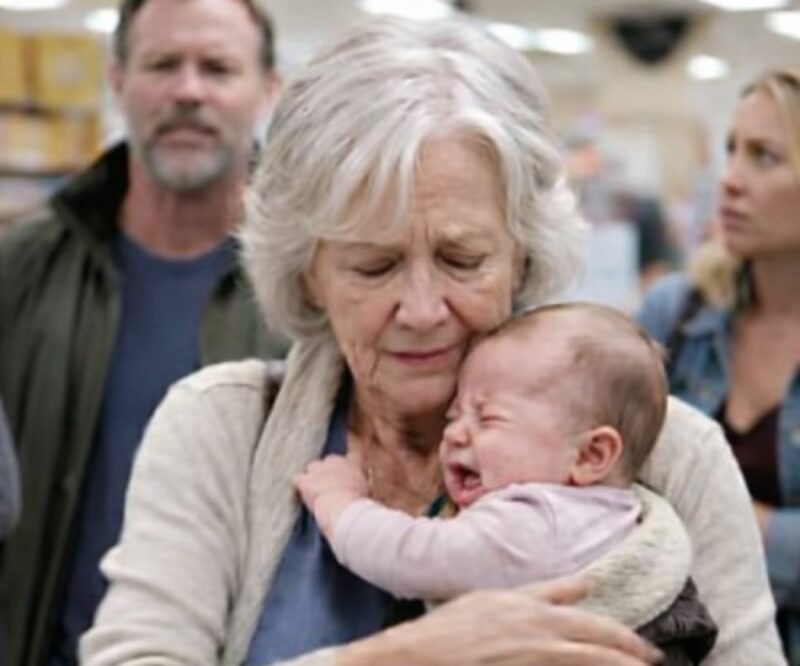
One bitter November day, worn down and aching, I bundled Lily into her carrier and went to the grocery store. We had nothing left—no diapers, no baby food—and I couldn’t put it off any longer.
Inside, the store buzzed with holiday energy. People filled their carts with festive meals while I quietly gathered only the bare essentials—the cheapest jars, the smallest pack of diapers, anything I could afford.
When my turn came, I placed everything on the counter and slid my card into the machine.
Declined.
My chest tightened. I tried again.
Declined.
Impatience spread through the line behind me. I heard sighs, then comments, then outright insults. Someone mocked me for holding everyone up. Another voice criticized me for buying what I couldn’t afford.
My face burned.
Lily began to cry. I rocked her gently, whispering reassurance I wasn’t sure I believed myself.
I checked my purse. Eight dollars.
“Could you just charge the baby food?” I asked softly.
Then, from behind me, a calm voice broke through the tension.
“Please, don’t worry.”
I turned, expecting more criticism—but instead saw a man with a composed, kind expression. Without hesitation, he stepped forward and asked the cashier to ring everything again.
Before I could protest, he paid.
Just like that.
Silence swept through the store.
When a few people tried to make jokes at his expense, he addressed them calmly, pointing out how easily they had chosen ridicule instead of kindness. No one answered him.
I stood there, overwhelmed.
“Thank you,” I whispered, struggling to hold back tears.
He simply smiled and told me it wasn’t necessary. He said I reminded him of his mother, who had passed away recently, and that helping me meant something to him.
Outside, he offered to take me home. I hesitated—but exhaustion won.
During the drive, I told him everything. About Sarah, about the note, about the endless nights and difficult choices. He listened quietly, without judgment.
He even offered to arrange help—a nanny—but I declined at first. It felt like more than I could accept.
When we arrived, I thanked him sincerely, convinced that our paths would never cross again.
But the next day, there was a knock on my door.
He stood there—with his wife and children. They brought a warm pie and an invitation to spend Thanksgiving with them.
His wife handed me a folder filled with carefully selected nanny profiles, encouraging me to choose someone I trusted.
I couldn’t even find the words to respond.
That Thanksgiving was unlike any I had known in years. Their home was filled with warmth, laughter, and genuine care. For the first time in a long while, I didn’t feel alone.
Eventually, I accepted their help. A kind nanny named Patricia joined us, and slowly, life became a little more manageable.
Even now, I think back to that moment in the store—the harsh voices, the humiliation, and the unexpected kindness that followed.
One stranger chose compassion when no one else did.
And ever since, every Thanksgiving, I bring a homemade pie to their home.
Because sometimes, a single act of kindness doesn’t just help—it transforms everything.