The Relationship Perception Test: What Your Instant Choice Might Reveal
Take a careful look at the two couples in the image.
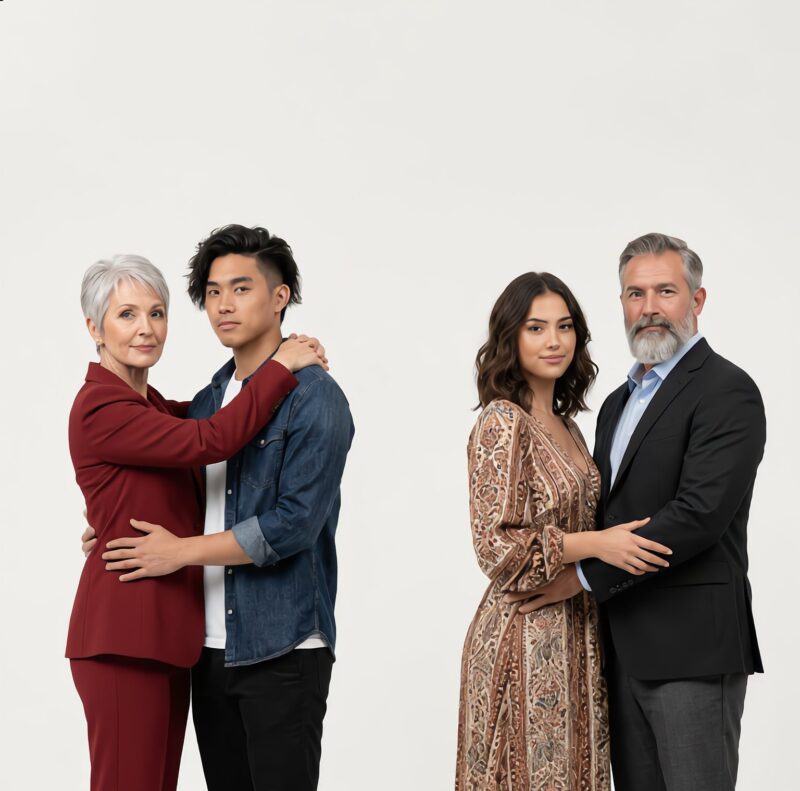
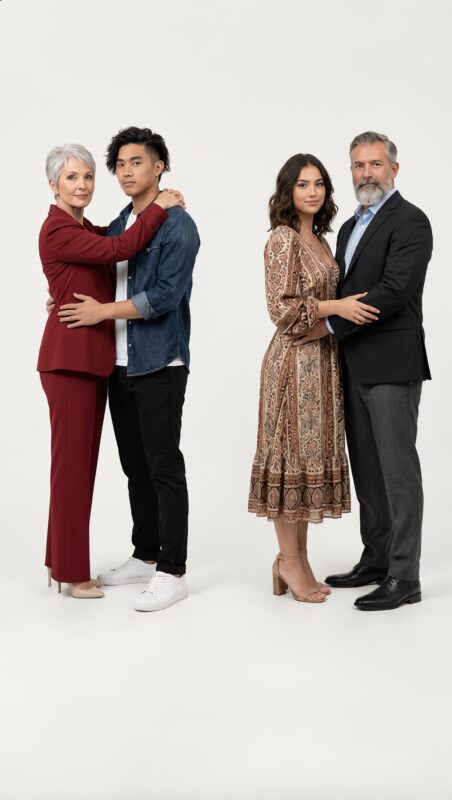
Couple A features a self-assured 50-year-old woman standing beside a confident 22-year-old man.
Couple B shows a poised 50-year-old man with a vibrant 22-year-old woman.
Without debating it in your mind, answer one simple question:
Which relationship feels more likely to succeed?
Don’t search for hidden meanings.
Don’t worry about giving the “right” response.
Trust your first instinct—the answer that appears before logic takes over.
Have you made your decision?
Great.
Because this isn’t really an evaluation of either couple.
It’s a glimpse into the way **you** naturally interpret people and relationships.
If your choice was Couple A
You tend to form your own opinions instead of relying on social expectations. You believe emotional intelligence, mutual respect, and genuine chemistry matter far more than age or public opinion. You’re comfortable embracing ideas that challenge convention and value authenticity above appearances.
If you selected Couple B
You often associate successful relationships with stability, life experience, and emotional balance. You appreciate dependable partnerships and believe that confidence, maturity, and clearly defined roles can help create long-term happiness. Security is something you naturally value.
If your answer was “Both” or “Neither”
You rarely make quick judgments based on appearances alone. Instead, you recognize that healthy relationships depend on communication, trust, shared values, and compatibility—not birthdays. You’re analytical, open-minded, and less influenced by stereotypes than most people.
The real answer?
There isn’t one.
No image can determine who will love longer or build a stronger relationship.
This exercise isn’t about predicting anyone’s future.
It’s about highlighting the assumptions, priorities, and values you unconsciously bring into your own view of love. Sometimes the opinions we form about complete strangers reveal more about our own mindset than about the people standing in front of us.