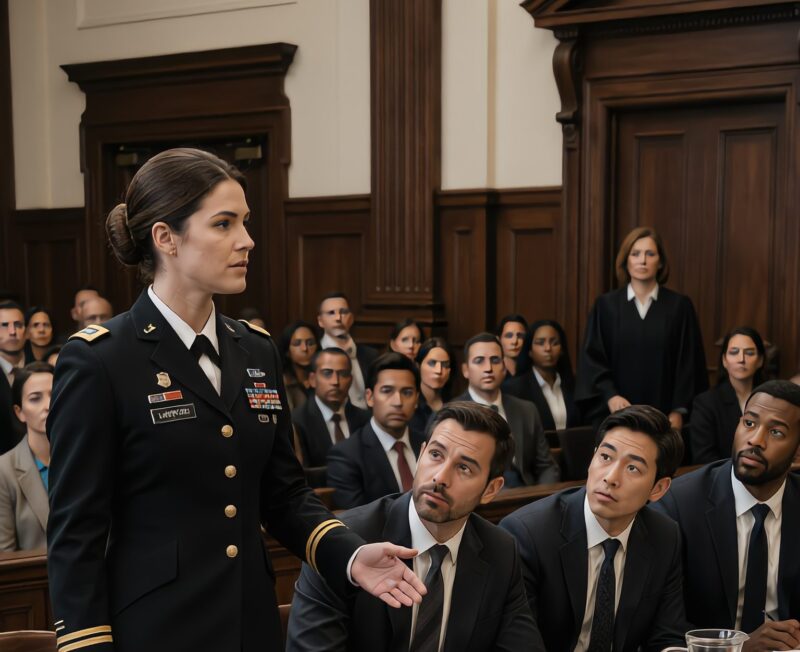
THREE LAWYERS SAT BESIDE MY HUSBAND—HE STILL WASN’T PREPARED FOR WHAT I BROUGHT
The first mistake the Blackwell family made was assuming I had come to divorce court unprepared.
The second was laughing about it where I could hear them.
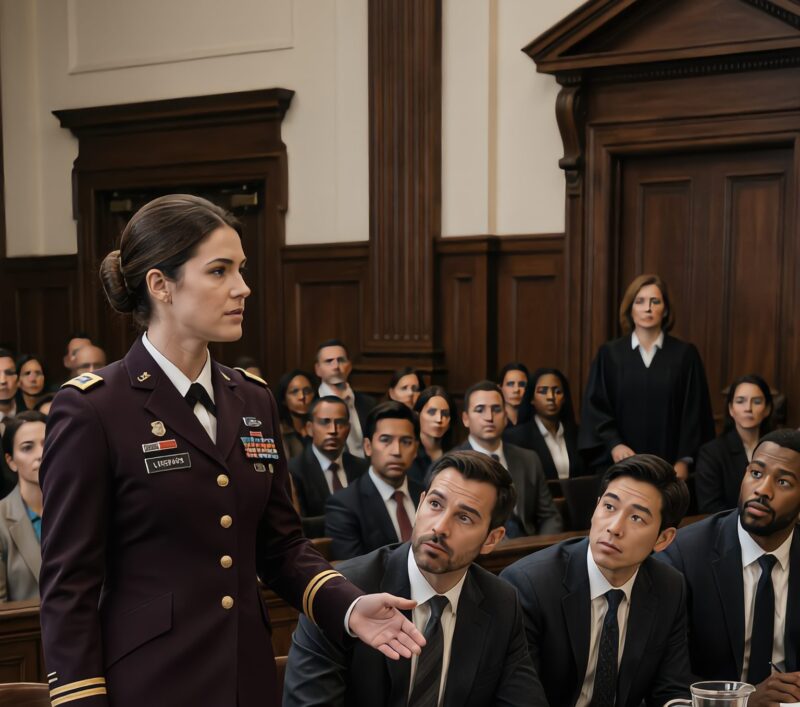
My husband, Nathan, sat across the courtroom surrounded by three attorneys in tailored suits. Behind him were his parents, Grant and Eleanor Blackwell.
Eleanor leaned toward her husband and whispered something.
They both smiled.
I sat alone.
On the table in front of me was an old leather bag.
Judge Mariana Ellis looked over the top of her glasses.
“Mrs. Blackwell, I want to confirm something before we proceed. You are not represented by counsel today?”
“No, Your Honor.”
“You understand that you are entitled to retain an attorney?”
“Yes.”
“And you have chosen to represent yourself?”
“I have.”
A faint chuckle came from behind Nathan.
I recognized Eleanor’s laugh immediately.
Seven years earlier, I had married into one of Chicago’s wealthiest real-estate families.
The Blackwells never allowed me to forget it.
Blackwell Holdings owned commercial buildings, luxury developments, and properties throughout the city. Nathan had grown up surrounded by money and people who rarely told him no.
His parents regarded my marriage to their son as an act of generosity on their part.
To them, I was simply Clara Hale—the woman who organized dinners, remembered birthdays, scheduled appointments, and made sure Nathan appeared wherever he needed to be wearing the correct suit.
Three weeks before court, Nathan had explained exactly how little he thought those years were worth.
He placed the divorce papers in front of me at breakfast.
“My attorneys prepared a reasonable settlement.”
I read the first few pages.
“Reasonable for whom?”
Nathan sighed.
“Clara, you didn’t financially contribute in any meaningful way.”
I looked up.
“Excuse me?”
“I earned the money.”
“And I spent seven years managing everything that allowed you to concentrate on earning it.”
“You managed a household.”
“I coordinated company functions, reviewed contracts when you brought them home, organized your travel, managed your calendar, dealt with donors, protected you from public-relations disasters, and handled half the responsibilities your office should have been doing.”
Nathan smiled as if I were being ridiculous.
“You arranged dinners and appointments.”
That sentence stayed with me.
Now, in court, his lead attorney, Victor Sloan, offered essentially the same argument in more expensive language.
According to Victor, my contribution to the marriage had been “limited and largely domestic.”
Nathan looked pleased.
Then Grant leaned forward from the row behind him.
“You should have found the money for a lawyer, Clara.”
I reached for my leather bag.
“Actually,” I said quietly, “I think I’ll manage.”
I removed a red folder.
Victor continued speaking until I stood.
“Your Honor, I have an objection regarding Petitioner’s Exhibit 12.”
Judge Ellis looked at me.
“State your objection.”
“The sworn financial disclosure submitted by the petitioner appears inconsistent with records produced earlier in discovery.”
Victor was on his feet immediately.
“Your Honor, Mrs. Blackwell has offered no basis for that claim.”
“I’m about to.”
I opened the folder.
Three corporate entities appeared in earlier Blackwell Holdings records.
Yet when Nathan submitted his final disclosure, those entities had vanished.
Not sold.
Not dissolved.
Simply omitted.
I handed the supporting documents to the clerk.
Judge Ellis compared the pages.
Victor’s confident expression began to fade.
“These entities were identified in materials produced earlier,” I said. “None appear in the final disclosure.”
“Corporate restructuring is hardly unusual,” Victor replied.
“Correct.”
I removed another document.
“But unexplained changes to a sworn financial disclosure after discovery are worth examining.”
Victor objected again.
This time, he attacked my ability to interpret the records.
“Mrs. Blackwell is not qualified to offer expert conclusions regarding complex corporate accounting.”
I had been waiting for him to say that.
I looked at the judge.
“Your Honor, I’m not appearing as an expert witness. However, since counsel has raised the question of my legal qualifications, I should clarify the record.”
Nathan frowned.
I continued.
“I am a licensed Illinois attorney.”
The room went quiet.
Eleanor stopped smiling.
Victor stared at me.
Nathan turned completely around in his chair.
“What?”
I ignored him.
“Before my marriage, I served in the U.S. Army Judge Advocate General’s Corps. Part of my work involved cases containing complex financial records and suspected fraudulent transactions.”
Nathan whispered my name.

“Clara…”
Judge Ellis looked at Victor.
“I believe that addresses counsel’s suggestion that Mrs. Blackwell is unfamiliar with legal proceedings. Continue.”
I turned another page.
There was a reason I had chosen the red folder.
Everything important was inside it.
Banking records.
Corporate filings.
Transaction histories.
Earlier disclosure documents.
And one number Nathan’s attorneys apparently hoped would never become important.
$14.2 million.
I handed the comparison to the clerk.
“There is an approximately $14.2 million difference between assets and transactions reflected in these records and what appears in the petitioner’s sworn disclosure.”
Nathan leaned toward Victor.
Victor didn’t look at him.
Judge Ellis studied the documents for several moments.
Then she asked a question that changed the atmosphere in the courtroom.
“Mr. Sloan, where is this money?”
Victor stood.
“We would need an opportunity to review these materials.”
“Your client swore that his disclosure was complete.”
“Yes, Your Honor, but—”
“Then I suggest you begin reviewing them.”
The three attorneys gathered around Nathan.
His parents were no longer whispering.
Grant looked furious.
Eleanor looked frightened.
Then the courtroom doors opened.
Several federal officials entered and approached the clerk.
Documents were delivered.
Quiet conversations followed.
I watched Victor read the first page of one of them.
His face changed.
Blackwell Holdings was already connected to a separate investigation.
I hadn’t initiated it.
Until that morning, I hadn’t even known how far it had progressed.
I had simply followed the numbers in my own divorce case.
Apparently, other people had been following some of the same numbers.
Nathan stared across the courtroom at me.
“You reported us.”
“No.”
“Then why are they here?”
“I don’t know.”
For once, that was a problem his family couldn’t blame on me.
Our divorce hearing didn’t produce a dramatic ending that afternoon.
There was no instant judgment.
No theatrical victory.
Instead, something much worse happened for the Blackwells.
People started asking questions.
The divorce proceedings slowed while financial disclosures were examined.
Transactions received additional scrutiny.
Corporate records were compared.
Assets that had previously received little attention suddenly required explanations.
And Nathan’s army of attorneys could no longer control the direction of events.
Over the following months, the Blackwell family faced consequences extending far beyond our divorce.
I remained outside the company’s problems.
That wasn’t luck.
During my marriage, I had kept my finances separate where appropriate, preserved records, maintained my professional standing, and refused to sign documents I didn’t understand.
Eventually, the legitimate marital assets were properly identified.
The final settlement was substantially different from the insulting proposal Nathan had originally placed on our kitchen table.
But the most important thing I recovered wasn’t money.
It was myself.
Before the divorce became final, Nathan asked me to meet him.
I agreed.
He arrived looking exhausted.
We sat across from each other in a nearly empty café.
For several minutes, he said nothing.
Then:
“Why didn’t you ever tell me?”
I already knew what he meant.
“About JAG?”
“About everything. Your legal career. The financial cases. You made it sound like that part of your life wasn’t important.”
“I never said it wasn’t important.”
“You never talked about it.”
I studied the man I had spent seven years married to.
“Did you ever ask?”
Nathan looked away.
“I knew you’d worked in law.”
“You knew more than that. You just never cared enough to remember.”
“That isn’t fair.”
“Neither was telling a court that I contributed almost nothing to our marriage.”
He rubbed his forehead.
“I thought you were happy staying home.”
“I was.”
That surprised him.
I continued.
“I chose to step away from my career because I believed supporting our family mattered. I wasn’t ashamed of that decision.”
“Then why—”
“Because you confused my choice with inability.”
Nathan fell silent.
“You saw me stop practicing law and decided I couldn’t practice law. You saw me manage our home and decided that was all I was capable of doing.”
“I didn’t know.”
“You didn’t want to know.”
His expression tightened.
Then came the sentence I would remember longer than anything else.
“You let us underestimate you.”
I shook my head.
“No, Nathan. You underestimated me all by yourselves.”
There was nothing more to discuss.
A year later, I unlocked the door to an office with my own name on it.
HALE LEGAL & FINANCIAL STRATEGY GROUP
My practice focused on clients facing difficult divorces involving complicated assets, financial pressure, and unequal access to information.
On my desk sat two things.
A photograph from my years in military service.
And the red folder.
I kept the photograph because it reminded me of who I had been.
I kept the folder because it reminded me of what I had learned.
For seven years, I had gradually lowered my voice.
I had stopped correcting assumptions.
I had made myself easier to dismiss because challenging the Blackwells always created conflict.
Eventually, they mistook my silence for proof that their assumptions were true.
That was their mistake.
They believed expensive lawyers guaranteed control.
They believed wealth made their version of events more credible.
And they believed a woman sitting alone at the opposite table had already lost.
But power isn’t always the loudest voice in a courtroom.
It isn’t always the person with the largest legal team.
Sometimes power is preparation.
Sometimes it’s knowing exactly which question to ask.
And sometimes it’s an old leather bag containing one red folder that everyone else wishes had stayed closed.