**After My Divorce, I Finally Used My Late Father’s Old Bank Card — And What Happened Changed Everything**
Not long after my divorce, when I felt completely lost and had nowhere left to turn, I walked into a small neighborhood bank with a worn debit card my father had given me years ago. The moment the teller scanned it, her expression shifted instantly.
“Ma’am… I’ll need to call the manager,” she said quietly.
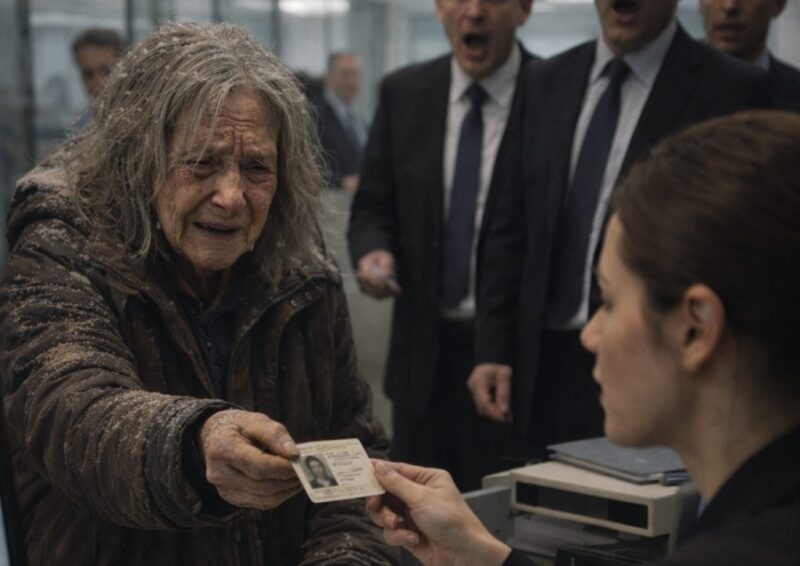
Just two days earlier, my divorce had been finalized. Now I was standing outside Maple Creek Community Bank with my life packed into the back of my car. In my hand was the only thing my father had ever left me: an old bank card sealed in a faded yellow envelope.
The address on the envelope was barely readable. My father had passed away a decade earlier, and somewhere between grief, several moves, and trying to salvage a collapsing marriage, I had shoved the envelope into a drawer and forgotten about it.
Now it felt like my last remaining option.
Inside the bank, a young teller named Hannah Brooks greeted me kindly.
“How can I help you today?”
“I just want to see what’s on this account,” I said, sliding the card toward her.
She scanned it.
The smile disappeared from her face.
She tried again, then a third time, frowning slightly as she studied the screen.
“Ma’am… please wait a moment,” she said before standing up quickly.
She walked to a glass office at the back of the lobby and spoke quietly with a tall man in a suit. From across the room, I could see his expression change—first curious, then startled, and finally tense.
A heavy feeling settled in my stomach.
People nearby began to notice something unusual was happening. They weren’t openly staring, but their attention had clearly shifted.
A moment later, the man approached me.
“Ms. Carter?” he asked calmly. “Would you mind coming with me for a moment?”
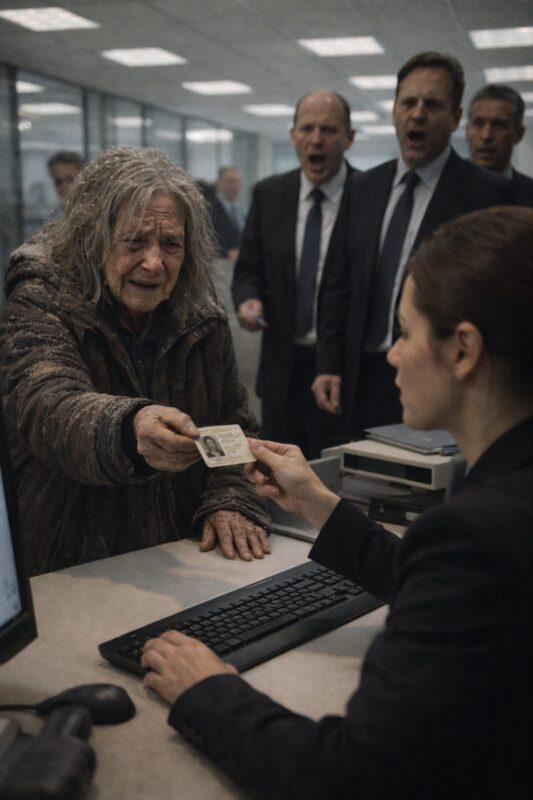
Inside his office, he shut the door and spoke in a lower voice.
“I’ve reviewed the card you presented,” he said carefully. “This account requires a special level of verification. It’s not a typical account.”
“What exactly does that mean?” I asked.
He rotated his computer screen so I could see. Most of the information was locked, but one section remained visible.
**Account Holders:**
Rebecca Carter
Michael Carter
My name—and my father’s.
Underneath it, in red text, were the words:
**Security Level: Classified — Tier 3**
My breath caught.
“Classified?” I repeated.
The manager exhaled slowly. “Ms. Carter… whatever your father arranged here goes far beyond a normal savings account.”
“My name is Daniel Whitmore,” he continued. “This account is tied to a restricted financial system. Before I proceed, I need to confirm your identity.”
“What kind of system?” I asked quietly.
“There are only two likely explanations,” he said. “Government-secured funds… or protected witness accounts.”
The idea sounded absurd. My father had spent his life as a quiet auto mechanic who drank strong coffee every morning and listened to jazz records in the garage. Nothing about his life suggested something like this.
Mr. Whitmore opened another secure system and placed his hand on a biometric scanner.
“Please enter the PIN.”
“I don’t know it.”
“Check the envelope,” he suggested.
My hands shook as I opened it. A small folded note slipped out. Four digits were written on it.
I entered them.
The screen unlocked.
Both of us stared at the monitor.
The balance alone was overwhelming—but what truly stunned us was the message stored in the file.
A scanned handwritten note appeared on the screen.
*If you’re reading this, Becca, it means you need protection more than money.*
*Everything I hid was meant for you.*
Mr. Whitmore leaned back in his chair. “Your father prepared this carefully.”
Tears welled in my eyes. Memories surfaced instantly—him encouraging me to learn self-defense, growing quiet whenever I mentioned my ex-husband’s temper, gripping my shoulder and reminding me, “Never let anyone control your life.”
Another document opened automatically. It was a legal directive signed and notarized years earlier.
**Emergency Asset Transfer**
*If my daughter Rebecca Carter ever faces coercion, threats, or abuse, she is granted immediate control of all protected assets.*
*No spouse may access them.*
*No court may confiscate them.*
I covered my mouth in disbelief.
My father had been protecting me long before I even realized I might need protection.
“You should contact an attorney,” Mr. Whitmore said gently.
“I finalized my divorce yesterday,” I told him.
He nodded slightly. “Then the timing worked out exactly as it should.”
Later, I sat quietly in the lobby with a thick folder resting on my lap. Memories flooded my mind—my father teaching me how to ride a bicycle, warning me that charm can sometimes hide cruelty, handing me that envelope and telling me to keep it safe for the future.
He had known.
And he had quietly built a path that would someday help me escape.
When I finally checked my phone, several missed calls from my ex-husband, Evan Carter, appeared on the screen. One message stood out.
*We need to talk. Something’s wrong with my accounts.*
But nothing was wrong.
While Evan had been secretly shifting money around, convinced I would never notice, my father had already ensured that I would never be left helpless.
I read his message again.
*Use this not to harm anyone—but to protect yourself.*
For the first time in years, I felt something I hadn’t felt in a long time.
Security.
Not because of the wealth—but because my father had truly understood me and had left me a foundation strong enough to stand on when everything else fell apart.