“Apologize publicly, Claire, and your bakery problems disappear.”
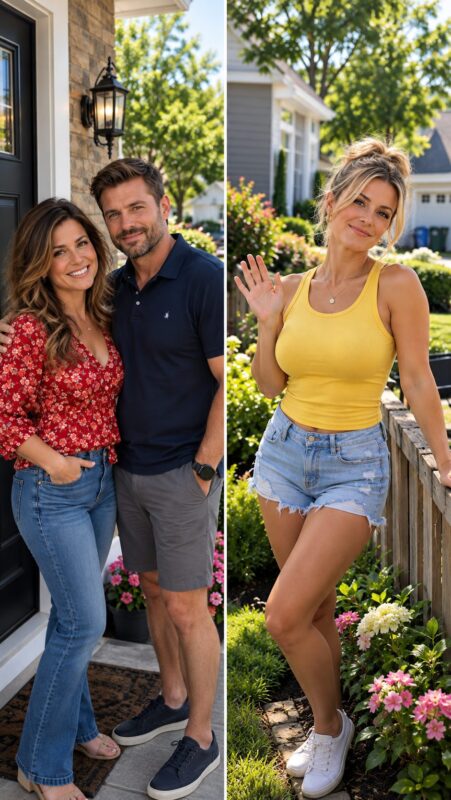
Vanessa stood on my front porch wearing the same pleasant smile she’d worn months earlier when I’d welcomed her to the neighborhood with an apple pie.
Now she was using my livelihood as leverage.
“Let me understand this,” I said. “You reported my business, and now you want something in exchange?”
“I want you to correct what you did.”
“What exactly did I do?”
“You made everyone think I was trying to steal Irvin.”
I stared at her.
“You told me you were going to steal Irvin.”
Her smile disappeared.
That was the absurd part.
None of this had started with suspicion.
Vanessa had confessed her intentions directly to me.
She moved next door after her divorce, and initially, I liked her.
She seemed lonely.
I helped unpack boxes, brought food over, and invited her into our home.
Then she met my husband.
Irvin and I had been married seventeen years.
He was friendly, patient, and incapable of watching someone struggle with a simple problem without offering assistance.
Vanessa quickly discovered that.
One afternoon, she couldn’t open a jar.
Irvin helped.
Two days later, she needed a smoke-detector battery replaced.
Then a cabinet door wouldn’t close properly.
Then furniture needed moving.
Then a lightbulb became an emergency.
Every problem ended the same way.
Could Irvin come over?
At first, he saw a newly divorced neighbor who needed occasional help.
I saw the way she looked at him.
The problems always seemed to appear when Irvin was home.
She laughed differently around him.
She stood too close.
If I joined them, Vanessa’s warmth cooled immediately.
One evening, I finally said what had become obvious.
“She isn’t calling because she needs a handyman.”
Irvin looked confused.
“What are you saying?”
“She likes you.”
“Vanessa?”
“No, the mailman. Yes, Vanessa.”
He laughed, then noticed I wasn’t.
“Claire, I’m not interested in her.”
“I know. I’m telling you she’s interested in you.”
That distinction mattered.
I trusted my husband.
I didn’t trust my neighbor.
Irvin promised to stop being so available.
Before he had the opportunity, Vanessa came over while he was at work.
I made coffee because, foolishly, I still thought we might clear the air.
She sat across from me at the kitchen table.
“You seem protective of Irvin.”
“I’m his wife.”
“I know.”
Something about the way she said it made me put down my cup.
Then Vanessa leaned back.
“I think you should start emotionally preparing yourself.”
“For what?”
“For your marriage ending.”
I actually thought I’d misunderstood her.

“Excuse me?”
“Irvin needs someone different.”
“And you’ve decided that’s you?”
She smiled.
“Eventually.”
The confidence was almost impressive.
“You came into my house to announce this?”
“I prefer honesty between women.”
I stood, took her untouched coffee, and poured it down the sink.
“Here’s some honesty. Get out.”
When Irvin came home, I told him everything.
His expression changed completely.
“She said that?”
“Almost casually.”
He took out his phone.
From that moment, Vanessa stopped receiving help.
He ignored requests.
Declined invitations.
And made it clear he wasn’t available.
Vanessa didn’t take rejection well.
A few days later, she organized a neighborhood barbecue.
Irvin was invited.
I wasn’t.
He wanted to throw the invitation away.
Instead, I said, “Go.”
“Why would I do that?”
“Trust me.”
Half an hour after the barbecue started, I arrived carrying a neatly wrapped box.
Vanessa’s smile disappeared when she saw me.
“Claire. I wasn’t expecting you.”
“I know.”
I handed her the package.
“A housewarming gift. Slightly late.”
Several neighbors watched as she opened it.
Inside was a basic tool set.
Batteries.
Lightbulbs.
A jar-opening device.
A beginner’s home-repair guide.
And contact information for several local professionals.
Vanessa looked up.
“What is this supposed to mean?”
“It means congratulations. You’re officially equipped to survive without borrowing Irvin.”
Someone nearby laughed before disguising it as a cough.
Vanessa’s cheeks reddened.
“You’re imagining things.”
“Am I?”
She turned toward the neighbors.
“I made one joke to Claire and she became obsessed.”
That was when I repeated her “joke.”
Exactly.
Nobody laughed.
Irvin walked over.
“Vanessa, don’t call me anymore unless it’s a genuine neighborhood emergency.”
Her expression hardened.
We went home.
For several days, there was silence.
Then a notice arrived regarding my bakery.
I’d operated a home baking business for six years.
What started with birthday cakes for friends had grown into weddings, corporate events, holiday orders, and regular customers.
Our converted garage had become my workspace.
Commercial ovens.
Storage.
Prep surfaces.
Everything I needed.
Except one thing.
Final approval for commercial use.
We’d completed the conversion years earlier and never finished that last administrative step.
I’d kept telling myself I’d handle it.
I didn’t.
Vanessa found the weakness I’d left exposed.
The city notice required me to stop operating from the garage until everything was brought into compliance.
Suddenly, I had nowhere to complete upcoming orders.
That was when Vanessa appeared on my porch with her deal.
Publicly call yourself a jealous liar.
Apologize.
And, according to her, the pressure would stop.
I refused.
Soon screenshots began circulating.
They showed conversations between Vanessa and Irvin.
CAN YOU COME OVER? I REALLY NEED YOU.
BE THERE IN TEN.
YOU ALWAYS SAVE ME.
ANYTIME.
Presented that way, they suggested an intimacy that hadn’t existed.
I didn’t question whether Irvin had cheated.
I knew he hadn’t.
But I did confront him about something else.
“You let this go on too long.”
He didn’t argue.
“I did.”
“You kept thinking being nice was neutral.”
“I know.”
“It wasn’t.”
“No.”
His willingness to admit that mattered more than an excuse would have.
Then one of my wedding customers canceled.
She’d heard there were “legal issues” with my business.
I sat in the garage surrounded by equipment I couldn’t use and finally understood that embarrassment wasn’t the real danger anymore.
I could lose what I’d spent six years building.
That night, Irvin opened his phone.
“Let’s compare everything.”
We placed Vanessa’s screenshots beside the original conversations.
The manipulation was obvious.
She hadn’t fabricated his words.
She’d amputated them.
Vanessa:
I WISH I COULD FIND A MAN LIKE YOU.
The screenshot ended there.
The original continued.
Irvin:
I’M SURE YOU WILL. I’VE ALREADY FOUND THE PERSON I WANT TO SPEND MY LIFE WITH.
Another:
YOU’RE THE ONLY GUY I CAN COUNT ON.
Missing underneath was Irvin’s answer:
PLEASE DON’T TALK TO ME THAT WAY. CLAIRE IS MY WIFE.
Again and again, Vanessa had removed anything that made Irvin’s position unmistakable.
We had evidence.
Still, I couldn’t celebrate.
“She isn’t lying about the garage,” I said.
Irvin nodded.
“No.”
I hated that answer because it was true.
Then something clicked.
Vanessa could manipulate messages.
She could gossip.
She could embarrass me.
But her strongest leverage existed only because I was desperate to conceal my own mistake.
So I stopped concealing it.
The next morning, I contacted every customer whose order might be affected.
Some received refunds.
Others agreed to revised arrangements.
I rented hours in a licensed commercial kitchen across town.
Then I filed the necessary paperwork and began bringing the garage into full compliance.
It cost money.
It cost sleep.
It bruised my pride.
But within days, Vanessa’s threat had become worthless.
She couldn’t expose something I was already openly correcting.
Then came the HOA meeting.
Vanessa had demanded it.
She apparently expected an execution.
Instead, she got a confession.
She spoke first.
She described herself as a vulnerable divorced woman who had been targeted by a suspicious neighbor.
According to Vanessa, my jealousy had caused the entire conflict.
Then she brought up the bakery.
Finally, she suggested that Irvin’s private messages told a different story from his public behavior.
When she finished, I stood.
“Let’s start with the part where Vanessa is correct.”
Heads turned.
Even Vanessa looked surprised.
“My garage wasn’t properly approved for commercial food production.”
Whispers moved through the room.
“I should have fixed that years ago. I didn’t.”
Vanessa smiled.
“So—”
I raised my hand.
“I’m not finished.”
She stopped.
“I’ve already suspended operations there. I’m currently working from a licensed commercial kitchen, and the garage is going through the proper approval process.”
I looked directly at her.
“So if your plan was to expose that mistake, you’re late.”
Vanessa’s smile vanished.
Then Irvin stood.
“My turn.”
He didn’t pretend he’d handled everything perfectly.
“I should have established clear boundaries with Vanessa much earlier.”
She immediately said, “Thank you.”
Irvin looked at her.
“That wasn’t an invitation to agree.”
Several people shifted in their chairs.
“I mistook repeated attention for harmless friendliness. That was careless. But I never encouraged a relationship with Vanessa.”
He displayed the messages.
Not screenshots.
Complete conversations.
The room saw what Vanessa had written.
Then what Irvin had answered.
Then exactly where she’d cropped each exchange.
Nobody needed an explanation.
Vanessa stood.
“This doesn’t change what Claire did to me at the barbecue.”
I nodded.
“I embarrassed you.”
“Finally.”
“I also told the truth.”
“You owe me an apology.”
“You came to my home and announced that you intended to end my marriage. Then you asked for this conflict to become public.”
I gestured toward the screen.
“Now it’s public.”
Her face tightened.
“I can keep filing complaints about your business.”
“You can file whatever legitimate complaint you want.”
That confused her.
“My garage isn’t operating until it passes inspection.”
For the first time since she’d moved next door, Vanessa had nothing to hold over me.
The HOA president glanced down at his agenda.
“All right. If nobody has anything further, we’re moving to landscaping.”
That was it.
No cheering.
No dramatic victory.
Just landscaping.
Vanessa packed her things and left before the meeting ended.
Months later, an inspector stood inside my garage with a clipboard.
I followed him around trying not to look nervous.
He checked the ventilation.
Equipment.
Storage.
Surfaces.
Paperwork.
Then he signed the final page.
Approved.
The following morning, my alarm went off before five.
I walked into the garage in the dark and switched on the lights.
Then the ovens.
For months, I’d imagined that moment.
The soft mechanical hum sounded better than music.
Irvin appeared carrying two coffees.
“Everything legal?”
I held up the approval.
“Even the boring parts.”
He smiled.
“Those are apparently important.”
We’d both learned uncomfortable lessons.
Irvin learned that boundaries aren’t useful if they’re invisible. Knowing privately that you would never betray your spouse isn’t always enough. Sometimes another person needs to hear a clear no.
My lesson was harder.
I had spent weeks believing Vanessa controlled me because she was willing to lie.
But lies weren’t her greatest advantage.
My secrecy was.
The bakery violation was true.
I knew it.
She knew I was ashamed of it.
And that shame gave her leverage.
The moment I said, Yes, I made that mistake—and then corrected it, her power disappeared.
Seventeen years into my marriage, another woman sat in my kitchen and confidently predicted she would take my husband.
She didn’t.
She nearly damaged my business instead.
But in the process, she accidentally taught me the rule I should have understood years earlier:
A lie can be exposed.
A mistake can be repaired.
But the truth you’re terrified to admit is the easiest truth for someone else to use against you.