At 9:06 on my mother’s sixty-eighth birthday, she sent me a text.
THE HOUSE IS FREEZING. GET SOMEONE HERE.
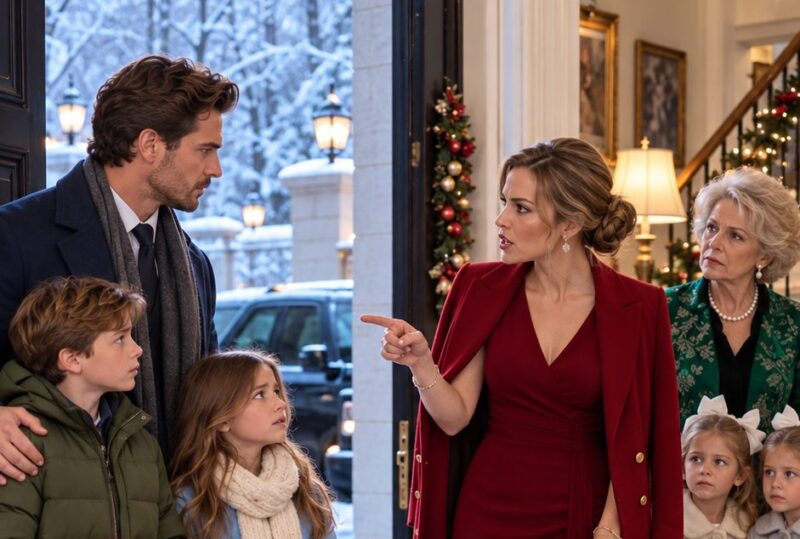
Three hours earlier, she’d suggested my children spend her birthday dinner sitting in my truck.
The irony was impressive.
I read the message twice, showed it to my twelve-year-old son Owen, and started laughing.
“What?” he asked.
“Grandma’s furnace died.”
Owen looked toward his nine-year-old sister Lucy, who was happily destroying a stack of pancakes at the diner we’d escaped to.
“Are you going to fix it?”
Normally, yes.
That was the problem.
For years, my family had treated me as a combination of handyman, emergency dispatcher, contractor, and ATM.
My name is Rupert.
I work in high-altitude structural maintenance. My actual job involves inspecting and repairing structures most people prefer viewing from the ground.
But according to my family, my qualifications included everything.
Roof leak?
Rupert.
Broken garage door?
Rupert.
Plumbing problem?
Call Rupert.
Need a contractor?
Rupert knows one.
Can’t afford the repair?
Rupert will probably handle that too.
I’d spent years believing this was what dependable sons and brothers did.
Then my children were asked to eat outside.
Mom’s birthday dinner had started badly.
Lucy had spent two evenings making her grandmother a card.
She’d drawn Grandma in the middle, surrounded by all four grandchildren.
When we arrived, Lucy immediately handed Mom the envelope.
Mom smiled.
“Thank you, sweetheart.”
For approximately three minutes, everything seemed normal.
Then my sister Brooke pulled me aside.
“We need to discuss the kids.”
Whenever Brooke said “we need to discuss” something, it usually meant she’d already made a decision and wanted me to cooperate with it.
“What about them?”
“The twins would be more comfortable if Owen and Lucy weren’t at dinner.”
I thought I’d misheard her.
“They’re already here.”
“I know.”
“So where exactly do you want them?”
Brooke glanced toward the driveway.
“They could wait in your truck.”
I stared at her.
Outside, it was thirty degrees.
“You’re joking.”
“Don’t make it weird.”
“You just suggested putting two children in a parked vehicle while we eat dinner.”
“They can turn the heat on.”
“No.”
Mom overheard us.
“What happened?”
Brooke sighed dramatically.
“The twins are uncomfortable around Rupert’s kids.”
Owen was standing close enough to hear.
His face fell.
“What did I do?”
Brooke explained that he’d been “too intense” earlier.
His offense?
He had walked over to one of his cousins and said hello.
Apparently, this qualified as social aggression.
Then there was Lucy.
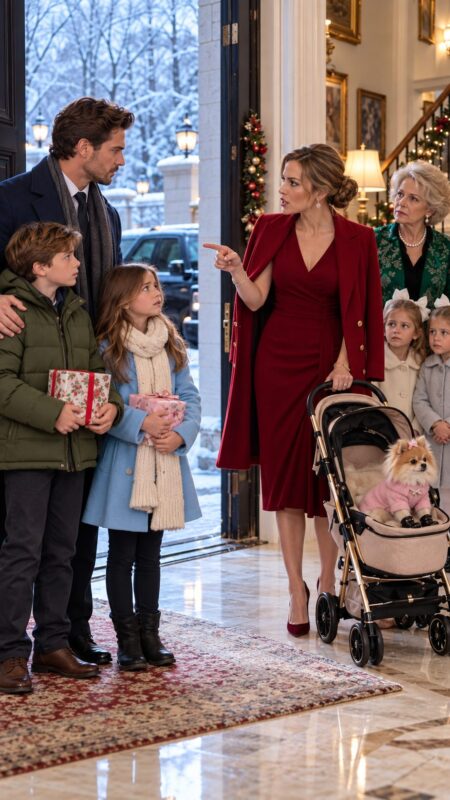
She had asked why Brooke pushed her Pomeranian around in a luxury stroller.
Personally, I thought it was an excellent question.
Brooke disagreed.
“Lucy mocks things she doesn’t understand.”
Lucy looked confused.
“I just asked why Biscuit can’t walk.”
I had to turn away so Brooke wouldn’t see me smiling.
Mom didn’t help.
“Maybe everyone just needs some space.”
“Great,” I said. “We’ll go.”
Mom sighed.
“Rupert, don’t turn this into a scene.”
“I’m not.”
I picked up Lucy’s backpack.
“You’re leaving my birthday?”
“Yes.”
“Because the children can’t sit through one dinner separately?”
“Separately means another table. You’re talking about a parking spot.”
Mom looked annoyed.
“It’s only for a couple of hours.”
I looked at Owen.
He was pretending the conversation didn’t hurt.
Then I looked at Lucy, still holding the card she’d made.
Decision made.
“Coats on.”
We left.
The diner was better anyway.
Lucy ordered fries.
Owen ordered pancakes despite it being dinner.
Nobody told them they were making anyone uncomfortable.
Then Mom’s furnace stopped.
I opened her text again.
Owen waited.
I typed:
YOU SHOULD CALL AN HVAC COMPANY.
Her response appeared almost immediately.
CALL YOUR GUY.
I had several “guys.”
Knowing people in construction meant I could usually find someone quickly.
That convenience had slowly become an obligation.
There was another reason Mom expected me to handle the heating.
I was paying for the gas.
Three years earlier, Mom had damaged her credit after co-signing a business loan for Brooke.
Brooke’s business collapsed.
The loan didn’t.
To help Mom stabilize things, I put the gas service in my name.
“For a few months,” she’d promised.
Thirty-six months later, the bill still came out of my account.
I sent another message.
MY GUY IS UNAVAILABLE.
Mom called.
“What does that mean?”
“It means call someone.”
“You always handle this.”
“Correct.”
“So handle it.”
“No.”
There was silence.
Then Brooke appeared on the line.
“You don’t understand how important tomorrow is.”
I knew exactly what she meant.
Declan Vale.
Brooke had spent years trying to become a lifestyle personality online.
She had redesigned rooms for photographs, bought clothes she couldn’t comfortably afford, and spoken constantly about “building her brand.”
Declan had a large following and enough influence that Brooke had convinced herself one successful visit could change everything.
He was coming the next day.
Now the house had no heat.
“You have to get somebody here tonight,” Brooke said.
“I don’t have to do anything.”
“Declan cannot walk into an icebox.”
“Then postpone.”
“Absolutely not.”
Mom grabbed the phone again.
“Rupert, this is my home. I’m entitled to have heat.”
I leaned back in the diner booth.
That sentence solved something for me.
“You’re completely right.”
Mom paused.
“I am?”
“Absolutely. Your home should have heat.”
“Yes.”
“And because it’s your home, you should probably start paying its gas bill.”
Another pause.
Longer this time.
“What?”
“I’m transferring the account back to you Monday.”
Mom’s voice hardened.
“You’re doing this because you’re angry.”
“I’m doing it because I’ve been paying expenses that were never mine.”
“So this is punishment?”
“No.”
I looked at my children.
“This is me realizing I shouldn’t finance a house where my kids can be told to wait outside.”
Mom accused me of keeping score.
Maybe I had been.
The difference was that I’d finally looked at the total.
The following morning, an HVAC technician inspected the furnace.
The control board had failed.
A replacement couldn’t arrive until Monday.
Brooke immediately bought electric heaters.
One.
Then three.
Then six.
Apparently, her plan was to defeat winter through extension cords.
Then Mom called me.
“Your sister wants to bring the patio heaters inside.”
I stopped what I was doing.
“The propane heaters?”
“Yes.”
“Tell her not to touch them.”
“She isn’t listening.”
That was different.
I drove over.
Brooke was wrestling one toward the door when I arrived.
“Put it back.”
She brightened.
“You came!”
“To prevent you from doing something dangerous.”
“The house is forty-something degrees!”
“Then wear a coat.”
Mom already was.
She had put a winter coat over a formal dress.
Brooke had found her own solution.
Cream blazer on top.
Thermal leggings underneath.
“You look comfortable,” I said.
“Say one more word.”
I wisely stopped.
Declan arrived that afternoon.
Brooke immediately transformed.
Suddenly she was smiling as if hosting people in near-refrigeration temperatures had always been intentional.
She talked about home design.
Authenticity.
Personal branding.
Creating meaningful spaces.
Declan listened politely.
Then he noticed Lucy’s handmade card on the mantel.
Mom had placed it there.
He picked it up.
“This is nice.”
“My niece made it,” Brooke said quickly.
“Is she here?”
Nobody answered.
Declan looked at me.
I wasn’t sure why.
Maybe because I was the only person not pretending.
“My daughter made it.”
“Where is she?”
“At home.”
“Didn’t she come to the birthday?”
“She did.”
Brooke interrupted.
“There was a little family situation.”
I looked at her.
Declan noticed.
“What kind?”
“My kids were told they’d be more welcome waiting in my truck during dinner.”
His eyebrows rose.
“In this weather?”
Brooke immediately said, “That is not an accurate description.”
“It is literally what happened.”
“We were respecting the twins’ boundaries.”
Declan looked around the room.
Then toward the windows.
“Apparently boundaries are better insulated than this house.”
I liked him immediately.
Brooke did not.
A few minutes later, every space heater was running.
Someone started the electric kettle.
The lights flickered once.
Brooke stared at the ceiling.
“Don’t.”
They flickered again.
Then the house went dark.
For several seconds, nobody spoke.
From somewhere near the dining room, Mom said:
“Well, this is lovely.”
I found the electrical panel using my phone flashlight.
Declan followed.
While I worked, he asked:
“So what do you do?”
“Structural maintenance.”
“Residential?”
I laughed.
“No. High-access work.”
“What does that mean?”
“Buildings. Towers. Wind turbines. Places where dropping your screwdriver creates paperwork.”
That got his attention.
He started asking questions.
How high had I worked?
How did inspections happen?
What kind of safety equipment did we use?
Had I ever worked during extreme weather?
By the time the power was restored, Brooke was standing in the doorway looking increasingly unhappy.
Declan wasn’t interviewing her anymore.
He was interviewing me.
Before leaving, he handed me his card.
“I’m putting together a documentary project about overlooked infrastructure jobs.”
I glanced at it.
“You want me?”
“I want to talk.”
Brooke’s face said everything.
The front door closed.
She turned toward me.
“You destroyed this for me.”
“I reset a breaker.”
“You embarrassed me in front of him.”
“He asked where Lucy was.”
“You didn’t have to tell him everything.”
“I told him one sentence.”
“You always do this!”
“Do what?”
“Walk into a room and somehow make people respect you without even trying!”
That stopped me.
Brooke’s face crumpled.
Then she sat down.
“I try so hard.”
Her voice was barely audible.
For once, there was no performance.
No branding language.
No dramatic outrage.
Just my younger sister crying in a freezing living room.
“I’ve spent years trying to make one thing work,” she said. “Just one. And I’m forty-one now.”
“So?”
“So I can’t suddenly start over.”
“Why?”
“Because people my age aren’t supposed to be beginners.”
There it was.
The real problem.
Brooke wasn’t afraid of work.
She was afraid of being seen learning.
“You don’t need another shortcut,” I said.
She wiped her face.
“What do I need?”
“Something real.”
“Starting where?”
“Wherever people start.”
“At the bottom.”
I shook my head.
“You keep calling it the bottom because that makes you feel ashamed.”
“What would you call it?”
“Day one.”
She looked at me for a long time.
On Monday, I transferred Mom’s gas account back to her.
No argument.
No delay.
For the first time in three years, the responsibility belonged to the person who owned the house.
Then Mom surprised me.
She came over that evening.
Owen and Lucy were at the kitchen table.
She sat across from them.
“I owe both of you an apology.”
Neither child spoke.
“I should never have agreed to send you outside. It was wrong.”
No excuses.
No “but.”
No blaming Brooke.
Just an apology.
Lucy disappeared upstairs and returned holding the birthday card.
“I didn’t know if you still wanted it.”
Mom hugged her.
“I do.”
Three weeks later, Brooke called.
“I got offered a job.”
“What job?”
“Entry-level logistics.”
She sounded almost embarrassed.
“Salary?”
“Fifty-six thousand.”
“Benefits?”
“Yes.”
“Take it.”
“I’d be starting from nothing.”
“No. You’d be starting.”
She accepted.
The first few months were rough.
She wasn’t special there.
Nobody cared about her follower count.
She had to ask questions.
Make mistakes.
Learn systems.
She hated it.
Then something unexpected happened.
She became good at it.
A year later, she was promoted.
At Mom’s sixty-ninth birthday, the temperature dropped even lower than the year before.
We arrived early.
The house was warm.
Mom was paying for that warmth herself.
Owen had barely entered when Brooke walked over with a serious expression.
“The twins have made a request.”
I immediately tensed.
“They want separate seating.”
“Brooke.”
She raised one hand.
“Don’t worry. I handled it.”
“How?”
“I told them there’s plenty of room in my minivan.”
Her twins overheard.
“Mom!”
Brooke started laughing.
“I’m kidding. Everyone sits inside.”
Owen laughed too.
Lucy took the seat beside Grandma.
Nobody was sent anywhere.
That night, while clearing plates, I realized something.
I had spent years thinking family loyalty meant becoming indispensable.
If Mom needed money, I paid.
If Brooke had a crisis, I solved it.
If something broke, I found the person who could repair it.
Being needed made me feel like I was doing something right.
But constantly rescuing people had created a strange arrangement.
They had stopped carrying things because they knew I would.
Setting boundaries didn’t destroy that family.
It forced all of us to grow.
Mom became responsible for her house.
Brooke became responsible for her future.
And I became responsible for protecting the two people who should always have come first.
Owen and Lucy.
I would still help my family.
I just wouldn’t confuse helping with carrying them anymore.
And if anyone ever suggested my children spend a family dinner in the parking lot again, they were welcome to join them.
Preferably in their own car.