Elliot Grayson had built his life on certainty. Deals closed when he wanted them to. Problems disappeared when he paid enough. Control was his greatest strength.
Until the day it failed him.
Rain traced quiet lines down the glass walls of his home, blurring the world outside. Inside, silence pressed in from every corner. No laughter. No movement. Only the soft, uneven sound of a child breathing.
In a small upstairs room, his daughter Lila lay still beneath a light blanket. Six years old—and already fighting a battle she didn’t understand. Each breath seemed fragile, like it might not return.
Elliot sat beside her, his hand resting near hers, afraid to move—as if even the smallest shift might break something.
The doctors had been clear.
“There’s nothing more we can do.”
And then the words he couldn’t escape:
“Three months… at most.”
He had responded the only way he knew how—by pushing harder. He called specialists from everywhere. He spent endlessly. He refused to accept limits.
But this time, effort changed nothing.
Money had always given him power.
Now it only showed him its limits.
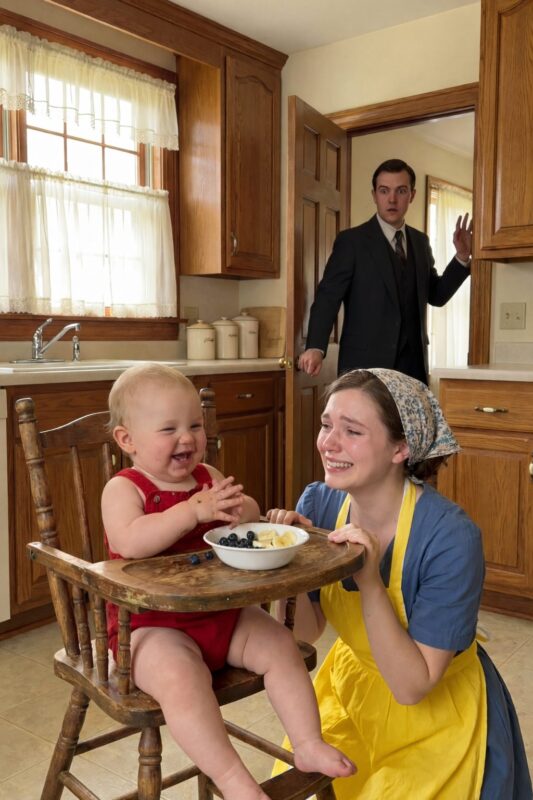
Marina watched all of this from the edges of the house. Quiet. Careful. Invisible, as she had learned to be.
But she recognized that look in Elliot’s eyes.
She had seen it before.
Years ago, her younger brother had been the one lying in bed, growing weaker day by day. Doctors had offered uncertainty, not answers. Hope had felt like something fragile and temporary.
Until someone pointed them toward a small place far from the city—a modest clinic hidden in the mountains.
The doctor there hadn’t promised anything extraordinary.
He had simply listened.
And somehow, that had been enough to begin.
Her brother lived.
Marina had never forgotten.
But she also remembered one thing clearly: that doctor refused people who believed money could replace care.
Still, she couldn’t stay silent now.
“Sir… there may be another option.”
Elliot barely reacted. He had heard too many suggestions already, too many empty leads. But when Lila stopped responding altogether—when even her small reactions disappeared—his certainty finally cracked.
That night, he found Marina standing alone in the kitchen.
“The doctor you mentioned… does he exist?”
“Yes,” she said.
For the first time in years, Elliot felt something unfamiliar.
Not doubt.
Not fear.
Helplessness.
“Take me to him.”
They left before sunrise. The city slowly gave way to winding roads and quiet hills. The noise of Elliot’s world faded behind them, replaced by stillness.
At the end of a narrow road stood a simple cabin.
The door opened before they knocked.
An older man stood there, studying them without expression.
“You’re looking for something you can’t buy,” he said calmly.
Marina stepped forward. “We’re looking for a chance.”
After a long pause, he let them enter.
The examination took time—real time. No rush. No shortcuts. Just attention.
Finally, the doctor spoke.
“She’s very ill… but not without hope.”
Elliot immediately reached for what had always worked.
“I’ll cover any cost—”
The doctor stopped him with a glance.
“That’s not how this works.”
Elliot frowned, confused.
“Then what is?”
The answer came quietly:
“You.”
Everything that followed was different from what Elliot expected.
No dramatic procedures. No instant solutions.
Just something far more difficult.
Presence.
Elliot stayed.
He stopped answering calls. He stopped thinking in terms of control and outcomes. Instead, he began to notice the smallest things—his daughter’s expressions, her breathing, the moments when she seemed aware.
He read to her. Sat with her. Waited.
And slowly… she responded.
Not all at once. Not dramatically.
But enough.
One day, her eyes opened a little wider than before.
“Are you staying?” she whispered.
Elliot didn’t hesitate.
“Yes.”
Time passed. Real progress replaced false urgency. Lila grew stronger, bit by bit.
Then one afternoon, she looked at him and said something simple:
“I like you like this.”
Elliot felt something shift inside him.
For the first time, he wasn’t trying to fix the moment.
He was part of it.
Later, he found Marina outside, standing quietly.
“You changed everything,” he told her.
She shook her head gently.
“No. I just spoke.”
He looked back toward the cabin, toward his daughter.
And finally understood.
Not everything can be controlled.
Not everything can be solved.
But sometimes, the most important thing we can do… is stay.