“Look at him!” the biker leader barked.
“Look at him!” he repeated, louder, as if volume alone could make the scene more entertaining.
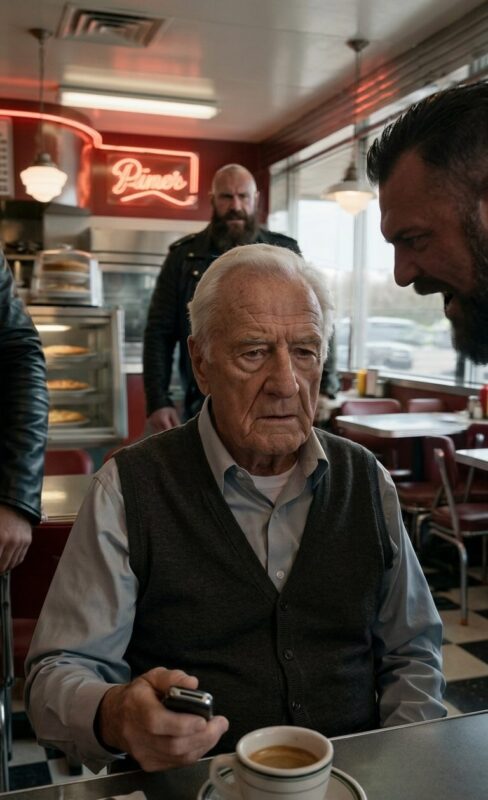
A boot sent the cane sliding across the floor, spinning away like useless debris. Chairs scraped harshly. The waitress stopped dead behind the counter, her hands frozen mid-motion.
The old man didn’t react.
No flinch.
No blink.
Not even a glance downward.
He sat perfectly still in a pressed coat, silver hair neatly arranged, his expression so composed it felt almost unnatural in the chaos around him.
If someone had been filming, the instinct would have been to zoom in—because stillness like that never meant nothing.
The biker leader leaned closer, smirking.
“What’s the plan now, old man?”
Silence answered him.
Then—click.
The old man reached into his pocket with slow precision and lifted a small key fob, holding it near his ear like a phone.
“It’s me,” he said quietly.
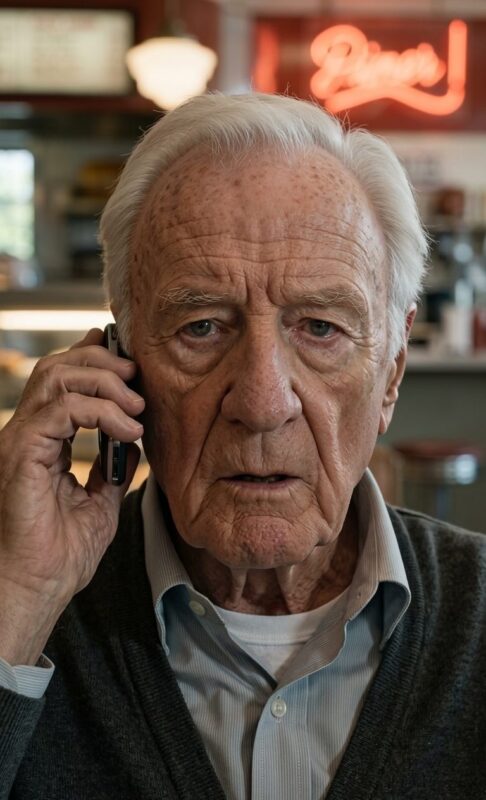
The effect was immediate. Not dramatic—controlled. As if the room itself had decided to stop making noise.
Laughter died first. Then conversation. Even breathing seemed to soften.
The old man added, almost gently:
“Bring them in.”
A heavy silence settled over everything.
One biker turned sharply toward the windows. Another shifted his weight back without realizing it.
Outside, tires tore into gravel.
Three black SUVs rolled into the lot with disciplined speed, engines low and powerful, stopping in perfect alignment.
The biker leader’s expression tightened.
The doors opened.
Three men in dark suits stepped inside. No hesitation. No announcement. No wasted movement.
The old man raised a hand slightly and pointed.
“Start with him. The one who spoke.”
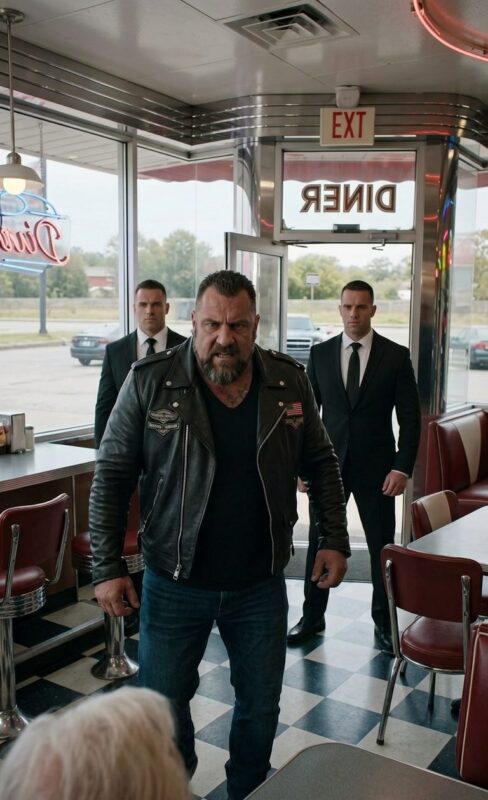
The biker stumbled back as chairs screeched in every direction. The air in the diner shifted—no longer tense, but collapsing inward.
The suited men moved without urgency, yet everything about them suggested inevitability. They closed distance like it had already been decided.
Then the old man spoke again.
“Hold.”
One word.
Everything stopped.
He lowered his gaze briefly to the cane on the floor. One of the men immediately retrieved it and returned it to him with quiet respect.
Only then did he stand.
Up close, the atmosphere changed. It wasn’t authority that made him unsettling—it was control. Absolute, deliberate restraint.
“You’re mistaken,” he said calmly. “This was never about fear.”
His attention drifted toward the waitress, still pale behind the counter.
“People like you only understand consequences when someone finally answers back.”
A pause lingered.
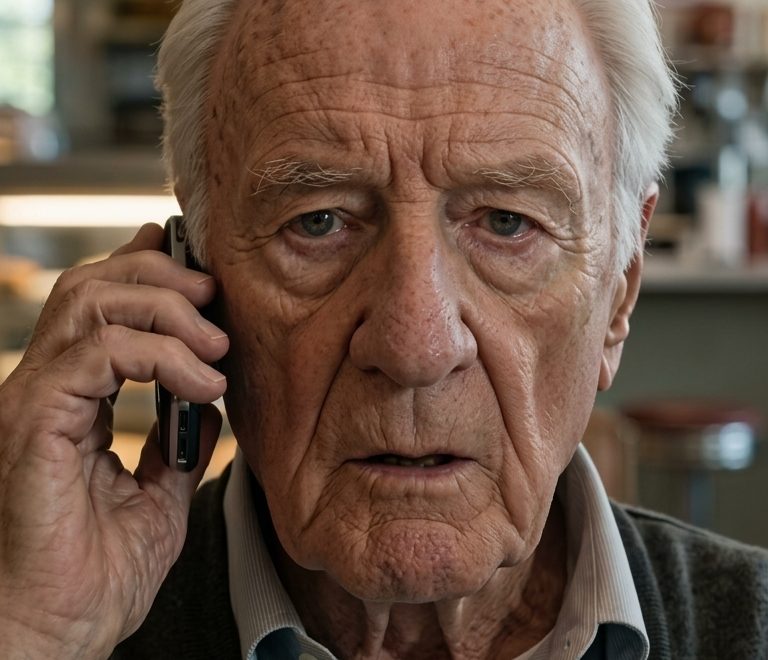
Then, unexpectedly:
“No one is being taken anywhere tonight.”
Even the suited men hesitated.
The biker leader frowned. “Then what is this supposed to be?”
“A reminder,” the old man replied. “You will walk out of here, and you will remember that there were witnesses. And that mercy was shown.”
He turned slightly, as if closing a chapter.
“Leave the cane,” he added—not a command, but a line that would not be crossed.
One by one, the bikers retreated, their confidence gone, replaced by urgency and discomfort. Chairs scraped again, but this time it sounded like escape rather than defiance.
At the exit, the old man paused and looked at the waitress. A small nod passed between them—brief, quiet, final.
She understood enough without words: it was over.
Then he stepped outside.
The SUVs waited patiently, engines running low.
And as they disappeared into the night, the diner slowly loosened its grip on silence—like a place remembering it was allowed to exist again.