For almost half a year, my mother refused every invitation to eat anywhere but home.
It hadn’t always been that way.
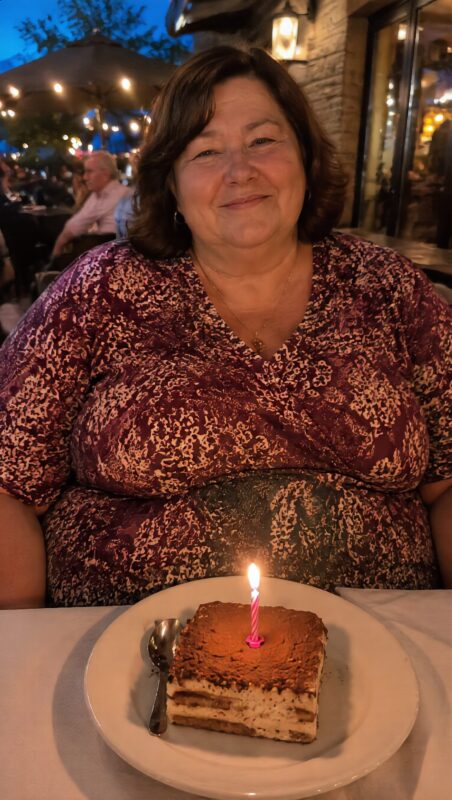
Molly once treated restaurant outings like small celebrations. She would read every item on the menu, order something unfamiliar just to try it, and insist that everyone at the table take at least one bite from her plate.
She also had an extraordinary ability to make friends with servers. By the time the check arrived, she usually knew their names, where they were from, and what they hoped to do someday.
Then eating out stopped being enjoyable.
It began with strangers staring.
Some glanced at Mom and then at whatever she had ordered. Others whispered loudly enough for her to hear. Occasionally, someone felt entitled to make a comment about her weight or suggest what she should and shouldn’t eat.
Mom pretended it didn’t bother her.
But I noticed the changes.
First, she stopped ordering dessert.
Then she started suggesting takeout.
Eventually, she stopped going to restaurants altogether.
When her sixty-fifth birthday approached, I decided I wanted to give her something different.
Not jewelry.
Not flowers.
I wanted one evening in which she could enjoy being herself again.
“There’s that little Italian place you used to love,” I reminded her. “Have dinner with me there.”
She immediately hesitated.
“Daphne, we could just eat at home.”
“Not for your birthday.”
After several days of persuasion, she finally agreed.
That evening, she wore the blue blouse she had always loved, a silver necklace, and the earrings Dad had given her years before he passed away.
When I picked her up, she checked her reflection twice before getting into the car.
“You look beautiful,” I told her.
She smiled nervously.
For a while, the evening was exactly what I had hoped for.
Mom relaxed.
She laughed.
She stole a piece of garlic bread from my plate and denied doing it while she was still chewing.
Then, before our entrées arrived, she ordered tiramisu.
I raised an eyebrow.
“Before dinner?”
She grinned.
“Once you turn sixty-five, dessert becomes a scheduling decision.”
I laughed.
Then she said something that caught me completely off guard.
“I’ve missed this.”
“So have I.”
“Maybe I’ll start going out again.”
I was still smiling when someone at the neighboring table spoke.
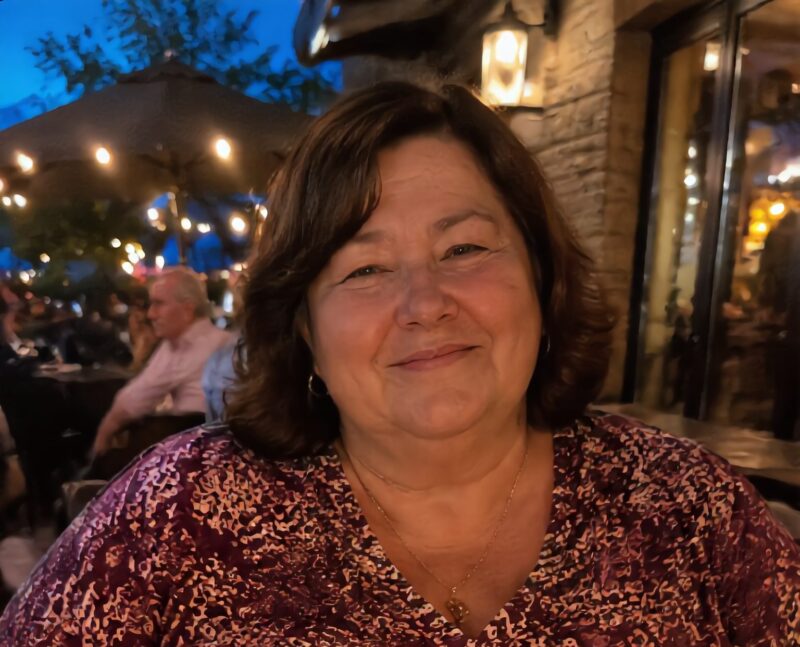
A woman had been watching Mom.
Her gaze moved toward the tiramisu.
Then she said loudly enough for everyone nearby to hear:
“Do you really think you need that?”
The laughter disappeared from my mother’s face.
The restaurant seemed to go quiet around us.
Mom stared at her plate.
Then she reached for her purse.
“Daphne, let’s go home.”
Those four words broke my heart.
This was exactly why she had hidden herself away for months.
I turned toward the woman.
“Was there a reason you needed to say that?”
She leaned back casually.
“I’m trying to help.”
“By embarrassing someone you don’t know?”
“Sometimes people need honesty.”
Before I could respond, a firm voice came from behind us.
“And sometimes people need to leave.”
The restaurant’s chef had stepped out of the kitchen.
His name was Alaric, and from the reaction of the staff, it was obvious he was also the owner.
He looked directly at the woman.
“I’m asking you to leave my restaurant.”
She stared at him.
“You’re throwing me out for telling the truth?”
“I’m asking you to leave because you deliberately humiliated another guest.”
Then Alaric turned toward our table.
He looked at Mom.
His expression changed instantly.
“Molly?”
My mother stared at him.
“Alaric?”
I looked between them.
Apparently, this wasn’t their first meeting.
More than four decades earlier, long before Alaric owned a successful restaurant, he and my mother had worked together at a roadside diner.
He was twenty-two and had almost no money.
What he did have was a dream of becoming a chef.
Most people treated it like a joke.
Mom didn’t.
After their shifts ended, she would stay late while he experimented with whatever ingredients were left in the kitchen. She tasted his dishes, encouraged him after disasters, and eventually persuaded the diner’s manager to give him a chance behind the stove.
Alaric looked at me.
“Your mother was the first person who ever called me a chef.”
Mom laughed softly.
“I probably said you were going to become one.”
“You said it before I believed it.”
Mom looked down, clearly uncomfortable with the attention.
“You would have succeeded anyway.”
Alaric shook his head.
“People remember the person who believed in them before there was anything to prove.”
The woman at the other table stood and picked up her bag.
But as she prepared to leave, she turned toward us one final time.
“I still think people are too sensitive. If someone tells you something true, maybe you should listen instead of getting offended.”
For years, Mom would have lowered her eyes.
She would have waited for the woman to leave and pretended everything was fine.
This time, she stood.
“I don’t need you to tell me anything about myself.”
The woman scoffed.
“I have eyes.”
“So do I,” Mom replied. “But seeing someone doesn’t mean knowing them.”
Every conversation around us stopped.
Mom continued.
“You know nothing about my health. You don’t know my history, what my doctor and I discuss, or what I’ve experienced in my life.”
Her voice trembled slightly.
But she didn’t sit down.
“And even if you somehow knew every detail, humiliating me in front of strangers still wouldn’t be kindness.”
She paused.
“It would just be humiliation.”
The woman had no response.
She left.
Mom slowly returned to her chair.
I reached across the table.
“Are you okay?”
“My knees are shaking.”
I smiled.
“You didn’t look scared.”
“I was absolutely terrified.”
“Then you were brave.”
Alaric disappeared for a moment and returned with something he wanted us to see.
On one wall was a collection of photographs from the early years of his career.
Among them was an old photograph taken inside a tiny diner kitchen.
A young Alaric stood beside the stove.
Next to him was Mom.
Underneath the photograph was a brass plaque.
FOR MOLLY—THE FIRST PERSON WHO CALLED ME A CHEF BEFORE I HAD EARNED THE TITLE.
Mom covered her mouth.
“You kept that?”
“For more than forty years.”
Her eyes filled with tears.
Later, Alaric personally brought our meal to the table.
There was fresh pasta, roasted vegetables, warm bread, and one unexpected addition.
Another huge piece of tiramisu.
Mom stared at it.
“I already ordered dessert.”
Alaric smiled.
“I noticed.”
She laughed.
“What am I supposed to do with this one?”
He placed a fork beside the plate.
“Whatever you want. That’s the point.”
Mom stared at him for a second.
Then she took a bite.
Several people nearby applauded.
Mom laughed so hard that she nearly dropped her fork.
On the drive home, she watched the city lights through the window.
Neither of us spoke for several minutes.
Then she said my name.
“Daphne?”
“Yes?”
“I think I’ve made a mistake.”
My heart tightened.
“About tonight?”
“No.”
She shook her head.
“About staying home all these months.”
I waited.
“I kept thinking that if I avoided restaurants, people couldn’t embarrass me.”
She looked down at her hands.
“But I was the one losing things I enjoyed. They weren’t.”
I reached over and squeezed her hand.
“So what happens now?”
Mom smiled.
“Next weekend, we find somewhere new.”
“With dessert?”
She laughed.
“Especially dessert.”
That evening didn’t magically erase every insecurity my mother carried.
It didn’t guarantee that another thoughtless stranger would never make a cruel remark.
What changed was something more important.
Mom stopped believing that other people’s opinions deserved control over her life.
She had spent months making herself smaller so strangers wouldn’t notice her.
On her sixty-fifth birthday, she finally decided she was done disappearing.
And the following Saturday, just as promised, we went out for dinner again.