For months, my husband and his mother tried to convince me that selling my inheritance was the only way to save our marriage.
When persuasion failed, their behavior became increasingly threatening.
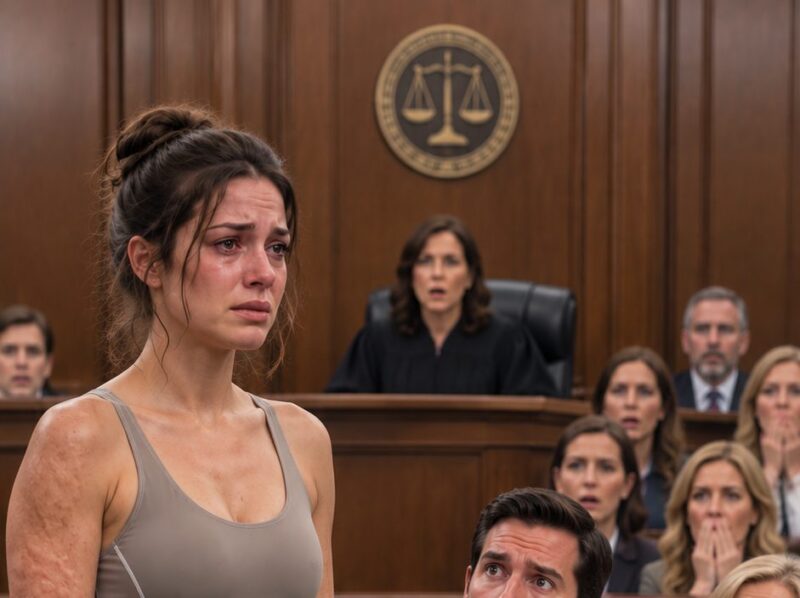
And after I was injured during one confrontation, my husband looked at me without sympathy and announced that he was filing for divorce.
They expected me to be frightened enough to give them what they wanted.
Instead, that night became the beginning of their downfall.
The Records They Never Expected
My father had spent decades building a modest but successful portfolio of commercial properties. When he died, he left several of those buildings to me through a carefully structured trust.
My husband, Julian, had always known about them.
At first, he rarely mentioned my inheritance.
That changed when his development company began struggling.
Projects stalled. Loans piled up. Creditors became impatient.
Soon, Julian started suggesting that I sell one of my father’s buildings and invest the proceeds in his company.
I refused.
Then one building became two.
Eventually, he wanted everything liquidated.
His mother, Eleanor, joined the campaign.
For six months, almost every family conversation somehow returned to my inheritance.
Finally, one evening, I had enough.
“My father protected those properties for a reason,” I said. “I’m not selling them to cover Julian’s company debts.”
Eleanor’s expression changed instantly.
“You would rather watch your husband lose everything?”
“Those are his business obligations,” I replied. “They are not mine.”
The argument escalated quickly.
Then Eleanor attacked me.
Julian was standing close enough to intervene.
He didn’t.
Instead, he watched.
As I struggled with the shock and pain of what had happened, he looked down at me with an expression I barely recognized.
“Maybe you’ll listen now,” he said.
Then he told me our marriage was over.
Eleanor showed almost no concern.
That was the moment I understood something I should have realized much earlier.
Neither of them cared about saving our marriage.
They cared about getting control of my assets.
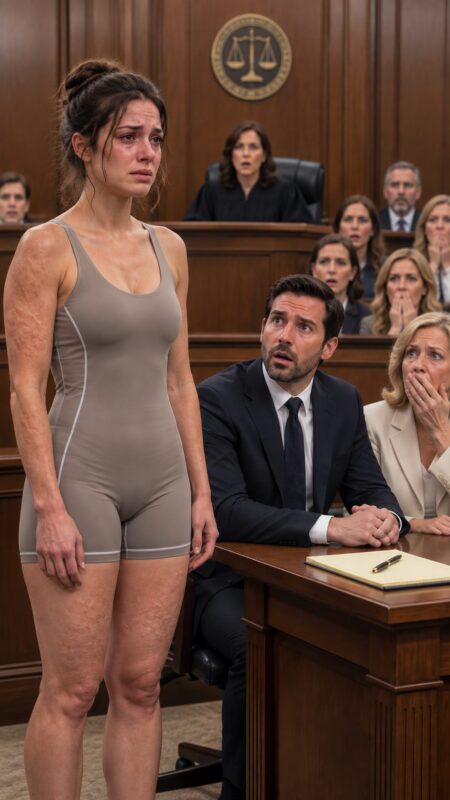
Eventually, Julian called for medical assistance, but before help arrived, he and Eleanor agreed on a different version of events.
According to them, what had happened was an accident.
At the hospital, Julian performed the role of the worried husband whenever doctors or nurses were nearby.
The moment we were alone, the performance disappeared.
“You can still fix this,” he told me.
I stared at him.
“How?”
“Transfer the properties. Sign the documents.”
Even from a hospital bed, he was still thinking about my inheritance.
“No.”
His jaw tightened.
“You’re making a serious mistake, Clara.”
The following morning, divorce papers appeared beside my bed.
Julian apparently believed he had cornered me.
What he didn’t know was that I had stopped trusting him years earlier.
Three years before the hospital incident, I discovered that my signature had appeared on a loan application I had never approved.
When I confronted Julian, he called it a misunderstanding.
I didn’t believe him.
From that day forward, I became meticulous about preserving financial documents, correspondence, contracts, and records of important conversations.
Julian used to laugh about it.
He called me paranoid.
He had no idea those records would eventually become his greatest problem.
The confrontation with Eleanor had produced evidence of its own.
More importantly, something she had said during the argument raised questions about Julian’s company.
In her anger, Eleanor had mentioned arrangements involving building inspectors and approvals.
Until that moment, I had assumed Julian’s business was simply failing.
Now I wondered whether something more serious was happening.
From my hospital room, I requested to speak with the police.
Then I called Mr. Vance, the attorney who had helped my father structure the trust.
Julian had always dismissed him as an outdated old lawyer.
That was another mistake.
“I need you to secure the trust and everything connected to my father’s properties,” I told him.
There was a short silence.
Then his voice became firm.
“I’ll start immediately.”
The following weeks uncovered far more than I expected.
Financial records were reviewed.
Transactions were traced.
Documents were compared.
Signatures supposedly belonging to me appeared on paperwork I had never seen.
Loans had been concealed.
Company funds had moved through accounts in ways that demanded explanation.
And inspection documents connected to Julian’s projects raised additional questions.
Every new record seemed to lead to another.
For years, Julian had treated paperwork as something insignificant.
Now paperwork was telling the story he didn’t want anyone to hear.
Three months later, I entered the courtroom.
Julian looked at me with the same confidence he had displayed throughout our marriage.
He apparently still believed he could explain everything away.
He was wrong.
The recording and other evidence were reviewed.
Then came the financial trail.
Document after document revealed discrepancies that could no longer be dismissed as simple misunderstandings.
The questionable signatures were examined.
The undisclosed loans were addressed.
The transfers from company accounts were scrutinized.
Then the inspection records entered the discussion.
Finally, Eleanor’s own recorded statement connected pieces of the investigation that had previously seemed unrelated.
Julian’s confidence began to disappear.
His attorney stopped interrupting as often.
Eleanor became unusually quiet.
The people who had once expected me to surrender everything were now watching their carefully constructed version of events unravel.
The court determined that the attempted transfer of my inherited property was invalid. Evidence of potential criminal wrongdoing was sent to the appropriate authorities for further investigation.
Julian stared at me as though I had betrayed him.
“You ruined everything,” he said.
For years, I might have apologized simply to avoid another argument.
Not anymore.
“I didn’t ruin your life, Julian,” I replied. “I stopped you from taking control of mine.”
Our divorce was finalized soon afterward.
My father’s properties remained protected.
Julian and Eleanor were left to deal with the legal consequences of their own decisions.
Yet their losses were not what gave me the greatest sense of relief.
That came later.
Recovery took time.
There were mornings when looking in the mirror reminded me of everything I wanted to forget.
But gradually, something changed.
I stopped seeing only what had happened to me.
I started seeing the person who had walked away from it.
My scars remained, but they no longer controlled the way I saw myself.
Months later, I reopened one of my father’s older commercial buildings.
I could have leased the entire property and treated it purely as an investment.
Instead, I reserved part of the building for a support organization that helped women rebuild their lives after abusive relationships.
Near the entrance, I installed a small brass plaque.
It carried a message I had learned the difficult way:
“Pain can shape a chapter of your life without deciding how the story ends.”
My father had taught me to protect important things with contracts, records, and careful planning.
For years, I assumed that lesson was about protecting property.
Eventually, I understood that it had helped me protect something much greater.
My independence.
My dignity.
My right to choose what happened next.
The inheritance remained mine.
But more importantly, so did my future.