For seven years, I convinced myself that I could manage my husband’s controlling behavior.
Then one evening, everything changed.
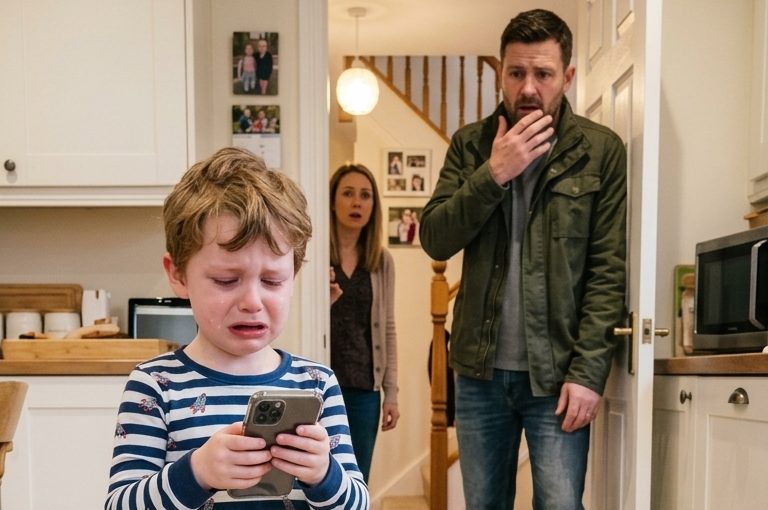
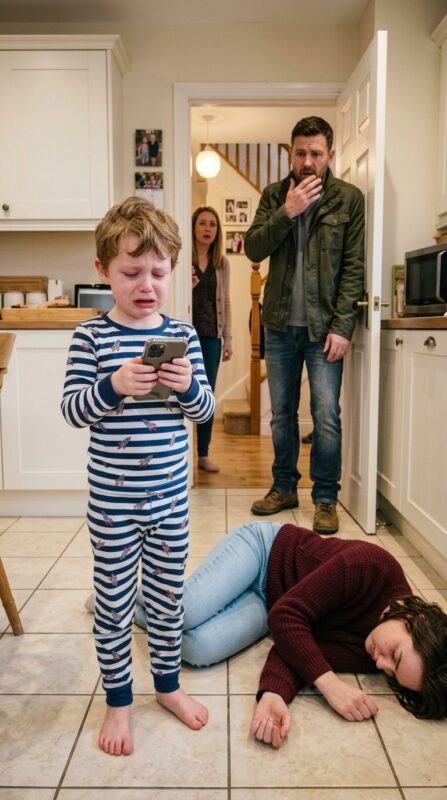
I ended up injured on our kitchen floor, struggling to breathe while my five-year-old son, Noah, watched in frightened silence.
My husband walked out.
Noah picked up my phone.
And instead of freezing, he called the one person he believed would always come when we needed him.
My father.
That phone call changed our lives.
Evan hadn’t become controlling overnight.
In the beginning, his behavior was easy to excuse.
He wanted to manage our finances because he was supposedly “better with money.” Then he began asking why I needed certain things whenever I went shopping.
Soon, every purchase required an explanation.
After that came the questions about where I was going, who I was talking to, and when I would be home.
Eventually, he started checking my phone.
I adjusted to each new restriction without realizing how much freedom I was giving up.
By our seventh year of marriage, I barely made a decision without considering how Evan might react.
Then I secretly saved seventy-three dollars.
It sounds insignificant.
It wasn’t.
I had opened a separate account and quietly put aside whatever little money I could manage.
The balance had reached only $73, but every dollar represented the same thing to me:
Independence.
It wasn’t enough to start over.
But it proved that starting over might someday be possible.
At 8:17 one evening, Evan discovered the account.
His reaction was immediate.
The argument escalated, and within minutes, I was on the kitchen floor, injured and struggling to breathe normally.
Evan stood nearby.
“You really thought you could leave me?”
“No,” I whispered.
The answer wasn’t honest.
It was survival.
Sometimes, when you’re frightened, you say whatever you believe will prevent the situation from becoming worse.
A few feet away stood Noah.
He was wearing his favorite dinosaur pajamas.
He didn’t understand everything that was happening, but he understood enough to be terrified.
Evan eventually grabbed my keys and stormed outside.
We heard his truck pull away.
For several seconds, Noah didn’t move.
Then he hurried toward me.
My phone was nearby.
He picked it up with both hands.
“This is what Grandpa is for,” he whispered.
Then he called my father.
When Dad answered, Noah’s voice trembled.
“Grandpa, you need to come. Mama can’t breathe.”
My father didn’t waste time asking unnecessary questions.
He told Noah to unlock the front door and stay with me. Then he contacted emergency services and immediately headed toward our house.
But Evan returned before Dad arrived.
The moment he stepped through the door, he saw the phone in Noah’s hands.
His expression changed.
“Who did you call?”
Noah slowly backed away.
Then my father’s voice came through the speaker.
“I’m the one he called.”
Evan stopped moving.
Minutes later, Dad arrived.
He didn’t threaten Evan.
He didn’t start an argument.
He went directly to Noah and me and stayed there until help arrived.
That calm response seemed to make Evan even more nervous.
He immediately began explaining my injuries.
According to his first version, I had fallen against the kitchen counter.
A few minutes later, the story changed.
Now we had supposedly argued, and I had somehow been hurt by accident.
The more he spoke, the less consistent his explanation became.
When the paramedics examined me, they documented my condition and what they observed inside the kitchen.
Then one of the responding officers approached me.
There was no complicated question.
No accusation.
Just a few words.
“Did someone do this to you?”
I looked at Evan.
For years, I had covered for him.
I had minimized his behavior.
I had kept quiet because I believed silence might preserve some kind of peace for Noah.
But there was nothing peaceful about the life we were living.
That night, I finally said it.
“Yes.”
I paused.
“Evan hurt me.”
The room seemed to become completely still.
Then Noah spoke from beside my father.
“Daddy hurt Mama.”
Evan immediately protested.
But something had changed.
For once, I wasn’t helping him hide the truth.
At the hospital, I gave investigators a detailed account of what had happened.
I told them about Evan’s behavior throughout our marriage.
I explained the secret bank account.
I told them why those seventy-three dollars mattered so much.
And then investigators discovered something I hadn’t known.
Someone had attempted to access my private bank account shortly after Evan returned home.
The attempt came only minutes after Noah’s call to my father.
Evan insisted he knew nothing about it.
His explanation of the evening changed again.
I had fallen.
Then I had been injured accidentally.
Then, according to him, everyone had simply misunderstood what they had seen.
But evidence doesn’t become confused simply because someone changes his story.
There were medical records.
There were photographs.
There were observations from the first responders.
There was financial activity.
And there were statements from the people who had been inside the house.
As the investigation continued, another discovery made Evan’s situation even more serious.
Messages from that evening were recovered.
In them, he discussed how my injuries might be explained if anyone started asking questions. He also raised the possibility of accessing my bank account if I was unable—or unwilling—to handle it myself.
That was when I understood the full extent of what had been happening.
Evan wasn’t simply trying to control my money.
He was trying to control the story afterward, too.
Months later, I found myself sitting in a courtroom.
At one point, Evan’s attorney asked why I had remained married to him if I had been so frightened.
Years earlier, that question might have silenced me.
Now I understood the answer.
“Being afraid doesn’t always mean you run,” I said. “Sometimes fear convinces you that staying quiet is the only way to keep your child safe.”
For the first time, I heard myself say those words without shame.
The legal proceedings eventually resulted in Evan being found guilty. Protective measures were established, and the custody arrangements were changed.
Noah and I were finally given the chance to build a life outside Evan’s control.
But freedom didn’t immediately erase what we had experienced.
My physical injuries gradually healed.
The habits created by years of fear were harder to leave behind.
I had to teach myself that I didn’t need permission to spend my own money.
I had to stop preparing explanations for ordinary decisions.
I had to learn that hearing a vehicle outside didn’t automatically mean trouble was coming.
I even had to rediscover what it felt like to make plans simply because I wanted to.
Noah had healing to do as well.
He began therapy.
During one session, he drew a picture of himself standing beside me. Behind us was an enormous fishing boat.
His therapist pointed toward it.
“What’s the boat?”
Noah answered as though the meaning should have been obvious.
“That means Grandpa is coming.”
When his therapist told me, I couldn’t hold back my tears.
That drawing revealed something about the way Noah understood safety.
To him, Grandpa represented the person who came when someone needed hel
Several months later, Noah and I moved into a modest house with large windows and a small backyard.
There was nothing extraordinary about it.
That was exactly what made it wonderful.
Our home was quiet.
Nobody checked my purchases.
Nobody inspected my phone.
Nobody demanded explanations about where I had been.
And when headlights appeared outside at night, I no longer wondered whether I needed to be afraid.
One evening, Noah was playing on the living room floor when he suddenly looked up.
“Mama?”
“What is it?”
“Was I brave when I called Grandpa?”
I sat down beside him.
“You were incredibly brave.”
His expression became serious.
“But I was scared.”
I squeezed his hand.
“Being brave doesn’t mean you weren’t scared. Sometimes being brave means doing the right thing while you’re scared.”
He thought about my answer for a few seconds.
Then he returned to his toys as though we had been discussing something completely ordinary.
I stayed beside him.
My mind returned to that kitchen and the little boy in dinosaur pajamas who had picked up my phone.
For years, I believed keeping our problems hidden was protecting my family.
My five-year-old son understood something I had forgotten.
When someone is hurting you, silence doesn’t necessarily keep you safe.
Sometimes the bravest thing you can do is let someone else know what is happening.
Noah made one phone call because he was frightened and knew we needed help.
And that single decision opened the door to a life neither of us had believed was possible.
A life where we could finally feel safe in our own home.