My Best Friend and I Chose One Sperm Donor So Our Children Would Share a Father. Then a DNA Test Uncovered a Family Secret Hidden for Twenty-Five Years.
«Sarah, there’s something in these genetic results that we need to discuss.»
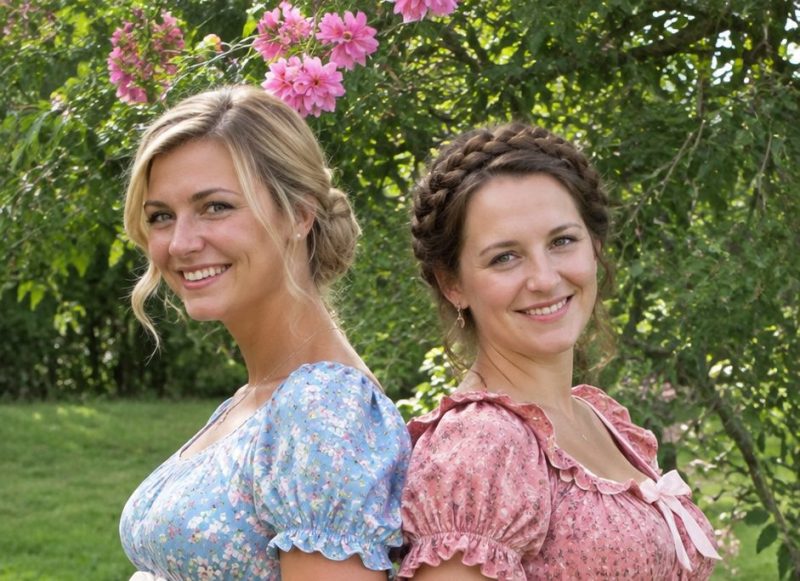
Dr. Harrison’s serious expression immediately frightened me.
Beside me sat Emily, my closest friend since childhood. We’d known each other for twenty-five years, growing up in neighboring houses and sharing almost every important experience.
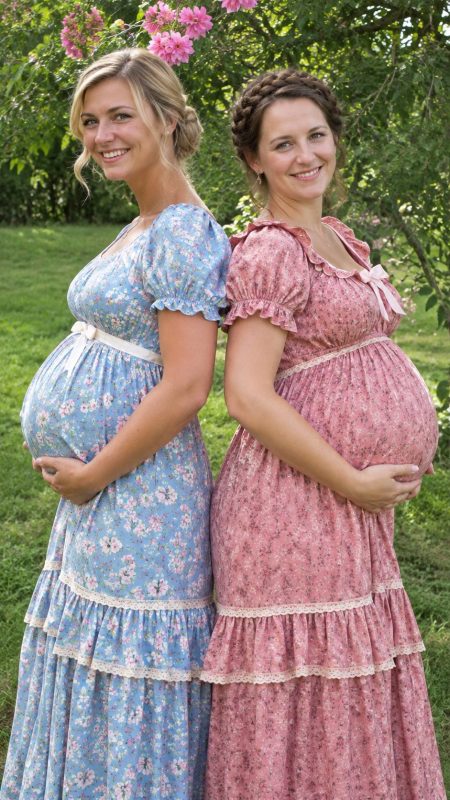
Now we were both expecting babies.
We’d made the unusual but carefully considered decision to use the same sperm donor. We wanted our children to share a biological father and grow up with a connection similar to the one we’d always enjoyed.
But our doctor had discovered something neither of us could have imagined.
«The laboratory identified an unexpected genetic relationship between you two,» he explained.
Emily frowned.
«What kind of relationship?»
Dr. Harrison looked at both of us.
«The results suggest you may be biological sisters.»
For a moment, I couldn’t speak.
Then I shook my head.
«That must be a mistake.»
Emily looked equally stunned.
We’d spent our childhoods together, attended the same schools, celebrated birthdays side by side, and supported each other through every difficult moment.
Our mothers, Margaret and Helen, were close friends who frequently described us as practically inseparable.
But sisters?
That was impossible.
At least, that’s what we’d always believed.
Dr. Harrison recommended additional testing to confirm the findings.
We left his office feeling as though someone had turned our entire lives upside down.
Then Emily’s phone rang.
It was her mother, Helen.
At first, the conversation seemed ordinary.
Helen asked about the pregnancy and whether the appointment had gone well.
But when Emily mentioned the name of our sperm donor, everything changed.
«Daniel,» Emily said. «His first name is Daniel.»
Helen suddenly went silent.
Then her voice became sharp with fear.
«Emily, listen to me carefully. Stay away from anyone connected to that man.»
Emily stared at the phone.
«Mom, what are you talking about?»
«Promise me you won’t trust him!»
«Who is Daniel? How do you know his name?»
But Helen refused to answer.
The call ended abruptly.
Emily turned toward me, her face drained of color.
«My mother knows something.»
I had the same terrible feeling.
Someone had been keeping a secret.
And somehow, that secret involved both our pregnancies.
The following day, we returned to the medical center for additional consultations.
While we waited in a private room, a nurse appeared at the doorway.
«Excuse me, ladies. There’s a gentleman downstairs asking to speak with you.»
I looked up.
«Who?»
«His name is Daniel Whitmore.»
Emily’s hand tightened around mine.
The nurse continued.
«He says he’s your biological father.»
I felt a chill run through me.
«My father died twenty-five years ago.»
Emily whispered, «So did mine.»
For as long as we could remember, we’d been told that our fathers had died when we were infants.
We’d never questioned the stories.
Now a stranger had appeared claiming to be the father of both of us.
Before either of us could respond, my phone vibrated.
An anonymous message appeared on the screen.
«Do not believe the man claiming to be Daniel. Your father died years ago.»
Below the warning was an old photograph.
Three young women stood together, smiling at the camera.
I recognized Margaret immediately.
Helen stood beside her.
But the third woman was someone I’d never seen before.
She had dark hair, warm eyes, and a smile that seemed strangely familiar.
Something about her face made me uncomfortable.
I enlarged the picture.
Then I called Margaret.
«Mom, I’m sending you a photograph. Tell me who the woman on the right is.»
There was silence as she opened the image.
When she finally spoke, her voice sounded completely different.
«Sarah, where did you get this?»
«That’s not important. Who is she?»
Margaret began crying.
«Her name was Rebecca.»
«Rebecca who?»
She hesitated.
Then she said something that changed everything I believed about my childhood.
«Rebecca was the woman who gave birth to you.»
I stared at the wall.
«What did you just say?»
«Sweetheart, please let me explain.»
«You’re my mother.»
«I am the person who raised you, Sarah. I have loved you every day of your life.»
«But you’re not my biological mother?»
«No.»
My hands began trembling.
«Why didn’t you tell me?»
Margaret couldn’t answer immediately.
Beside me, Emily was already calling Helen.
I watched her expression change as her mother began speaking.
First confusion.
Then disbelief.
Finally, tears.
When she ended the call, she looked directly at me.
«Sarah, Rebecca was my birth mother too.»
The room seemed to become very quiet.
We weren’t two unrelated women who happened to grow up together.
We shared the same biological mother.
Dr. Harrison hadn’t made a mistake.
The person I’d called my best friend for twenty-five years was actually my sister.
That evening, Margaret and Helen came to my apartment.
Emily and I sat opposite them at the dining table.
Neither of us wanted reassuring words or partial explanations.
We wanted the truth.
All of it.
Margaret began speaking.
More than twenty-five years earlier, Rebecca had been married to a man named Daniel Whitmore.
Their relationship had become increasingly difficult because of Daniel’s controlling behavior.
Eventually, Rebecca decided to leave him.
She wanted a safer, more stable future for her two daughters.
Margaret and Helen, her closest friends, helped her find somewhere to live and supported her during the separation.
Then something unexpected happened.
Daniel disappeared.
After severe flooding, his vehicle was discovered abandoned near a river.
Search teams investigated the area, but no trace of him was found.
Over time, authorities presumed that he had died.
Rebecca tried to rebuild her life.
She began working, caring for her daughters, and making plans for the future.
For a while, things seemed to be improving.
Then she became seriously ill.
An infection spread rapidly, and despite medical treatment, she died several months later.
Margaret’s voice broke as she described Rebecca’s final days.
«She was terrified about what would happen to you girls.»
Helen reached for a tissue.
«We promised her you would always have a home.»
After Rebecca’s death, Margaret and Helen became our guardians.
Margaret raised me.
Helen took care of Emily.
They continued living next door to each other, allowing us to grow up together.
But they made one decision that would eventually change everything.
They concealed the fact that we were biological sisters.
«Why?» Emily demanded.
Helen looked ashamed.
«We thought it would make your childhood easier.»
«Easier?» Emily repeated. «You let us believe we were unrelated for twenty-five years.»
Margaret lowered her eyes.
«We were afraid of confusing you when you were little. Then, as you grew older, the secret became harder to explain.»
I shook my head.
«You could have told us the truth at any point.»
Neither woman disagreed.
But there was another question I couldn’t ignore.
«Why does our sperm donor have Daniel Whitmore’s name?»
Margaret looked toward Helen.
Helen’s face went pale.
They clearly had no answer.
The following morning, Emily and I contacted the fertility clinic.
We demanded access to the records associated with our treatments and requested an independent investigation.
At first, clinic representatives insisted that their donor identification procedures were reliable.
They assured us that every sample had been properly documented.
But the results of additional genetic testing contradicted those assurances.
Investigators reviewed the donor database, storage history, and identifying information.
Eventually, they uncovered a serious administrative failure.
Biological material belonging to Daniel Whitmore had been assigned to another donor’s record.
The samples had subsequently been made available for treatment under the wrong identity.
Neither Emily nor I had known whose biological material we were receiving.
We’d trusted the clinic’s information.
Now we were facing consequences nobody had warned us about.
When Dr. Harrison invited us back to review the confirmed results, I felt frightened before he even spoke.
He placed the documents on his desk.
«The independent laboratory has verified that you and Emily share both biological parents.»
Emily began crying quietly.
The doctor continued.
«The tests also indicate that Daniel Whitmore, your biological father, was the donor involved in both pregnancies.»
I felt as though I couldn’t breathe.
The man we’d believed died decades earlier had somehow become the donor whose samples we had selected.
I looked down at my growing belly.
Suddenly, I was terrified for my unborn child.
«What does this mean for our babies?» I asked.
Dr. Harrison answered carefully.
«There are additional genetic considerations when biological parents are closely related. We need to arrange specialist assessments and discuss appropriate monitoring.»
«Are our children going to be healthy?»
«We cannot predict their individual outcomes from these results alone,» he explained. «Further examinations and genetic counseling will help us understand any specific concerns.»
Emily covered her face.
«This was supposed to be a happy experience.»
I understood exactly what she meant.
We’d planned everything with excitement.
We’d imagined celebrating our pregnancies together, decorating nurseries, and watching our children grow up as biological siblings.
Instead, we were confronting a frightening mistake rooted in secrets that had existed long before we were born.
The investigation also clarified another mystery.
The man who had appeared at the hospital claiming to be Daniel wasn’t our father.
His real name was Michael Whitmore.
He was Daniel’s younger brother.
Michael had been searching for information about Daniel’s disappearance and the family he’d left behind.
He had used his brother’s name when asking hospital employees about us.
Investigators found no evidence that Michael had manipulated the fertility clinic or arranged our treatments.
His behavior had been misleading, but it wasn’t proof that he’d caused the donor identification error.
Meanwhile, important questions about Daniel remained unanswered.
What exactly had happened to him after his vehicle was found?
Why was biological material associated with him still available years later?
Had anyone known that his daughters were alive?
The investigation continued, but Emily and I couldn’t spend every day chasing the past.
We had children to prepare for.
The next several months brought medical appointments, specialized consultations, and long nights filled with uncertainty.
Some days, Emily was optimistic.
Other days, she blamed herself.
One evening, she came to my apartment and sat beside me on the sofa.
«I wish I’d never suggested using the same donor,» she whispered.
I turned toward her.
«Emily, we both agreed to it.»
«But it was my idea. I thought our children would be closer if they shared a father.»
I took her hand.
«We made our choice based on the information we were given. We couldn’t have known what the clinic had done.»
She began crying.
«I just want Lily to be okay.»
I put my arm around her shoulders.
«I know. I want the same for Noah.»
We hadn’t yet met our children, but we’d already chosen their names.
Emily was expecting a daughter.
I was having a son.
For the first time, we understood that protecting them meant more than planning for their births.
It also meant facing difficult medical questions with patience and getting reliable professional guidance.
Eventually, Emily went into labor.
Her daughter, Lily, was born surrounded by a medical team familiar with the situation.
When Emily held her baby for the first time, she looked overwhelmed with emotion.
«She’s beautiful,» she whispered.
I stood beside her, feeling relief and joy.
Three weeks later, I gave birth to Noah.
When the nurse placed him in my arms, I studied his tiny face.
His eyes were closed.
His fingers curled gently around mine.
For months, I’d been afraid that his unusual biological history would overshadow everything else.
But looking at him, I felt only love.
He was my son.
Whatever medical care he might need in the future, he deserved to grow up knowing that his existence was never something to regret.
As the weeks passed, Emily and I continued following our doctors’ recommendations.
The uncertainty didn’t disappear overnight.
But gradually, we learned that we could acknowledge our fears without allowing them to define every moment with our children.
One sunny afternoon, Emily arrived at my house with Lily.
Noah was resting in his bassinet.
We sat together on the living room carpet, watching our babies.
Then Emily reached into her bag and pulled out two tiny pairs of socks.
One yellow.
One green.
I recognized them immediately.
We’d bought them months earlier, shortly after learning we were pregnant.
At the time, we’d laughed about how our children might someday argue over which pair belonged to whom.
Emily held up the yellow socks.
«We had such simple plans,» she said.
I nodded.
«We wanted them to be family.»
She looked at me.
«And then we discovered we already were.»
I smiled sadly.
For twenty-five years, we’d shared birthdays, secrets, heartbreaks, and dreams.
We’d supported each other through school, careers, and some of the most difficult moments of our lives.
All that time, we’d believed our connection came entirely from friendship.
Now we knew that our history began long before either of us could remember.
We were sisters who had unknowingly chosen each other again and again.
Several months later, our attorney contacted us.
During the investigation into Daniel’s history, an old handwritten note had been discovered among family documents.
It appeared to have been written by Daniel himself.
The note requested that certain records concerning his daughters be provided to them if they ever tried to learn about their origins.
Emily and I read it repeatedly.
The discovery raised more questions than it answered.
Had Daniel wanted us to find him?
Had he known that Margaret and Helen were raising us?
Why had the records remained hidden?
And what had actually happened on the night his vehicle was discovered near the river?
We didn’t know.
Our attorney advised us that the note alone couldn’t establish Daniel’s motives.
That was difficult to accept.
After so many years of deception and confusion, I wanted every mystery solved.
But sometimes discovering the truth also means recognizing what remains uncertain.
Meanwhile, our relationship with Margaret and Helen was changing.
We still loved them.
They had given us homes, cared for us when we were sick, celebrated our accomplishments, and supported us through childhood.
But their decision to hide our biological relationship had deeply hurt us.
We needed time to rebuild trust.
Eventually, Margaret invited us to look through an old wooden chest she’d kept in her bedroom.
Inside were photographs, letters, postcards, and several small belongings that had once belonged to Rebecca.
I found pictures of a young woman I’d never had the chance to know.
Rebecca smiling beside a garden.
Rebecca standing on a beach.
Rebecca holding two babies wrapped in blankets.
Emily and me.
I stared at that photograph for a long time.
For the first time, I could see our biological mother holding both of us.
Margaret sat beside me.
«Rebecca loved you girls more than anything,» she said quietly.
I traced the photograph’s faded edge.
«Why didn’t you show us this when we were younger?»
Margaret’s eyes filled with tears.
«I wish I had.»
It wasn’t an excuse.
But it was the beginning of an honest conversation we’d needed for years.
Over time, Emily and I learned more about Rebecca.
She loved gardening and old books.
She enjoyed taking photographs.
She had a habit of writing little notes to people she cared about.
And according to Helen, she’d dreamed of taking her daughters on a long holiday when they were old enough to remember it.
Each new detail gave us a clearer picture of the woman we’d lost.
We couldn’t bring her back.
But we could finally acknowledge her place in our lives.
One evening, Emily came over after the babies had fallen asleep.
We sat at the kitchen table with Rebecca’s photographs spread between us.
«Do you ever wonder what things would have been like if we’d known?» she asked.
«Every day,» I admitted.
«Maybe we would have grown up calling each other sisters.»
I looked at her.
«Maybe. But I think we would have been just as close.»
Emily smiled.
«Probably.»
We both knew that our bond had never depended on a genetic report.
We’d chosen to stand beside each other long before learning the truth.
The DNA results hadn’t created our relationship.
They had revealed a part of its history.
As Lily and Noah grew, we made an important decision.
We wouldn’t hide their origins from them.
When they became old enough to understand, we would explain their family history gradually, honestly, and with age-appropriate guidance.
We would answer their questions without shame.
We would continue obtaining any medical care or genetic counseling they needed.
And we would make sure they understood that the circumstances surrounding their conception did not determine their value as people.
Our children deserved something Emily and I had been denied.
The freedom to understand their own identities without discovering that the adults they trusted had concealed essential truths.
One afternoon, I was holding Noah near the living room window when Emily arrived with Lily.
Sunlight streamed across the floor.
The babies were peaceful, and for a few moments, everything felt wonderfully ordinary.
Emily noticed Rebecca’s photograph on the bookshelf.
«I still can’t believe we went our whole childhood without knowing,» she said.
I nodded.
«Neither can I.»
She sat beside me.
«Do you think we’ll ever find out everything about Daniel?»
«Maybe. But some answers might never come.»
Emily looked down at Lily.
«I don’t want our children growing up surrounded by secrets.»
«They won’t,» I promised.
We had both experienced how painful hidden truths could become.
We understood why Margaret and Helen had believed they were protecting us.
But we also knew that good intentions couldn’t erase the consequences of silence.
Our children would not have to question whether the people closest to them were deliberately keeping important information from them.
They would grow up with honesty, compassion, and support.
That night, after Emily left, I stood beside Noah’s crib.
He was sleeping peacefully, unaware of the extraordinary circumstances that had brought him into the world.
I thought about everything that had happened.
The doctor’s unexpected discovery.
Helen’s frightened warning.
The stranger claiming to be Daniel.
The anonymous message.
Rebecca’s photograph.
And the terrible clinic error that had changed our pregnancies forever.
I couldn’t undo any of it.
I couldn’t return to the life I’d lived before learning that Emily was my biological sister.
Nor could I recover the years we’d lost without knowing Rebecca.
But I could decide what happened next.
I could stop treating the truth as something to fear.
I could make room for unanswered questions without allowing them to overshadow the love surrounding our children.
And I could build a family where honesty wasn’t withheld in the name of protection.
Before turning off the light, I looked at Rebecca’s photograph one more time.
For most of my life, I’d believed my family history was straightforward.
A loving mother.
A father who had died.
A best friend who felt like a sister.
Then one medical appointment revealed an entirely different story.
My mother had been my guardian.
My best friend was my sister.
And our children’s biological origins were tied to a devastating mistake nobody had anticipated.
Yet one thing remained unchanged.
Emily and I loved our children.
We loved each other.
And we were determined to give Lily and Noah a childhood built on truth rather than silence.
Twenty-five years earlier, two women had separated two sisters into neighboring households, believing secrecy would protect them.
Now those sisters were raising children of their own.
We couldn’t rewrite the decisions that shaped our past.
But we could choose a different path.
A path where difficult conversations were welcomed.
Where family history was shared instead of buried.
And where no child would have to wonder whether knowing the truth might cost them the love of the people closest to them.
We had set out to give our babies a biological connection.
Instead, we discovered the connection we’d unknowingly shared our entire lives.
And despite everything that had happened, our family’s next chapter would not be defined by the secrets we’d inherited.
It would be defined by the honesty we chose to give our children.