For six years, my twin brother, Ryan, and his wife, Melissa, dreamed of becoming parents.
They endured failed treatments, crushing disappointments, and countless months of hoping that the next attempt would finally work.
It never did.
So when they asked me to carry their child, my answer came almost immediately.
Yes.
Ryan had always been more than my twin. When our parents died, he became the person who helped hold my life together. I was raising my son alone, and Ryan never hesitated to step in whenever I needed him.
Becoming their surrogate felt like my chance to give something back.
The pregnancy went beautifully.
Melissa attended every appointment and cried the first time she heard the heartbeat. Ryan assembled the crib, painted the nursery, and filled his phone with ultrasound pictures.
By the final trimester, however, something about him had changed.
He became unusually quiet.
His phone rarely left his hand. Whenever Melissa mentioned the cost of baby supplies, he changed the subject. Sometimes I caught him staring into space as though he were carrying a secret too heavy to explain.
Whenever I asked what was wrong, he gave me the same answer.
“Just nervous about becoming a dad.”
I accepted it.
Then the baby arrived.
After delivery, Melissa was overwhelmed with happiness.
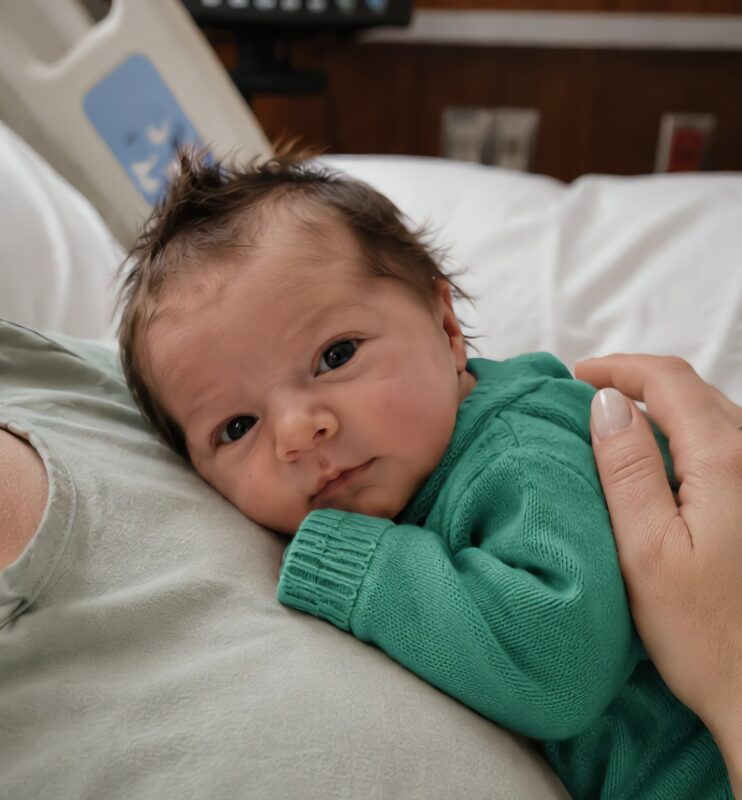
A nurse wrapped their daughter in a blanket and placed her carefully in Ryan’s arms.
I expected him to cry.
Instead, he froze.
His eyes moved toward the lower part of the baby’s back.
There was a small raised area near the base of her spine.
Ryan’s face turned white.
“I can’t bring her home.”
Melissa stared at him.
“What?”
“I can’t do this.”
“Ryan, what are you saying?”
He swallowed.
“I think we should give her up.”
The joy disappeared from the room.
Melissa looked as though she had stopped breathing.
Then Ryan placed his newborn daughter in my arms and walked out.
Doctors soon explained that they suspected a mild form of spina bifida. More testing would be necessary before they understood exactly what treatment she might need.
Melissa was devastated—not because her daughter might require medical care, but because her husband had abandoned them minutes after the diagnosis was mentioned.
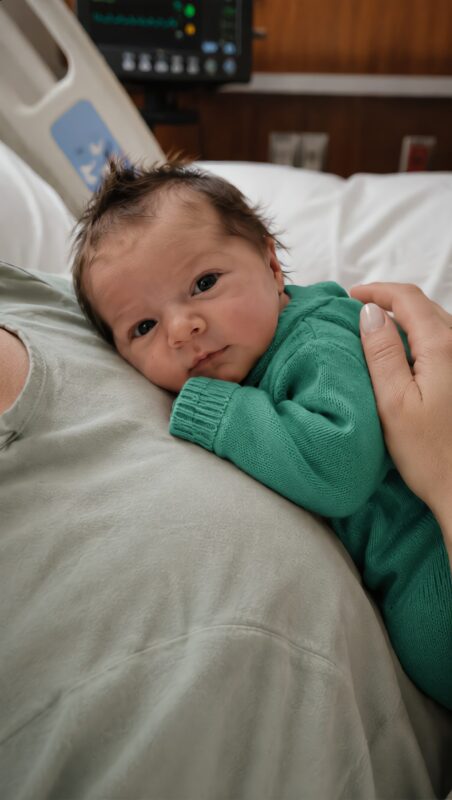
I held the tiny baby against my chest.
“You’re wanted,” I whispered. “Whatever happens, you’re wanted.”
For the next few days, I privately called her Hope.
Three days after we left the hospital, Ryan showed up at my apartment.
He looked like he hadn’t slept.
I blocked the doorway.
“You owe me the truth.”
He stared at the floor.
“I don’t have a job anymore.”
For a moment, I thought I had misunderstood him.
“What do you mean?”
“I was fired four months ago.”
“Does Melissa know?”
“No.”
That single word explained months of strange behavior.
Every morning, Ryan had put on work clothes, taken his laptop, kissed Melissa goodbye, and left the apartment as usual.
But he wasn’t going to work.
He spent his days applying for jobs from coffee shops and libraries, then returned home at the same time each evening and pretended nothing had changed.
Their savings were almost gone.
The nursery Melissa was so proud of had been financed largely through credit cards.
Ryan had hidden all of it.
“You lied to your wife for four months?”
“I thought I’d find another job before she ever had to know.”
“But you didn’t.”
He shook his head.
Then I asked the question that mattered most.
“What does any of this have to do with abandoning your daughter?”
Ryan went silent.
I knew immediately that there was another truth he didn’t want to say aloud.
“Tell me.”
His eyes filled with shame.
“When the doctor mentioned possible procedures and therapy, I started thinking about bills. We already couldn’t afford what we had.”
“That still doesn’t explain what you did.”
Ryan closed his eyes.
“Then I realized everyone would think I was leaving because of her diagnosis.”
I stared at him.
“And you let them.”
He nodded.
“If Melissa hated me for rejecting a sick child, at least she wouldn’t know I’d destroyed us financially.”
I could hardly believe what I was hearing.
“You made your own daughter the reason for something she had nothing to do with.”
“Yes.”
“You used her condition to hide your lies.”
Ryan began crying.
“I know.”
I loved my brother.
But loving someone doesn’t require protecting them from the consequences of what they’ve done.
“You’re telling Melissa tonight.”
“She’ll never forgive me.”
“That’s not your decision.”
“She might leave.”
“She has the right to make that choice after hearing the truth.”
That evening, Ryan and I returned to his apartment.
I carried Hope.
Melissa was sitting in the living room with the untouched nursery visible behind her.
Ryan sat down across from his wife.
Then, piece by piece, his entire false life collapsed.
He told her about losing his job.
He admitted their savings were nearly gone.
He showed her the credit card debt.
He confessed that every morning he had pretended to go to work while secretly searching for another position.
Finally, he told her why he had walked out of the hospital.
“When I heard what treatment might involve, I panicked,” he said. “Then I realized her diagnosis gave me something else to blame.”
Melissa’s face crumpled.
“You let me believe you didn’t want our daughter because she might have a disability?”
“Yes.”
Her eyes filled with tears.
“Ryan, I would have sold the crib.”
He looked up.
“I would have sold every piece of furniture we own. I would have worked nights. We could have moved. We could have asked people for help.”
Her voice broke.
“But I would never have abandoned her because money was tight.”
Then Melissa looked at me.
More specifically, she looked at the baby in my arms.
She stood and walked toward us.
“Can I hold my daughter?”
I placed Hope gently into her arms.
Melissa pressed her cheek against the baby’s head and cried.
I told her what the doctors had explained after further testing. Hope would need medical follow-up and might require treatment and therapy, but her medical team was optimistic about her future.
Ryan broke down completely.
After several minutes, Melissa finally looked at him.
“I can forgive fear,” she said.
Ryan wiped his eyes.
“I can understand panic. What I cannot accept is you deciding that lying to me was somehow protecting me.”
“I’m sorry.”
“If we try to repair this marriage, there will be no more secret bank accounts, fake workdays, or decisions made behind my back.”
“Never again.”
Melissa didn’t forgive him that night.
She shouldn’t have had to.
Some damage cannot be repaired with one apology.
Trust has to be rebuilt through hundreds of small choices made after the apology is over.
Before leaving, I kissed Hope’s forehead.
For months, I had thought my role was simply to help my brother and his wife have the perfect family they had always wanted.
I had been wrong.
Their daughter didn’t enter the world to complete a perfect picture.
She entered it and shattered one.
She exposed Ryan’s fear.
She forced hidden financial problems into the open.
She made everyone confront truths that had been buried beneath appearances.
Their marriage was uncertain.
Their finances were a mess.
Their daughter might face challenges none of us had expected.
But as I watched Melissa hold Hope while Ryan sat quietly beside them, something became clear.
For the first time in months, nobody in that room was pretending.
Their family wasn’t perfect.
It was frightened, wounded, complicated, and uncertain.
But it was finally honest.
And sometimes honesty isn’t the ending you dreamed of.
It’s the place where a real beginning becomes possible.