The moment my husband’s pregnant mistress entered the Archer Foundation gala, I knew the evening had been carefully staged.
Savannah walked beneath the chandeliers with one hand resting on her stomach and my late father’s Cartier bracelet sparkling on her wrist.
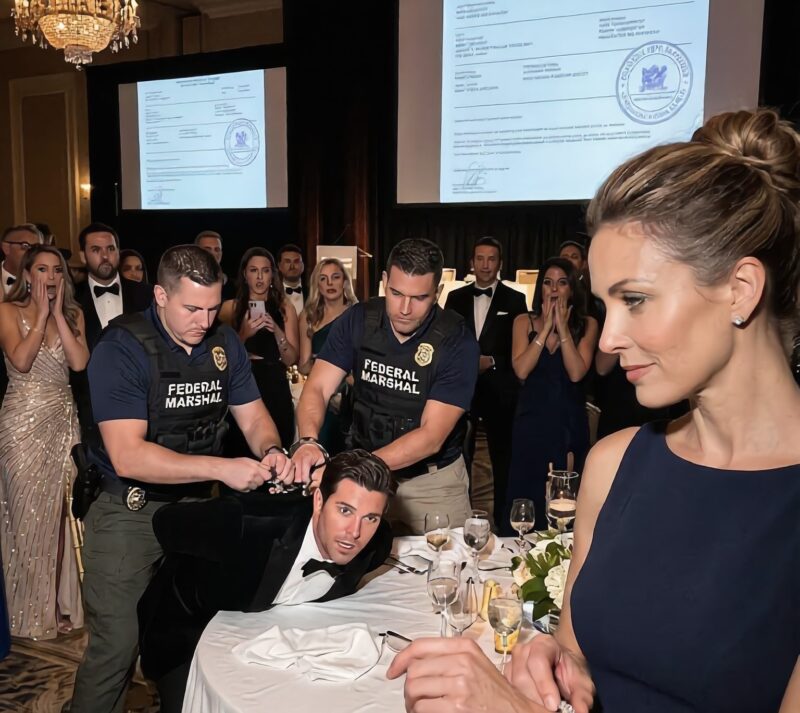
Grant leaned toward me without losing his polished smile.
“Vivian, whatever you’re thinking, not here.”
I looked across the ballroom.
His mother, Eleanor, was seated among our most influential donors, watching me with unsettling concentration.
For weeks, she and Grant had been quietly building the same story: I was exhausted. I was becoming forgetful. I was emotionally unpredictable. Perhaps someone else should temporarily oversee the foundation.
Now almost three hundred guests were gathered in one room.
All they needed was a scene.
Savannah stopped near me and deliberately turned her wrist toward the light.
“Grant gave it to me,” she said. “He said it was special.”
“He was right about that.”
I looked directly at her.
“But it wasn’t his to give.”
Savannah frowned.
“Look underneath the clasp.”
She turned the bracelet over.
There, hidden beneath the diamonds, were two engraved initials.
V.A.
Her expression changed.
“Vivian Archer,” I said.
Savannah stared at Grant.
“You told me it belonged to you.”
Grant opened his mouth, but I was no longer watching him.
Eleanor had instinctively reached for the emerald necklace resting against her throat.
That single movement told me more than anything Grant could have said.
Three weeks earlier, I had noticed the Cartier bracelet was missing from my jewelry case.
Grant dismissed my concern immediately.
“You probably moved it somewhere,” he said. “You’ve been forgetting things lately.”
Within days, Eleanor began making similar remarks.
Then board members started asking whether I was sleeping enough.
Whether the pressure was becoming too much.
Whether Grant should temporarily handle some of my responsibilities.
Their concern had sounded almost convincing.
Almost.
So I contacted Daniel Mercer, the attorney my father had trusted for more than twenty years.
Daniel discovered a draft resolution that had never been shown to me.
Under its terms, Grant could assume operational control of the Archer Foundation if I became medically or psychologically incapable of performing my duties.
One line stood out:
A public incident may justify immediate intervention.
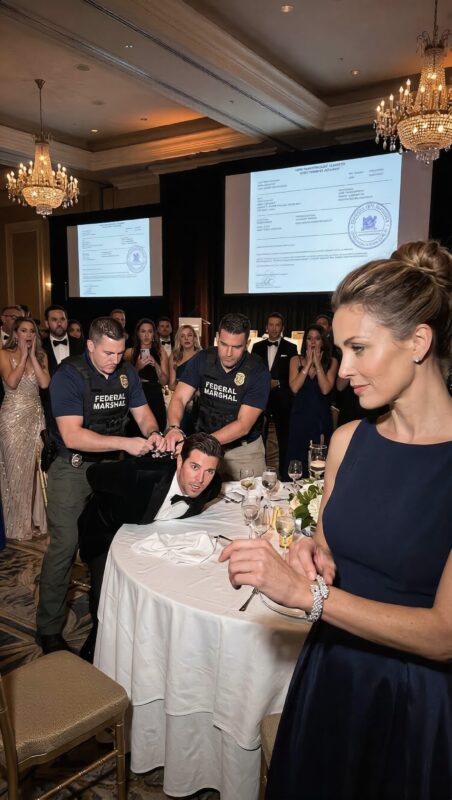
The gala suddenly looked less like a fundraiser and more like a trap.
They expected Savannah to appear pregnant and wearing my stolen bracelet.
They expected me to confront her.
They expected anger, shouting, perhaps tears.
And by morning, three hundred witnesses would remember Vivian Archer losing control in public.
So I gave them the one reaction they hadn’t prepared for.
I smiled.
Seconds later, the ballroom doors opened.
Daniel entered carrying a sealed legal folder.
Behind me, the enormous presentation screens went dark.
Then the Archer Foundation logo was replaced by financial records.
Wire transfers.
Shell companies.
Foreign accounts.
Millions moving through entities I had never authorized.
The ballroom fell silent.
Then Grant’s voice came through the speakers.
It was a recording.
He was discussing how to establish that I was incapable of managing the foundation before transferring Archer assets through accounts connected to the Hawthorne family.
Grant lunged toward the control area.
“Shut it down!”
Two federal officers intercepted him.
Daniel stepped onto the stage.
He explained that investigators were examining more than $42 million in potentially improper transactions linked to Grant, Eleanor, and businesses associated with them.
Then he pointed toward Eleanor.
“The jewelry is relevant too.”
Every head turned.
The emerald necklace around her neck had also been taken from my father’s estate.
Eleanor’s hand closed around it.
Savannah began trembling.
She removed my bracelet and held it toward me.
“I swear I didn’t know. Grant said you had given it to him.”
I took it from her.
Then I fastened it around my wrist.
Grant called my name as officers led him away.
I never turned around.
Eleanor followed moments later.
When the ballroom doors shut behind them, hundreds of people looked toward me.
I returned to the microphone.
“This foundation has survived something difficult tonight,” I said. “Tomorrow, we return to the people we were created to serve.”
The applause was immediate.
Yet I felt nothing resembling victory.
After most of the guests had left, Daniel found me alone near the stage.
He handed me a yellowed envelope.
My father’s handwriting was on the front.
For Vivian.
“He left instructions,” Daniel said. “If anyone ever tried to take the foundation away from you, I was supposed to give you this.”
Inside was a short letter.
My father wrote that the Archer Foundation had never been created to preserve wealth, status, or our family name.
Its purpose was to help people who had lost power over their own lives.
Near the bottom was a sentence that stopped me.
Anyone who needs to diminish you in order to control you does not love you.
That was when the tears finally came.
Not because my marriage was over.
Not because Grant had betrayed me.
But because my father had somehow left behind the words I needed years after he was gone.
Six months later, portions of the missing money had been recovered while the investigation continued.
Grant and Eleanor were still dealing with the legal consequences of what they had done.
I remained chairwoman of the foundation.
But I made one major change.
There would be no more lavish annual gala.
The money normally spent on flowers, chandeliers, entertainment, and expensive dinners was redirected into something permanent.
We opened the Archer Family Advocacy Center.
Its purpose was practical: legal support, emergency accommodation, counseling, and financial guidance for families trying to escape coercion and abuse.
On opening morning, I stood outside the building and noticed sunlight reflecting from the Cartier bracelet on my wrist.
For years, I had viewed it as an expensive reminder of my father.
Now the initials meant something else.
V.A.
They weren’t merely engraved letters.
They were proof that my identity belonged to me.
Grant had tried to rewrite who I was.
Eleanor had tried to convince others that my judgment couldn’t be trusted.
Together, they had tried to turn humiliation into evidence and control into concern.
They failed.
I lost a husband.
I lost the family I believed I had married into.
I lost the future I once assumed was guaranteed.
But those losses created room for something I hadn’t felt in years.
Peace.
That evening, I unlocked the door to my house and stepped inside alone.
There was no one waiting to question my memory.
No one telling me how I should feel.
No one quietly deciding what I was capable of.
The house was silent.
And for once, silence didn’t feel empty.
It felt like my life belonged to me again.