For three years, my family ridiculed me for being a janitor, never suspecting I was quietly holding a $280 million lottery win. I kept the uniform, the worn-out Corolla, and the basement bedroom on purpose—I needed to see if they could care about me without status. Yesterday, they called me an embarrassment and forced me out. Today, I came back in a Bugatti to collect my things—and my father collapsed the moment he realized who I was.
The numbers branded themselves into my mind the instant they flashed across the flickering screen: 4, 12, 28, 35, 42, and Mega Ball 11.
What stayed with me most wasn’t excitement—it was the silence. No shouting, no chairs scraping, none of the chaotic joy people imagine. Just the weak rattle of an old space heater in the corner and the slow drip of water behind the concrete wall.
The lottery host’s thin, distorted voice crackled through my battered laptop as he repeated the winning combination.
I sat on the edge of a fold-out bed in the basement of my parents’ house in Fairhaven Cove—a polished coastal suburb where every lawn looked flawless. My laptop rested on a lopsided stack of cardboard boxes, one still labeled in my mother’s elegant handwriting: *Unimportant storage.*
The irony was almost amusing. Even a box had managed to define me more kindly than my family ever had.
Above me, the house glowed with warmth and celebration. A dinner party was in full swing, laughter filtering through the vents while silverware clicked against fine china. My father’s voice rose above the others—calm, authoritative—the kind that expected every room to reshape itself around him.
That evening’s “small gathering,” as my mother called it, was anything but small. Two executives from Horizon Power—my father’s clean energy company—were there, along with a city councilman and his wife. There were long-time associates whose wealth mattered more than their character, and a young woman my mother hoped to introduce to my older brother, Colton.
I hadn’t been included. No one needed to say it—exclusion in the Miller household was never spoken, only arranged. It appeared as a missing chair, a place card that didn’t exist, conversations that paused when I walked in and resumed when I left.
Before the guests arrived, my mother had come downstairs dressed in pearls and silk, her perfume overwhelming the damp air. She looked around as if the room itself embarrassed her.
“Julian, please stay down here tonight unless it’s absolutely necessary,” she said, avoiding my gaze.
That had always been the quiet condition of my existence. I simply nodded as she left.
I thought seeing those numbers would spark something intense—joy, relief, disbelief. Instead, a deep, heavy calm settled over me, colder than happiness and stronger than excitement. It felt like a steel door closing between the life I had known and the one about to begin.
The host announced the jackpot: $450 million. I already understood what that meant. After taxes and the lump-sum payout, it would be around $280 million.
Enough to buy houses, companies, independence.
Enough to stop asking for permission to exist.
And most importantly, enough to ensure no one in my family could ever trace it back to me.
I opened the dented drawer beside the bed and pulled out a matte gray business card. Two simple lines were printed on it:
Eleanor Halbrook — Private Counsel, Trusts and Asset Protection.
I ran my thumb along its edge as laughter erupted upstairs—something my brother Colton had said. My name drifted down through the vent in fragments. I didn’t need to hear the full sentence to understand.
Julian the basement ghost.
Julian the disappointment.
The reminder that not every Miller was meant to stand in the light.
I set the card beside me and stared at the glowing screen until the numbers dissolved into a blur.

For the first time in my life, I didn’t care whether they stopped laughing or even noticed I existed.
All I needed was for them to remain exactly as they were a little longer, because the lottery had given me something far more valuable—time. And time, I had learned, was something I could use better than anyone else in that house.
Three years before the numbers were ever drawn, I walked into a gray limestone building in the old financial district with fifty thousand dollars in cash. It stood quietly between a private gallery and an upscale watch shop, its glass door bare of any sign. I was dressed in my navy maintenance uniform from Horizon Power, my name stitched across the chest—just another invisible worker.
No one in my family knew I worked at the company my father helped run. Harrison Miller liked to think he knew everything. He boasted about predicting downturns before the accountants confirmed them, yet he only paid attention to people who fit into his version of importance. Janitors and maintenance workers—the ones who kept everything functioning after hours—simply didn’t exist to him.
I used that blindness to my advantage. That’s where my second life began.
When I entered Eleanor Halbrook’s office, the receptionist eyed my uniform with quiet suspicion.
“I have an appointment with Ms. Halbrook,” I said.
She checked her screen, then paused when she saw my last name.
“Mr. Miller?” she asked, uncertain.
I nodded and followed her into an office overlooking the bay. Eleanor sat behind a pristine desk—no photographs, no personal items. She looked to be in her mid-forties, with dark hair cut neatly at her jawline and the steady composure of someone who had heard every story imaginable.
Her gaze shifted from me to the worn gym bag beside my chair. “Is that cash?”
“Yes. Fifty thousand dollars,” I answered, sitting down.
She didn’t react. No surprise, no curiosity. That alone told me I could trust her.
I explained what I needed: a blind trust, a layered structure, complete separation between my identity and any future wealth.
“I want no visible connection—nothing my family could ever trace back to me,” I said.
She studied me for a moment. “Are you avoiding debts? Taxes? A spouse?”
“None of that. Nothing illegal.”
“Then what exactly are you preparing for?” she asked calmly.
I turned my gaze to the sailboats drifting across the bright water, searching for the right words.
“I want to know if my family truly cares about me,” I said at last, “or if they only tolerate me because I’m easy to overlook.”
She didn’t judge. Instead, she asked, “And you think money will reveal that?”
“Not the money,” I replied. “The absence of it—at least in their eyes.”
She tapped her pen lightly. “Your family already appears wealthy.”
“They appear that way,” I said. “But they’re closer to the edge than anyone realizes.”
From the outside, the Millers had everything—an elegant stone house, tailored clothes, a polished image. But behind closed doors, I saw the truth: refinancing papers, late-night arguments over bills, and the quiet anxiety in my father’s face when financial reports arrived.
That’s the benefit of being invisible. People stop pretending when they think you don’t matter.
Eleanor opened a fresh file. “What you’re asking for can be done, but it won’t be simple. You’ll need multiple layers—companies, nominee directors, and a holding entity that keeps your identity completely hidden.”
I told her I bought lottery tickets every week. She raised an eyebrow at the odds.
“I brought this money,” I said, “so that if the impossible ever happens, I won’t be swallowed by the very people who were meant to protect me.”
She wrote down the name I had chosen: Zenith Crest Holdings.
That was the moment my second life truly took shape—a life no longer tied to a basement room.
I left her office with an empty bag and, for the first time, a sense of security. This secret wasn’t meant to protect them from me. It was meant to protect me from them.
The Miller house stood on a gentle hill, surrounded by perfectly manicured lawns that looked almost unreal. From the street, it projected flawless success—white stone walls, tall windows, an image of permanence.
Every summer, my mother hosted garden parties and told her guests that family meant everything to her.
I usually heard those words from the kitchen—or from the staircase leading down to the basement where I lived.
In my house, family life felt less like something real and more like a carefully controlled performance—my father writing every line, my mother shaping how it was seen.
Harrison Miller carried an authority that made people instinctively adjust themselves the moment he stepped into a room. He valued discipline, ambition, and, above all, success that could impress outsiders.
I was never the answer he was looking for. My brother, Colton, was. He fit perfectly into our father’s vision of what the Miller name should represent. He developed quickly, moved with confidence, and learned early that if you acted certain enough, people rarely questioned whether you truly knew what you were doing.
I existed differently—quieter, more observant. I stayed on the edges, often with a book, noticing the moments when adults lowered their voices to hide uncomfortable truths.
My mother, Beatrice, did not display obvious cruelty. Instead, her distance grew slowly, almost imperceptibly. She surrounded herself with beautiful things—glassware, elegant décor, carefully arranged family photos—but in those images, I was always pushed to the margins. In one picture, part of my shoulder was missing; in another, my eyes were closed, something she never noticed before approving it.
For a long time, I convinced myself none of it was intentional—that they were simply tired or distracted. That belief ended when I was twelve.
That year, I baked a lemon cake for their anniversary, using a recipe from my grandmother’s old notebook. She was the only one who ever saw my quiet nature as something meaningful. The first attempt fell apart. The second burned. But the third one looked right—good enough to offer.
I placed it carefully on the dining table and lit two small candles just as my parents walked in, already arguing. For a brief second, my mother’s expression softened, and I allowed myself to believe things might change.
Then it disappeared. She frowned and asked if I had made a mess in her kitchen.
My father loosened his tie and criticized me for using expensive equipment without permission.
“It looks like a brick,” Colton said, laughing as he walked past.
No one even tried it. Later that night, I found the cake thrown away.
I took it out of the trash and sat outside in the dark, forcing myself to eat every dry, tasteless bite.
Some pain doesn’t arrive suddenly—it settles quietly, like dust, until one day you realize you’ve been buried under it.
By the time I was twenty-two, the basement had quietly become my permanent space. My father framed it as a lesson in responsibility after I dropped out of college because I couldn’t afford another semester. My family refused to help, calling it a risky investment. Still, they continued funding Colton’s lifestyle and donating generously to causes that made them look good.
I told myself it was temporary. It wasn’t. Over time, neglect simply became normal. Eventually, no one even questioned why I was still there. They chose not to see it.
I got a job at Horizon Power on a rainy Tuesday in March. No one in human resources recognized my name. I introduced myself as Julian Elias Miller, but the supervisor only cared whether I could work nights and clean restrooms.
I said yes.
That’s how I ended up working as a janitor at the same company my father treated like his personal empire.
Horizon Power was celebrated in Fairhaven Cove. At social events, my father spoke about it as if it were a place where the future was being built.
To me, it was a place filled with overflowing trash bins and executive restrooms that constantly needed attention.
My shift began at six in the evening, just as the office workers were leaving. I moved through quiet glass hallways, cleaning away the traces of people who made decisions that shaped entire businesses.
No one noticed me. And that invisibility became my greatest advantage.
People spoke openly in front of me—private conversations, confidential topics, careless mistakes left on desks. They assumed I wouldn’t understand, so they didn’t bother to hide anything.
I never took anything. I just listened—and later, I learned.
I discovered my father had attached his reputation to risky ventures that were beginning to fail. I realized Colton often signed documents he didn’t fully understand in his role.
After work, I returned to the basement, opened my laptop, and studied—financial reports, market data, anything I could access. Using my savings and a small inheritance from my grandmother, I started investing carefully.
I focused on overlooked companies and struggling assets that others had dismissed but that showed signs of recovery.
My first real breakthrough came from a small thermal storage company in Oregon—one most investors ignored because they thought it was too specialized to matter.
I put my money to work early, and within two years, the company was bought out, turning my investment into something seventeen times larger. A significant portion of those gains went through Eleanor, who eventually asked what I was really building behind the scenes.
“I’m creating a life where I don’t have to ask for the right to exist,” I said, watching my coffee lose its heat.
She never demanded explanations. In time, she became the only person who understood both sides of my life—the version of me who slept in a basement and the one quietly acquiring high-end properties and equity in companies. By the time my lottery ticket paid out, Zenith Crest was already in place: a carefully designed system ready to receive wealth without drawing attention.
I claimed the winnings in silence. A couple of weeks later, the media reported that an anonymous individual had stepped forward. Experts speculated endlessly, but no one imagined the winner was the janitor working on the twelfth floor.
I didn’t resign. I didn’t leave the basement—not immediately. Eleanor was frustrated when she realized I intended to stay.
“You could walk away tonight and never return,” she told me.
“I know,” I said. “But I need clarity first.”
If I walked out too soon, I would never know if their treatment of me was about money—or something deeper.
That night, I returned home and found a short note from my mother on the counter, reminding me not to use the laundry room in the morning because cleaners were scheduled. I folded it and went downstairs to a bed that felt colder than any of the luxury apartments I now owned.
After the win, I started helping my family quietly, from a distance. Not because they had earned it, but because a part of me still wanted to matter.
The first issue I handled was the house. My father had refinanced it too many times just to maintain appearances. Through an intermediary company, I bought into the debt and restructured it to reduce the strain on him.
That evening, he raised a glass and proudly claimed that the system had finally recognized who it was dealing with. Colton smirked and praised his business instincts. I remained silent at the end of the table.
Then came Colton’s so-called “strategic sports investing,” which was nothing more than a pile of gambling losses. When creditors threatened to expose him, I settled everything through legal agreements that ensured silence. Two weeks later, he showed up wearing a new watch, claiming the market had finally shifted in his favor. My mother smiled, convinced he always found a way to land safely.
Next was the audit targeting my mother’s arts foundation. Poor handling of deductions had triggered it. I brought in a top-tier tax lawyer and resolved everything through a donor-advised fund, keeping my involvement hidden.
At a luncheon, I overheard her telling friends how comforting it was that people still supported the arts. I stood behind the kitchen door holding a tray when someone asked about me.
“Is Julian still living with you?” the woman asked.
My mother hesitated—just enough.
“Yes,” she said with a faint sigh. “He’s still figuring things out.”
By that point, I owned several luxury properties and had enough capital to buy the entire street she was standing on.
I continued to step in when needed. When Horizon Power faced a hostile takeover, I quietly accumulated shares and redirected the threat by leaking key information to the right people. When Colton was promoted, it was because of a strategic report I had sent anonymously—one he presented as his own. My father praised him, calling it proof of natural leadership.
I watched from the sidelines, knowing how hollow applause sounds when you’ve seen how the illusion works.
One cold evening, I tried to pass through the dining room unnoticed, but my father called out to me.
“Julian, designers are coming tomorrow to evaluate the basement,” he said without looking up.
My mother casually mentioned they were thinking of turning it into a wine cellar. Colton laughed.
In that moment, it became clear that the space I lived in didn’t matter to them. It was temporary. Replaceable.
“Alright,” I said quietly, heading downstairs. I sat on my bed for a long time.
I wasn’t angry. Anger requires expectation—and I had almost none left.
I had never planned for my father to find out that I worked at Horizon Power—not as an executive’s son, but as part of the maintenance crew.
One Thursday evening, my schedule shifted, and I was scrubbing a coffee stain outside the conference room when the elevator doors slid open. My father stepped out with two suited colleagues, and I instinctively lowered my gaze, hoping to remain invisible.
“Julian?” he called. His voice wasn’t loud, yet it carried enough weight to stop me cold.
I straightened slowly. The men beside him glanced from the name stitched on my uniform to his face, curiosity flickering in their expressions.
“Good evening, Father,” I said. He looked at me as though my presence itself embarrassed him.
He told the men to wait and stepped aside with me. They moved off but stayed close enough to listen.
“What exactly are you doing here dressed like that?” he asked, irritation sharpening every word.
“I work here,” I answered.
He moved closer, the sharp scent of his cologne overpowering the chemical smell of the cleaner in my hands.
“Do you realize how this reflects on me?” he muttered.
“I needed a job.”
“You could have come to me,” he snapped. “Unless things were that desperate.”
“They were,” I said evenly. “And you turned me away every time I asked—for tuition, for my car, for anything.”
His jaw tightened as he adjusted his cuff.
“You told me to stand on my own,” I reminded him.
“I didn’t mean like this,” he said. “You’re embarrassing me in my own company. Quit. Now.”
“I’m not leaving.”
“You’re damaging my reputation. I don’t want to see you here again,” he said, then walked away without another glance.
I didn’t resign. Instead, I switched to a later shift—one that kept me out of his sight entirely.
Months passed. Eventually, Zenith Crest closed the deal that quietly placed the company he cherished under my control.
At a formal dinner, my father raised his glass, praising the anonymous investor who had saved them. I stood in the kitchen, listening to the ice clink against the glass, fully aware he was thanking me without knowing it.
Their thirty-fifth anniversary became a grand event—imported flowers, live music, everything curated for perfection. My mother spent months orchestrating it, yet no one thought to ask whether I would attend.
I was still living in the basement, even though my penthouse overlooking the bay had long been ready.
That afternoon, I decided to bake one final lemon cake from my grandmother’s recipe—one last attempt to reach them.
In the prep kitchen, I mixed everything by hand, the sharp citrus scent filling the air. The cake came out with a slight crack across the top—imperfect, but genuine in a way nothing else in that house ever was.
I set it on a plain white plate and carried it upstairs into the bright, crowded living room.
My father saw me immediately, his expression hardening. “What are you doing?” he asked in front of everyone.
“I made a cake for your anniversary,” I said, stopping in front of them.
My mother’s eyes flickered with discomfort. It didn’t belong in her carefully constructed world.
“Not now, Julian,” she whispered, her smile never breaking. “We already have a proper cake.”
A nearby guest asked if I was her younger son. My mother brushed it off with a light touch, as though I were nothing more than an awkward interruption.
My father reached for my arm to guide me away, but I didn’t move.
Colton looked at the cake and laughed. “What is this? Another version of that brick cake disaster?”
I turned to my mother, hoping—just once—she wouldn’t join in.
Instead, she walked to a large trash bin and dropped the cake inside without a word.
The sound of the plate hitting the bottom echoed inside me like something breaking beyond repair.
“I’m leaving tomorrow,” I said quietly.
“We’ll talk about it later,” she replied, still smiling for the room.
“No,” I said. “We won’t.”
I turned and went downstairs as the music continued overhead, unchanged.
I packed my books, my grandmother’s notebook, a few photographs, and my laptop into a single bag.
At eleven that night, I called Eleanor and told her it was time.
When the elevator opened directly into my penthouse, I stood there for a moment, listening to the silence. In the basement, there had always been footsteps above me. Here, there was nothing—no one left to overlook me.
Eleanor arrived at midnight with coffee. Together, we worked until three in the morning, setting every legal mechanism into motion.
Breaking apart a family, she cautioned, isn’t the same as restructuring a corporation as we went through the documents together.
I replied that a real family shouldn’t need contracts or legal safeguards just to remember they have a son.
The mortgage protections were allowed to fall back to their original terms, and the accounts Colton had been using like personal vaults were locked. I didn’t take anything that didn’t belong to me—I simply stopped holding together what was already ready to collapse.
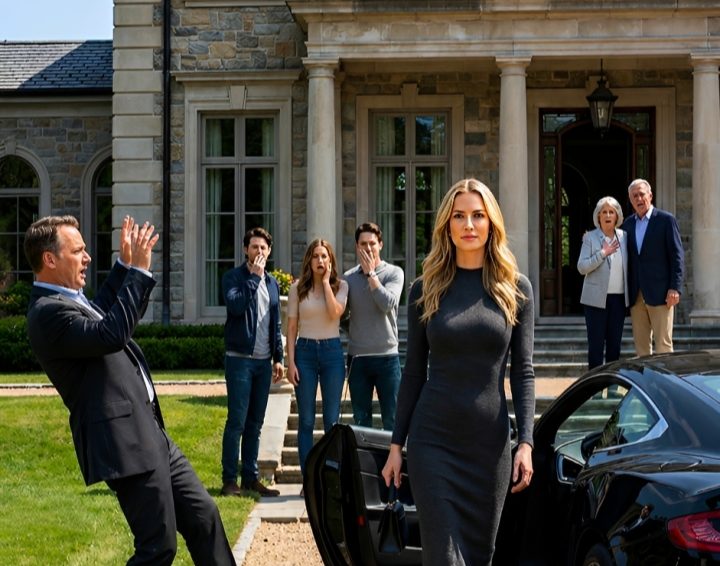
The next morning, I arrived at my parents’ house in a matte-black luxury car, determined to reclaim my identity. Colton answered the door in a robe, his gaze shifting from the car to my tailored suit, clearly thrown off. I stepped past him into the living room, where my father was descending the stairs, looking drained.
Arthur Pendergast, acting CEO of Horizon Power, entered behind me with his team. He gave a slight nod and addressed me as Mr. Miller. My father froze at the sound of that recognition.
Arthur announced that Zenith Crest Holdings had taken control of the company and that significant changes were already in motion. Eleanor turned to my mother and explained that I was the one behind the entity that had effectively saved both their home and their foundation.
My father lowered himself into a chair and asked why I had done all of this for them without ever saying a word.
“I thought if I helped you enough times, you might finally see that I mattered,” I told him.
The color drained from his face. His breathing faltered, and I caught him before he collapsed. I held him steady, telling him to breathe while someone called an ambulance.
After they took him away, I stepped outside and realized the house no longer had any hold over me.
My mother called several times from the hospital before I finally picked up.
“Julian, can you come back? We need you,” she said, her voice fragile and unsteady.
I told her they needed what I could provide, and she shouldn’t mistake that for truly needing me.
Over the following days, I oversaw the investigation into Colton. It revealed he had been selling company secrets to a competitor, Titan Energy, to support his lifestyle. This time, I made no effort to shield him.
When I visited my father in the hospital, he seemed diminished without his suits and authority. He admitted he had been ashamed—ashamed to see his son cleaning floors, thinking only of how it reflected on him.
“I avoided you because I didn’t want to face what it meant,” he confessed, tears slipping down his cheeks.
I told him he had failed me. He didn’t argue; there was nothing left for him to hide behind.
I left the hospital and, in time, the city itself, beginning a new life far from the weight of Fairhaven Cove. I came to understand that freedom isn’t about erasing your past—it’s about refusing to let it define your future.
And as I moved forward, I finally felt lighter, like someone who had put down a burden he had carried for far too long.
THE END.