He Disguised Himself as a Customer in His Own Diner — What He Discovered Changed Everything
Michael Carter pulled his cap low and stepped into the diner he had built from the ground up. No one recognized him—and that was exactly what he wanted.
For years, Carter’s Diner had been his pride. It had grown into a popular local spot, known for good food and friendly service. But recently, the numbers didn’t add up. Profits were slipping, staff kept leaving, and something felt… off.

So he decided to see the truth for himself.
“Anywhere’s fine,” a waitress said absentmindedly as he walked in.
Michael sat at the counter, watching closely. The place looked busy and efficient, but something beneath the surface felt wrong.
Then he noticed Henry.
The elderly dishwasher moved slower than the others, but with quiet precision. While the rest of the staff rushed, Henry stayed steady, focused, and calm. His hands were worn from years of work, his posture slightly bent—but his face carried a quiet kindness.
When a young mother struggled to pay her bill, the cashiers grew impatient. Their whispers carried a sharp edge. Before the situation could turn humiliating, Henry stepped forward and quietly paid the difference.
“No need to worry,” he said gently. “Things will get better.”
Later, Michael overheard two employees making fun of him.
“He acts like some hero,” one said.
“Yeah,” the other replied, laughing. “More like a broke old man trying to save everyone.”
Michael said nothing, but inside, something tightened.
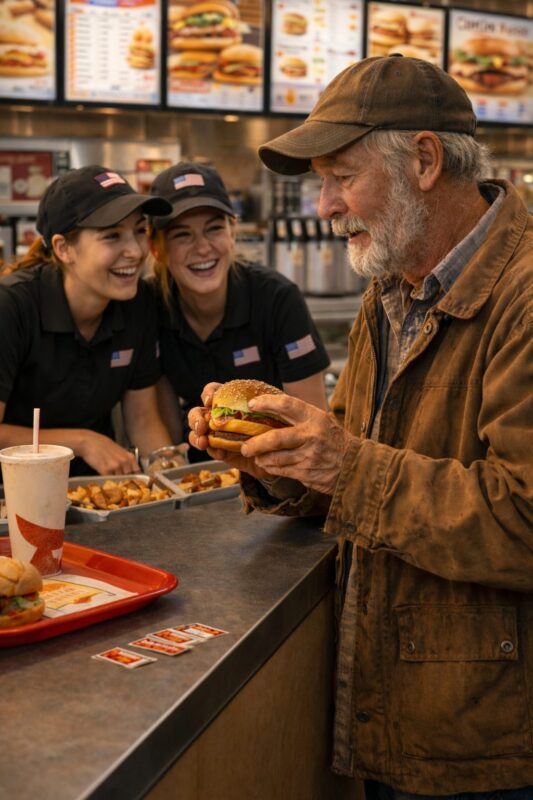
As the day went on, he kept watching. Henry never stopped working. He stayed longer than required, cleaned what others ignored, and treated everyone with respect—customers and staff alike. Even when pain showed in his movements, he never complained.
A regular customer eventually explained why.
Henry had lost his wife years ago. Medical bills had taken everything—his savings, his home, his security. Still, he refused help. Instead, he kept working, determined to stand on his own feet.
That evening, Michael followed him.
Henry didn’t go to a proper home. Instead, he drove to a hidden, rundown trailer behind the diner. It was barely livable.
Michael sat in his car, stunned.
How had he built a business where a man like Henry lived like this?
The following day revealed something worse.
Two employees were manipulating the register—creating missing cash on purpose. Their plan was simple: blame Henry and get him fired.
Michael watched it unfold, anger building with every moment.
Soon, the manager confronted Henry.
“There’s money missing,” she said. “And you’ve been seen near the register.”
Henry looked shocked. “I was helping customers. I gave money—I didn’t take it.”
But suspicion had already taken hold.
“I understand,” he said quietly. “If you think I’m the problem, I’ll go.”
That’s when Michael stepped forward.
“No,” he said firmly. “You won’t.”
He removed his cap, standing tall as the room fell silent.
“I’ve been here all week,” he continued. “Watching everything.”
Moments later, the truth came out. Recorded evidence exposed the real culprits—the same employees who had mocked Henry were the ones stealing and setting him up.
They were dismissed immediately.
Then Michael turned to Henry.
“You deserved better,” he said. “And I’m going to fix that.”
By the next morning, everything had changed.
Henry was no longer a dishwasher. He was offered a leadership role, with fair pay and lighter duties. His financial burdens were taken care of, and he was given a modest but comfortable home nearby.
Henry could barely believe it.
“Why help me?” he asked.
Michael’s answer was simple.
“Because you never stopped helping others—even when you had nothing.”
From that moment on, the diner became something different. It wasn’t just a place to eat—it became a place built on respect, fairness, and compassion.
Henry stayed—not out of necessity, but because he belonged.
And in the end, the most valuable thing in that diner wasn’t profit—
It was the character of a man who chose kindness, even when life had taken almost everything from him.