The Dance Reserved for the Woman They Forced Into Silence
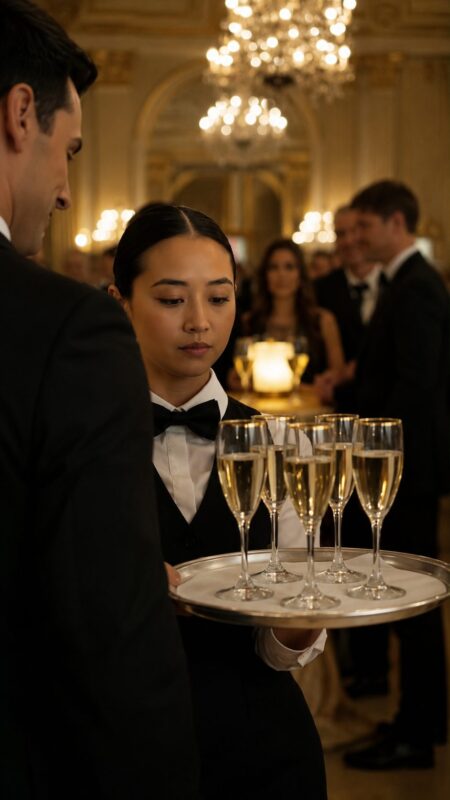
The first piano note drifted through the ballroom.
Not harshly.
Not loudly.
But with a weight that settled into every corner of the room, as if the building itself remembered her.
The young waitress crouched to tighten the old ballet slippers around her ankles. The satin ribbons were worn thin with age, one edge nearly torn apart. The instant her fingertips touched the frayed fabric, a shadow crossed her expression.
A memory.
A wound.
Then it vanished.
The woman in the silver gown noticed.
Alex noticed too.
Behind him, the event director stepped forward and raised a microphone.
“This evening was created to honor the memory of Celeste Moreau,” he declared.
The waitress shut her eyes for a brief second at the sound of the name.
Conversation died immediately.
The entire ballroom fell still.
Everyone in the city knew who Celeste Moreau had been.
The dancer audiences once called unforgettable.
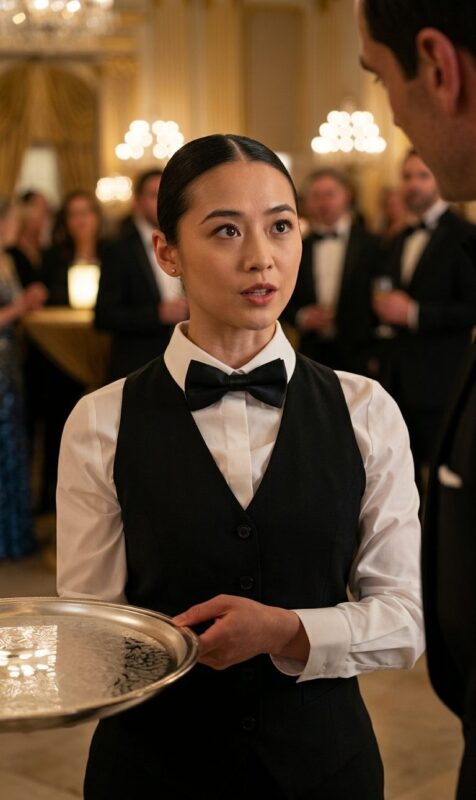
The artist whose career collapsed beneath rumors and scandal.
The woman Alex’s influential family had quietly erased from charity brochures, photographs, and public speeches.
The waitress opened her eyes.
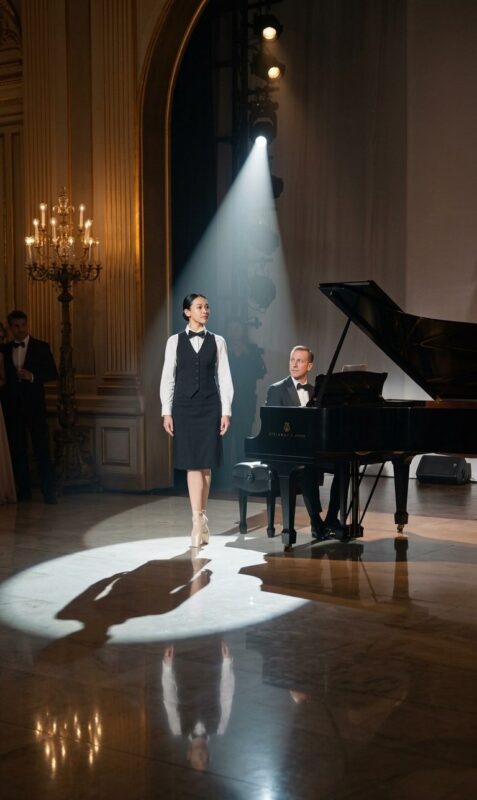
Then she stepped into the center of the floor.
At first, the dance was restrained.
A careful turn.
A slow inhale.
A trembling hand reaching for someone lost long ago.
Then emotion burst through every movement.
This was not the flawless precision of a staged performance.
It was something far more powerful.
It was grief given motion.
Her server’s uniform swayed beneath the crystal lights overhead. The old slippers brushed softly against the marble floor with every step. She danced like someone clawing her way back from humiliation, rejection, and years of being forgotten.
Alex could not stop staring.
There was no mockery left in his face now.
Only unease.
The woman in silver leaned toward the director.
“Who is she?” she whispered.
The answer echoed through the microphone.
“She is Celeste Moreau’s daughter.”
A collective gasp swept across the room.
As the final note faded, the waitress stopped directly in front of Alex.
Her breathing was uneven.
Her eyes glistened with tears.
“My mother was meant to open this gala ten years ago.”
Alex turned pale.
“She disappeared,” he said quietly.
The waitress shook her head.
“No. Your family convinced everyone that she did.”
The director lifted a yellowed envelope into the air.
“We discovered her letter tonight.”
The waitress looked around the ballroom, then fixed her eyes on the wealthy man who had reduced her to part of the evening’s spectacle.
“My mother did not vanish because she lacked talent.”
Her voice quivered, though her posture remained proud.
“She vanished because your family believed a poor dancer had no place beside people like you.”
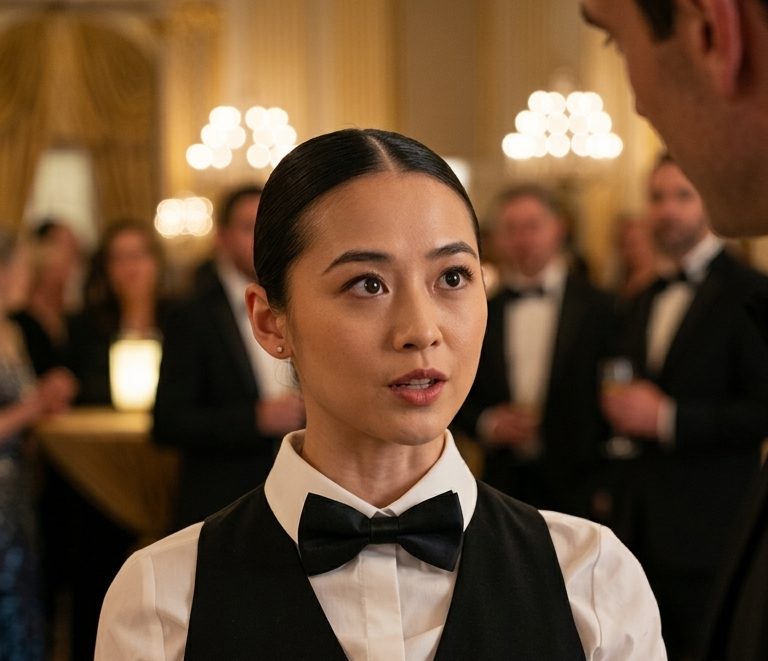
Alex stood speechless.
The waitress lowered her gaze to the battered slippers.
“Before she died, my mother taught me one thing.”
Then she raised her head again, tears slipping freely down her cheeks.
“The stage does not belong to the people who pay for the room.”
Her voice strengthened with every word.
“It belongs to the one brave enough to stand in the light.”