I Bought My Parents a $425,000 Oceanfront Home—Then Discovered My Sister Was Renting It to Strangers
“Imagine spending an entire summer at the beach without paying a single dollar!”
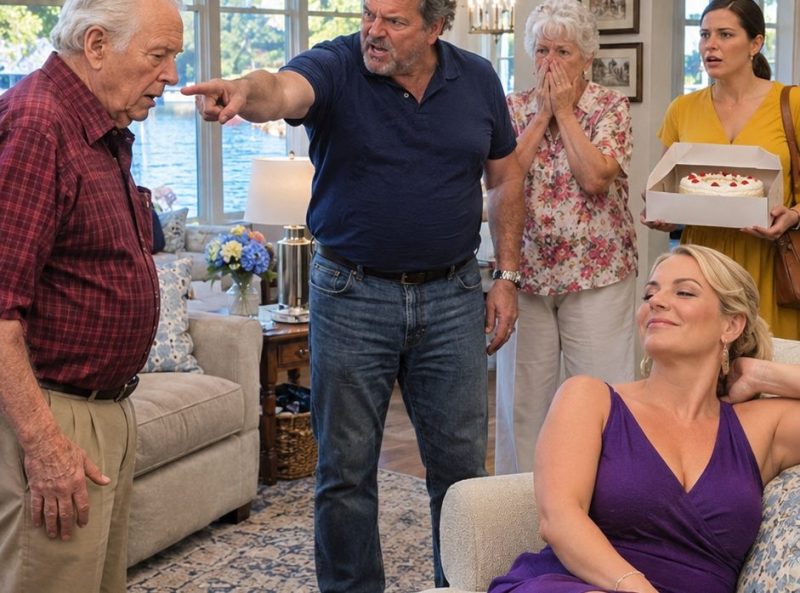
My brother-in-law’s booming laughter echoed through the living room as I stood unnoticed in the doorway.
Marcus was stretched across the expensive recliner I’d purchased for my seventy-six-year-old father. He was wearing Dad’s new bathrobe, drinking from his favorite coffee mug, and bragging to someone on the phone about his incredible luck.
“It’s practically our own private resort,” he continued. “Her parents are here, but they’ll get used to us. They’ve got plenty of space.”
Across the room, my father sat uncomfortably on a wooden dining chair.
Mom was standing at the kitchen sink, silently scrubbing a mountain of dirty dishes.
And my sister Dana was smiling as though nothing unusual was happening.
Four days earlier, I’d handed my parents the keys to that beautiful coastal house.
I’d spent $425,000 of my savings to give them the retirement they’d always dreamed of.
Now my sister and her husband had practically moved in.
But what made my stomach drop wasn’t the mess or Marcus wearing Dad’s clothes.
It was the discovery I was about to make.
Dana had secretly advertised my parents’ home as a vacation rental.
And she’d already accepted reservations from strangers.
My name is Mara. I’m thirty-seven, and I’ve worked as a nurse practitioner in Rhode Island for several years.
I didn’t grow up surrounded by luxury.
My parents worked harder than anyone I knew, yet financial security always seemed just beyond their reach.
Dad spent decades repairing industrial machinery. His hands were rough, his knees often ached, and he came home exhausted most evenings.
Mom cleaned offices after dark, frequently returning home long after Dana and I had gone to bed.
Despite their efforts, money was always tight.
I remember watching Mom divide grocery money into carefully labeled envelopes.
I remember Dad repairing the same unreliable car because replacing it wasn’t possible.
And I remember how they smiled through disappointment whenever an unexpected expense forced them to cancel something they’d been looking forward to.
They never allowed us to feel deprived.
But I noticed their sacrifices.
When I was fifteen, I made a private promise.
One day, I would give my parents a place where they wouldn’t have to spend their evenings worrying about money.
I’d known for years what their dream home looked like.
They wanted a small house near the ocean.
Nothing extravagant.
Just somewhere with a welcoming kitchen, a comfortable place to sit, and windows overlooking the water.
Dad loved watching boats moving across the horizon.
Mom wanted a garden where she could grow flowers without worrying about moving again.
Whenever we visited the Maine coast, they would stop to admire the cottages overlooking the shoreline.
“Wouldn’t it be wonderful to live somewhere like this?” Mom would ask.
Dad always answered with the same gentle smile.
“Maybe in another lifetime.”
I decided they deserved that life in this one.
After high school, I worked relentlessly to earn scholarships.
I studied nursing, took extra shifts whenever possible, and continued my education until I qualified as a nurse practitioner.
It wasn’t easy.
There were years when I barely took time off.
Friends bought new cars, traveled internationally, and renovated their houses while I continued living modestly.
Every month, I transferred part of my earnings into a savings account.
I named it “PROMISE.”
Whenever I checked the growing balance, I imagined handing my parents a set of keys.
That picture kept me motivated.
Unfortunately, my younger sister had a very different relationship with money.
Dana and her husband, Marcus, always seemed to be facing another financial emergency.
Sometimes they were behind on rent.
Other times, their car needed repairs or their utilities were about to be disconnected.
Because they had children, I frequently helped.
At first, the requests were occasional.
Then they became predictable.
“Just until payday,” Dana would promise.
Or Marcus would insist, “We’re getting back on our feet. This is the last time.”
But there was always another crisis.
Over nine years, I gave them approximately $47,000.
None of it came back.
I wasn’t angry about helping when their children genuinely needed something.
What bothered me was how quickly my generosity became something they expected.
If I hesitated, Dana accused me of caring more about my savings than my family.
Eventually, I realized that repeatedly rescuing them wasn’t teaching them independence.
It was allowing them to avoid making difficult changes.
So I began setting limits.
Dana didn’t appreciate that.
Our relationship grew strained, but I continued working toward the promise I’d made to our parents.
After years of saving, I finally had enough to purchase a home outright.
I spent months researching coastal properties in Maine.
I wanted something manageable for two older people, close enough to medical facilities and shops, with no major renovations required.
Then a listing appeared that seemed almost too perfect.
A charming blue house stood near the shoreline, with white window frames, a bright kitchen, and a sheltered porch overlooking the water.
The first-floor bedroom was spacious.
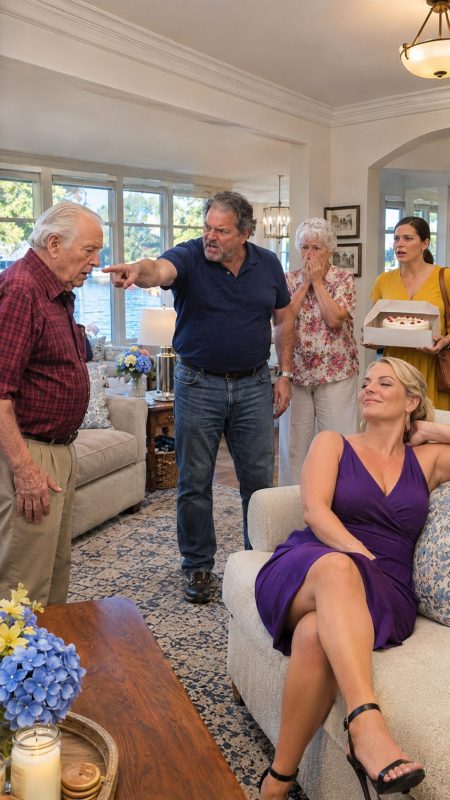
The living room had wide windows.
There was even a little garden behind the house.
The price was $425,000.
I scheduled a viewing immediately.
As I walked through the property, I could picture Mom preparing breakfast and Dad sitting by the window with his newspaper.
I knew I’d found their home.
But I also knew that a gift this significant needed careful planning.
Before making the purchase, I met with an attorney named Linda Ferreira.
I explained that my parents should have secure rights to live in the house without worrying about someone pressuring them to sell, transfer ownership, or share it against their wishes.
Linda recommended establishing a trust.
Under the arrangement, the trust would own the property, my parents would have protected occupancy rights, and I would serve as trustee.
Other relatives wouldn’t be able to claim the house simply because they were family.
It seemed like a sensible precaution.
At the time, I hoped we’d never need to rely on it.
I completed the purchase in cash and spent the following weeks preparing everything.
I bought furniture, kitchen equipment, soft bedding, and new appliances.
For Dad, I chose a comfortable recliner and placed it by the largest living room window.
For Mom, I stocked the kitchen with her favorite cooking supplies and planted colorful flowers near the front steps.
I arranged their photographs on shelves and filled the refrigerator with groceries.
Then I placed a handwritten note inside a wooden recipe box.
It was a message for their fiftieth wedding anniversary.
Finally, everything was ready.
I told my parents I’d organized a special weekend trip to Maine.
Mom assumed I’d booked a seaside hotel.
Dad asked whether he needed to bring his fishing equipment.
I simply told them to trust me.
When we arrived, I parked in front of the little blue house.
Mom admired the porch.
Dad looked toward the ocean.
“Beautiful place,” he said. “Are we staying here?”
I handed him an envelope.
Inside were the keys and a short letter explaining the gift.
Mom read it first.
Then she read it again.
“Mara, what have you done?”
I smiled.
“Something I’ve wanted to do since I was fifteen.”
She began crying.
Dad stood completely still.
“You bought this?”
“Yes.”
“For us?”
“For you and Mom. It’s your home.”
He walked slowly onto the porch, staring at the coastline.
For several moments, he didn’t speak.
Then he turned toward me.
“I never imagined I’d live somewhere like this.”
I wrapped my arms around him.
“You’ve earned the chance to enjoy it.”
He looked at the water again.
“Maybe I’ll finally stop waking up worried about bills.”
That sentence made every sacrifice worthwhile.
We spent the weekend arranging their belongings.
Mom loved the kitchen.
Dad practically refused to leave his new chair.
When I returned to Rhode Island, I believed I’d given them the beginning of a peaceful new chapter.
I was wrong about how smoothly that chapter would begin.
Two days after the anniversary surprise, Dana arrived with Marcus, their children, and the family dog.
They told my parents they were stopping by for lunch.
But they brought several large suitcases.
At first, Mom didn’t think much of it.
She enjoyed seeing her grandchildren and assumed Dana was planning to stay one night.
By the next morning, however, Marcus had occupied the guest bedroom, filled the refrigerator with his own food, and taken possession of Dad’s recliner.
Dana announced that the children needed a summer by the coast.
She said staying there would be good for everyone.
Mom tried to explain that she and Dad were still settling in.
Dana dismissed her concerns.
“There’s enough space for all of us.”
Dad suggested they discuss how long the visit would last.
Marcus laughed.
“Why put a deadline on family time?”
My parents didn’t know how to respond.
They were accustomed to avoiding confrontation, especially with Dana.
So they remained quiet.
I became suspicious when Mom started taking my phone calls in whispers.
On Tuesday evening, I called to ask how she liked her new neighborhood.
She answered quickly.
“Oh, it’s wonderful, sweetheart.”
But her voice sounded tense.
“Are you sure everything’s okay?”
“Of course.”
In the background, I heard a man shouting at someone to turn up the television.
Then a dog barked.
I frowned.
“Mom, who’s there?”
She hesitated.
“Your sister and her family.”
“Are they visiting?”
“Well, yes. They’ve been here a couple of days.”
“Are they planning to leave soon?”
Another pause.
“I don’t really know.”
I sat upright.
“What do you mean?”
Mom lowered her voice.
“Mara, please don’t be upset. I don’t want an argument.”
Her answer told me everything I needed to know.
I asked a few more questions and realized that Dana had effectively moved her family into the house without receiving a proper invitation.
After ending the call, I contacted Linda.
We reviewed the trust arrangements, my parents’ occupancy rights, and the steps available if anyone was interfering with their ability to enjoy the property.
Linda prepared the relevant documentation.
I also began checking whether the house had been advertised online.
What I found made me furious.
The property appeared on a vacation rental website.
Its photographs showed the very rooms I’d spent weeks furnishing.
The advertisement promised a comfortable coastal getaway with beautiful views and modern amenities.
The nightly rate was $325.
The host account belonged to Dana.
Three reservations had already been accepted.
I stared at the screen.
My sister wasn’t merely taking advantage of free accommodation.
She was attempting to turn my parents’ retirement home into a source of income.
Without asking them.
Without asking me.
And without any legal authority to do so.
The next morning, I drove to Maine.
I arrived shortly before noon and let myself inside.
The sight that greeted me made my chest tighten.
The clean, carefully arranged living room had been transformed into a cluttered mess.
Children’s toys covered the floor.
Laundry was piled on the sofa.
Dirty dishes occupied almost every available kitchen surface.
Dog hair clung to the furniture.
And Marcus was reclining in Dad’s favorite chair, wearing his new bathrobe.
He was speaking loudly into his phone.
“It’s an unbelievable deal,” he said. “We’re staying right by the ocean all summer. No rent, no hotel fees, nothing!”
He laughed.
“Her parents can deal with it. They don’t need that much room anyway.”
I looked toward my father.
He was sitting silently on a wooden chair in the corner.
Mom was washing dishes at the sink.
Dana stood nearby, drinking coffee.
Nobody noticed me for several seconds.
Then I placed my handbag firmly on the dining table.
“Dana.”
She turned.
“Oh. Mara.”
“We need to have a conversation.”
She sighed.
“Please don’t start complaining. We’ve barely been here.”
“That’s exactly the problem.”
Marcus ended his call.
“What’s going on?”
I looked around the room.
“Why are you treating my parents’ home like your personal vacation property?”
Dana rolled her eyes.
“Because we’re family. Isn’t that what family houses are for?”
“No,” I replied. “This is Mom and Dad’s home. It’s not a place you can occupy whenever you feel like it.”
She crossed her arms.
“You always act as though you’re better than everyone else because you have a good job.”
I ignored the insult.
“Were you invited to stay for the entire summer?”
Dana hesitated.
“Mom said we could visit.”
“Visiting for lunch isn’t the same as moving in.”
Marcus shrugged.
“What’s the big deal? It’s not like they’re using every room.”
I turned toward Dad.
He kept his eyes lowered.
That hurt more than anything Marcus had said.
I had bought the house so my father could finally relax.
Instead, he looked like a guest in his own living room.
I took my phone from my bag.
“Dana, explain this.”
I showed her the vacation rental advertisement.
Her expression changed immediately.
“Where did you get that?”
“It’s online.”
Marcus stood up.
“That’s just something we were testing.”
“Testing?” I repeated. “You’ve accepted three paid reservations.”
Dana looked away.
“We thought it could bring in some extra money.”
“For whom?”
She didn’t answer.
I continued.
“The house is already paid for. Its ongoing expenses are provided for. What exactly were you planning to do with the rental income?”
Marcus cleared his throat.
“We could help maintain the property.”
“By charging strangers to sleep in my parents’ bedrooms?”
Dana snapped.
“You’re making everything sound terrible!”
“Then explain your plan.”
Silence.
“Where would Mom and Dad stay while these guests occupied the house?”
Dana glanced toward Marcus.
He looked at the floor.
That was when I realized they hadn’t considered my parents’ wishes at all.
To them, the house wasn’t a sanctuary.
It was an opportunity.
I opened my handbag and removed a folder.
Inside were copies of the trust documents and an attorney-prepared notice outlining the situation.
I placed everything on the table.
“This property belongs to a trust,” I explained. “Mom and Dad have the right to live here peacefully. I am responsible for administering it.”
Dana stared at the papers.
“You actually involved a lawyer?”
“Yes.”
“Against your own sister?”
“To protect our parents.”
Her expression hardened.
“So you never trusted us.”
“I trusted you to respect Mom and Dad. You chose not to.”
Marcus approached the table.
“We’ve already promised the place to people. Canceling everything will cause problems.”
“Those are problems you created,” I replied. “You’ll need to cancel the reservations, issue refunds, and explain that you weren’t authorized to offer the property.”
Dana looked stunned.
“You expect us to leave?”
“Yes.”
“With the children?”
“You have an apartment in Rhode Island. You’re welcome to return to it.”
She shook her head angrily.
“This is unbelievable.”
Then Mom spoke.
“Dana, we didn’t agree to any rental arrangements.”
Everyone turned toward her.
Her voice was quiet, but firm.
“I don’t want strangers in my house. Your father and I moved here to enjoy our retirement.”
Dad slowly stood.
“And I’d like my chair back.”
Marcus looked toward the recliner.
For the first time, he seemed embarrassed.
Dad continued.
“I love my grandchildren. I enjoy visiting with all of you. But I don’t want anyone deciding how I should live in my own home.”
The room fell silent.
Dana stared at our parents as though she’d never considered that they might object.
I looked at her.
“It’s time to go.”
She argued for another twenty minutes.
She accused me of being controlling, selfish, and obsessed with money.
Then she brought up every occasion when I’d refused to help with a bill.
Finally, I reminded her that I’d already provided approximately $47,000 in financial support over the years.
“I gave you that money because I cared about your family,” I said. “But helping you doesn’t mean allowing you to take advantage of Mom and Dad.”
Marcus checked the paperwork again.
Then he quietly began gathering their belongings.
By late afternoon, the suitcases were packed.
The rental reservations were being canceled.
Dana refused to say goodbye to me.
But before leaving, she glanced at our parents.
Neither asked her to stay.
Once their car disappeared, the house became wonderfully quiet.
Mom sank into a chair.
“I feel awful,” she admitted.
I sat beside her.
“Why?”
“Because they’re upset.”
“Mom, you’ve spent your whole life making sure everyone else is comfortable. You’re allowed to want comfort for yourself.”
Her eyes filled with tears.
Dad sat down across from us.
“I should have spoken up sooner.”
I shook my head.
“You don’t have to manage everything alone.”
That afternoon, I arranged for the locks to be changed with my parents’ agreement.
Then we cleaned together.
I washed the dishes, vacuumed the carpets, and removed the piles of laundry and trash.
Mom wiped down the kitchen counters.
Dad put his books back on their shelves.
By evening, the blue house looked the way it had when I’d first handed them the keys.
Dad settled into his recliner.
He opened a novel, adjusted the lamp, and sighed contentedly.
Mom brought him a cup of tea.
I watched them for a moment and felt something inside me settle.
This was what I’d wanted.
Not luxury.
Not recognition.
Just two people who had worked hard all their lives finally enjoying a quiet evening without demands being placed on them.
Unfortunately, Dana wasn’t finished expressing her anger.
The following morning, my phone began receiving messages from relatives.
My sister had written a lengthy social media post claiming I’d forced her family out of a vacation home and humiliated them in front of her children.
She described me as cruel and controlling.
Several relatives sided with her immediately.
One aunt called to tell me I should be ashamed.
A cousin accused me of putting property ahead of family.
Someone else suggested I should simply have allowed Dana to stay for the summer.
I considered responding publicly.
I had screenshots of the rental advertisement, copies of the bookings, and a clear record of what had happened.
I could have defended myself in detail.
But then I looked at my parents sitting together on the porch.
Dad was watching boats in the distance.
Mom was watering her flowers.
They looked peaceful.
And I realized that arguing with relatives on the internet would accomplish nothing.
I’d purchased the house to give my parents a place free from constant stress.
I wasn’t going to make their home the center of a public family feud.
So I declined to participate.
Over the following months, Dana and Marcus began adjusting to life without my financial assistance.
Marcus found more consistent employment.
Dana started working additional hours and managing their household expenses more carefully.
They remained unhappy with me for a while.
But gradually, the angry messages stopped.
Mom told me Dana had begun calling before visiting.
Her first visit was awkward.
She arrived alone, stayed for lunch, and left in the afternoon.
She didn’t ask to spend the night.
She didn’t bring suitcases.
And she made no suggestions about using the house to earn money.
A few weeks later, she visited again.
This time, she helped Mom in the kitchen and spent an hour talking with Dad.
It wasn’t a dramatic reconciliation.
But it was progress.
Several months after the incident, Dana sent me a message.
“I’ve been thinking about what happened. I treated Mom and Dad’s house like something I could use whenever I wanted. I didn’t consider what they needed.”
I read it twice.
Then another message appeared.
“I know I took your help for granted, too. I’m working on changing that.”
For a long moment, I didn’t know what to say.
Eventually, I replied.
“I’m glad you’re taking responsibility. I want us to have a better relationship, but it has to be built on respect.”
She answered simply.
“I understand.”
I didn’t expect everything to improve overnight.
But I was relieved that she had begun recognizing the problem.
Nearly a year after purchasing the beach house, I returned to Maine for my parents’ fifty-first wedding anniversary.
As I pulled into the driveway, I noticed how much the place had changed.
Mom had planted flowers along the path.
Dad had built small wooden planters near the porch.
A wind chime moved gently in the ocean breeze.
Through the kitchen window, I could see them preparing dinner together.
I entered without announcing myself.
Mom stood at the counter, decorating a honey cake.
Dad was stirring soup on the stove.
They were laughing about something.
For a moment, I remained in the doorway, simply enjoying the scene.
These were the same people who’d once spent every evening worrying about expenses and repairs.
Now they were arguing playfully about whether Dad had added too much cayenne pepper to the soup.
“Mara!” Mom exclaimed when she noticed me.
She hurried over and embraced me.
Dad turned from the stove.
“Perfect timing. Come taste this.”
I accepted a spoonful.
The soup was delicious, though noticeably spicy.
“Dad, what did you put in here?”
He grinned.
“An improvement.”
Mom rolled her eyes.
“He’s been rewriting all my recipes.”
I laughed.
While helping set the table, I opened the wooden recipe box I’d placed on the counter the previous year.
Inside, tucked between cards for honey cake and vegetable soup, was the handwritten anniversary note I’d left for my parents on the day they received the house.
The paper was slightly worn.
They had clearly handled it often.
I unfolded it.
“Mom and Dad,
“You gave Dana and me love, shelter, and countless opportunities, even when providing those things meant sacrificing your own comfort.
“I hope this home gives you all the peaceful mornings and happy evenings you deserve.
“You’ve spent your lives taking care of us.
“Now it’s time to enjoy taking care of yourselves.
“Love, Mara.”
I stood quietly, holding the letter.
Mom appeared beside me.
“We keep that there,” she explained, “because it reminds us how fortunate we are.”
I smiled.
“I’m the fortunate one.”
After dinner, Dad returned to his favorite chair with a book.
Mom and I stepped outside.
The evening sky glowed pink above the ocean.
For a while, we stood in silence.
Then Mom spoke.
“Your father hasn’t been this relaxed in years.”
I looked through the window.
Dad was reading, his feet resting comfortably on the ottoman.
“He looks happy.”
“He is,” she replied. “And he’s sleeping so much better.”
I remembered what he’d said when I first handed him the keys.
He hoped he’d finally be able to sleep peacefully.
Now, almost a year later, that hope had become part of his everyday life.
Mom reached for my hand.
“I know how hard you worked for this, sweetheart.”
I shook my head.
“It was worth it.”
She looked toward the water.
“We never needed anything fancy. We just wanted somewhere we could feel safe.”
I followed her gaze.
The waves rolled gently toward the shore.
I thought about the fifteen-year-old girl who had once watched her parents struggle with bills and made a promise she didn’t know whether she could keep.
I’d spent decades working toward that goal.
But somewhere along the way, I’d confused generosity with the responsibility to solve everyone’s problems.
I’d believed that if I worked hard enough and gave enough, I could keep every member of my family happy.
The situation with Dana had taught me otherwise.
I couldn’t force my sister to make responsible choices.
I couldn’t prevent every disagreement.
And I couldn’t rewrite the difficult years my parents had already experienced.
But I could make sure their home remained a place where their wishes were respected.
I could help without surrendering my boundaries.
And I could love my family without allowing that love to be used against me.
As the evening grew cooler, Mom and I went back inside.
Dad looked up from his book.
“Did you two enjoy the sunset?”
Mom smiled.
“Very much.”
He closed his novel and glanced toward the window.
“Beautiful evening, isn’t it?”
I nodded.
“It really is.”
Then I looked around the warm little house.
There were flowers on the table, homemade cake in the kitchen, and the familiar sound of the ocean outside.
Nothing dramatic was happening.
Nobody was arguing.
Nobody was demanding money or making plans without permission.
My parents were simply enjoying their home.
And that ordinary moment meant more to me than any extravagant celebration ever could.
The house had cost $425,000.
But what I’d spent all those years working toward couldn’t truly be measured in dollars.
It was the sight of my father resting comfortably.
The sound of my mother’s laughter.
And the knowledge that two people who had given everything to their children could finally enjoy the life they’d always imagined.
I hadn’t bought them a business opportunity or a vacation rental.
I’d given them a place to call their own.
And at last, the promise I’d made as a teenager had become reality.