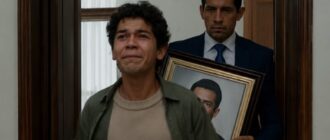
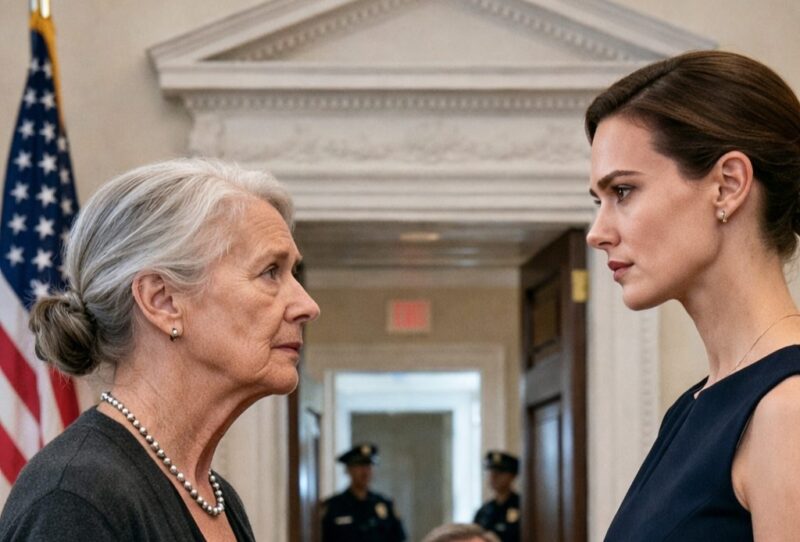
I was already sitting across from the lawyer’s desk when my daughter-in-law leaned back with a look of pure satisfaction.
“Better start figuring out where you’ll live, Eleanor,” Stephanie said calmly. “Because after today, you’re getting nothing.”
The word *nothing* seemed to echo around the office.
Outside the window, cars crawled along Route 9. I had driven that same road hundreds of times—to visit my grandchildren, drop off dinners, or help my son whenever he called.
Now I was here because he never would again.
Our attorney, James Morrison, opened a folder and adjusted his glasses. In his hands was an envelope with my son David’s handwriting across the front.
Stephanie sat confidently, her arms folded as if the outcome had already been decided.
“There is one final addition to David Fairfield’s will,” Mr. Morrison said.
That sentence changed everything.
Two months earlier, my phone lit up at **3:17 in the morning**.
I will remember that time forever.
“Mom,” David whispered when I answered. His breathing sounded wrong. “Something’s not right… my chest…”
Then the call cut off.
Within minutes I was driving through empty streets toward Memorial Hospital in Worcester.
But I arrived too late.
Massive heart attack.
Forty-five years old.
The doctor spoke gently, explaining cardiac arrest and failed resuscitation attempts. The official time of death was **3:41 a.m.**
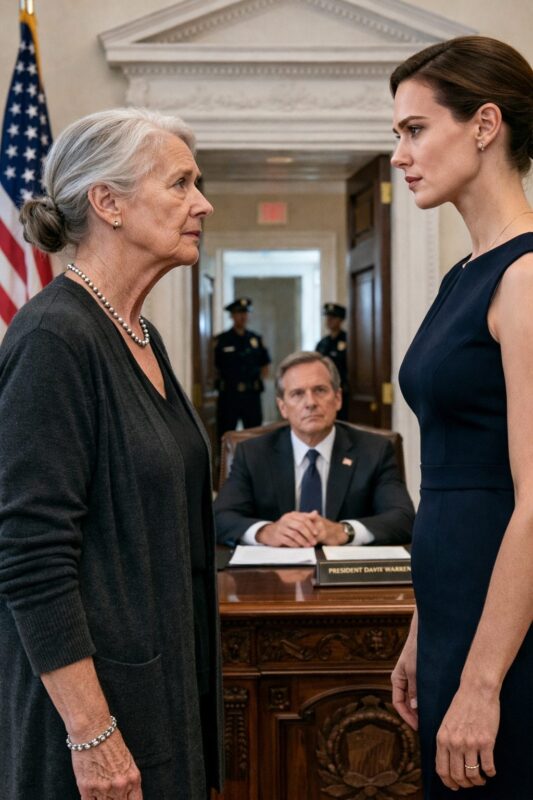
When I stepped into the hallway, Stephanie was already there in silk pajamas with a coat thrown over them.
For a moment we simply looked at each other—two women connected by the same man.
Then her expression shifted.
“Now we deal with reality,” she said quietly.
Not *we.*
*She.*
Six years earlier, I had handed David a **$40,000 check**—everything I had saved—to help him buy the house on Fairview Lane.
“You don’t have to do this,” he told me.
“It’s better to help you now,” I said.
Stephanie didn’t seem particularly moved. She talked about property values and mortgage rates while sipping wine.
Soon afterward, David asked if I would move into their guest room “for a while.”
That “while” turned into two years.
During that time I cooked, cleaned, watched the children, ran errands, and quietly kept the household functioning.
I told myself that was what family did.
After David died, everything changed.
The day after the funeral Stephanie asked me to step into the kitchen.
“I’m going to be honest,” she said. “This living arrangement isn’t working anymore. I need my space.”
I tried to stay calm.
“Maybe we should revisit this later,” I suggested. “When things aren’t so fresh.”
She shook her head.
“You have until tomorrow night to move out.”
Tomorrow.
Not next month.
Tomorrow.
I packed sixty-seven years of life into four suitcases and a few boxes.
The next evening Stephanie stood in the doorway while I loaded my car.
“You’ll manage,” she said. “You’re an adult.”
That was it.
I drove to a small hotel near Route 9.
For the first time in my life, I had no home.
Two weeks later my phone rang.
“Mrs. Fairfield,” the voice said, “this is James Morrison. We’re scheduling the official reading of David’s will next Tuesday. Your attendance is requested.”
Requested.
Stephanie had assured me there was nothing for me in the will.
Apparently that wasn’t true.
Now, sitting again in the lawyer’s office, Mr. Morrison finished reviewing the main portion of the document.
Stephanie inherited the house, the cars, and the **$200,000 life-insurance payout**.
She looked pleased.
“So that’s everything?” she asked.
“Not quite,” the attorney replied.
He lifted another sheet.
“To my mother, Eleanor Fairfield,” he read, “who provided the down payment for our home and never asked to be repaid, I leave the contents of safety deposit box number 3537 at First National Bank.”
Stephanie stiffened.
“What box?” she demanded.
Mr. Morrison slid a small envelope across the desk toward me.
Inside was a key.
A few days later I sat alone in a quiet room at the bank, opening that box.
Inside were financial records—and a letter from David.
*Mom,* it began.
*I invested the $40,000 you gave me. I added to it whenever I could.*
*If you’re reading this, it should be worth around $185,000 now.*
My breath caught.
**$185,000.**
More than four times what I had given him.
At the end of the letter he wrote:
*You will never have to depend on anyone who makes you feel like a burden.*
That afternoon Stephanie called.
“I heard about the deposit box,” she said sweetly. “Maybe we should discuss how to divide whatever was inside.”
I looked down at the bank statement in front of me.
For the first time since my son died, I felt steady.
“No,” I said quietly. “I don’t think that will be necessary.”
Sometimes justice isn’t loud or dramatic.
Sometimes it arrives quietly—
in a small brass key,
a son who kept his promise,
and **185,000 reasons to remember your worth.**