My Ex-Husband Tried to Claim His Father’s Fortune—But One Hidden Letter Revealed the Son He Never Knew Existed
“You’ve got some nerve showing your face here, Eleanor!”
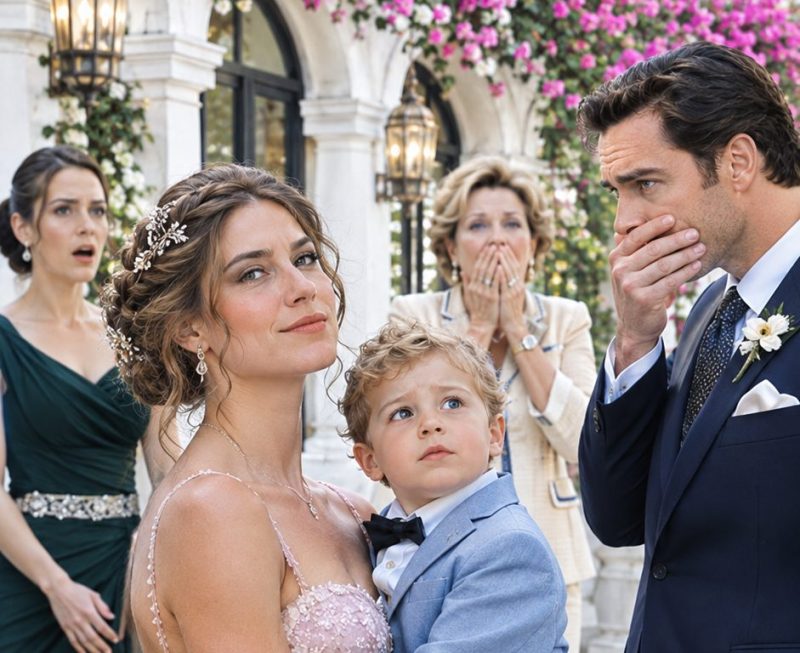
Marguerite Prescott’s furious voice cut through the silence of the attorney’s office.
I had barely stepped inside when my former mother-in-law rose from her chair, glaring at me as though I were an intruder.
“You divorced my son nearly two years ago. Whatever happens to our family’s money is none of your concern!”
My ex-husband, Warren, sat beside his new wife, Camille. He looked uncomfortable, but he made no effort to defend me.
That familiar silence brought back memories I had worked hard to leave behind.
I adjusted my handbag and calmly answered, “I didn’t invite myself. Thomas asked me to come.”
Marguerite laughed bitterly.
“My husband would never have wanted you involved in this.”
Before I could respond, Gerald Whitaker, the family attorney, looked up from his papers.
“Actually, Mrs. Prescott, your husband gave very specific instructions. Eleanor’s attendance was not optional.”
Marguerite’s expression tightened.
I took an empty chair near the end of the conference table.
None of them knew what Thomas had discovered before his death.
And I had no idea that the truth he left behind would change my son’s future forever.
My name is Eleanor Hayes. I’m thirty-three, and I spent five years married to Warren Prescott.
When we first met, Warren seemed nothing like the wealthy, privileged men I’d encountered before.
He was charming, attentive, and genuinely interested in my life.
He admired my determination to finish college while supporting myself through part-time jobs.
I believed he loved me for who I was.
Unfortunately, his mother saw me very differently.
The Prescotts belonged to an influential family with extensive investments, successful companies, and properties throughout South Carolina.
I came from a modest background.
My mother worked in a school office, and my childhood had been comfortable only because she stretched every dollar carefully.
To Marguerite, that made me unsuitable.
She criticized my clothes, questioned my education, and repeatedly suggested that Warren could have married someone from a more respectable family.
At first, I tried to win her over.
I attended family events, remembered birthdays, and offered to help whenever possible.
Nothing worked.
During one dinner, Marguerite casually remarked that Warren had always been too generous toward people who wanted access to his money.
She looked directly at me when she said it.
I waited for my husband to object.
Instead, he changed the subject.
That moment captured much of our marriage.
Warren wasn’t necessarily cruel, but he was unwilling to challenge his mother.
Whenever I complained, he told me to ignore her.
“That’s just how she is,” he’d say. “Don’t make everything into a confrontation.”
Over time, I began feeling like a stranger in my own family.
There was, however, one exception.
Warren’s father, Thomas Prescott, treated me with warmth from the beginning.
Unlike his wife, Thomas was never impressed by family connections or expensive possessions.
He valued honesty, kindness, and determination.
He often asked about my career and listened carefully when I talked about my goals.
When Marguerite embarrassed me at gatherings, Thomas would quietly remind me that her opinions didn’t determine my worth.
“You don’t need to become someone else to deserve respect,” he once told me.
Those words stayed with me long after my marriage ended.
By the time Warren and I divorced, our relationship had deteriorated beyond repair.
His mother had spent years interfering, and he had consistently chosen the easier path of avoiding conflict rather than supporting our marriage.
Camille, a woman from Marguerite’s social circle, had also become increasingly close to him.
I finally realized I couldn’t build a happy life while constantly fighting for a place in it.
So I left.
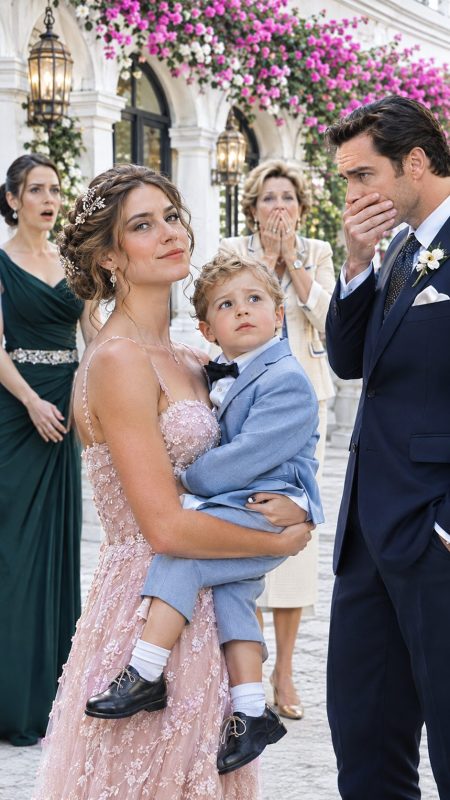
I rented a small apartment, returned to work, and began the difficult process of rebuilding my confidence.
Then, several weeks after the divorce became final, I discovered I was pregnant.
I sat alone in my bathroom, staring at the test.
My first reaction was disbelief.
Then fear.
I had no idea how Warren would respond.
Despite everything between us, I believed he deserved to know that he was going to become a father.
On May 7, I wrote him a letter.
I explained the pregnancy, confirmed that I wasn’t asking to reconcile, and suggested that we discuss how to raise our child responsibly.
I sent it to his family’s business office using a delivery service that required a signature.
The tracking information confirmed its arrival.
Someone had accepted it on Warren’s behalf.
I waited for him to call.
One day passed.
Then another.
After nearly two weeks, a message arrived from his account.
It was devastating.
The message accused me of using the pregnancy to manipulate him and warned me never to contact him again.
It stated that he wanted nothing to do with me or the child.
I read it repeatedly, searching for some indication that I’d misunderstood.
There was none.
I spent that night crying.
By morning, I’d decided that I wouldn’t spend my pregnancy pleading for affection from someone who appeared determined to reject us.
My mother offered to help.
Together, we began preparing for the baby’s arrival.
I chose a small crib, rearranged my apartment, and started saving whatever money I could.
I didn’t know that the message had been sent by someone else.
And I certainly didn’t know that Warren had never seen my letter.
Several months into my pregnancy, Thomas unexpectedly appeared at my apartment.
He carried flowers and a bag containing fresh fruit and groceries.
When I opened the door, he looked at my growing stomach and smiled sadly.
“Eleanor, I hope I’m not disturbing you.”
“Of course not. Please come in.”
We sat at the kitchen table.
After a few minutes, he asked whether the baby was Warren’s.
I nodded.
His expression changed.
“Does Warren know?”
“I told him.”
Thomas looked surprised.
“When?”
I explained the letter and showed him the message I’d received.
He read it carefully.
Then he asked to see the delivery confirmation.
When I showed him the signature information, his face became unusually serious.
“May I make copies of these?”
“Why?”
“I want to understand what happened.”
I agreed.
Before leaving, he placed his hand gently over mine.
“I can’t speak for Warren, but I can speak for myself. This baby is my grandchild, and neither of you will be forgotten.”
He kept his word.
Thomas began visiting regularly.
Sometimes he brought groceries.
Other times, he arrived with children’s books or small gifts.
He helped my mother assemble the nursery furniture and insisted on accompanying me to important appointments whenever I needed support.
But the most valuable thing he offered wasn’t money.
It was reassurance.
He never made me feel ashamed of my circumstances.
He never treated my pregnancy as a scandal.
When I worried about raising a child alone, he reminded me that families could take many different forms.
As my due date approached, we became closer.
Then my son was born.
He had dark hair, bright eyes, and the tiniest fingers I’d ever seen.
When Thomas held him for the first time, he became emotional.
“He’s absolutely wonderful,” he whispered.
I’d already chosen the baby’s name.
Thomas.
I wanted my son to carry the name of the man who had shown us kindness when we needed it most.
The older Thomas was deeply moved.
From that day onward, he visited whenever his health allowed.
He read stories to the baby, brought photographs from his own childhood, and spent hours simply watching his grandson sleep.
I never imagined those visits would end so soon.
Thomas had been struggling with serious health problems, and his condition gradually worsened.
He tried to hide how much pain and exhaustion he was experiencing.
Whenever I asked about his health, he redirected the conversation toward little Thomas.
Then, at seventy-one, he passed away.
Losing him was devastating.
He had been more supportive than almost anyone else in my life.
I grieved not only for myself, but for my son, who would never remember the grandfather who had loved him so fiercely.
A few days after the funeral, Gerald Whitaker contacted me.
He explained that Thomas had specifically requested my presence when his will was read.
I initially refused.
I didn’t want another confrontation with the Prescott family.
But Gerald insisted that Thomas’s instructions were clear.
So I agreed.
That was how I ended up sitting in the attorney’s office while Marguerite glared at me from across the table.
Gerald began by reviewing the estate.
Warren inherited significant company shares, investments, and other assets.
Marguerite received the provisions Thomas had arranged for her.
Several relatives were named as beneficiaries of smaller gifts.
Then Gerald paused.
“There is one additional bequest.”
He looked directly at me.
“To Eleanor Hayes, Thomas Prescott leaves his Magnolia Hollow property in Summerville, together with a cash inheritance of $142,000.”
I stared at him.
For a moment, the words made no sense.
Magnolia Hollow?
The beautiful historic house with the enormous fig tree and peaceful gardens?
Thomas had once told me it was his favorite place in the world.
Why would he leave it to me?
Marguerite reacted before I could speak.
“Absolutely not!”
She jumped from her chair.
“That property belongs to the Prescott family!”
Gerald remained calm.
“Thomas was entitled to decide how his estate would be distributed.”
“She isn’t even related to us!”
Warren turned toward me.
“Did you convince Dad to do this?”
His accusation stunned me.
“Of course not.”
Camille gave a dismissive laugh.
“How interesting that someone who left the family suddenly receives one of its most valuable properties.”
I looked down at my hands.
I’d come to honor Thomas’s memory, not defend myself against accusations of greed.
Fortunately, Gerald was prepared.
He reached into his briefcase and removed a thick sealed envelope.
“Thomas expected questions about this decision,” he announced. “He left a written explanation and supporting documentation.”
Marguerite’s face changed.
Gerald began reading.
“My family,
“Before discussing the reasons for my final decisions, I must address something that should never have been hidden.
“On May 7, Eleanor Hayes sent Warren a letter informing him that she was pregnant with his child.”
Warren suddenly leaned forward.
“What did you say?”
Gerald continued.
“The letter was delivered to the Prescott office. Marguerite personally accepted it.”
The color drained from my former mother-in-law’s face.
Warren looked at her.
“Mother?”
She said nothing.
Gerald read the next sentence.
“That letter was never given to Warren.”
My heart began racing.
For fifteen months, I’d believed Warren had knowingly rejected our child.
Now the truth was beginning to emerge.
Warren turned toward me.
“Eleanor, were you pregnant?”
I nodded.
“Why didn’t you tell me?”
“I did.”
His expression was filled with confusion.
“I never received anything.”
“I sent a letter. Then I received a message from your account telling me never to contact you again.”
He stared at me.
“I didn’t send that.”
The room went silent.
Gerald explained that Thomas had discovered the missing letter and begun investigating the message.
He had preserved the available records and supporting evidence.
Then Camille unexpectedly covered her face.
“I wrote it.”
Warren turned toward her.
“What?”
Tears streamed down her cheeks.
“Your mother told me Eleanor was pregnant. She said it would ruin everything if you found out.”
Marguerite immediately interrupted.
“Camille, be quiet!”
But Camille continued.
“I was afraid you’d go back to her. I used your account to send the message.”
Warren stood so abruptly that his chair scraped across the floor.
“You made her believe I wanted nothing to do with my child?”
Camille began sobbing.
“I didn’t know what else to do.”
“You could have told me the truth!”
Marguerite stepped forward.
“We were protecting your future, Warren.”
He turned toward her.
“Protecting me from my own son?”
She froze.
I hadn’t realized I’d spoken the word aloud until Warren looked directly at me.
“Son?”
My voice trembled.
“Yes. You have a little boy.”
He stared at me.
“How old?”
“Fifteen months.”
Warren lowered himself into his chair.
He looked devastated.
For a long moment, he couldn’t speak.
Then he whispered, “What’s his name?”
“Thomas.”
His eyes filled with tears.
“After Dad?”
I nodded.
“He loved your father very much.”
Warren covered his face.
When he finally looked up, his voice was barely audible.
“Where is he?”
“My mother is watching him outside.”
“Can I meet him?”
I hesitated.
Whatever Warren had just discovered, I couldn’t forget how painful our marriage had been.
I also knew that introducing a father into my son’s life required more than an emotional moment.
But I could see that Warren genuinely wanted to understand what he’d missed.
“Come with me,” I said.
We walked into the courtyard.
My mother was sitting near the fountain, entertaining little Thomas with a toy car.
When my son noticed me, he lifted his arms.
“Mama!”
I picked him up and kissed his forehead.
Warren stopped a few steps away.
He stared at the boy in my arms.
“He has my eyes,” he whispered.
Thomas looked curiously at the unfamiliar man.
Warren approached slowly.
“Hello, Thomas.”
My son reached toward his tie.
When Warren leaned closer, the boy grabbed it and laughed.
Warren laughed too, though tears were running down his face.
“I’m your dad,” he whispered.
Thomas had no idea what those words meant.
He was far more interested in the shiny clip holding Warren’s tie in place.
But for Warren, the moment was overwhelming.
He looked at me.
“Dad knew about him?”
I nodded.
“He visited throughout my pregnancy. He helped us prepare for the birth. He held Thomas when he was just a few days old.”
Warren closed his eyes.
“My father knew my son.”
“Yes.”
“And I didn’t.”
I didn’t know how to comfort him.
There was no way to return the months he’d missed.
I explained that Thomas had investigated the missing letter and discovered evidence of what Marguerite and Camille had done.
He’d intended to address the situation but became too ill before he could bring everyone together.
Instead, he preserved the records and prepared instructions for Gerald.
Warren listened without interrupting.
Then he asked, “Will you let me be part of his life?”
I looked at our son.
“I want Thomas to know his father,” I said. “But we need to do this carefully. He deserves stability.”
Warren nodded immediately.
“Whatever it takes.”
In the following weeks, Warren arranged a paternity test.
The results confirmed that he was Thomas’s biological father.
He began taking steps to establish a consistent relationship with our son.
At first, visits were short.
He came to my apartment and played with Thomas while I remained nearby.
He learned which toys made him laugh, which foods he enjoyed, and how to recognize when he needed a nap.
Sometimes he looked completely overwhelmed.
But he kept showing up.
He attended appointments when appropriate, contributed to his son’s needs, and respected the routines I’d already established.
I watched carefully.
I wasn’t interested in grand promises.
I wanted to see whether Warren could become a dependable father.
Gradually, he proved that he was willing to try.
Meanwhile, his marriage to Camille collapsed.
He couldn’t move past the fact that she’d deliberately hidden his son’s existence.
He separated from her and began rebuilding his life independently.
Marguerite reacted with anger.
She blamed me for the family’s problems and threatened to challenge the inheritance.
According to her, Thomas had been too ill to understand the consequences of his decisions.
But Gerald had anticipated that argument.
The estate planning documents were properly prepared, and medical assessments supported Thomas’s ability to make informed decisions.
He had also kept detailed notes explaining why he wanted Eleanor and his grandson to benefit from his estate.
After reviewing the available evidence, Marguerite eventually withdrew her objections.
Magnolia Hollow and the $142,000 were formally transferred according to Thomas’s instructions.
The first time I returned to the house as its owner, I felt a strange mixture of gratitude and sadness.
I’d visited Magnolia Hollow many times with Thomas.
He loved its quiet gardens and the enormous fig tree that shaded the back terrace.
He often said that the property reminded him of a simpler time in his life.
Walking through the empty rooms, I could almost hear his voice.
In his study, Gerald had arranged for another envelope to be left for me.
I recognized Thomas’s handwriting.
I sat beside the window and opened it.
“Dear Eleanor,
“I hope Magnolia Hollow becomes a place where you and little Thomas can build happy memories.
“I know some members of my family will question why I made this decision.
“But I want you to understand that this gift isn’t simply because you’re my grandson’s mother.
“I’ve watched you face difficult circumstances with remarkable courage.
“When others treated you unfairly, you refused to become cruel in return.
“When you found yourself preparing to raise a child alone, you worked hard to create a safe and loving home.
“And throughout everything, you continued treating me with genuine kindness.
“You never asked me for wealth, property, or influence.
“You simply allowed me to be part of your life.
“That was a gift I treasured.
“I want this house to remind you that you have always deserved respect.
“You do not need the Prescott name to make you worthy.
“Your strength and compassion have already proved who you are.
“Please give my grandson the childhood every child deserves.
“And whenever you look at the old fig tree, remember that I loved you both.”
I could barely finish reading.
For years, I’d allowed Marguerite’s insults to influence the way I saw myself.
Her constant criticism had left me wondering whether I would ever be good enough.
Thomas had seen something different.
He had recognized the strength it took to leave an unhappy marriage, rebuild my life, and become a mother under difficult circumstances.
And he’d wanted me to remember that strength.
I moved into Magnolia Hollow with my son.
We turned one of the sunny upstairs rooms into his bedroom.
I filled it with books, stuffed animals, and photographs of the people who loved him.
In the living room, I placed a picture of Thomas holding his grandson.
Warren began visiting regularly.
Over time, our communication improved.
We learned to discuss parenting without returning to the bitterness of our marriage.
We made decisions about Thomas’s health, education, and daily routines together.
Sometimes we disagreed.
But we gradually became better at listening.
Several months later, Warren asked to speak privately.
We were sitting on the back terrace while our son played in the garden with my mother.
“Eleanor,” he began, “I’ve been thinking about the future.”
I looked at him.
“I know I failed you when we were married. I should have defended you when my mother treated you badly.”
He paused.
“I can’t change the past. But I want to do better.”
“I know you’re trying,” I replied.
He took a breath.
“Would you ever consider giving us another chance?”
I remained silent.
He continued.
“Maybe we could get married again. Raise Thomas together as a family.”
A few years earlier, those words might have been everything I wanted to hear.
But I wasn’t the same woman anymore.
I’d learned that a peaceful life didn’t require returning to a relationship simply because someone regretted losing it.
“Warren,” I said gently, “I’m grateful that you’re becoming a good father.”
He waited.
“But our son doesn’t need us to be married. He needs us to respect each other and put his needs first.”
His expression changed.
I could see the disappointment.
Still, he nodded.
“I understand.”
“I’m not rejecting our family,” I continued. “I’m choosing the kind of family that works best for us.”
He looked toward Thomas playing in the grass.
Then he gave a small smile.
“As long as I get to be his dad, that’s what matters.”
Our relationship remained focused on raising our son.
It wasn’t always easy, but it became healthier than our marriage had been.
Even Marguerite eventually began making an effort.
At first, I wanted nothing to do with her.
She had concealed my pregnancy from Warren and contributed to fifteen months of misunderstanding and pain.
An apology couldn’t erase that.
But after some time, she approached my mother and acknowledged her actions.
She admitted that her need to control Warren’s life had caused terrible harm.
She apologized for judging me because of my upbringing.
I didn’t immediately welcome her back into our lives.
Instead, I established clear boundaries.
Visits had to be arranged in advance.
Parenting decisions belonged to Warren and me.
And any disrespect toward me or my family would end the visit.
To my surprise, she accepted those conditions.
She began making small, consistent efforts.
She arrived when invited, respected our decisions, and gradually developed a relationship with her grandson.
I couldn’t forget what she’d done.
But I was willing to recognize genuine improvement.
When little Thomas turned two, I organized a birthday celebration at Magnolia Hollow.
The garden was filled with balloons and cheerful decorations.
My mother prepared sandwiches and homemade desserts.
Warren arrived early to help arrange the tables.
Marguerite brought a small gift and quietly asked where she should place it.
There were no arguments about inheritance.
No insults about social status.
No attempts to control anyone.
For once, everyone was simply there to celebrate a child.
Thomas spent the afternoon running across the lawn, laughing as Warren chased him.
My mother watched from beneath the fig tree.
I stood nearby, remembering the man who had made this peaceful gathering possible.
After the party, when the last guests had left, I carried Thomas into the living room.
He pointed at the photograph above the fireplace.
“Grandpa Thomas!”
I smiled.
“Yes, sweetheart.”
He studied the picture.
“Grandpa?”
I knelt beside him.
“He was a wonderful man. And he loved you very, very much.”
My son touched the frame gently before wandering away to play.
I remained beside the fireplace.
Later that evening, I brought out Thomas’s final letter and placed it next to his photograph.
I thought about everything that had changed.
When my marriage ended, I’d felt unwanted and humiliated.
When I became pregnant, I feared I would have to raise my child without his father’s support.
And when Thomas died, I thought I’d lost the only Prescott who had ever truly cared about me.
But his final decisions had revealed a truth that had been hidden for far too long.
Warren learned he had a son.
My little boy gained the opportunity to know his father.
And I gained something I hadn’t expected.
Not simply a house or financial security.
I gained the confidence to stop measuring my worth through other people’s judgments.
For years, I’d tried desperately to be accepted by the Prescott family.
Now I understood that acceptance was never something I should have had to earn by sacrificing my dignity.
The people who truly loved me had never demanded that I become someone else.
They had simply stood beside me.
As I turned off the living room lights, I glanced once more at Thomas’s photograph.
His gentle expression reminded me of the man who’d always made room for me at his table.
“Thank you,” I whispered.
Outside, the old fig tree moved softly in the evening breeze.
Upstairs, my son was sleeping peacefully in his own room.
And I knew that whatever challenges waited in the future, I would teach him the lesson his grandfather had given me.
A person’s value isn’t determined by wealth, family connections, or the approval of powerful people.
Real belonging grows from honesty, kindness, and respect.
And the strongest families aren’t always the ones that look perfect from the outside.
They’re the ones whose members choose to care for one another, even when doing the right thing requires courage.