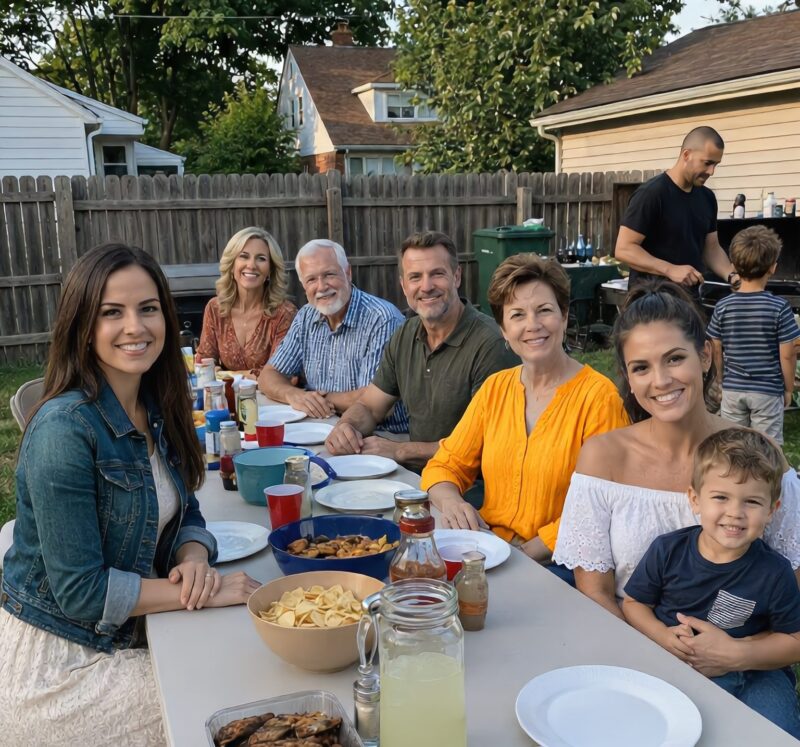
My father’s seventy-first birthday was supposed to be a relaxed family picnic. Instead, one sentence from my mother brought the entire gathering to a standstill.
She looked directly at my eight-year-old son, Noah.
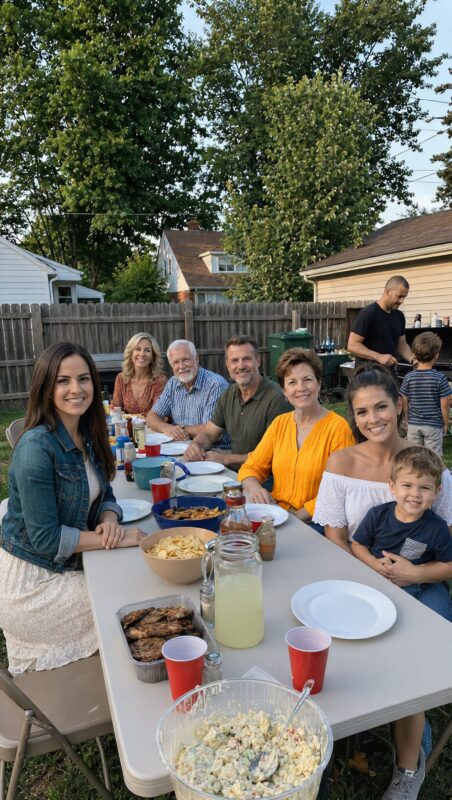
“Next time, maybe you should come without him.”
Noah’s fork stopped halfway to his mouth.
My stomach tightened.
He had spent the whole afternoon trying his best to make everyone happy. Earlier, when my brother’s dog bumped into the table and spilled Noah’s lemonade, Noah had apologized—even though he hadn’t done anything wrong. Then he cleaned up the drink himself and carefully wiped the table.
I turned toward my mother.
“What exactly did you just say?”
She barely reacted. She simply wiped her mouth with her napkin.
“I’m only saying what everyone else is afraid to say. He changes the whole atmosphere.”
Silence.
My brother focused on the grill as though nothing had happened. My sister suddenly found something fascinating on her phone. Dad shifted uncomfortably in his chair.
Not one adult defended Noah.
Then a chair scraped loudly against the patio.
Lily, my seventeen-year-old daughter, stood up.
“Say it again.”
Mom looked at her in disbelief. “What?”
“You heard me. Look at Noah and tell him directly that you don’t want him here because he makes you uncomfortable.”
Mom’s face tightened.
“You’re seventeen. This has nothing to do with you. Let the adults handle it.”
Lily didn’t move.
“You made it my business when you decided to embarrass an eight-year-old in front of his entire family.”
Then she pulled out her phone and set it on the table.
There was an audio file open on the screen.
Mom’s expression changed immediately.
Lily looked at her.
“Three nights ago, you told me exactly what you thought about Noah and why you didn’t want him coming to family events anymore.”
Mom went pale.
Lily had recorded their conversation.
In it, Mom had called Noah difficult and overly sensitive. She complained that someone always had to watch him and suggested that I should simply leave him somewhere else whenever the family got together.
But Lily never played the recording.
Noah was close enough to hear it.
She wanted to defend him, not hurt him even more.
Dad finally spoke.
“Margaret, is that true?”
Mom tried to avoid answering, but Dad wouldn’t let the question disappear.
Eventually, she admitted it.
Dad turned toward Noah.
“Listen to me,” he said. “You are part of this family. You belong here as much as anyone else.”
Later, Noah and I moved away from the gathering and sat beneath a large oak tree.
For several minutes, he said nothing.
Then he quietly asked, “Mom, do I really make things worse for everyone?”
My heart sank.
“No, sweetheart.”
“Then why would Grandma say that?”
“Because adults can be wrong too.”
Noah looked down at his favorite shirt and ran his fingers over the picture of a Triceratops.
“You know,” he said, “people misunderstood Triceratops for a long time.”
I waited.
“They thought the horns were just for fighting. But scientists think they might have been used for communication too.”
He paused, staring at the dinosaur.
“Sometimes you can be communicating, but people don’t realize what you’re saying.”
Lily sat down beside him and gently nudged his shoulder with hers.
A small smile appeared on Noah’s face.
“Some people notice, though.”
Three days later, Dad called.
He admitted that he had heard Mom make similar comments before and had chosen not to challenge her. He regretted staying silent.
After several serious arguments between them, Mom agreed to try family counseling.
For the next two months, I kept Noah away from family gatherings.
My parents needed to work through what had happened, and Noah needed to know that he would never be forced into a place where he felt unwanted.
Then Dad called again.
Counseling had uncovered something Mom had never admitted before.
She was uncomfortable with things about Noah that she didn’t understand.
Crowded rooms could overwhelm him. Loud noises bothered him. Unexpected changes sometimes made things difficult for him.
Instead of becoming curious and learning how to support him, Mom had treated those differences as problems.
Her confusion had slowly turned into frustration, and her frustration had become criticism.
The counselor made one point especially clear: understanding the reason behind her behavior did not erase the harm it had caused.
Then Dad repeated something Mom had said during one of their sessions.
“I think I’ve been misunderstanding the frill.”
I immediately knew what she meant.
Dad had told her about Noah’s Triceratops comparison.
A few days later, Mom asked whether she could see him.
I didn’t answer for Noah.
I asked him.
He thought about it.
“Can Lily come with us?”
“Absolutely.”
“And can I explain the Triceratops myself?”
“That’s completely up to you.”
The following Saturday, we went to my parents’ house.
Mom had made lemonade for Noah.
Not ordinary lemonade.
His lemonade.
Less sugar. A little more tartness. Exactly the way he preferred it.
We sat together, and Mom faced him.
“I owe you an apology,” she said. “What I said at Grandpa’s birthday was cruel and unfair. You were trying hard to be comfortable and spend time with us. Instead of noticing your effort, I made you feel like you were the problem.”
Noah remained quiet.
Mom continued.
“I should have helped you feel welcome. I did the opposite. I’m sorry.”
After a moment, Noah touched the Triceratops on his shirt.
“Grandpa told you about the frill?”
“He did.”
“Then I want to explain it.”
Mom nodded.
Noah took his time.
“I’m communicating even when people think I’m not. At Grandpa’s picnic, I was trying really hard. Cleaning the lemonade, staying calm, sitting with everybody—that was me communicating.”
He pointed toward the dinosaur.
“But if you don’t understand what the frill means, you can miss the entire conversation.”
Mom’s eyes softened.
“I understand.”
Noah studied her carefully.
“Really?”
She hesitated before answering.
“I’m starting to.”
Noah nodded.
“That answer is better.”
Mom looked surprised.
“Why?”
“Because it’s honest. I can work with honest.”
Then she asked him what she could have done differently at the picnic.
Noah didn’t need much time to answer.
“You could have noticed the things I was doing right. And if you thought something was getting too difficult for me, you could have asked instead of deciding for me.”
Mom nodded.
“I can do that.”
Before we left, Noah surprised us.
“I think I want to come for Thanksgiving.”
Mom smiled.
“I’d really like that.”
“But I need somewhere quiet if everything gets too loud.”
“You can use the reading room whenever you want.”
“And can the dog stay outside during dinner?”
“Absolutely.”
On the drive home, Noah leaned against the window and watched the trees pass.
After a while, he said, “That was better than I expected.”
“I thought so too.”
He considered this.
“The lemonade was perfect.”
“Your grandma apparently practiced.”
That made him smile.
“She’s learning how to read the frill.”
I glanced in the rearview mirror.
Lily was smiling too.
I thought back to Dad’s birthday picnic.
A table full of adults had heard my mother humiliate a child, and almost everyone had chosen silence.
Then a seventeen-year-old girl pushed back her chair and refused to pretend nothing had happened.
She protected her brother without making him listen to the painful recording she had saved.
That moment taught me something about families.
Change doesn’t always begin with a perfect apology.
It doesn’t always begin with understanding either.
Sometimes it begins when one person refuses to remain silent.
Lily did that for Noah.
And eventually, Grandma did something difficult too: she admitted that she didn’t understand him and decided to learn.
Noah had never stopped communicating.
We were the ones who needed to become better listeners.
For the first time, it felt like we finally were.