My parents brushed off my graduation as “a celebration for people who’ll never amount to anything.” Instead of watching me receive my diploma, they drove across town to cheer for my younger brother Tyler at a routine basketball game.
I graduated first in my class and walked across the stage without seeing a single familiar face in the audience. The row reserved for the families of honor graduates remained painfully empty. I glanced at the speech I had rehearsed for weeks, folded the pages, and slipped them back into my pocket.
I decided to speak without notes.
I thanked the teachers who refused to give up on me, the librarian who always found another book to challenge me, and the friends who became the family I never had. Then I thanked the people who had never been there. Their absence, I said, had taught me a lesson no classroom ever could: never build your confidence on the approval of those who continually choose not to care.
Silence filled the auditorium for a heartbeat before everyone stood and applauded.
When the ceremony ended, Daniel Pierce, the founder of Pierce Athletics, introduced himself and congratulated me. He informed me that I had been awarded the highly competitive Future Leaders Scholarship, which would pay every expense for my studies at Columbia University.
By nightfall, a video of my impromptu speech had exploded across TikTok, becoming the platform’s most-watched clip of the day.
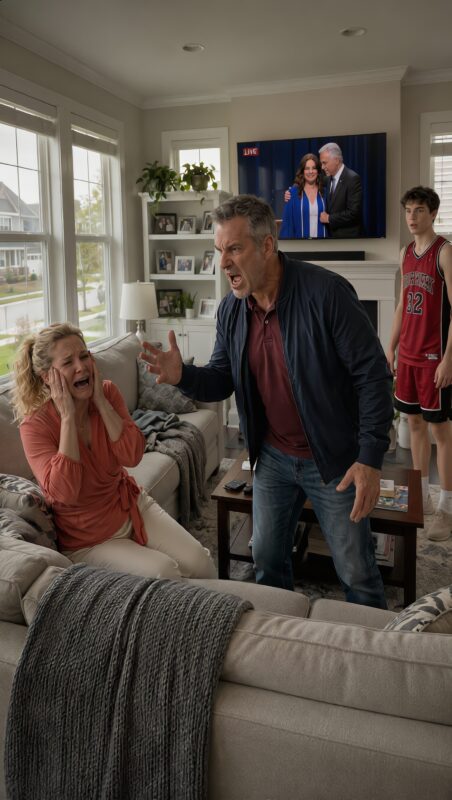
My parents saw it only because it was impossible to ignore. The instant they recognized Daniel Pierce beside me, their attitude changed completely. They demanded to know why such a well-known businessman had attended my graduation.
I looked at them calmly.
“He wasn’t there for the ceremony,” I said. “He was there for me.”
A few days later, Rachel Monroe, Daniel Pierce’s chief of staff, arrived with official scholarship documents and an invitation to join an exclusive leadership fellowship in New York. She explained that my tuition, housing, and program expenses were fully covered. She also reminded my parents that, as a legal adult, I alone would decide my future.
Only after hearing that did they begin asking for forgiveness.
My father claimed they would never have missed my graduation if they had known Daniel Pierce planned to attend.
I shook my head.
“You’re proving my point,” I answered. “You wouldn’t have shown up for your daughter. You would have shown up for someone important.”
Even Tyler admitted the truth. There had never been college recruiters at his game. My parents had ignored one of the biggest milestones of my life for an ordinary high school matchup that ended in a loss.
Soon afterward, I packed my belongings and moved in with my best friend, Nina, while preparing for my move to New York.
As public interest in my story grew, I turned down offers to appear on talk shows. Instead, I focused on speaking at schools and community events about students who succeed despite growing up without encouragement at home. Those conversations inspired generous donations to my former school’s library and academic support programs.
When I arrived at Columbia, Daniel Pierce treated me no differently than any other scholarship recipient. He reminded me that opportunities may open doors, but only hard work keeps them open.
My parents continued reaching out, hoping to repair our relationship. I answered their calls, but trust returned slowly. Tyler changed as well, admitting that years of being treated as the favorite had shaped him in unhealthy ways.
Exactly one year later, I returned to my high school to deliver the commencement address.
This time, my parents were already seated in the front row before the ceremony began.
Afterward, my father quietly told me he was proud of everything I had accomplished.
I believed him.
His words finally felt sincere.
The difference was that I no longer depended on hearing them.
My confidence had been built long before that day, the moment I stopped asking others to measure my worth and began believing in it myself.