My father gave me exactly one instruction after the judge finalized my divorce.
“Change every PIN connected to every card you own.”
I never asked him why.
By midnight, that advice had turned my ex-husband’s victory party into the most humiliating night of his life.
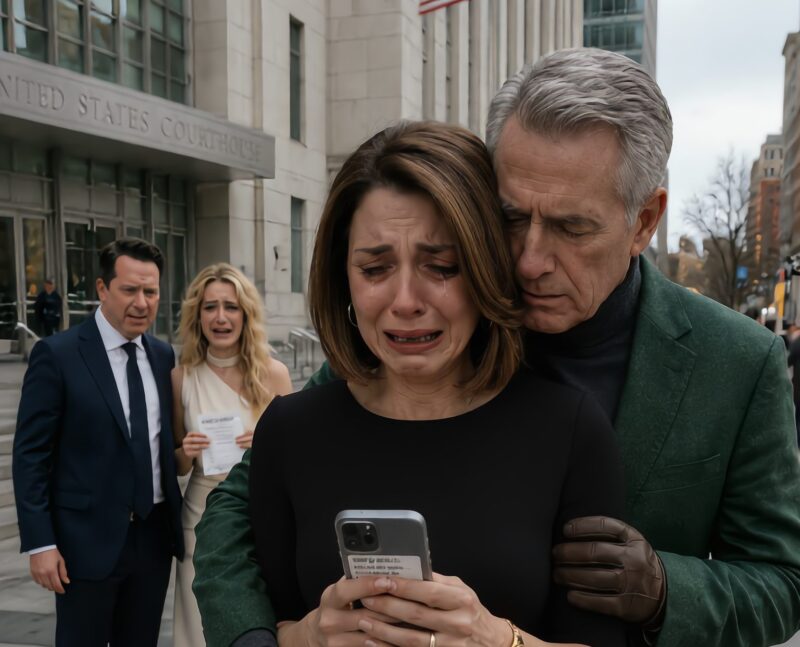
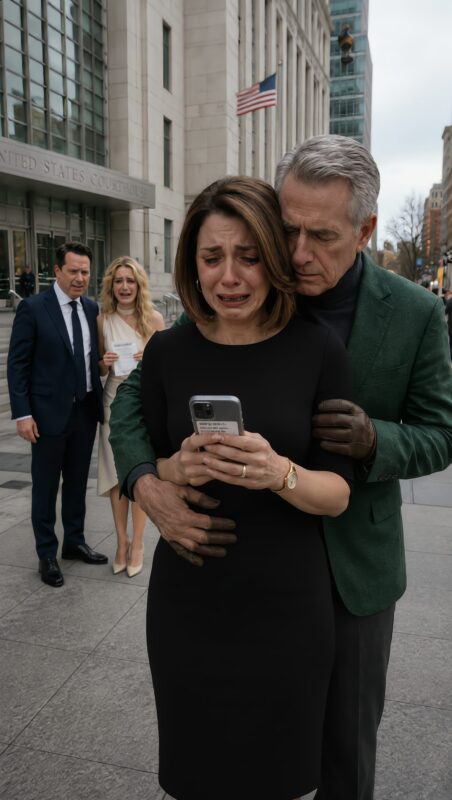
The ink on the divorce decree had barely dried when my father stopped me outside the courthouse. His expression was calm, but I recognized the look. Richard Hayes had spent thirty-three years uncovering financial fraud, and whenever he spoke in that quiet, measured tone, people paid attention.
“Claire,” he said, “don’t wait until tomorrow. Open your banking apps now. Change every PIN, every password, every code. A new chapter begins the moment old access ends.”
I didn’t argue.
The cold metal bench outside Courtroom 6B became my office for the next fifteen minutes. One after another, I updated every security code tied to my finances—personal accounts, business cards, travel cards, emergency credit lines, corporate accounts, and even the black executive card I rarely carried.
Just as I finished, Daniel Whitmore walked past with Vanessa Cole wrapped around his arm as though she had already inherited my entire life.
Daniel slowed long enough to deliver one final insult.
“Hope you’re ready for your new life, Claire. Maybe next time you’ll learn how to keep a husband.”
Vanessa laughed as if she’d rehearsed the moment.
I locked my phone and met his eyes.
“Maybe,” I replied. “You should learn how financial authorization actually works.”
For a fraction of a second, uncertainty crossed his face.
Then they disappeared toward the parking lot.
That evening, they celebrated at Aurum House, one of Manhattan’s most exclusive private clubs—a place where privacy cost almost as much as the wine.
Daniel still had access because, during our marriage, he’d been listed under my corporate membership.
He ordered without restraint.
Fresh oysters flown in that morning.
Japanese A5 Wagyu.
Vintage Bordeaux.
Signature cocktails covered with edible gold.
A private violin performance arranged especially for Vanessa.
Then they wandered into the members-only jewelry salon.
Vanessa admired a sapphire necklace worth $640,000.
Determined to impress her, Daniel confidently presented my matte-black corporate card.
The waiter accepted it and disappeared.
Several minutes later, he returned looking noticeably uncomfortable.
“Mr. Whitmore,” he said quietly, “I’m afraid the transaction could not be completed.”
Daniel barely looked up.
“Try again.”
“We already have.”
“Use another linked card.”
The waiter took a careful breath.
“Unfortunately, sir, every authorized payment method connected to this membership has either been removed or no longer permits purchases.”
Vanessa’s confident smile disappeared.
Daniel grabbed the receipt from the waiter.
The balance due was $990,000.
Across the city, my phone vibrated repeatedly as attempted transactions triggered fraud notifications.
I glanced at the screen while sitting comfortably in my father’s kitchen.
He poured coffee into two mugs.
Without looking up, he smiled.
“Now,” he said, “he’s discovering the difference between access and ownership.”
Before dawn the next morning, my attorney called.
“Your ex spent hours insisting the club’s payment system malfunctioned,” she said. “Management verified everything. The system worked perfectly.”
Nothing had failed.
The membership had already been transferred into my sole control.
Every payment authorization connected to Daniel had been revoked.
The privileges he had taken for granted disappeared the same moment our marriage legally ended.
By lunchtime, my phone showed twelve missed calls and several increasingly desperate voice messages.
“Claire… please answer. We need to talk. We can straighten this out.”
I deleted every message without listening to the end.
For years, I believed solving Daniel’s problems was my responsibility.
That morning, I finally understood it never had been.
Later, while autumn leaves drifted across my father’s backyard, he joined me at the window.
“I wasn’t worried about your money,” he said.
I looked at him.
“The cards were only symbols.”
“Then why tell me to change everything?”
“Because security isn’t just about banks,” he answered. “Sometimes you have to remove someone’s access before you can reclaim your own life.”
His words carried more weight than anything said inside the courtroom.
That evening, I made one final change.
Not another password.
Not another account.
My perspective.
For the first time in years, I stopped seeing the divorce as something that had taken my future.
Instead, I saw it for what it truly was.
It had returned my freedom, my confidence, and the peace that comes from knowing no one will ever again mistake kindness for unlimited permission.