My parents said they were taking Grandma Eleanor out for a quiet lunch.
By the end of the afternoon, she had been abandoned at a nursing facility.
I learned about it when an unfamiliar number appeared on my phone.
“Am I speaking with Ivan Sterling?” the caller asked. “Your grandmother gave us your name as her emergency contact. The family members who brought her here left before the admission process was completed.”
I stared at the phone.
“What do you mean they left?”
But I already knew something was terribly wrong.
I grabbed my keys and started driving.
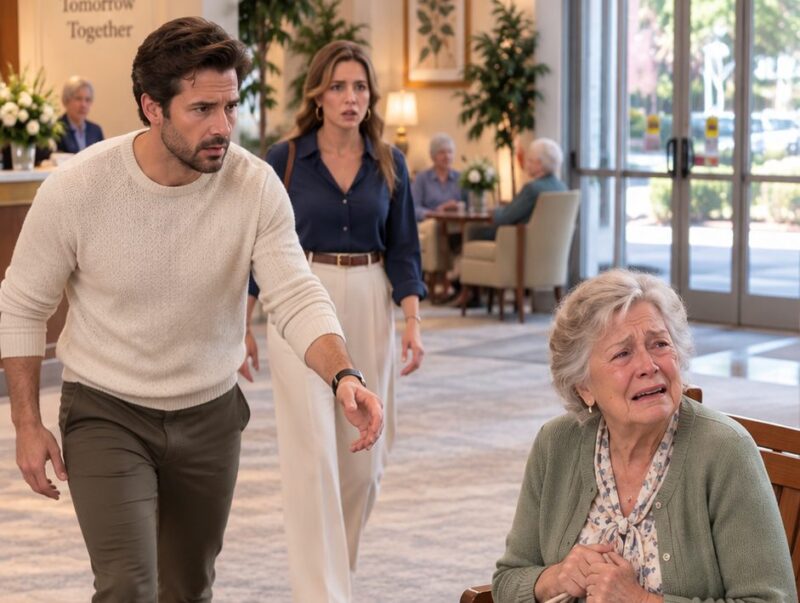
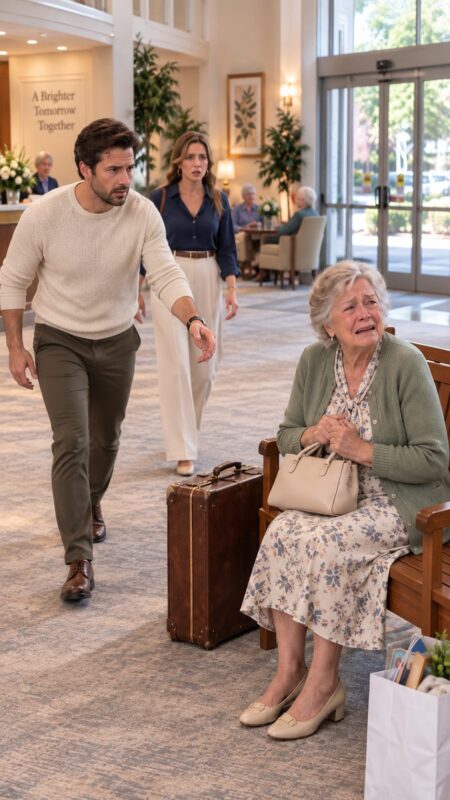
One hundred and ninety miles later, I walked into the facility and found Grandma sitting near the entrance.
Everything she had apparently been expected to begin a new life with was beside her: one worn brown suitcase and a grocery bag containing her medications.
She looked impossibly small sitting there alone.
When she saw me, she didn’t break down.
She didn’t ask why my parents had done it.
She stood, picked up her purse, and spoke with a calmness that unsettled me more than tears would have.
“Don’t tell Arthur you found me.”
Arthur was my father.
“Where are we going?”
“The courthouse.”
Ten minutes into the drive, Grandma reached into her purse and handed me a bank statement.
Three transactions had been marked in ink.
$12,000.
$18,000.
$25,000.
“Dad took this?”
“He says he spent it on me.”
Several months earlier, while Grandma was recovering from knee surgery, she had temporarily given my father power of attorney. He was supposed to pay bills, manage medical expenses, and handle anything she couldn’t easily do herself.
Instead, tens of thousands of dollars had disappeared.
Then Grandma removed a thick envelope from her purse.
Inside was the original deed to her property.
She ran her fingers across the paper.
“They weren’t trying to find somewhere better for me to live, Ivan,” she said. “They were trying to get me out of the house.”
At the courthouse, we asked to see the most recent records connected to Grandma’s property.
The clerk searched the system.
Then she frowned.
A quitclaim deed had been recorded three days earlier.
According to the document, Grandma had voluntarily transferred ownership of her home to my parents.
Grandma studied the signature at the bottom.
Her expression hardened.
“I never signed that.”
Someone had signed it for her.
My phone rang before we had even stepped away from the counter.
Dad.
I answered.
His voice came through in a panic.
“Ivan, thank God! Grandma disappeared while we were out for lunch. Your mother and I have been trying to find her for hours.”
I almost laughed at the absurdity of it.
Instead, I turned on the speaker.
Grandma stepped closer.
“I haven’t disappeared, Arthur.”
There was a pause.
“Mom?”
“I’m standing in the courthouse with Ivan. We’re looking at the deed you filed three days ago with a signature that doesn’t belong to me.”
Nothing came from the other end.
Grandma continued.
“You have one hour. Meet us at my house.”
Then she disconnected the call.
We arrived before the hour was up.
My parents were already there.
The front door was open, and boxes covered the hallway floor.
Some were sealed.
Others were half-filled with Grandma’s clothes, photographs, books, and personal belongings.
They hadn’t even waited to confirm that the nursing facility would keep her.
They had already started dismantling her life.
Mom rushed toward us.
“Eleanor, please listen. This looks much worse than it really is.”
Grandma said nothing.
“We were protecting you,” Mom continued. “We were trying to protect the property.”
Grandma raised her hand, and Mom fell silent.
“My power of attorney has been revoked. The property transfer has been reported. The deed is being investigated, and access to my accounts has been restricted.”
Dad’s face drained of color.
For a few seconds, he remained silent.
Then everything spilled out.
“My company is in trouble! I needed money to keep it alive. We were going to sell the house, stabilize the business, and put the money back. You weren’t going to lose anything.”
Grandma looked at him for a long time.
When she finally spoke, her voice was quiet.
“You left your mother sitting alone in a nursing facility so you could sell the home your father built for us.”
Dad opened his mouth.
Nothing came out.
Grandma took her spare keys from her purse and handed them to me.
“Ivan, help them remove anything that belongs to them.”
Then she looked at my parents.
“A deputy will be here in ten minutes.”
Dad finally understood that there was nothing left to negotiate.
The weeks that followed were ugly.
With allegations of fraud and forgery hanging over him, my father sold investments and repaid every dollar that had been removed from Grandma’s accounts.
As part of resolving the dispute, he also gave up any future claim to her estate.
My parents stopped coming to the house.
I didn’t.
Originally, I planned to stay with Grandma for only a few weeks.
I moved into the guest suite and arranged to do my job remotely. After everything that had happened, I didn’t want her waking up in that enormous house alone.
Weeks became months.
Neither of us mentioned when my temporary stay quietly became permanent.
One afternoon, I walked into my grandfather’s study and found Grandma sitting at his old desk.
His journal was open in front of her.
She was writing something on one of the blank pages near the back.
When she noticed me, she closed it gently.
“I changed my estate plan,” she said.
I immediately shook my head.
“Grandma—”
“Listen first.”
Her home, the surrounding thirty acres, and the family trust would eventually be placed under the protection of an independent foundation.
She wanted me to manage it.
I told her I hadn’t stayed because I expected an inheritance.
“I know.”
She looked at me for several seconds.
“That’s exactly why I trust you.”
I didn’t know what to say.
Grandma reached for my hand.
“When that facility called, you drove 190 miles to get me. You didn’t ask how much money I had. You didn’t ask what the house was worth. You didn’t ask what would eventually belong to you.”
Her voice softened.
“You simply came.”
Her eyes began to shine.
“When people I trusted tried to take away my choices and my dignity, you stood beside me.”
She squeezed my fingers.
“That isn’t duty, Ivan. That’s love.”
Almost a year passed.
On the first snowy evening of winter, Grandma and I stood on the porch together.
Snowflakes drifted silently over the garden, covering the flower beds and stone path in white.
Grandma slipped her arm through mine.
“Look.”
Warm light from the house stretched across the snow.
I smiled.
“It’s beautiful.”
She smiled too.
At the courthouse, her smile had been sharp and determined—the expression of a woman refusing to let anyone decide her future for her.
This smile was softer.
She was safe.
My parents had been willing to destroy their family for a house.
But they had never understood what made that house valuable.
It wasn’t the acreage.
It wasn’t the market price.
It wasn’t the trust attached to the estate.
Its value lived in things that could never appear on a bank statement.
It was the porch my grandfather had built.
The garden Grandma had cared for through countless springs and summers.
It was the marks on the kitchen doorway where generations of children had measured their height.
It was birthdays around the dining table, Christmas mornings, rainy afternoons, laughter from rooms that still seemed to remember everyone who had lived there.
And now it meant something else.
It meant Grandma would never again have to wonder whether someone might decide she was inconvenient and leave her behind.
She rested her head lightly against my shoulder.
For a while, neither of us spoke.
Then she took my hand.
“It’s ours now, Ivan.”
I looked through the windows at the warm rooms beyond them.
Grandma did the same.
After everything that had been taken from her—her money, her trust, and nearly her home—she had reclaimed the one thing nobody should have tried to steal.
The right to decide where she belonged.
Grandma squeezed my hand once more.
Then she smiled at the house glowing against the falling snow.
“I’m home,” she whispered.
And this time, nobody could make her leave.