The engines of my private jet were already running when my seven-year-old daughter stopped me from boarding.
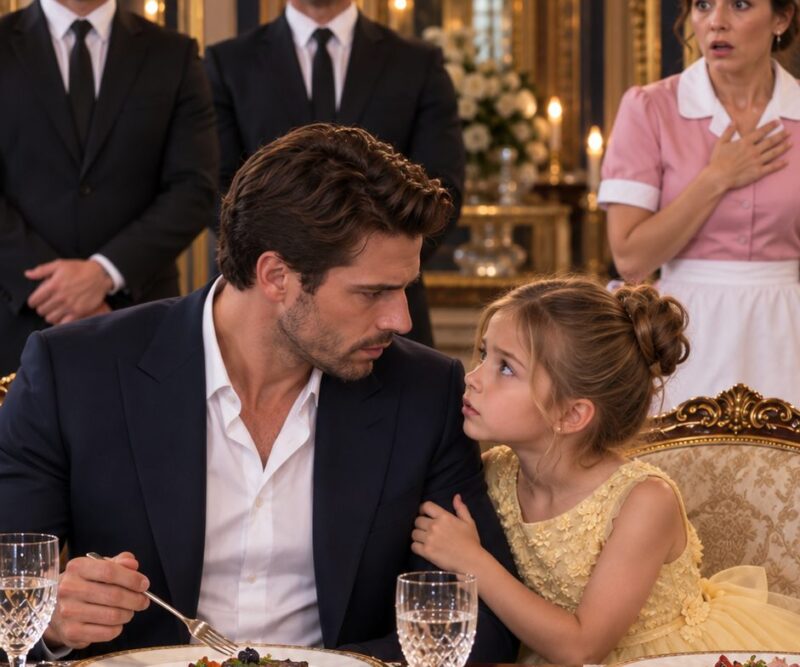
Fiona caught the sleeve of my coat with both hands.
“Daddy, please stay.”

I checked my watch. A multimillion-dollar acquisition was waiting for me in Chicago, along with lawyers, executives, and a conference room full of people who expected me to arrive on schedule.
But something about Fiona’s face made me forget all of them.
“What happened?”
She glanced around as if she were afraid someone might hear us.
“Grandma takes me somewhere when you travel.”
I crouched in front of her.
“My mother or Mommy’s mother?”
“Grandma Wendy.”
“Where does she take you?”
Fiona shook her head.
“I’m not allowed to know. She makes me lie down in the back of her car until we get there.”
My chest tightened.
“Has this happened more than once?”
She nodded.
Then tears appeared in her eyes.
“She said I can’t tell you.”
“Why?”
“Because Mommy will get hurt if I do.”
Her voice dropped almost to a whisper.
“And Grandma said it would be because of me.”
I pulled Fiona against me.
“No, sweetheart. Whatever the adults around you do is their responsibility. None of this is yours.”
I kissed her forehead and made a decision that probably confused everyone waiting for me in Chicago.
I canceled the flight.
But I didn’t tell Wendy.
Instead, I arranged for it to look as though I had left exactly as planned.
Two hours later, Wendy arrived at our Greenwich home.
I watched from a distance as she took Fiona to her SUV.
Then I followed.
She drove away from the residential streets and eventually entered an industrial area on the outskirts of Greenwich.
Warehouses replaced houses.
Traffic disappeared.
Finally, Wendy turned behind an old brick building with no sign and almost no windows.
A steel door opened before she even reached it.
The man waiting outside made me stop cold.
Arthur Vance.
My wife’s father.
Eight years earlier, I had stood beside Jessi at his funeral.
I remembered the flowers.
The mourners.
The grief.
I remembered holding my wife’s hand while she cried.
Yet Arthur was standing in front of me very much alive.
Wendy took Fiona inside.
I moved around the building until I found a narrow window that allowed me to see part of the room.
My daughter was sitting at a table.
Arthur sat opposite her with a stack of photographs.
He spread them out one by one.
I recognized myself.
Then my business partners.
My security staff.
Several people connected to negotiations that were supposed to be completely confidential.
Arthur tapped one picture.
“Did this man come to your house on Thursday?”
Fiona studied it nervously before pointing.
Arthur exchanged a glance with Wendy.
Then he leaned closer.
“Does Daddy still keep a silver key in his office?”
Fiona nodded.
I felt the air leave my lungs.
That key opened a private safe containing sensitive business materials.
Whatever I was witnessing had nothing to do with a grandfather secretly wanting to meet his granddaughter.
They had turned Fiona into an information source.
I stepped away from the window and called Leo, the head of my security team.
“Secure my office immediately.”
His answer came after a short silence.
“We may already have a breach.”
“What happened?”
“Someone entered the office about twenty minutes ago.”
I looked back through the window.
Wendy’s phone suddenly rang.
She listened.
Then she smiled.
“We got it.”
A second door opened.
Someone else entered the room.
Jessi.
My wife.
For one irrational second, I expected her to scream when she saw her supposedly dead father.
Instead, she smiled.
Then she hugged him.
Eight years of memories rearranged themselves in my mind.
Every explanation.
Every family story.
Every time Jessi had spoken about losing her father.
She had known.
Jessi opened her purse and removed a flash drive.
She placed it in Arthur’s hand.
“He should be on his way to Chicago by now,” she said. “Everything will be done before he gets back.”
Suddenly, the timing made sense.
They hadn’t simply waited for me to leave town.
They had planned around my absence.
The acquisition was the target.
And my family had helped them reach it.
Then Fiona glanced toward the window.
Our eyes met.
Her face changed instantly.
I expected her to shout for me.
Instead, she gave the smallest shake of her head.
No.
Stay outside.
A seven-year-old girl who had been frightened into silence was still trying to protect her father.
I would never forget that look.
I called Leo again.
“Stop all external transfers. Lock every board credential. Preserve the security logs and anything connected to the office breach. Contact federal investigators and give them everything.”
“Already moving.”
I put my phone away.
Then I walked through the steel door.
Fiona saw me first.
“Daddy!”
She ran.
I crossed the room and caught her in my arms.
She clung to me.
“I’m sorry,” she whispered.
I held her tighter.
“You have nothing to apologize for.”
“But I told them things.”
“You were scared. They should never have put you in this situation.”
I looked into her eyes.
“None of this belongs to you, Fiona. Not the secret. Not the blame. Nothing.”
Arthur interrupted us.
“You should be more concerned about what we took from your office.”
I turned toward him.
He held up the flash drive.
“You’ve already lost.”
My phone rang almost immediately.
Leo.
I answered without taking my eyes off Arthur.
“The files they copied were decoys,” Leo said. “They were created to identify unauthorized access. We have the access records, the transfer path, and the receiving endpoints.”
Arthur’s expression tightened.
Leo continued.
“The evidence also links the breach to the network we’ve been tracking.”
I ended the call.
Arthur slowly lowered the drive.
For the first time, he looked uncertain.
Jessi began to cry.
“My father pressured me,” she said. “You don’t understand what my family is like.”
I looked at her.
“You had choices.”
“I was trying to keep everyone safe.”
“Everyone?”
My eyes moved toward Fiona.
“You let them frighten our daughter into believing something terrible would happen to you if she told me the truth.”
Jessi wiped her face.
“I never wanted her involved.”
“But she was involved.”
Sirens became audible in the distance.
I lifted Fiona back into my arms.
Before leaving, I looked at Jessi one last time.
“Whatever you call what you did, don’t call it protecting her.”
Then I carried my daughter outside.
I never looked back at the building.
Six months later, our kitchen in Greenwich sounded like a home again.
Fiona sat on a stool at the island, attempting to build what she called the tallest waffle tower in Connecticut.
Our golden retriever had positioned himself underneath her, apparently confident that engineering failure would eventually produce breakfast.
The tower leaned.
Fiona tried to save it.
Three waffles fell.
The dog won.
Fiona burst out laughing.
For months, that sound had been rare.
Now I heard it every day.
The investigation uncovered a much larger scheme than I had initially imagined.
Arthur’s death had been deliberately staged years earlier. His disappearance had allowed him to operate unnoticed while building a network connected to corporate theft and financial manipulation.
Wendy had helped maintain the deception.
Jessi’s involvement ended our marriage.
Legal arrangements concerning Fiona were placed under court supervision, with her safety taking priority over everything else.
But the legal consequences weren’t what I thought about most.
I cared about the small changes.
Fiona no longer became nervous when adults lowered their voices.
She no longer asked whether ordinary conversations were “safe to tell.”
She slept better.
She laughed more.
She was becoming seven again.
One morning, I set her panda mug beside her plate.
“Daddy?”
I sat across from her.
“What is it?”
“You’re coming to the park after my spelling test, right?”
“I am.”
“What if I get a bad score?”
I smiled.
“Then we’ll go to the park with a bad score.”
She considered that.
“And ice cream?”
“Now you’re negotiating.”
Fiona grinned.
Six months earlier, I had believed the most important thing waiting for me that morning was a business deal in Chicago.
I had spent years measuring success in acquisitions, contracts, revenue, and victories that looked impressive on paper.
Then my daughter grabbed my sleeve.
One frightened sentence from a seven-year-old changed the meaning of everything.
The company mattered.
The deals mattered.
My responsibilities mattered.
But they were never supposed to cost me the ability to notice when my own child needed me.
That became the most important rule in our home.
No adult would ever again frighten Fiona into silence.
No one would make her responsible for protecting grown-ups from the consequences of their own choices.
And no matter how complicated the truth became, my daughter would always know one thing:
She could tell me.
She could tell me anything.
And she would never have to face it alone.