My Sister Hurt My Little Girl Over a Few Fallen Cupcakes… But One Security Camera Revealed Everything My Family Wanted Buried
“If your daughter refuses to learn manners, somebody had to teach her.”
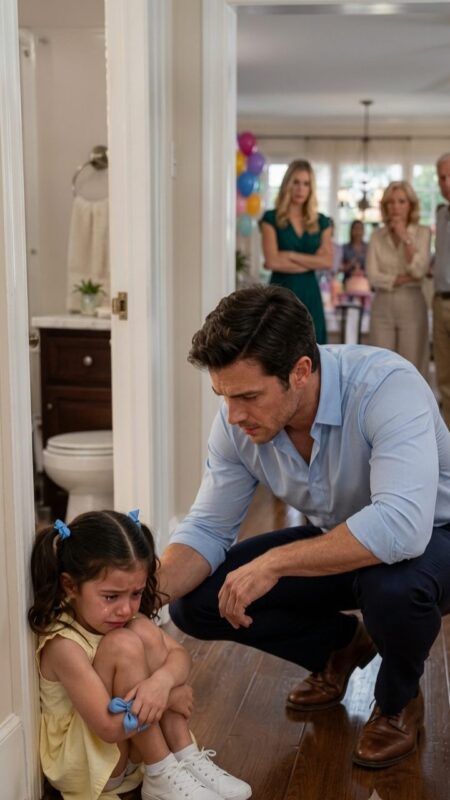
My sister Rebecca spoke those words without the slightest hint of regret while my five-year-old daughter, Sofia, hid behind me, trembling. A red handprint was still visible on her tiny cheek.
Ever since my wife, Elena, passed away, Sofia had withdrawn into herself. She rarely laughed anymore, so when my niece Valentina celebrated her birthday at my parents’ house, I hoped the afternoon might remind my daughter that she still belonged to a family.
Instead, it became the worst day of her young life.
The party was lively until I realized Sofia had quietly disappeared.
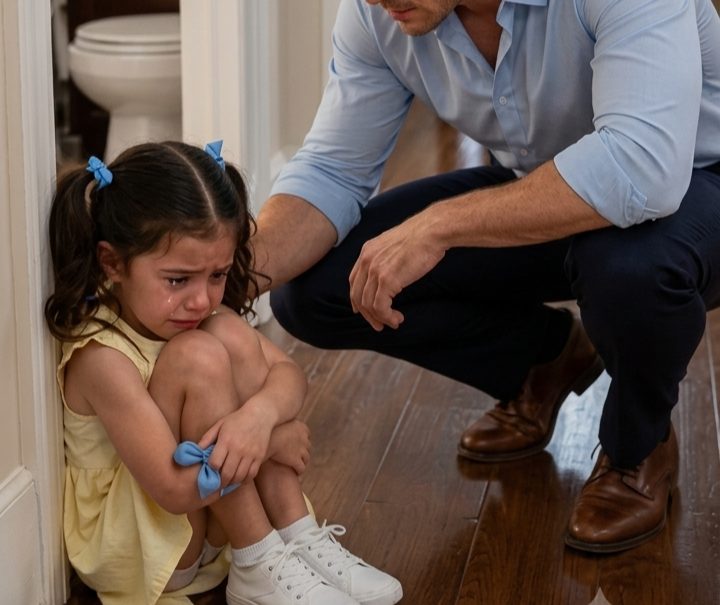
After searching the house, I found her sitting alone on the laundry room floor. Tears streamed down her face. Fresh fingerprints marked her arms, and one side of her face was swollen.
When she finally managed to speak, her voice barely rose above a whisper.
“Valentina pushed me. The cupcakes fell over. Aunt Rebecca said I ruined everything… then she said I was just like Mommy.”
My stomach turned.
I carried Sofia outside and confronted Rebecca in front of everyone.
She didn’t deny it.
Instead, she calmly insisted that children sometimes needed “firm discipline.” My parents immediately rushed to defend her, telling me not to overreact over “a simple family misunderstanding.”
I refused to argue.
I put Sofia in the car and drove straight to the emergency room.
The doctor carefully examined her injuries, photographed every bruise, and explained that the assault had to be officially documented.
That same evening my phone filled with messages from relatives.
Every one of them asked for the same favor.
Tell the police Sofia had fallen by herself.
If Rebecca were reported, they warned, she could lose her position at the children’s education center where she worked.
I didn’t delete a single message.
Every screenshot was saved.
Three days later, my cousin contacted me with information none of us expected.
One of the home’s security cameras had recorded the entire incident.
The video showed Rebecca grabbing Sofia by the wrist and dragging her away from the guests.
Her voice was perfectly clear.
“Maybe now you’ll learn not to ruin my daughter’s birthday.”
A loud smack followed.
Then Sofia’s heartbreaking cries filled the recording.
Once investigators received the surveillance footage, the medical documentation, and the messages urging me to lie, the case changed immediately.
A formal investigation was launched.
Rebecca’s explanation changed almost every time she was questioned.
First she insisted Sofia had fallen.
Later she admitted grabbing her but claimed she had only given the child “a harmless punishment.”
Neither version matched the evidence.
Meanwhile, my parents continued calling, insisting I was destroying the family by refusing to forgive Rebecca.
They were wrong.
Rebecca had made that choice herself.
Several weeks later she appeared outside my house, furious that she had been suspended from work.
She never apologized.
She never asked how Sofia was recovering.
Instead, she blamed me for the consequences of her own actions.
One evening, as I tucked Sofia into bed, she looked at me with frightened eyes.
“Daddy… was I bad?”
I wrapped my arms around her.
“No, sweetheart. Even if every cupcake at the party had ended up on the floor, no one ever has the right to hurt you.”
The investigation lasted for months.
Rebecca lost her job, remained under criminal investigation, and was legally forbidden from contacting Sofia.
Although my parents faced no criminal charges, investigators included their attempts to pressure me into hiding the assault as part of the official record.
Eventually, my parents asked whether they could see their granddaughter again.
I agreed—but only if every visit took place with a child psychologist present.
During the first session, my mother finally broke down.
“I should have protected you,” she whispered through tears. “I’m so sorry.”
Sofia quietly replied,
“I thought nobody would believe me.”
Rebecca never offered those words.
Not once.
A year later, Sofia celebrated her sixth birthday with a small party at home.
As everyone gathered around the cake, she closed her eyes, smiled, and said,
“Daddy… can we have cupcakes again next year?”
For the first time in a long while, I saw joy instead of fear.
That was the real victory.
Later that evening, I stood before Elena’s photograph.
“I kept my promise,” I whispered. “Our daughter is safe.”
Losing relatives was painful, but protecting my child was never a sacrifice.
That day taught me something I will never forget: family is not determined by shared blood. Family is made up of the people who choose to protect a frightened child instead of protecting the person who caused the harm.