When I accepted a job at a small long-term care facility, I assumed my responsibilities would begin and end with looking after elderly residents. I never imagined that one extraordinary woman would become the missing piece of my own life.
The residence always smelled of chamomile tea, polished floors, and aging novels. Having spent my childhood in foster care, I had grown up believing family was something other people were lucky enough to have. Then Gloria entered my life.
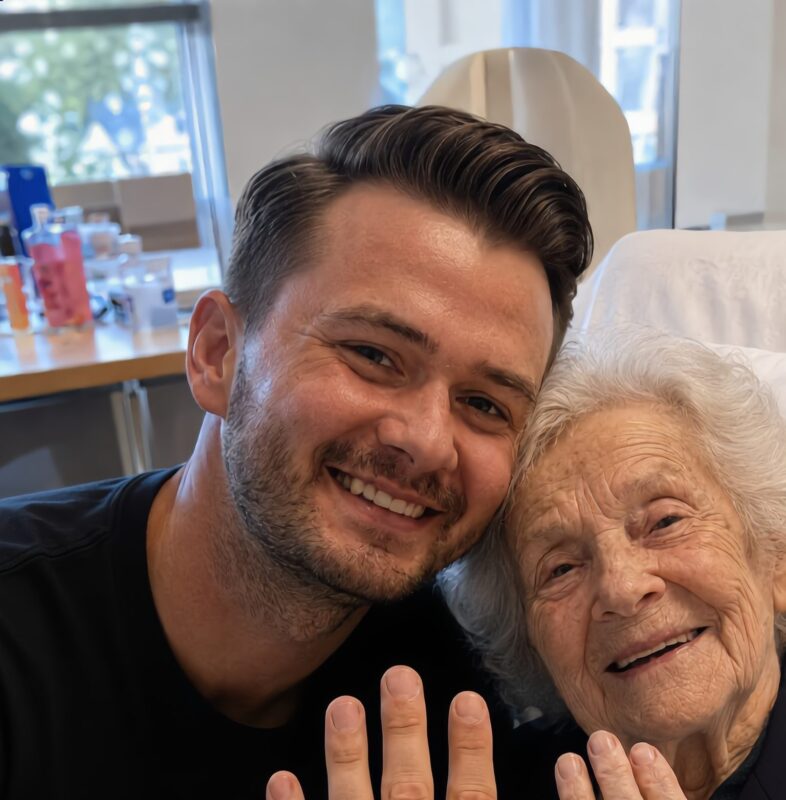
She was eighty-two years old, endlessly curious, wonderfully stubborn, and possessed the kind of wit that could brighten an entire room. On my very first day, she invited me to sit beside her and asked me to tell her about my childhood. I couldn’t remember the last time anyone had cared enough to ask.
Before long, we shared tea almost every evening. Gloria spoke fondly of her youth, her beloved husband, and the little house where they danced together in the kitchen whenever their favorite songs played on the radio. Yet despite all her stories, one thing remained painfully absent—she never received visitors.
Eventually she explained why.
Her nephew, Marcus, had stopped coming after realizing she wasn’t likely to die anytime soon. With a bittersweet smile, she told me that some people measured love by the size of an inheritance.
There was one object she never allowed out of her sight: a faded canvas medical bag. Whenever anyone showed interest in it, she would gently pull it closer and quietly repeat the same words.
“Everything that matters to me is in here.”
As the seasons changed, Gloria’s condition steadily worsened. Simple tasks exhausted her. Her breathing became weaker, and her hands shook almost constantly. When she was admitted to the hospital, no relatives appeared. I stayed with her whenever my shifts allowed.
One quiet afternoon, she wrapped her fragile fingers around mine.
“I have one final request,” she whispered. “Before my time is over, I’d like to know what it feels like to belong to someone again. Would you marry me?”
For several moments I couldn’t speak.
I understood exactly how such a marriage would appear to everyone else. A thirty-four-year-old caregiver marrying an elderly patient would invite endless suspicion. But when I looked into Gloria’s eyes, I saw neither manipulation nor desperation. I saw a woman who simply feared leaving the world alone.
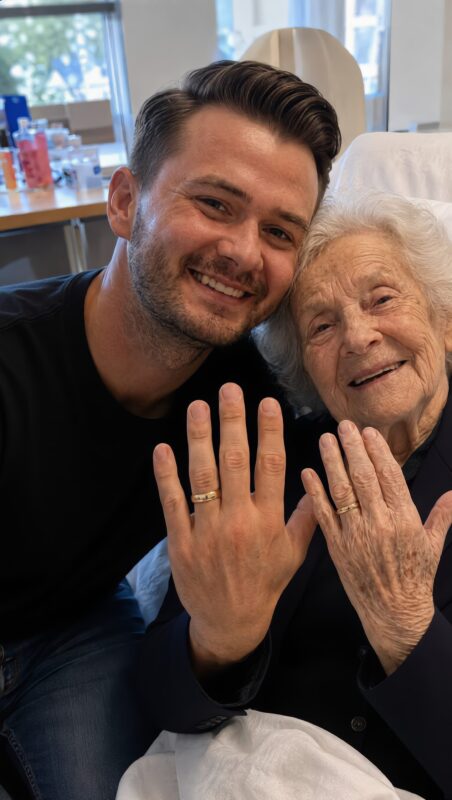
My coworker Sarah urged me to think carefully, warning that people might question my motives and destroy my career. Still, the more I reflected on Gloria’s request, the more I realized she wasn’t asking for financial security or legal protection. She was asking for companionship during the final days of her life.
I accepted.
A week later, a hospital chaplain performed a modest ceremony in Gloria’s room with Sarah standing beside us as our witness. Three days later, Gloria passed away peacefully while I held her hand.
After the funeral, her attorney, Mr. Charleston, approached me carrying the weathered canvas bag Gloria had protected for so many years.
“She wanted you to have this,” he said. “When you’re ready, you’ll understand everything.”
Before I could respond, Marcus confronted me in front of the mourners. He accused me of taking advantage of Gloria, called the marriage a fraud, and promised to fight her estate in court. I hated conflict so much that I considered walking away from every inheritance she had left behind.
That evening, however, Mr. Charleston insisted I open the bag before making any decision.
Inside there were no diamonds, no cash, and no valuable antiques.
Instead, I found neatly bundled letters tied with ribbon, an old photograph of a young woman holding an infant, and a sealed envelope with my name written across the front.
Reading that letter changed everything I believed about my past.
Gloria confessed that, as a teenager, she had been forced to place her newborn son for adoption. Decades later she discovered that he had passed away, leaving behind a young boy who had grown up in foster care.
That boy was me.
She had recognized me the moment I introduced myself at the nursing home. Yet she deliberately kept the truth hidden because she wanted our relationship to grow naturally, without either of us being influenced by blood ties alone.
Soon afterward, Mr. Charleston produced adoption records together with DNA test results confirming beyond any doubt that Gloria was my biological grandmother.
He also revealed the true purpose behind our marriage. Gloria had arranged it not for romance or financial reasons, but to protect me legally. As her surviving spouse, I could not easily be trapped in years of inheritance disputes designed to challenge my identity.
Presented with overwhelming evidence, Marcus abandoned every claim and disappeared without another word.
Several weeks later I moved into Gloria’s modest house. The old photograph found a permanent place above the fireplace, reminding me each day that love can survive even decades of separation.
I devoted part of the inheritance to creating a volunteer companionship program for nursing home residents without regular visitors, determined that fewer people would spend their final years forgotten by the world.
One afternoon Sarah watched volunteers laughing with residents throughout the halls and smiled.
“She knew exactly who you were long before you did,” she said.
For years I believed I had entered this world completely alone.
Only after Gloria was gone did I discover that someone had never stopped searching for me—and that fate allowed us to find each other before it was too late.