My Wife Died While Giving Birth to Our Twins—Three Months Later, Her Mother Revealed a Secret I Never Expected
For three months after my wife, Mary, died giving birth to our twin daughters, her mother refused to meet them.
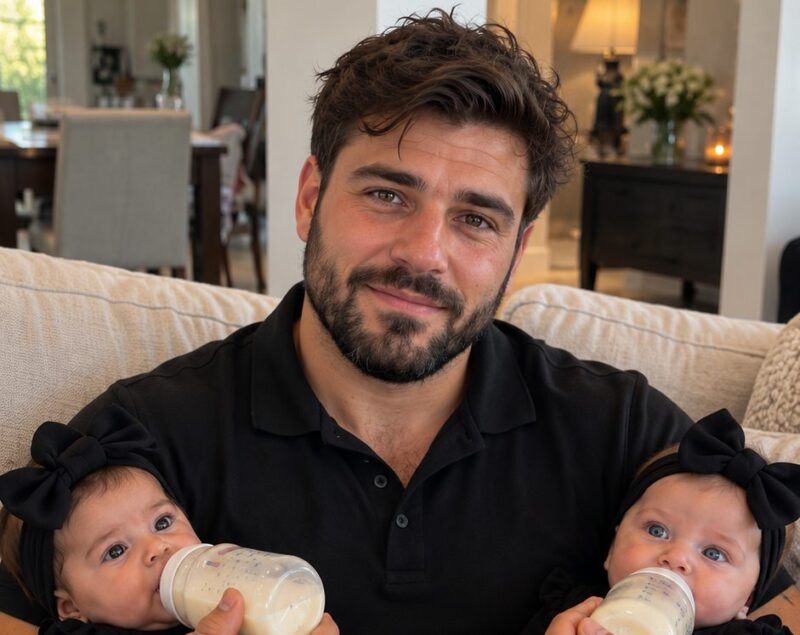
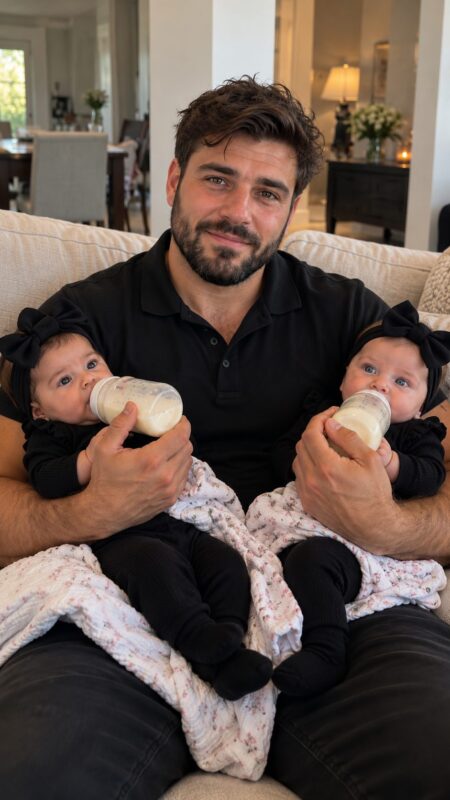
Every week, I sent photographs of the girls, hoping their tiny faces might persuade her to visit.
Her response never changed.
“Thank you.”
Just two words.
No questions about the babies. No offers to help. Not even a phone call.
I eventually convinced myself that she blamed me for losing her only daughter.
But one afternoon, she appeared at my front door with swollen eyes and an old envelope pressed against her chest.
“Before you decide you hate me,” she whispered, “there’s something about Mary’s past you need to know.”
What she told me that day completely changed how I understood my wife’s final words.
Mary had always wanted children.
When we learned she was pregnant with twins, she cried with happiness. She immediately began planning their nursery, choosing names, and buying tiny clothes.
Our house soon filled with baby blankets, stuffed animals, and furniture we spent entire weekends assembling.
I had never seen her so excited.
Yet sometimes, when she thought I wasn’t watching, I caught her staring at the nursery with an expression I couldn’t understand.
Once, I asked whether something was troubling her.
She smiled and shook her head.
“I’m just hoping I’ll be a good mother.”
“You’ll be wonderful,” I assured her.
She hugged me tightly, but I noticed tears in her eyes.
I didn’t understand those tears until much later.
Mary’s pregnancy became increasingly difficult during the final weeks. Although the doctors closely monitored her condition, we remained hopeful.
Then, during delivery, serious complications arose.
Suddenly, the room filled with urgent voices and medical staff rushing to help.
I stood beside Mary’s bed, frightened and helpless.
She reached for my hand.
“Promise me something,” she whispered.
“Anything, sweetheart.”
“If I can’t come home with you, don’t let our daughters feel that something is missing because of them.”
My heart sank.
“Mary, please don’t talk like that.”
“Promise me they’ll always know they’re wanted.”
I squeezed her hand.
“I promise. But you’re coming home with us.”
She managed a faint smile.
Hours later, our daughters were safe.
Mary was gone.
I returned to an empty house carrying two newborn babies and a hospital bag filled with my wife’s belongings.
The nursery she’d decorated with so much love was ready.
But the woman who’d dreamed of raising our children would never walk through its doorway.
The first few weeks nearly overwhelmed me.
I barely slept. Between feeding schedules, laundry, appointments, and endless diaper changes, I often forgot to eat.
Sometimes I reached for my phone to tell Mary something funny one of the babies had done.
Then reality would hit me all over again.
Her number was still saved under “My Forever.”
I couldn’t bring myself to change it.
At night, after the twins finally fell asleep, I sat on the edge of our bed and stared at Mary’s empty pillow.
One question haunted me.
Had I somehow failed to protect the person who trusted me most?
I desperately needed family around us.
But Mary’s mother stayed away.
Before the birth, she’d been involved in every detail of our lives. She’d helped decorate the nursery and promised to teach the girls all the songs Mary had loved as a child.
After the funeral, however, she stopped visiting.
When I invited her over, she said she wasn’t ready.
When I called, she rarely answered.
And every photograph received the same brief reply.
“Thank you.”
Eventually, I stopped trying.
Then, exactly three months after Mary’s death, the doorbell rang.
Her mother stood outside.
She seemed to have aged years in a matter of weeks.
“Could we talk?” she asked.
I led her into the kitchen.
She sat at the table without removing her coat and placed a faded envelope in front of her.
“I owe you an explanation.”
I folded my arms.
“The girls have been here for three months. They’ve never even heard your voice.”
Her eyes filled with tears.
“I know.”
“Then why did you abandon them?”
She looked down.
“Because I was afraid I’d make the same mistake twice.”
I didn’t understand.
She took a trembling breath.
“Mary never told you everything about her childhood, did she?”
I shook my head.
Then she began.
Mary was eight years old when her father died unexpectedly.
Until then, they’d been an affectionate, happy family.
Her father’s death shattered their world.
Her mother continued working, cooking, cleaning, and making sure Mary attended school.
But behind closed doors, she struggled with overwhelming sorrow.
There were evenings when she barely spoke and weekends when she spent hours looking through old photographs.
One winter night, Mary found her mother crying in the living room.
“Do you miss Daddy?” she asked.
“More than I can explain,” her mother replied.
“Do you wish he could come back?”
“Every day.”
The little girl hesitated.
Then she asked a question her mother would remember for the rest of her life.
“Would you rather have Daddy here than me?”
Her mother stared at her.
The answer should have been simple.
She loved Mary more than anything.
But her grief left her speechless.
Before she could respond, Mary quietly walked away.
“And that silence stayed with her,” her mother told me. “She thought being alive wasn’t enough to make me happy.”
I felt a knot forming in my stomach.
“Mary never mentioned that.”
“She rarely spoke about it. But I saw how it changed her.”
As a teenager, Mary avoided asking for anything.
She apologized unnecessarily, tried to solve every problem alone, and worried constantly about disappointing the people she loved.
Years later, her mother finally found the courage to discuss that night.
She apologized and explained that Mary had never been responsible for her sadness.
They repaired their relationship.
But even after they reconciled, Mary carried the fear of being unwanted.
“When she found out she was expecting the twins,” her mother continued, “she made me promise something.”
“What?”
“That no matter what happened, I would never allow her daughters to grow up believing they’d caused someone else’s unhappiness.”
I closed my eyes.
A memory suddenly returned.
About a month before the delivery, Mary and I had been lying in bed, talking about the future.
Out of nowhere, she asked, “If something happened to me, would you wish we’d never decided to have children?”
I remember laughing nervously.
“Why would you ask such a terrible question?”
“Please. I need to know.”
I took her hands.
“Mary, listen to me. Our children are already the best thing that’s happened to us. Nothing could ever make me regret them.”
She began crying.
I pulled her close and promised that whatever happened, our daughters would always know they were loved.
At the time, I thought she was simply frightened about giving birth.
Now I understood the deeper reason.
Mary had spent years worrying that loss could turn love into resentment.
Her mother pushed the envelope across the table.
“She wrote this several days before going to the hospital. She wanted you to have it if she couldn’t tell you these things herself.”
I carefully unfolded the pages.
The handwriting was unmistakably Mary’s.
My hands shook as I read.
She wrote about the future she’d imagined for our family and the happiness she felt whenever she heard our daughters’ heartbeats during an appointment.
She admitted that becoming a mother had awakened memories she’d believed were long behind her.
Then, near the bottom of the final page, I found a passage that made me stop breathing for a moment.
“If you’re reading this, my love, I need you to understand something.
“You gave me a kind of security I never knew I needed. Every time you told me our babies were a blessing, you helped quiet the frightened little girl I used to be.
“Please never think you failed me. I knew how deeply you loved us.
“Our daughters must never believe that their existence caused sorrow. They came into this world surrounded by love, and that’s how I want them to remember their beginning.
“Mom, you promised me that if life ever became difficult, you wouldn’t disappear behind your grief again.
“Please keep that promise. Our girls deserve to know their grandmother.”
I read the final lines several times.
Mary had anticipated the very guilt that now consumed me.
Even while facing her own fears, she’d wanted to protect our daughters from feeling responsible for our sadness.
I looked at her mother.
“She knew you might withdraw again.”
She nodded, tears running down her face.
“And I proved her right.”
“Then why are you here now?”
She reached into her handbag and pulled out a photograph.
It was the most recent picture I’d sent her.
Our daughters were lying side by side in matching yellow pajamas.
“I’ve carried this everywhere,” she said. “Every morning, I look at their faces. And every morning, I tell myself I’ll visit tomorrow.”
She swallowed.
“Yesterday, I realized I was making those two little girls wait for love that already belonged to them.”
Her words stayed with me.
Before I could respond, one of the babies began crying upstairs.
A moment later, her sister joined in.
I stood.
“Excuse me. They’re awake.”
I went into the nursery and picked up the girls, one after the other.
When I turned around, their grandmother was standing in the doorway.
She stared at them silently.
Then she whispered, “They have Mary’s eyes.”
I nodded.
“And sometimes her expressions.”
She pressed a hand against her mouth.
“May I hold one?”
I hesitated.
Part of me wanted to protect my daughters from someone who’d stayed away when we needed her.
But another part remembered Mary’s letter.
“They need people who will be there consistently,” I said. “Not someone who comes and goes whenever the memories become painful.”
Her mother nodded.
“I understand.”
“Can you promise that?”
She stepped closer.
“I can’t promise that missing Mary will get easier. But I can promise I won’t let that sadness keep me away from them again.”
I studied her face.
Then I gently placed one of our daughters into her arms.
She looked down at the tiny baby.
“Hello, little one,” she whispered. “I’ve wanted to meet you for so long.”
The baby stretched her fingers and caught hold of her grandmother’s collar.
Mary’s mother began to cry.
But she didn’t hand the baby back.
Instead, she sat in the rocking chair and held her granddaughter close.
That afternoon was the beginning of something neither of us had expected.
The next morning, she arrived with breakfast and offered to help with the twins.
Two days later, she returned with homemade meals.
By the following week, she’d become a regular presence in our home.
She learned the girls’ feeding schedules, helped fold their tiny clothes, and took turns comforting them when they were restless.
Sometimes she stayed for dinner.
Sometimes we spoke about Mary until late in the evening.
For the first time since my wife’s death, I could talk about her without feeling that every memory had to end in silence.
Her mother told me stories I’d never heard.
She described Mary as a little girl who collected fallen leaves because she believed each one was beautiful.
She remembered the time Mary tried to teach their elderly dog to dance.
She laughed while recalling how her daughter once prepared breakfast for Mother’s Day and accidentally covered the entire kitchen counter in flour.
I began writing those memories down.
One day, I wanted our daughters to read them.
I wanted them to know their mother as more than a face in a photograph.
I wanted them to understand her kindness, her humor, her courage, and the joy she’d brought into our lives.
Several weeks later, something extraordinary happened.
We were sitting in the living room when one of the twins smiled at her grandmother.
Not the sleepy expression newborns sometimes make.
A real, wide smile.
Mary’s mother went completely still.
“Oh, sweetheart,” she whispered.
I glanced at the baby.
The resemblance was remarkable.
It was Mary’s smile.
For several seconds, her grandmother couldn’t speak.
Tears gathered in her eyes.
I wondered whether the moment might overwhelm her.
Instead, she smiled back.
“There you are,” she whispered. “I’ve been waiting to see that smile again.”
Then she kissed her granddaughter’s forehead.
And she stayed.
That evening, after the twins were asleep, I finally opened the hospital bag I’d avoided for months.
Inside were Mary’s toiletries, a hairbrush, and the soft gray sweatshirt she’d worn constantly during her pregnancy.
I held it against my chest.
For the first time, I allowed myself to remember her last months without thinking only of the hospital.
I remembered her standing in the nursery, arranging stuffed animals on a shelf.
I remembered the way she placed my hand against her stomach whenever the babies moved.
I remembered her excitement when we heard both heartbeats for the first time.
And I remembered her voice asking me to promise that our daughters would always feel wanted.
I folded the sweatshirt carefully and placed it in a memory box alongside her photographs and letters.
Then I went into the nursery.
The girls were sleeping peacefully.
I pulled up a chair between their cribs and began speaking softly.
“Your mommy was an extraordinary person,” I told them. “She loved rainy afternoons, terrible jokes, and singing songs she never remembered correctly.”
I smiled through my tears.
“She couldn’t wait to hold you. She imagined all the wonderful things we’d do together.”
One daughter stirred in her sleep.
I gently touched her hand.
“You both made her happier than you could ever imagine.”
Behind me, the floor creaked.
Their grandmother stood in the doorway, listening.
“May I tell them something too?” she asked.
I nodded.
She came inside and sat beside me.
“Your mother was brave,” she whispered to the twins. “And she taught me that love means showing up, even when your heart is hurting.”
We remained there for a long time, sharing memories with two little girls who couldn’t yet understand our words.
But one day, they would.
And when that day came, they would have more than photographs.
They would have stories, letters, familiar voices, and people who had chosen to remain by their side.
I once believed that being a devoted father meant hiding my grief and pretending I could manage everything alone.
Now I know better.
Missing Mary doesn’t diminish my love for our children.
Remembering her doesn’t prevent us from building a happy home.
And accepting help doesn’t mean I’ve failed to keep my promise.
Our daughters don’t need a perfect father or a grandmother who never cries. They need people who love them enough to stay.
Mary’s final letter didn’t erase the pain of losing her.
But it helped us understand what she had wanted all along.
She didn’t want our children growing up beneath the weight of everyone else’s sadness.
She wanted them surrounded by affection, laughter, security, and the certainty that their lives were precious.
Today, Mary’s picture hangs in the nursery.
Her mother visits regularly and has become someone the twins recognize with delighted smiles.
And every night, before I turn off the lights, I tell our daughters the same thing.
“Your mommy wanted you. Your grandma loves you. And I will always be here.”
Because the greatest promise I made to Mary wasn’t simply that I would care for our children.
It was that I would never allow the pain of losing her to overshadow the happiness of having them.
And with every passing day, we’re learning how to keep that promise together.