Seven Months After Our Divorce, My Ex-Wife Delivered Twin Boys—Then a Nurse Gave Me a Key That Uncovered My Family’s Greatest Betrayal
At 11:23 p.m., my telephone rang.
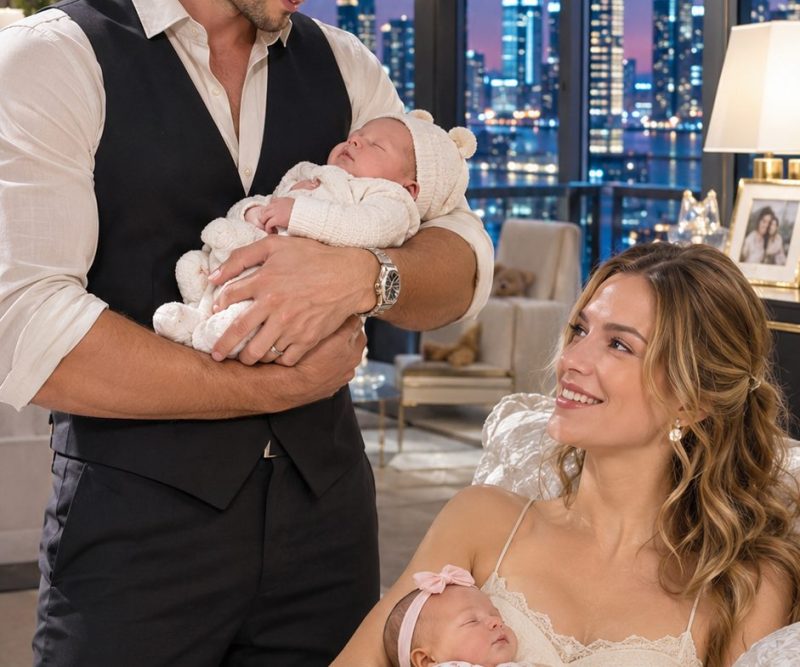
I was preparing for bed when an unfamiliar woman’s voice interrupted the silence of my Boston apartment.
“Is this Grant Waverly?”
“Yes. Who’s calling?”
“Your former wife is at St. Catherine’s Hospital. She’s just given birth.”
I gripped the phone.
“Mara?”
“She’s safe. So are the babies.”
“Babies?”
“Twin boys, Mr. Waverly.”
I lowered myself into a chair.
Seven months had passed since Mara and I finalized our divorce. Seven months of unanswered questions, bitter accusations, and complete silence.
And now she had given birth to twins.
Before I could collect my thoughts, the caller added something unexpected.
“You need to come tonight. Preferably before anyone from your family gets here.”
“Why? What’s happening?”
“Please, Mr. Waverly. Just come.”
The call ended.
I stared at my phone, wondering whether I’d misunderstood everything.
Then I grabbed my car keys and drove to the hospital.
The maternity ward was quiet when I arrived.
Near Room 418, a nurse with kind but serious eyes stepped into my path.
“Mr. Waverly? I’m June Harper.”
“You called me?”
“Yes. Mara specifically asked me to contact you.”
I struggled to speak.
“Those babies… are they mine?”
June nodded.
“Mara has confirmed that you’re their father. Both boys arrived prematurely, but they’re doing well.”
My knees felt weak.
I had two sons.
Two children whose existence I’d known nothing about.
June reached into her uniform pocket and handed me a small brass key.
Attached to it was a metal tag engraved with three numbers.
214.
“Mara wanted you to receive this before your family learns she’s here.”
I examined the key.
“What is it?”
“It belongs to a safe-deposit box at Commonwealth Trust.”
“Why would she give me something like this?”
June hesitated.
“She said that once you see what’s inside, you’ll understand why she disappeared from your life.”
My stomach tightened.
Then June opened the door to Room 418.
Mara was lying against a stack of pillows, looking exhausted.
Two bassinets stood beside her bed.
For a long moment, I couldn’t move.
She turned toward me.
“Grant.”
Hearing my name in her voice brought back memories I’d spent months trying to bury.
I approached the bed.
“Why didn’t you tell me about the pregnancy?”
She looked at the babies.
“Because your family had already taken my marriage. I wasn’t going to let them take my children, too.”
I felt a flash of anger.
“My family wouldn’t hurt our children.”
Mara met my eyes.
“That’s what you said when I told you they were trying to ruin me.”
I fell silent.
Seven months earlier, our marriage had collapsed after my relatives accused Mara of manipulating confidential financial records.
Our family-owned corporation, Waverly Holdings, controlled some of Boston’s most valuable development projects.
Mara had helped oversee a major waterfront proposal.
Then documents surfaced suggesting she’d authorized suspicious transactions and attempted to gain control of the project.
My mother, Eleanor, insisted that the evidence was undeniable.

Our family attorney, Walter Kessler, supported her accusations.
My brother Stephen claimed Mara had betrayed our trust.
And I believed them.
I had listened to everyone except my wife.
Now Mara reached toward the bedside table.
“Grant, everything they showed you was manipulated.”
I stared at her.
“What do you mean?”
“The financial records were altered. My digital signature was attached to transactions I never approved.”
“Who did it?”
“You’ll find the answer in Box 214.”
I looked down at the key.
“Why didn’t you show me the evidence before?”
“I tried. But every time I challenged your family, you accused me of making excuses.”
The truth of her words struck painfully.
She continued.
“Eventually, I realized I couldn’t protect myself or our children while living under their control.”
I wanted to apologize.
I wanted to explain why I’d trusted my relatives.
But nothing I could say would change what had happened.
Mara looked exhausted.
“Please, Grant. Open the box before you decide what to do next.”
I nodded.
Then I glanced at the bassinets.
“May I see them?”
Her expression softened.
“Of course.”
I approached the nearest baby.
He was sleeping peacefully, one tiny hand resting near his cheek.
His brother stirred beneath a pale blue blanket.
I stood there, overwhelmed by the realization that I’d become a father without even knowing it.
The next morning, I arrived at Commonwealth Trust as soon as the bank opened.
After the required identity and authorization checks, an employee escorted me into the safe-deposit area.
Box 214 was placed before me.
I inserted the brass key.
Inside were several carefully organized folders, sealed letters, a storage device, and documents bearing the Waverly family name.
I opened the first folder.
Within minutes, I understood why Mara had been afraid.
The records contained detailed transaction histories from Waverly Holdings.
Several substantial payments connected to the waterfront project had been authorized by Stephen.
But the original timestamps showed something impossible.
The transactions had been approved before Mara’s electronic signature appeared on the corresponding documents.
Someone had attached her signature afterward.
The evidence that destroyed our marriage had been fabricated.
I searched through the remaining papers.
There were internal emails, accounting reports, and correspondence involving our family attorney.
Then I found letters written by my mother.
One instructed Walter to remove Mara from the waterfront development.
Another described her growing independence as a threat to the family’s plans.
A third discussed preparing documentation that would justify excluding her from important business decisions.
My hands began to tremble.
They hadn’t uncovered wrongdoing.
They had manufactured it.
My mother had wanted Mara removed because she refused to surrender control of a project she believed could benefit ordinary families.
And my brother had helped make it happen.
I opened a sealed envelope bearing my name.
Inside was a handwritten letter from Mara.
“Grant,
I never wanted to become your family’s enemy.
I wanted us to build a life together, make our own decisions, and raise our children without being controlled by people who valued reputation more than truth.
I fought for our marriage until I realized I was fighting alone.
You believed the accusations because they came from people you trusted.
But you forgot that I was supposed to be one of those people.
I didn’t stop loving you.
I left because I could no longer live in a marriage where my voice meant nothing.
If you’ve opened this box, I hope you’ll finally understand why I had to protect our children.
Whatever happens next, please give them the freedom we never had.”
I placed the letter on the table.
For the first time, I saw our divorce from Mara’s perspective.
She hadn’t abandoned our marriage because she was guilty.
She’d left because I had refused to believe she was innocent.
Another folder contained documents establishing a trust for our newborn sons.
The trust held fourteen acres of waterfront property that Mara had acquired independently.
Attached were architectural plans for an affordable-housing community.
I recognized the concept immediately.
Years earlier, Mara had spoken passionately about building reasonably priced homes near Boston Harbor.
She believed that teachers, nurses, service workers, and young families deserved the opportunity to live near the communities they served.
My relatives had mocked her proposal.
They preferred another luxury development.
But Mara had never abandoned her dream.
I closed the folder and left the bank.
I knew exactly where I needed to go.
My mother was in her study when I entered her house.
She looked up from her desk.
“Grant? I wasn’t expecting you.”
I placed the financial records in front of her.
“Tell me why Mara’s signature appears on transactions Stephen approved before she ever saw them.”
Eleanor froze.
“Where did you get those?”
“Answer my question.”
She glanced through the documents.
Her face grew pale.
“Grant, you need to understand the position we were in.”
I stared at her.
“What position could possibly justify framing my wife?”
“Mara was interfering with a development worth millions. She wanted to redirect land toward a housing project that made no financial sense to us.”
“So you decided to destroy her reputation?”
“I believed I was protecting our family’s future.”
“You destroyed my marriage!”
My mother lowered her eyes.
“I know.”
The admission left me speechless.
For months, I’d defended her.
I’d insisted she would never deliberately hurt someone I loved.
And she’d allowed me to believe that lie.
“Did Walter help you?”
She nodded.
“And Stephen?”
She hesitated.
“Yes.”
I stepped away from her desk.
“You watched me lose my wife while knowing she was innocent.”
Tears appeared in her eyes.
“Grant, I never imagined things would go so far.”
“You made sure they did.”
I left without another word.
Stephen was in his office when I arrived.
He didn’t look surprised when he saw the documents.
“So Mara kept copies.”
I felt my anger rising.
“You knew the records were altered?”
He looked toward the window.
“I found out before your divorce was finalized.”
“And you didn’t tell me?”
“Mother insisted that revealing everything would destroy the company.”
I couldn’t believe what I was hearing.
“You let me accuse my wife of something she never did.”
“I thought I was protecting the family.”
“No, Stephen. You were protecting yourself.”
For the first time, he had no answer.
That afternoon, I contacted independent legal counsel and demanded a comprehensive investigation into the company’s financial records and the allegations against Mara.
I also withdrew from day-to-day leadership while the review was conducted.
My mother called repeatedly.
Stephen sent messages.
Walter tried to arrange a private meeting.
I ignored their attempts to influence me.
There was only one person I wanted to see.
When I returned to St. Catherine’s Hospital, Mara was holding one of our sons.
She looked at my face and immediately understood.
“You opened the box.”
“Yes.”
I sat beside her.
“You were innocent.”
She nodded.
“I told you that months ago.”
“I know.”
My voice broke.
“I should have listened.”
Mara watched me quietly.
“You were supposed to be my husband, Grant. The person I could trust when everyone else turned against me.”
“I failed you.”
“Yes,” she answered. “You did.”
I didn’t argue.
For once, I didn’t try to explain away my mistakes.
“I’m sorry, Mara. I know those words don’t repair what happened.”
She looked down at the baby in her arms.
“No. But acknowledging the truth is a beginning.”
Then she asked a question I wasn’t prepared for.
“Would you like to hold your son?”
I nodded.
She carefully placed the sleeping baby in my arms.
“This is Owen.”
I stared at his tiny face.
“And the other one?”
“Noah.”
I looked toward the second bassinet.
Two sons.
Two innocent lives that had already changed everything I believed mattered.
All the corporate meetings, investment agreements, and family arguments suddenly seemed insignificant.
I had nearly missed the chance to know my own children.
Later that afternoon, June returned to Mara’s room.
She carried a small envelope.
“Mr. Waverly, there’s one more thing you need to see.”
Inside was another key.
Smaller.
Older.
“This opens a concealed compartment inside Box 214,” June explained.
I looked at Mara.
She nodded.
“It contains something your father left behind.”
My father had died eleven years earlier.
The thought of receiving anything from him after so long left me stunned.
The next morning, I returned to Commonwealth Trust.
Using the second key, I opened the hidden compartment.
Inside was a small recording device and a note written in my father’s familiar handwriting.
I activated the recording.
His voice filled the quiet room.
“Grant, if you’ve found this, then I hope you’re ready to understand something that took me many years to learn.”
I closed my eyes.
Hearing him again was overwhelming.
“Never confuse family loyalty with unquestioning obedience. People who truly care about you should never require you to surrender your conscience.”
He paused.
“Power can protect a family, but it can also become a prison when people use it to control one another.”
Then he described a plan he’d once discussed with Mara’s father.
They had dreamed of transforming part of Boston’s waterfront into a community where working families could afford safe, comfortable homes.
Not another luxury complex.
Not another investment designed solely for wealthy buyers.
A neighborhood built around opportunity.
I listened in disbelief.
The project my mother had tried to stop was connected to my father’s own ambitions.
Mara had been carrying forward a dream that began long before our marriage.
When the recording ended, I remained seated.
For years, I’d believed my responsibility was to preserve the Waverly family’s wealth and influence.
But my father had left me a different definition of responsibility.
Protect people.
Respect their choices.
And never allow power to replace integrity.
The investigation into Waverly Holdings continued for several weeks.
Independent reviewers uncovered manipulated records, questionable transactions, and serious ethical violations.
Stephen acknowledged his involvement and accepted responsibility for his actions.
Walter’s conduct was referred to the appropriate authorities for further examination.
My mother eventually apologized to Mara.
But Mara refused to pretend that a single apology could erase everything she’d endured.
“I appreciate that Eleanor has admitted what she did,” she told me. “But trust has to be earned.”
I agreed.
I’d learned that lesson the hardest way possible.
I appointed qualified professionals to oversee the company and stepped back from daily corporate management.
For the first time in my adult life, I stopped organizing every decision around the expectations of my relatives.
Instead, I focused on becoming a father.
I visited Owen and Noah regularly.
I learned to prepare their bottles, change diapers, and calm them when they cried.
I attended pediatric appointments and helped Mara through exhausting nights.
At first, I was clumsy and uncertain.
Mara sometimes had to show me the same thing twice.
But slowly, I became more confident.
And I discovered something extraordinary.
Nothing I’d achieved in business compared with the satisfaction of hearing my sons laugh.
Mara and I continued living separately.
There was no immediate reconciliation.
No sudden promise that everything would return to normal.
She needed time.
And I needed to demonstrate that my priorities had genuinely changed.
We talked honestly about our failed marriage.
I listened when she described how isolated she’d felt while my family attacked her reputation.
I apologized without making excuses.
And gradually, our conversations became easier.
We also began developing the affordable-housing project she’d protected.
We called it Harbor House.
The community would be built independently of Waverly Holdings, with a dedicated team overseeing financing, construction, and long-term affordability.
Mara directed the vision.
I helped assemble the professional resources needed to make it possible.
We worked together without allowing my relatives to interfere.
For the first time, our partnership felt balanced.
Neither of us had to fight for the right to be heard.
As the months passed, Owen and Noah grew stronger.
They learned to recognize our faces.
Then came their first attempts to crawl.
Soon, they were exploring every corner of Mara’s living room.
By their first birthday, they had become two energetic little boys who kept us constantly busy.
We celebrated in Mara’s garden with a small gathering of friends.
After everyone had finished eating, I found her watching the twins play.
“Mara, can I ask you something?”
She turned toward me.
“Of course.”
“Do you think we might ever have another chance?”
She studied me for a long moment.
“I still care about you, Grant. More than I expected to.”
My heart raced.
“But caring about someone isn’t enough to build a healthy marriage.”
“I understand.”
“Our relationship fell apart because I couldn’t depend on you to trust me when it mattered.”
“I know.”
“I need to believe you’ve changed because you genuinely want to be different, not because you’re afraid of losing me.”
I nodded.
“Then I’ll keep working on becoming the person I should have been.”
She looked toward our sons.
“Let’s take our time.”
And we did.
There were no dramatic declarations.
No attempts to rush her decision.
We continued raising the boys, managing Harbor House, and learning how to communicate honestly.
Some days were difficult.
Old memories occasionally resurfaced.
But we no longer allowed those moments to turn into arguments dominated by fear and resentment.
Instead, we talked.
We listened.
And slowly, the trust I’d destroyed began to return.
Several months after the twins’ first birthday, Mara invited me to dinner.
The boys were asleep upstairs.
We sat across from one another in her kitchen, sharing a quiet meal.
After a while, she spoke.
“Grant, I’ve been thinking about us.”
I set down my glass.
“What about us?”
“I don’t want to recreate the marriage we had before.”
“Neither do I.”
She looked surprised.
“Then what do you want?”
I considered the question carefully.
For years, my answer would have involved business success, financial security, and maintaining the Waverly family’s reputation.
Now those things seemed secondary.
“I want a peaceful home,” I said. “Breakfast with you and the boys. Evenings without arguments about my family’s expectations. A life where our decisions belong to us.”
Mara smiled.
“That sounds very different from the man I married.”
“I hope it is.”
She reached across the table and took my hand.
“Then maybe we can build something new.”
We continued moving forward carefully.
When we eventually decided to marry again, we made one thing clear.
The ceremony would be ours.
Not my mother’s.
Not the company’s.
Not the extended family’s.
Just ours.
We chose a quiet garden overlooking Boston Harbor.
Owen and Noah were there, along with a few close friends who had supported us through the difficult years.
There were no extravagant decorations or business associates invited out of obligation.
No grand speeches about wealth or legacy.
Only a simple promise to build our future on honesty and mutual respect.
When Mara stood beside me, I realized how different this wedding felt from our first.
Back then, I’d been thinking about becoming the kind of husband my family expected.
This time, I wanted to become the kind of partner Mara could genuinely trust.
Three years after June’s mysterious telephone call, Harbor House welcomed its first residents.
Families who had struggled to find affordable housing in Boston began moving into their new homes.
Some were young parents.
Others were essential workers who had spent years commuting long distances because they couldn’t afford to live near their jobs.
Watching them receive their keys filled me with a sense of accomplishment I’d never experienced during my years of corporate leadership.
One afternoon, Mara and I stood near the harbor while Owen and Noah played on the grass.
The buildings of Harbor House rose behind us.
Mara looked toward the water.
“Do you ever think about that little brass key?”
I smiled.
“More often than you’d imagine.”
“What did you expect when you opened the box?”
I considered her question.
“I thought I’d find something that would ruin what was left of my life.”
“And what actually happened?”
I watched our sons running toward each other, laughing.
“It showed me that the life I was trying to preserve had been built around the wrong things.”
Mara turned toward me.
“And now?”
“Now I know what matters.”
She took my hand.
I looked at our boys, the new homes, and the harbor stretching into the distance.
“For years, I thought protecting my family meant defending its reputation, no matter what. But real loyalty means protecting people, even when the truth is uncomfortable.”
Mara nodded.
“That sounds like something your father would have said.”
I smiled.
“It does.”
The brass key still rests in the top drawer of my desk.
I could have thrown it away years ago.
It no longer has any practical purpose.
But I keep it as a reminder of the night my entire understanding of family changed.
That key led me to evidence of a betrayal I never imagined possible.
It revealed how easily I’d allowed powerful relatives to influence my judgment.
It helped me understand why Mara had walked away.
And it gave me an opportunity to become a better father and a more dependable partner.
I used to believe the Waverly family’s greatest achievement was the wealth we’d accumulated and the influence our name carried throughout Boston.
Today, I see things differently.
Our greatest legacy isn’t a company, a development project, or a collection of valuable properties.
It’s the environment we create for the people we love.
Owen and Noah will grow up knowing that their opinions matter.
They’ll never be expected to remain silent simply because an older relative holds power.
They’ll learn that love requires honesty, and that trust cannot exist where fear controls every decision.
Seven months after my divorce, I believed my marriage was permanently lost and my future had already been decided.
Then a nurse called shortly before midnight.
Two newborn boys entered my life.
A small brass key uncovered the truth.
And the woman I’d failed to trust gave me an opportunity to understand what genuine family loyalty should mean.
I can’t change the mistakes I made.
But I can choose what kind of husband, father, and person I become afterward.
And every morning, when I hear Owen and Noah laughing in the next room, I’m reminded that the most valuable things in life were never the ones my family kept locked away.
They were the things I nearly lost because I was too afraid to question them.