The custody hearing felt like the final thread holding our lives together. The social worker believed I was too young to raise a child, the judge kept scanning the files with visible doubt, and Samuel sat silently in the back of the courtroom, wiping tears from his cheeks when he thought nobody noticed.
The day they separated us, I made him a promise: one day we’d be together again.

I was only fourteen when everything collapsed. Overnight, I became more than an older brother to six-year-old Samuel. I became the person who cooked for him, comforted him, and tried to shield him from the chaos around us—until the system decided we couldn’t stay under the same roof.
After that came years of fighting.
Eight different foster placements. Endless court meetings. Double shifts at work. Evening classes. Every paycheck I earned went toward building a life stable enough for Samuel to come home to. I dreamed about simple things: dinosaur bedsheets freshly washed, his old teddy bear resting beside the pillow, the sound of him laughing in the next room again.
Whenever we met during supervised visits, he always asked the same question in a quiet voice.
“When can I come back home?”
“Soon,” I would tell him.
But inside, I feared “soon” might never come.
That final hearing carried the weight of every sacrifice we’d made. When the judge adjusted his glasses and began reading through the paperwork, the room felt painfully still.
Samuel was my entire world. I had spent years protecting him, especially during the times our mother couldn’t. Yet standing in court terrified me more than anything ever had. I kept imagining the possibility that one signature could erase our chance forever.
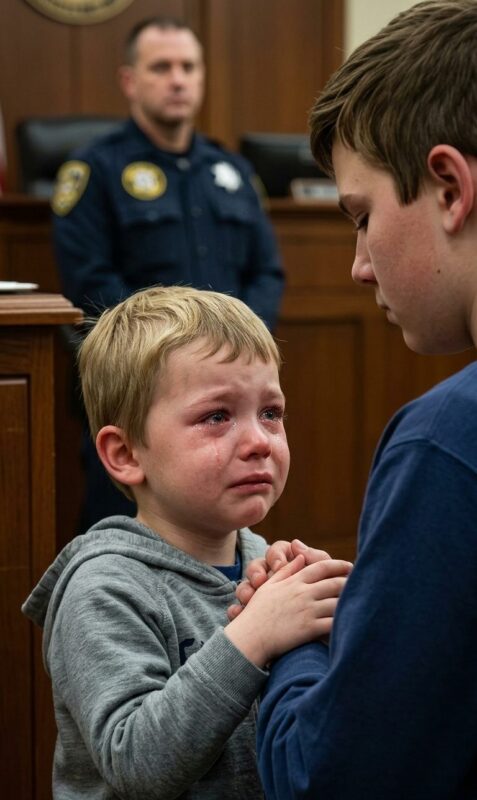
The silence in the courtroom felt suffocating. I pressed my fists against my knees to stop my hands from trembling. Giving up wasn’t an option. I had come too far to lose him now.
Frances, the social worker handling our case, stood beside me. Her tone stayed professional, but sympathy softened her expression.
“You’ve worked hard, Brad,” she said carefully. “But effort alone doesn’t always satisfy the court.”
Her words cut deep.
I never had enough of anything.
Not enough money.
Not enough space.
Not enough years behind me.
No matter what I accomplished, it felt like I was always failing some invisible test.
* I worked overnight warehouse shifts.
* I studied for my GED after exhausting days.
* I survived on almost no sleep trying to meet every requirement they handed me.
“I did everything they asked,” I managed to say, though my voice shook.
Frances lowered her eyes briefly. “I know you did. But there are still concerns.”
I walked outside before I completely lost control of my emotions. The cold air hit me sharply, stealing the breath from my lungs. I watched the frost dissolve into the night and thought about how quickly life had fallen apart for us.
A memory surfaced from years earlier.
I was six, sitting at a tiny kitchen table with Mom while she performed card tricks for me. We barely owned anything back then—an old deck of cards, a noisy fan, mismatched furniture—but somehow she made those evenings feel warm and magical.
“Pick one,” she’d say with a smile.
I pulled the five of hearts from the deck. Somehow, seconds later, she revealed the exact same card from the top pile.
“How did you do that?” I asked in amazement.
She laughed softly. “A magician never reveals the trick.”
Years later, I realized her smile had been a trick too. She hid our struggles so well that, for a little while, we almost believed everything would be okay.
Reality was much harsher now.
My basement apartment barely covered basic expenses, and state rules required Samuel to have a bedroom of his own. I had no idea where I’d find the money for something bigger.
Then one evening, my landlord, Mrs. Rachel, knocked on the door holding a tray of homemade cookies.
“How did court go?” she asked gently.
“They want proof I can raise him,” I replied bitterly. “Apparently sacrificing everything for him still isn’t convincing enough.”
She nodded slowly. “Love matters, sweetheart. But the system looks for things it can physically see.”
I sighed heavily. “They say this place is too small. Samuel needs his own room.”
Mrs. Rachel thought for a moment before speaking again.
“There’s an empty room upstairs,” she said. “Fix it up. I won’t charge you extra. Just don’t destroy the house in the process.”
For a second, I couldn’t even respond.
“You mean that?”
She smiled. “It needs work, but yes—it’s yours if you want it.”
That single moment changed everything.
The same night, I started painting the walls blue because it was Samuel’s favorite color. The room wasn’t expensive or perfect, but every detail came from love.
A few days later, Frances returned for another inspection.
She examined the room carefully, though concern still lingered across her face.
“Children need stability,” she reminded me.
“I understand,” I answered quietly.
Her expression softened. “You’re fighting harder than most adults would. The court just needs proof this life can truly last.”
With only weeks remaining before the final hearing, I pushed myself beyond exhaustion. Mrs. Rachel connected me with an attorney named Mr. Davidson, who advised me to petition for guardianship officially as Samuel’s closest relative.
Then, the night before court, Samuel’s foster mother called unexpectedly.
“We sent the judge a letter,” Mrs. Bailey told me. “Samuel belongs with you.”
The next morning, I stood before the judge one last time.
When he invited me to speak, I lifted my head and met his eyes directly.
“I know I’m young,” I said. “But I’ve spent most of my life caring for Samuel. I can give him a safe home. I can give him love. And I will never stop fighting for him.”
The courtroom became completely silent.
Then finally, the judge spoke.
“The court believes Samuel’s best place is with his brother.”
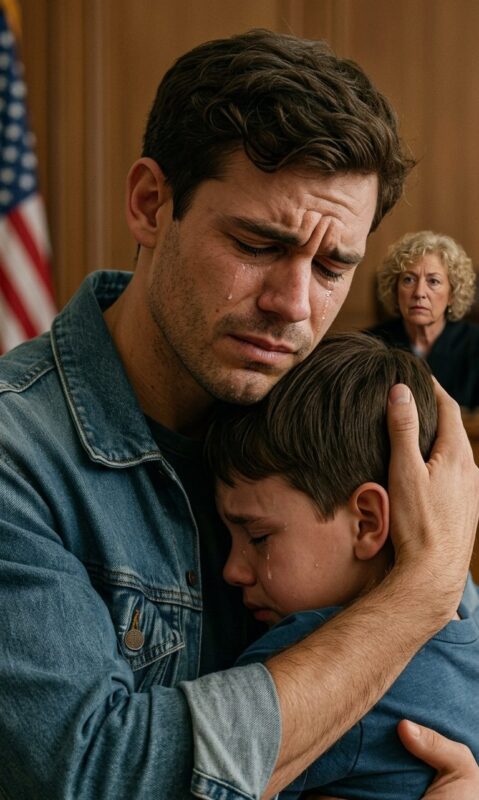
Before anyone could say another word, Samuel rushed toward me and wrapped his arms around me tightly.
We had won.
After years of separation, uncertainty, and fear, we were finally together again.
Outside the courthouse, we walked hand in hand beneath the cold afternoon sky. I looked down at him and smiled.
“What do you say we celebrate with pizza?”
Samuel’s face lit up instantly.
“Really? Pizza?”
I laughed for what felt like the first time in forever.
And in that moment, I realized something important: family isn’t built by perfect circumstances. It’s built by the people who refuse to let go of each other, no matter how difficult the fight becomes.