The envelope wasn’t part of my husband’s organ donation paperwork.
I learned that only after Mark was gone.
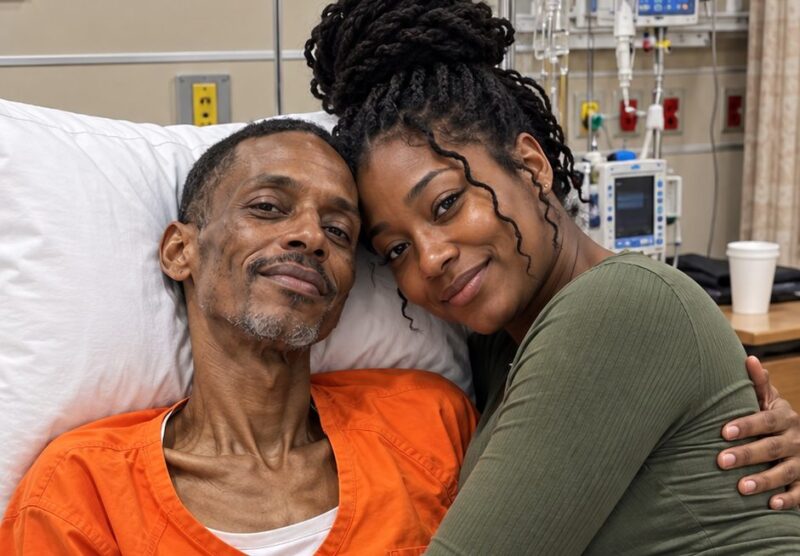
I was walking down the hospital corridor, barely aware of where I was going, when his doctor called my name.
“Sarah, there’s something I need to give you.”
He held out a sealed envelope.
Before I could ask what it was, he explained.
“Mark gave this to me several weeks ago. He made me promise you wouldn’t receive it until after his death.”
My first instinct was fear.
I thought I had already survived the worst thing Mark could leave me with.
I was wrong.
Three years after our wedding, we discovered I was pregnant. Mark was ecstatic. He talked to my stomach before there was even a visible bump and spent evenings suggesting baby names I immediately rejected.
For a while, our future seemed almost embarrassingly perfect.
Then, during my sixth month of pregnancy, Mark became sick.
The diagnosis arrived quickly.
The prognosis was brutal.
He didn’t have years left.
He had months.
Once the shock faded, Mark began making decisions about what would happen after his death. One of them mattered deeply to him.
He wanted to donate whatever organs doctors could use.
One night, he placed his hand over my stomach and felt our daughter move.
“I won’t get enough time with her,” he said.
I couldn’t answer.
“But maybe somebody else can get more time because of me.”
That was Mark.
Or at least, that was the Mark I believed I knew.
During his last few weeks, he began having private conversations with his physician.
I asked about them more than once.
He always avoided giving me a real explanation.
“I’m trying to take care of something before it’s too late.”
I trusted him.
Then one day, with my hand in his, Mark died.
Hours later, after the necessary donation arrangements had been completed, I received his envelope.
I opened it on a bench in the hospital corridor.
The first thing inside wasn’t a letter.
It was a photograph.
A woman I had never seen before stood beside a young boy.
He looked about five.
I almost turned the picture over without studying him.
Then I noticed his eyes.
Gray with a hint of green.
Mark’s eyes.
My hands went cold.
On the back, Mark had written:
Please don’t let them face this alone.
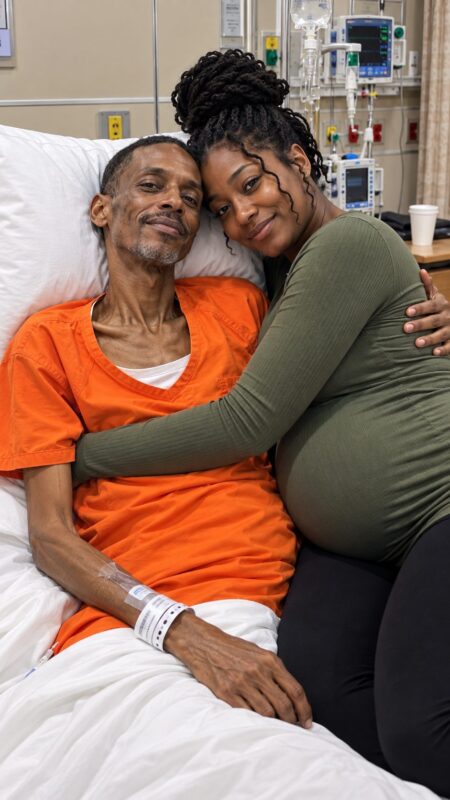
Underneath the photograph was a letter.
By the time I finished reading it, the man I had spent years loving had become someone far more complicated.
Before our relationship began, Mark had dated a woman named Diane.
They separated.
Months later, Diane contacted him and told him she was pregnant.
Mark was the father.
He panicked.
Rather than accept responsibility, he disappeared from her life.
Diane gave birth to a son.
Daniel.
For five years, Mark never met him.
Near the end of his own life, however, Mark discovered that Diane had developed a serious medical problem and needed surgery. She didn’t have much family nearby, and Mark became terrified that Daniel might somehow end up alone.
His letter didn’t ask me to adopt the boy or replace Diane.
Instead, it said:
*I failed him once. I’m asking you not to let my failure hurt him again.*
*You owe me nothing. I know that.*
*If all you can do is check that he’s safe, that’s enough.*
*I’m sorry I kept this from you.*
I didn’t know whether I wanted to scream or collapse.
My husband had hidden a child from me.
Worse, I soon discovered his mother had known about Daniel for nearly two years.
Everyone seemed to have been given pieces of my husband’s life except me.
For three days, I did nothing.
But Daniel’s photograph remained on my kitchen counter.
Every time I passed it, those familiar eyes followed me.
Eventually, I called Diane.
The moment I said my name, she stopped speaking.
“I found out about Daniel after Mark died,” I explained.
Another silence.
“I’m not calling to defend him. I don’t think I could even if I wanted to.”
That seemed to surprise her.
Then I told her about the letter.
Diane explained that her surgery had gone well and her doctors expected a full recovery. Friends were helping while she regained her strength, but she was worried about what would happen when she returned to work.
A few days later, I visited.
Daniel was on the living room carpet surrounded by pieces of a wooden rocket.
He looked up.
I immediately saw Mark again.
Not his face exactly.
Just enough of him to hurt.
“Who are you?” Daniel asked.
“I’m Sarah.”
He lifted the unfinished rocket.
“I’m Daniel. This is going to Mars.”
Despite everything, I smiled.
Diane and I talked while he played.
She described raising him alone and trying repeatedly to contact Mark during Daniel’s early years.
Mark never responded.
I expected anger from her.
Instead, I heard exhaustion.
Before leaving, I asked, “What’s the hardest thing for you right now?”
“Childcare,” she admitted. “When I start working again, I don’t know how I’m going to manage.”
Part of me wanted to immediately promise help.
I stopped myself.
Promises were exactly what Daniel didn’t need from another unreliable adult.
“I don’t know yet what I can be to him,” I said. “But if I become part of his life, I don’t want to disappear.”
Diane nodded.
Three weeks later, Josephine entered the world.
My daughter.
Mark’s daughter.
Daniel’s sister.
One sleepless night, I sat rocking her beneath the dim nursery light.
“There’s someone you should know about someday,” I whispered.
“His name is Daniel. He builds rockets.”
I smiled sadly.
“And you have the same dad.”
The months that followed were unexpectedly ordinary.
Diane grew stronger.
Daniel abandoned rockets for dinosaurs.
Josephine discovered that staring at a spinning ceiling fan was apparently the greatest entertainment on Earth.
Occasional phone calls with Diane became regular conversations.
The anger didn’t disappear, but it stopped controlling every thought.
Then, one afternoon, I called her.
“I’ve been thinking about something.”
“What?”
“Would you bring Daniel over this spring?”
She was quiet.
“I think he should meet Josephine.”
When Diane finally answered, her voice was softer.
“I think so too.”
After the call, I looked across the room at Mark’s photograph.
I still hadn’t removed it.
For a long time, I had struggled with the idea that loving someone meant defending the person they had been.
It didn’t.
Mark had been a loving husband to me.
He had also abandoned Diane when she needed him and denied Daniel the chance to know his father.
One truth didn’t erase the other.
His death didn’t transform his mistakes into something noble.
And helping Daniel wouldn’t magically repair what Mark had done.
But perhaps repair wasn’t the point.
“I haven’t forgiven everything,” I told Mark’s photograph quietly.
“But I’m not going to let it continue.”
That was when I finally understood his last request.
I didn’t have to carry Mark’s guilt.
I didn’t have to become responsible for correcting every decision he had made.
And I certainly didn’t have to pretend his choices hadn’t hurt people.
I only had to decide what kind of choice I would make now.
Daniel had already inherited his father’s gray-green eyes.
He didn’t need to inherit his father’s abandonment too.