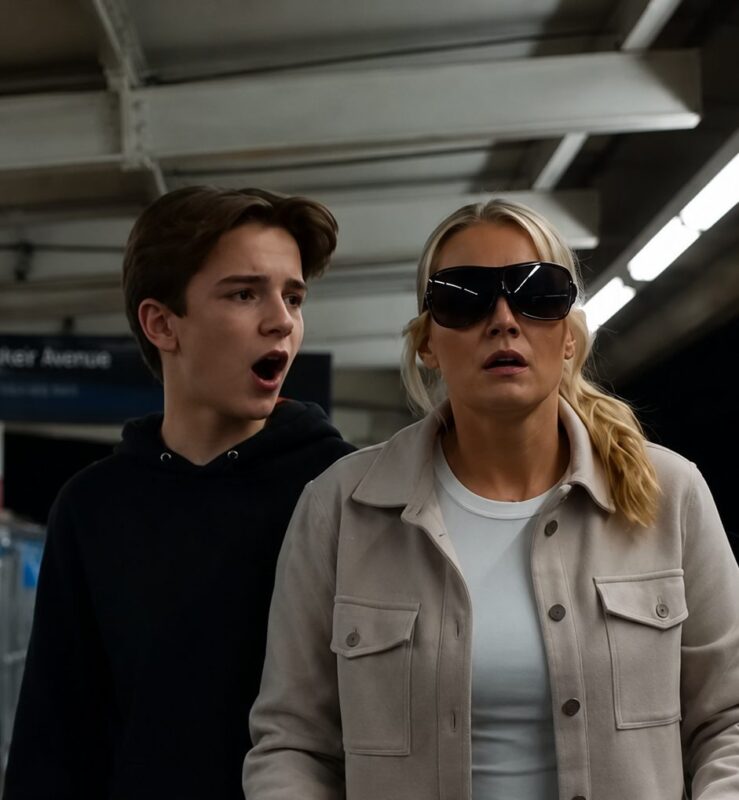
The Hand That Reached in Time
The train tore into the station with a rising roar.
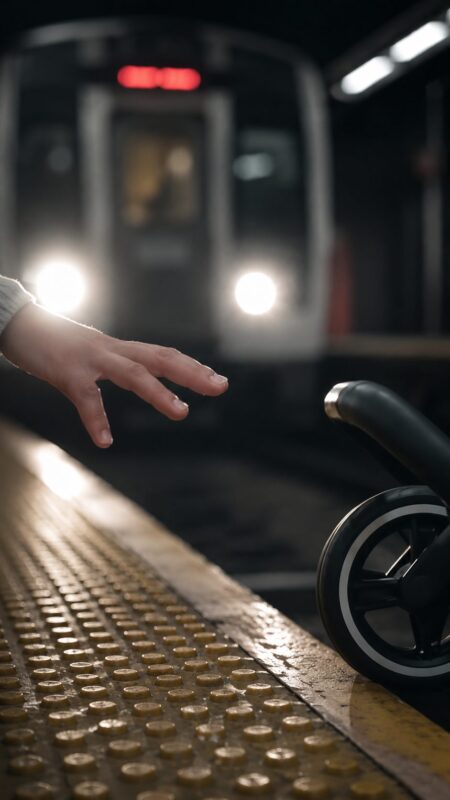
At the very edge of the platform, the transit worker leaned dangerously far, one arm clamped around the stroller’s handle while his shoes scraped against the ground. His grip was slipping, but he refused to let go.
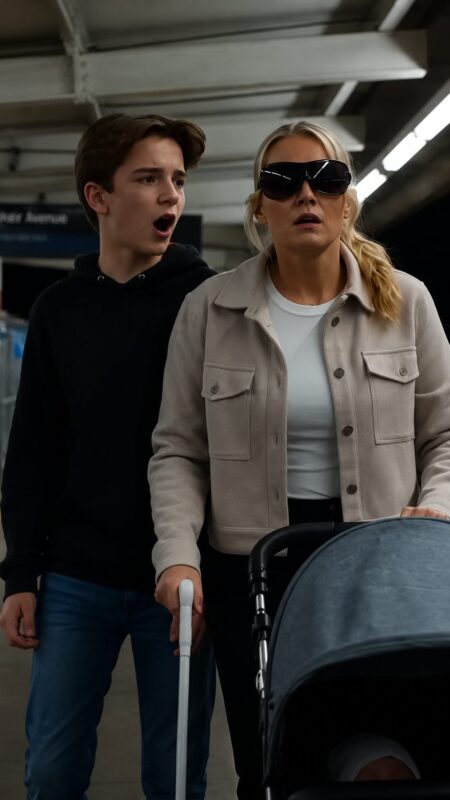
Behind him, a small boy grabbed the back of his jacket and pulled with all his strength, his arms trembling from effort.
Only then did the crowd react.
Two men rushed forward and grabbed the worker’s legs. A woman pulled the blind mother away from the edge, holding her tightly as she struggled in panic.
For a single, suspended moment, the stroller tipped toward the tracks.
Then everything shifted.
The worker yanked back with all his force.
The stroller snapped away from danger just as the train thundered past in a blur of wind and steel.
A baby’s cry cut through the noise.
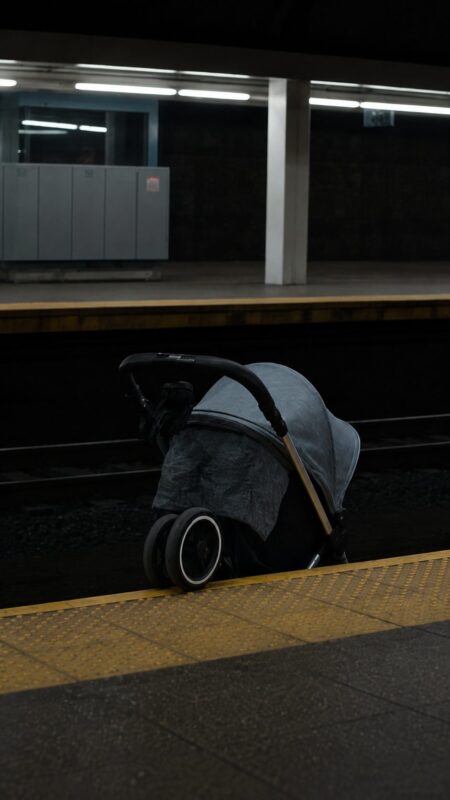
The blind mother dropped to her knees, reaching out desperately until her hands found the stroller. She clung to it, as if confirming it was real.
“My baby…” she cried.
The boy stood beside her, shaking uncontrollably.
The teenager lowered his head, his face drained of color and pride.
The transit worker collapsed onto the platform, gasping for breath, still holding the stroller like he couldn’t trust the world to stay still.
Through tears, the blind woman reached out and touched his sleeve.
“You saved her.”
He looked at the boy instead.
“No,” he said quietly. “He’s the one who saw it before anyone else did.”
The boy wiped his face with his sleeve, his voice barely audible.
“I just didn’t want her to fall,” he said.
And the platform fell completely silent—because the smallest voice in the chaos had been the one that stopped disaster.