The Legacy Hidden Inside the Cedar Chest
The day my wife, Emily, died, I believed the worst chapter of my life had already begun.
I soon discovered it hadn’t.
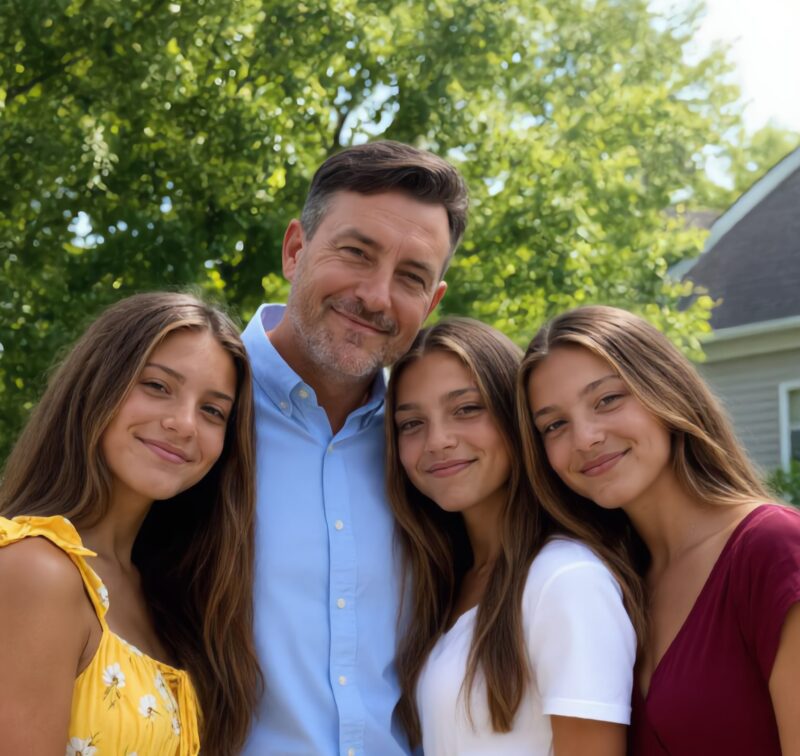
Her death left me raising our four children alone, trying to become both parents while hiding my own grief behind reassuring smiles. Every morning began with questions I couldn’t answer, and every night ended with promises that tomorrow would somehow be easier.
It never was.
The first morning after the funeral, my youngest daughter climbed into my bed before dawn.
“Daddy… you’re staying with us, right?”
I pulled her close.
“Always.”
She believed me.
I desperately wanted to believe myself.
Nothing inside our home felt normal anymore. Emily’s favorite sweater still hung on the back of the bedroom door. Her gardening gloves rested on the porch exactly where she had left them. Even the silence felt unfamiliar, replacing the laughter that had once filled every corner of the house.
Five days after we buried her, the doorbell rang.
Standing outside was Emily’s mother, Margaret.
She offered no hug.
No sympathy.
She carried only a small cedar chest wrapped in a faded cloth.
“Emily wanted you to have this,” she said, placing it carefully on the kitchen table.
As she turned toward the door, she paused.
“Wait until you’re alone before opening it.”
Then she disappeared without another word.
For nearly an hour, I couldn’t bring myself to touch the box.
When I finally opened it, I expected family photographs, jewelry, or perhaps one final letter.
Instead, I found folders.
The first envelope contained a handwritten note.
*”If you’re reading this, I ran out of time. Everything you need is inside. Trust the evidence before you trust anyone’s explanations.”*
A knot formed in my stomach.
Beneath the note were statements from the savings accounts we’d opened years earlier for our children’s futures.
I remembered every deposit.
Birthday gifts.
Tax refunds.
Extra income from weekend projects.
The balances should have been growing.
Instead, they had nearly vanished.
The money hadn’t disappeared overnight.
It had been removed in small amounts over several years, carefully spaced so that no single withdrawal seemed alarming.
Every authorization pointed to the same person.
Margaret.
I flipped through the records again, hoping I had misunderstood.
I hadn’t.
Emily’s letter continued.
*”I uncovered the missing money several months ago. I wanted proof before saying anything. If you’re reading this, please don’t underestimate what she’s capable of.”*
The realization struck harder than any blow.
While Emily and I skipped vacations, postponed replacing our aging car, and explained to the children why expensive gifts would have to wait another year, someone we trusted had quietly emptied the accounts meant for their education.
I called Margaret immediately.
She answered almost instantly.
“You’ve been taking money from the children’s savings.”
She sighed, sounding annoyed rather than guilty.
“I intended to replace it.”
“That’s not an answer.”
“It was family money.”
Before I could respond, she changed the subject.
“I assume you’ve received Emily’s insurance payment by now. I expect part of it.”
The request stunned me.
When I refused, her tone hardened.
“You should think carefully before making enemies.”
She explained that she had been documenting every mistake I’d made since Emily’s death.
Late school pickups.
Missed permission slips.
A forgotten prescription refill.
“I’ve been keeping records,” she said calmly. “Judges pay attention to those things.”
Only then did I realize this conversation hadn’t begun with the cedar chest.
It had started long before Emily died.
“You have two days,” she said before hanging up.
I sat motionless, staring at the scattered papers across the table.
Something still felt unfinished.
As I packed everything back into the chest, my fingers brushed against an uneven wooden panel beneath the lining.
I pressed gently.
A hidden compartment opened.
Inside waited another sealed envelope.
This one contained legal documents bearing official seals and signatures.
Less than a week before her death, Emily had established a family trust protecting every remaining asset, every insurance payment, and every financial account intended for our children.
I had been named the sole trustee.
Attached to the file was another document.
A completed request for a protective order against Margaret, supported by financial records and written statements Emily had prepared herself.
She hadn’t simply uncovered the truth.
She had planned for the day I would need it.
That evening I invited Margaret back to the house.
She arrived carrying paperwork and wearing a satisfied smile.
“I knew you’d come to your senses,” she said confidently.
Then she noticed another guest seated at the dining table.
A woman in a navy suit stood and introduced herself.
“My name is Katherine Brooks. Emily retained me several days before her passing.”
Margaret’s expression immediately changed.
Katherine opened several folders.
“We’ve completed a financial review documenting years of unauthorized withdrawals from the children’s education accounts. Civil recovery proceedings have already begun.”
Margaret protested.
She claimed Emily had given permission.
Katherine calmly slid another document across the table.
“We also have recordings of today’s phone conversation, including threats regarding custody and demands for insurance proceeds. Those materials have already been filed with the court.”
The room fell silent.
For the first time, Margaret had nothing left to argue.
She slowly gathered her purse, walked to the front door, and left without looking back.
No one followed her.
Later that evening, I watched Emma, Oliver, Sophie, and Caleb laugh over a board game in the living room.
It was the first genuine laughter our home had heard since Emily’s passing.
Margaret had tried to take away their security.
Emily had quietly made sure she never could.
Looking at the cedar chest resting on the bookshelf, I realized its greatest treasure wasn’t the paperwork hidden inside.
It was my wife’s determination to keep protecting her family—even after she could no longer stand beside us.