The moment my mother reached for the last present under the tree, I knew exactly what she was doing.
It was New Year’s Eve, and every grandchild in the living room had received a beautifully wrapped gift.
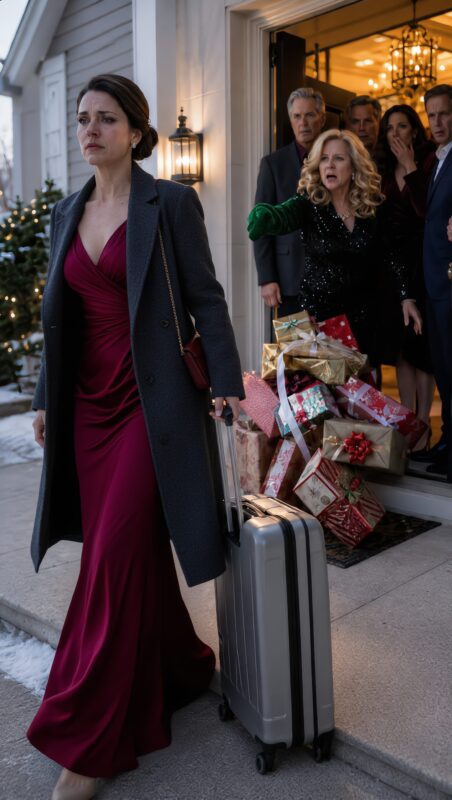
Every grandchild except my two.
Mom lifted the silver package, glanced directly at Emma and Noah, and then placed it in the hands of Tyler, my brother Brent’s son.
“There you go, sweetheart.”
Emma looked down at the empty floor in front of her.
Noah pulled his sleeves over his hands and stared at his shoes, trying desperately to appear unaffected.
Then Tyler laughed.
“Looks like you two didn’t make the good list.”
Brent nearly choked on his champagne as he chuckled. His wife continued scrolling through her phone as though nothing had happened.
My father raised the television volume.
I looked at my mother, waiting for her to intervene.
She didn’t.
Instead, she leaned back in her chair with a satisfied expression.
“Sometimes children need to understand that their behavior has consequences,” she said. “Maybe they’ll show a little more gratitude next year.”
Emma blinked rapidly, fighting back tears.
Noah leaned closer to me.
“Mom,” he whispered, “what did we do?”
Four simple words.
That was all it took.
Suddenly, I remembered every incident I had spent years pretending wasn’t intentional.
The birthday parties that were always smaller for my children.
The family gatherings we somehow heard about only after they happened.
The photographs where Emma and Noah were placed at the far edge while Tyler stood proudly in the center.
I had noticed all of it.
I had simply chosen silence.
I told myself I was protecting the family.
Avoiding unnecessary arguments.
Keeping the peace.
But sitting there that night, watching my children wonder why their own relatives treated them as though they mattered less, I finally understood the truth.
Silence wasn’t keeping the peace.
It was giving cruelty permission to continue.
I rose from my chair.
Mom immediately narrowed her eyes.
“Julia, don’t start.”
“I’m not starting anything.”
I picked up Emma’s coat and helped her put it on. Then I did the same for Noah.
Brent stared at me in amusement.
“You’re actually leaving because they didn’t get presents?”
I looked around the room.
“No. We’re leaving because a room full of adults just watched two children being deliberately humiliated, and apparently I’m the only person who sees a problem with it.”
Dad finally lowered the remote.
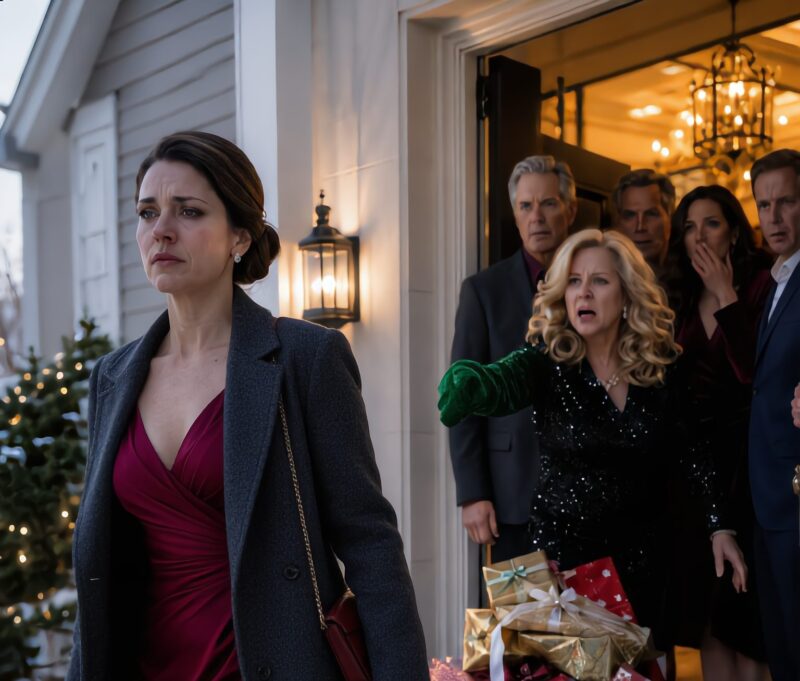
“For heaven’s sake, Julia. It’s New Year’s Eve. Sit down.”
I looked him straight in the eye.
“We won’t be coming back.”
Then I walked out with my children.
Emma cried silently during the drive home.
Noah kept telling me he hadn’t wanted anything anyway.
I knew better.
So I smiled and made them a promise.
“Midnight pancakes. As many as you can eat.”
That finally earned me two small smiles.
There was something else I could have told them that night.
I could have explained that, for nearly three months, my attorney had been quietly preparing paperwork that would change everything.
But they didn’t need to carry another adult burden.
Not anymore.
My mother believed she had punished two powerless children.
What she had apparently forgotten was that she was living in a house she didn’t own.
I controlled it.
At six o’clock the following morning, a courier arrived at my parents’ front door carrying a white envelope.
My phone rang eight minutes later.
I didn’t answer.
Mom called again.
And again.
At 6:20, she finally left a voicemail.
“Julia! What is this? This letter says the house is being prepared for sale. You need to call me right now. This has to be a mistake!”
There was no mistake.
My grandfather had placed the property in a family trust years earlier.
Five years ago, my parents had fallen dangerously behind on the property taxes. I stepped in, settled the debt, reorganized the trust, and became its controlling trustee.
My parents were allowed to remain in the house without paying rent.
But there were conditions.
One clause was particularly clear.
No child who was a beneficiary of the trust could be intentionally mistreated, excluded, or financially exploited within the property.
Mom and Dad had signed the agreement themselves.
Apparently, they assumed I would never enforce it.
At 7:03 that morning, someone hammered on my front door.
I opened it to find my mother standing there with Dad and Brent.
Mom didn’t bother with a greeting.
“You cannot sell my home!”
I remained calm.
“It’s not your home. It’s an asset owned by the trust.”
Dad stepped toward me.
“Think about what you’re doing. Your brother needs stability.”
I almost laughed.
“My children needed a family that treated them with dignity.”
Mom threw up her hands.
“All this because they didn’t get a couple of presents?”
“No.”
My voice remained steady.
“This is about two years of behavior recorded by the security system you installed yourselves.”
For the first time, Brent stopped looking angry.
He looked nervous.
Then another car turned into my driveway.
My attorney, Daniel Cho, stepped out with a folder tucked beneath his arm.
Brent’s face changed instantly.
I noticed.
So did Daniel.
I turned to my mother.
“You should read the rest of the notice. Selling the house isn’t the only matter being addressed.”
Her expression tightened.
“What are you talking about?”
“I’ve ordered a full audit of Grandpa’s education fund.”
Brent went pale.
That told me more than any confession could have.
Daniel opened his folder.
“We’ve identified a series of unauthorized withdrawals from accounts established for the grandchildren. The transactions occurred over approximately eighteen months.”
Mom touched the pearls around her neck.
“That money was used for the family.”
I shook my head.
“Was it?”
I looked at Brent.
“Did the family need to pay for Tyler’s private baseball coach?”
He said nothing.
“Did the family need to make payments on your new truck?”
Still nothing.
Then I turned back to Mom.
“And I’m curious how your cruise qualified as an educational expense.”
Dad slowly faced Brent.
His expression darkened.
“You told me Julia knew about the withdrawals.”
Brent stared at the driveway.
Not one word came out of his mouth.
For years, my mother had described me to relatives as the daughter who cared too much about money.
Successful but cold.
Responsible but selfish.
She conveniently left out certain details.
Like the fact that I paid several of her household bills.
Or that I helped cover the cost of Dad’s medication.
Or that I had already replaced thousands of dollars that mysteriously disappeared from the children’s education accounts.
I had known something was wrong.
I just hadn’t wanted to confront it.
I had mistaken tolerance for loyalty.
But when I saw Emma and Noah standing beside that tree, trying to understand why their grandmother had chosen to hurt them, something inside me finally changed.
My silence had protected the wrong people.
Daniel handed my mother another document.
“You and your husband have thirty days to leave the property,” he explained. “A smaller residence owned by the trust has been made available to you. The primary property will be sold.”
Mom stared at him.
Daniel continued.
“The unauthorized withdrawals will also be deducted from Brent’s future inheritance.”
Brent exploded.
“You can’t do that!”
Daniel barely reacted.
“The trust documents say otherwise.”
Mom turned toward me.
“You’re destroying this family.”
I shook my head.
“No. I’m finally refusing to let this family destroy my children.”
Daniel closed his folder.
“If you decide to contest these actions, the trust will provide the court with the signed agreements, financial records, and relevant security footage.”
Silence fell over the driveway.
Mom looked at me as though she couldn’t recognize her own daughter.
“You would publicly humiliate your mother?”
I glanced through the open doorway behind me.
Emma and Noah were sitting at the kitchen table in their pajamas, drawing together.
They were safe.
That was all that mattered.
I turned back to Mom.
“You humiliated two children because you knew they were too young to defend themselves.”
I paused.
“I’m making sure you never have that power over them again.”
Brent turned and marched toward his car.
Dad followed slowly, saying nothing.
Mom remained where she was.
For several seconds, she simply stared at me.
I knew what she was waiting for.
She expected me to feel guilty.
To apologize.
To take everything back.
The old Julia probably would have.
But that woman had disappeared the moment her son asked what he had done wrong.
I closed the door.
By spring, the house had been sold.
Every dollar missing from the children’s education accounts was restored.
My parents moved into the smaller trust property, and Brent discovered that family money was no longer his personal bank account.
More importantly, Emma and Noah stopped asking why their relatives didn’t seem to like them.
The following New Year’s Eve, we stayed home.
There was no enormous tree.
No expensive champagne.
No perfectly wrapped gifts arranged for appearances.
But there was laughter.
There were paper crowns that kept falling apart.
There was music playing far too loudly.
And, just before midnight, there was a mountain of pancakes in the middle of the kitchen table.
When the countdown began, Emma grabbed one of my hands.
Noah grabbed the other.
“Best New Year’s ever,” he said.
I smiled.
He had no idea how much those words meant to me.
Because that night, there were no empty spaces deliberately left beneath a tree.
No cruel jokes.
No adults pretending not to notice.
And no children wondering what they had done to deserve being treated as less important.
As midnight arrived, I looked at Emma and Noah and realized they had finally learned the lesson I should have taught them years earlier.
Family isn’t defined by who shares your blood.
It’s defined by who makes you feel safe, valued, and loved.
And my children had never been unworthy of any of those things.
They had simply been surrounded by people who failed to see their worth.
Never again.