The Truth I Discovered Ten Years After Sending My Daughter Away
For ten years, one memory has haunted me more than any other.
“Leave. You’re not my child. Don’t come back.”
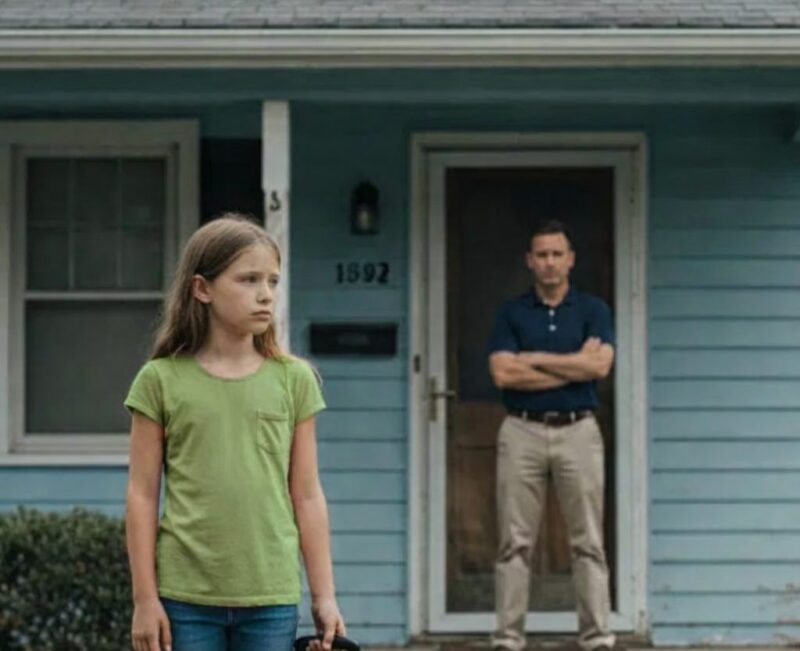
Those were the words I shouted at a fourteen-year-old girl standing in the rain outside my house in Portland, Oregon. She was small and pale, clutching an old backpack to her chest. She didn’t protest. She didn’t scream or beg. She simply stared at me with frightened eyes, then quietly turned and walked away into the darkness.
Her name was Lily.
I’m Michael Carter. Back then I was forty-two, running a construction supply business and living what I believed was a stable life. I had a good home, steady work, and a wife I loved more than anything. Laura was my entire world.
Then everything changed.
One cold October evening Laura died in a car accident. Losing her shattered me, but an even deeper blow came weeks later. While going through her belongings, I discovered a bundle of letters hidden in a drawer. They had been written long before our marriage to a man named David.
They were love letters.
One line inside them froze me where I stood:
“For our daughter Lily — may she always know she is loved.”
Our daughter.
My mind refused to accept it. The girl I had raised since childhood — the one I taught to ride a bike and read stories to before bed — suddenly felt like proof of betrayal. My grief turned into anger, and my anger turned into cruelty. I drowned my pain in alcohol and bitterness.
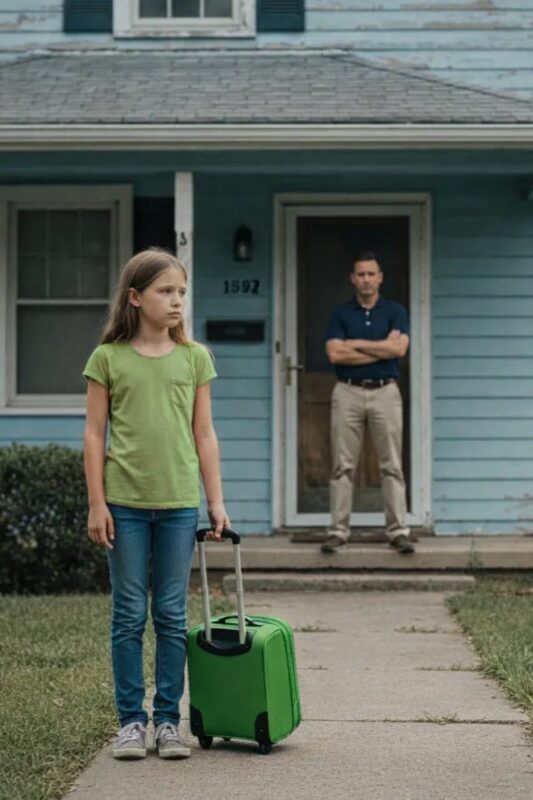
When Lily approached me one evening, worried because I hadn’t eaten all day, I exploded.
“Pack your things and get out,” I shouted. “You’re not my daughter.”
She didn’t argue. Tears rolled silently down her cheeks as she picked up her bag and walked out the door. The rain swallowed her small figure within seconds.
After that night the house felt empty and lifeless. The laughter that once filled the rooms vanished. When neighbors asked about Lily, I simply told them she had run away.
Years passed, but guilt followed me everywhere. I woke up at night hearing imagined footsteps in the hallway or the sound of rain tapping against the windows.
By the time I was fifty-two, I was a lonely man living in a quiet house filled with regrets.
Then one afternoon a young woman knocked on my door. She wore a white medical coat and held a clipboard.
“Mr. Carter?” she asked softly. “I’m Dr. Emma Collins from the Northwest Genomics Center. I’m here regarding a genetic identity case involving you and Lily.”
My heart skipped a beat.
“Lily?” I whispered.
“She’s alive,” the doctor said gently. “But she’s very sick. She needs a kidney transplant, and your DNA shows you’re a perfect match.”
I stared at her in confusion.
Then she added the words that shattered me.
“Because Lily is your biological daughter.”
My knees nearly gave way. Ten years earlier, I had thrown my own child out of my home.
Not long afterward I found myself standing in a hospital hallway, staring through a glass window. On the bed lay a young woman connected to tubes and machines.
It was Lily.
A nurse told me that years earlier she had been found homeless at a bus station. A compassionate couple had taken her in and raised her. She later became a literature teacher. But two years ago her kidneys began to fail.
When I entered the room, Lily slowly opened her eyes.
For a moment neither of us spoke. A decade of silence filled the space between us.
Then she gave a faint smile.
“Dad,” she whispered. “I knew you’d come.”
I fell to my knees beside her bed and held her fragile hand.
“I’m so sorry,” I said through tears. “I was angry and blind. Please forgive me.”
She gently shook her head.
“Don’t cry,” she said quietly. “I just wanted to see you again.”
I agreed immediately to donate my kidney. The operation lasted several hours, but the doctors said the transplant was successful. For the first time in years, hope returned.
Yet fate had one final test.
A few days later complications appeared. Infection spread through Lily’s weakened body, and despite the doctors’ efforts, she passed away peacefully one morning as sunlight streamed through the hospital window.
I sat beside her bed long after she was gone, unable to release her hand.
Later I buried her ashes beside Laura’s grave and engraved a simple message on the headstone:
*My beloved daughter — the one who taught me what love truly means.*
Today I still live in the same house. A pink rose vine grows along the porch, just like the flowers Lily loved.
I spend my days helping children who have no families of their own.
Not because I expect forgiveness — some mistakes can never be undone.
But because that is the life Lily deserved.
And sometimes, when the wind moves through the roses, I imagine I hear her gentle voice again:
“It’s okay, Dad.”
In those moments, for the first time in decades, I feel something I thought I had lost forever.
Peace.