**The Miracle of the Winged Shadow: What Appeared on the Table Ended Fifteen Years of Silence**
If you found this story after reading my post, I understand the disbelief. I would have questioned it too—if I had not stood in that room myself. I saw the burst of light. I saw the vast outline of wings stretch across the wall. And I saw my Aunt Clara rise from a wheelchair she had occupied for fifteen years.
But the true revelation came afterward—on the kitchen table.
When the Light Receded
The white brilliance did not simply fade; it seemed to withdraw, taking the air with it. For a moment, the house felt hollow, as though sound itself had been erased.
I blinked hard, purple spots flickering in my vision. My pulse pounded in my ears.
The sharp scent that had filled the room—something like lightning striking earth—vanished. In its place drifted a fragrance soft and clean, reminiscent of rain on warm stone and distant blossoms.
Outside, the storm persisted. Rain struck the windows in relentless sheets. Yet inside, a profound stillness settled.
I turned toward Clara.
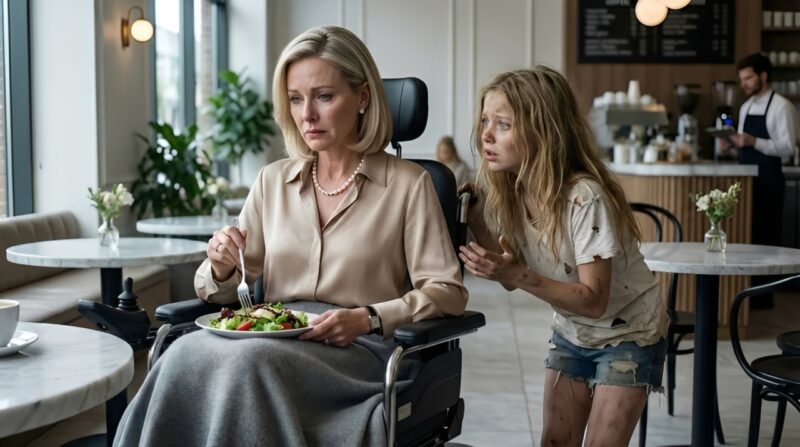
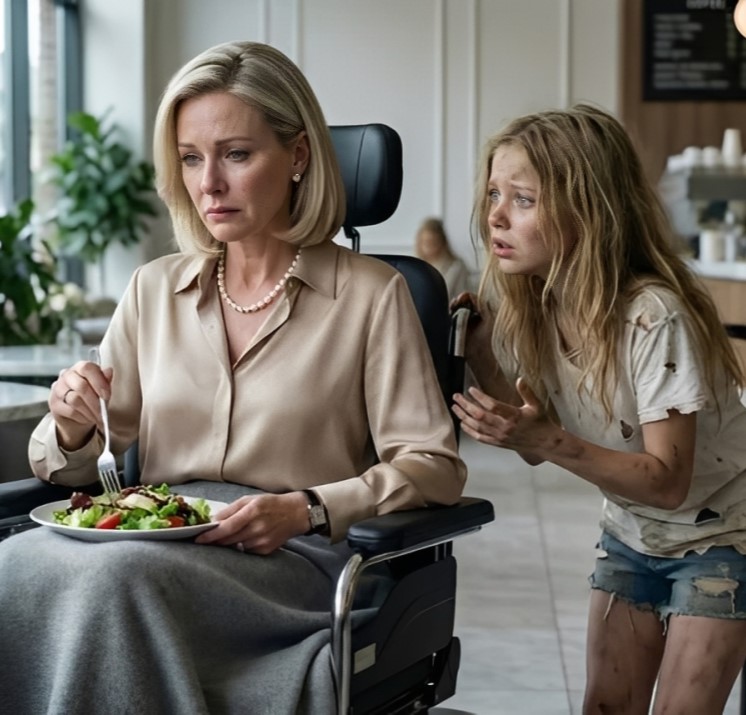
For fifteen years she had lived seated—first in hospitals, then in a custom-built chair that became both support and prison. Specialists had flown in from across continents. Experimental procedures had promised progress. Nothing changed.
Her legs had remained unmoving.
Until that moment.
She was standing—upright, steady.
“Clara?” I managed.
She stared at her feet against the tile floor, shifting her weight tentatively, as though reacquainting herself with the sensation of balance.
Then she stepped forward.
The movement was controlled. Confident. Astonishing.
Muscles long unused responded without hesitation. It contradicted every diagnosis she had ever received.
She walked toward the kitchen.
I followed, still unsettled by the immense shadow I had seen moments earlier—wings arcing across the wall.
But what awaited us on the table would eclipse even that.
The Objects
Lightning illuminated the kitchen in brief flashes.
At the center of the wooden table lay two items.
Clara reached them first and froze. A broken sound escaped her throat.
Beside her, I saw it clearly.
A single white feather—large, flawless, faintly luminous. It lay perfectly dry, untouched by the storm.
Next to it rested a small silver music box.
Its surface was scorched. The edges blackened by fire.
I recognized it immediately.
The lid bore one engraved name: **Lily**.
“No,” Clara whispered. “It burned. It burned with the car.”
The Past We Buried
Fifteen years earlier, Clara’s paralysis had not begun with illness.
It followed a crash.
She had been driving home on a rain-heavy night after a celebration. She had misjudged a curve. The car skidded down an embankment and ignited.
Clara was thrown from the vehicle, her spine irreparably injured.
Her five-year-old daughter, Lily, remained inside.
The music box had been Lily’s treasured possession. We were told nothing survived the flames.
Yet here it was.
I reached toward it. The lid opened slowly on its own.
A delicate melody drifted into the quiet—warped and fragile, but unmistakable.
“You Are My Sunshine.”
Clara collapsed—not because her legs failed her, but because years of suppressed guilt finally surfaced.
“She was hungry,” Clara cried. “She wanted food. I told her to get out of the car. I told my child to get out.”
The girl who had appeared at our door earlier that evening—barefoot, rain-soaked, eyes luminous beyond explanation.
It was not coincidence.
It was Lily.
“She came back to forgive you,” I said softly.
What Truly Healed
For years, Clara believed her paralysis was punishment. She invested everything in medical solutions, convinced that repairing her spine would repair her life.
Doctors had suggested that part of her condition might be psychosomatic—that her body possessed dormant potential, restrained by unresolved trauma.
Clara had imprisoned herself in more ways than one.
Her spine had been damaged, yes—but her guilt had been heavier.
The presence that visited us did not arrive to perform spectacle. It came to offer release.
The wings I saw were not a warning. They were shelter. A gesture of protection from a love that had not been extinguished by fire.
Clara remained on the floor for a long time, releasing grief she had carried for over a decade.
When she stood again, something in her expression had softened. The tension that once hardened her features was gone. She looked fragile—but calm.
She lifted the scorched music box and held it against her chest.
Afterward
Clara walks now.
She sold the house and directed much of her wealth to a children’s rehabilitation center. She spends her days there, guiding small hands as they attempt their first steps.
Healing does not always arrive in the form we request.
No fortune can quiet a conscience weighed down by regret. No treatment can mend a spirit unwilling to forgive itself.
True restoration begins when we release what we have been holding too tightly.
And sometimes, it takes a storm—and the memory of wings—to remind us that love endures beyond the limits of what we can see.