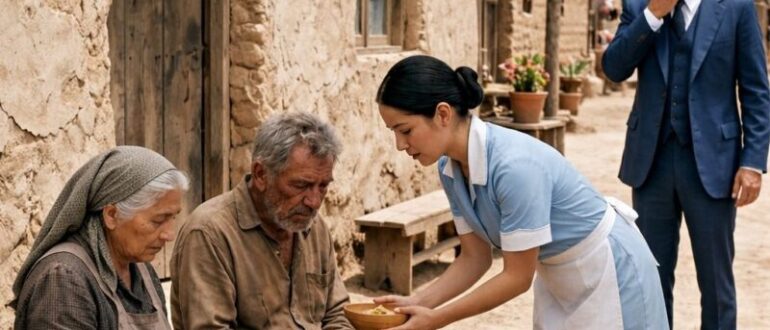
Six days after we buried my husband, his brothers walked into my kitchen, placed a $500,000 check on the table, and told me to leave the farmhouse where I’d raised my daughter for twelve years.
“You have until planting season to move out, Melissa,” Randy said coldly. “This check covers Jeff’s share of the family business. Our partnership agreement allows us to buy out his interest.”
Scott, the younger brother, stood beside him, refusing to meet my eyes.
“The property belongs to the partnership,” he added. “You have no legal claim to the house anymore.”
I couldn’t believe what I was hearing.
My husband, Jeff, had died suddenly at forty-seven. Our twelve-year-old daughter, Abby, had barely begun to understand that her father wasn’t coming home.
Now the two men she’d always called family wanted to take away the only home she’d ever known.
For twenty years, Jeff and his brothers had farmed 1,100 acres of Nebraska land together. I’d managed their accounts, tracked expenses, handled payments, and helped keep the business financially organized.
I understood the partnership agreement. Randy and Scott could legally purchase Jeff’s ownership interest.
But I never imagined they’d use that right against us while we were still mourning him.
I wanted to argue, to remind them of everything Jeff had done for the farm.
Instead, I silently picked up the check.
That evening, Abby found me sitting by the kitchen window.
“Mom, where are we going to live?”
I didn’t have an answer until I looked across the gravel road.
Beyond the fence stood the abandoned Wiebe farm.
Eighty acres of neglected land surrounded a faded white farmhouse and an aging red barn.
Jeff had admired that property for years.
Whenever we passed it, he’d point toward the fields and tell Abby, “Someday, maybe we’ll make that little farm yours.”
I remembered the listing price.
$430,000.
For the first time since his funeral, I felt something other than grief.
I felt determination.
The next morning, I called the real estate agent and offered the full asking price.
Once the purchase was arranged and I’d confirmed that the buyout released me from the partnership’s debts, I started gathering everything we’d need to operate the farm ourselves.
I purchased an aging tractor, a used planter, and enough seed for our eighty acres.
What remained of my money disappeared faster than I’d expected.
Then I learned I’d missed the deadline for crop insurance.
One severe storm, one prolonged drought, or one failed harvest could leave Abby and me with almost nothing.
I was terrified.
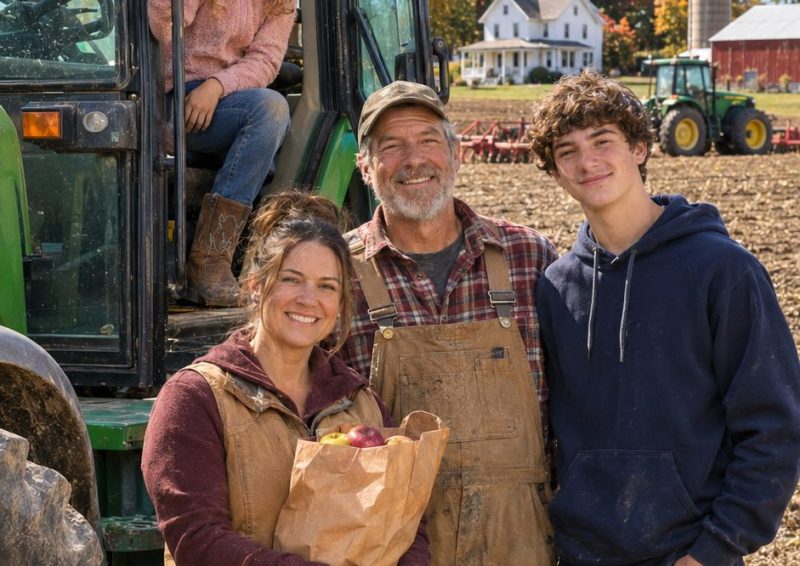
But I’d spent nineteen growing seasons working beside Jeff. I’d helped prepare fields, operate machinery, calculate expenses, and make decisions when the weather turned against us.
I knew farming wasn’t easy.
I also knew I wasn’t helpless.
A few days before we moved, I discovered something that made Randy’s behavior even harder to
forgive.
His twenty-four-year-old son, Luke, had finished college and was returning to Nebraska.
Randy wanted him to live in our farmhouse.
That was the reason he’d been so determined to remove us before planting season.
He wasn’t trying to protect the business.
He simply wanted to give his son the home my husband and I had spent two decades building together.
I could have confronted him.
I could have demanded an explanation.
But I decided that Abby and I needed our energy for something more important.
Our future.
We packed our belongings and moved across the road.
On our first evening at the Wiebe farm, I handed Abby the house keys.
She studied the overgrown fields, the peeling paint, and the barn with its crooked doors.
“Mom, are we really going to take care of all this land ourselves?”
I squeezed her hand.
“We may not know exactly how yet, but we’re going to figure it out.”
When May arrived, I climbed onto our old tractor and began planting.
Across the road, Randy and Scott were already working with powerful, modern equipment.
Their machines covered enormous stretches of land while mine struggled to finish a single field.
The tractor rattled constantly. The planter jammed. Every repair cost precious time.
By sunset, I’d planted only twenty acres.
My arms were aching from lifting seed bags, my clothes were covered in dust, and I could barely stand upright.
Abby had spent the day bringing me water, carrying small supplies, and encouraging me whenever the machinery stopped.
She wore Jeff’s old green baseball cap.
It was still too large for her.
Every time I looked at it, I remembered how proudly Jeff used to wear it during planting season.
That night, I lay awake wondering whether I’d made a terrible mistake.
The following morning, I was checking the planter when a pickup pulled into our driveway.
Luke stepped out.
“Aunt Melissa, can I show you something?”
He pointed toward the equipment.
“I saw you working yesterday. Your planter was missing part of a row.”
“I noticed that too. I’ve fixed it.”
He shifted uncomfortably.
“There’s something else I need to tell you.”
I waited.
“I didn’t know Dad was going to make you and Abby leave. He told me the house was becoming available because of the partnership agreement.”
His expression was serious.
“Uncle Jeff taught me almost everything I know about planting. I spent summers riding beside him, asking questions until he got tired of answering.”
A small smile crossed his face.
“He never actually got tired of answering.”
I remembered those summers.
Jeff had always treated Luke like a second son.
Luke looked at the unfinished field.
“I’d like to help you, if you’ll let me.”
Part of me wanted to send him away.
His father had caused so much pain that accepting anything from Randy’s family felt difficult.
But Luke wasn’t responsible for Randy’s decision.
And I desperately needed another pair of capable hands.
I stepped aside.
“Then climb onto that tractor. We’ve got work to do.”
Luke took over planting while I handled the seed and supplies.
He moved confidently, adjusting the equipment and making steady progress.
Around lunchtime, another vehicle appeared.
This time, it was Scott.
He arrived with the partnership’s seed tender.
Without saying much, he positioned the equipment beside our planter and helped us refill it.
We worked in uncomfortable silence until Scott finally spoke.
“Melissa, I haven’t been able to stop thinking about what happened.”
I kept my eyes on the seed bags.
“I should’ve stood up to Randy,” he continued. “Especially when he insisted on giving you that check right after Jeff’s funeral.”
His voice became quieter.
“Jeff would’ve never treated my family that way. He deserved more loyalty from me.”
I looked at him.
“So did Abby.”
Scott nodded.
“I know. And I’m sorry.”
It didn’t erase what had happened.
But for the first time, I believed he understood the damage they’d caused.
With Luke operating the tractor and Scott helping us manage the supplies, we planted nearly forty acres that day.
By evening, I could see our dream taking shape.
The following Sunday, Randy called.
He wanted Abby and me to come over for dinner.
My first instinct was to refuse.
But Abby had spent her childhood eating Sunday meals with her uncles and cousins. I didn’t want her to lose those relationships too.
So we went.
Dinner was unusually quiet.
When everyone finished eating, Randy pushed back his chair and stood.
“Melissa, I need to say something in front of the whole family.”
I braced myself.
“I convinced myself that buying out Jeff’s share meant I was treating you fairly. The agreement gave us the right to do it, and I used that as my excuse.”
He stopped, searching for words.
“The truth is, I wanted Luke to have the farmhouse. I put what I wanted ahead of what you and Abby needed.”
Nobody interrupted.
“I watched you out there planting with that old tractor. I saw how hard you were working just to give your daughter a home.”
His eyes filled with regret.
“And I realized I’d forced my own brother’s wife and child to start over when they needed family support the most.”
He looked directly at me.
“I’m sorry, Melissa. Truly.”
Then he surprised everyone.
“If you want your old farmhouse back, I’ll work out a way to return it to you.”
For a moment, memories flooded my mind.
Jeff making coffee before sunrise.
Abby learning to ride her bicycle in the driveway.
Summer evenings on the porch.
Birthdays, Christmas mornings, and countless ordinary days I’d once taken for granted.
I missed that house.
But I also remembered Abby helping me carry supplies across our new fields.
I remembered the first morning she’d looked at our land and called it ours.
And I knew my answer.
“Thank you for offering, Randy,” I said. “But Abby and I aren’t moving again.”
He looked surprised.
“The Wiebe farm is our home now.”
Then I added, “I don’t want Abby to grow up feeling separated from her family. I’d like us to continue having Sunday dinners together.”
Randy nodded immediately.
“And when harvest season comes,” I continued, “I’d appreciate being able to hire your combine.”
“Of course,” he replied. “Anything you need.”
I didn’t want revenge.
I wanted peace.
As we prepared to leave, Luke appeared carrying something long and narrow wrapped in a blanket.
“Abby, I found something I thought you’d want.”
He carefully removed the covering.
It was a piece of the wooden doorframe from our old farmhouse.
My heart nearly stopped.
Every year on Abby’s birthday, Jeff had measured her height against that doorframe.
He’d drawn a pencil line, written her age beside it, and joked about how soon she’d be taller than him.
All twelve marks were still there.
Jeff’s handwriting was unmistakable.
Abby slowly traced the pencil lines with her fingertips.
“Dad did this every year,” she whispered.
Then she wrapped her arms around the piece of wood.
I realized Luke had saved something far more precious than a household decoration.
He’d brought back a small part of Jeff.
The months that followed tested us in ways I hadn’t expected.
Our tractor needed frequent repairs. The fields required constant attention. Expenses kept appearing, and every dark cloud reminded me that our crops were uninsured.
Some evenings, I was so tired that I fell asleep before dinner.
But Abby never stopped believing in our farm.
When weeds threatened the young corn, she helped with age-appropriate chores.
When equipment broke down, she brought me tools and kept me company.
When I worried about money, she reminded me of something Jeff used to say.
“Mom, Dad always said you can’t harvest what you never plant.”
And she was right.
In July, after weeks of worrying about dry weather, steady rain finally soaked our fields.
The corn responded beautifully.
By September, the plants stood tall and healthy.
When October arrived, Randy honored his promise and arranged for us to hire the family’s combine.
Our first harvest produced an average of 141 bushels per acre.
It wasn’t an extraordinary result.
But to me, it felt like a miracle.
After paying our operating expenses, I was able to clear the small equipment loan and put some money into a savings account for Abby.
We still had challenges ahead, but the farm had survived its first season.
So had we.
That winter, I made a decision.
When Abby reached eighteen, I wanted to transfer ownership of the eighty acres to her.
Whether she chose to farm the land herself or pursue another dream, she’d have something solid to build upon.
Something no one could simply take away from her.
Then came Abby’s thirteenth birthday.
That morning, Luke arrived with a toolbox and the wooden doorframe he’d rescued from our former home.
He spent an hour carefully attaching it to the wall inside our farmhouse.
When he finished, the twelve pencil marks stood exactly as they had in our old house.
I called Abby into the hallway.
“Come here. There’s one more birthday tradition we need to keep.”
She stood against the wood, straightening her shoulders.
I took Jeff’s carpenter’s pencil from the drawer where I’d kept it since his death.
My hand trembled slightly as I measured her height.
Then I drew a new line above the others.
Beside it, I wrote:
“Abby, 13 — Wiebe Farm.”
Abby turned and studied the marks.
Twelve from her father.
One from me.
Thirteen years of memories, now joined together in our new home.
She looked out the window toward the fields stretching beyond the gravel road.
“Mom, do you think Dad would be proud of our farm?”
I felt tears gathering in my eyes.
“I think he’d be proudest of you.”
She smiled.
“Can I help with planting again next spring?”
“You certainly can.”
She reached for Jeff’s faded green cap and placed it on her head.
For years, that cap had slipped over her ears.
Now it almost fit perfectly.
Watching her stand there, I finally understood what those difficult months had taught me.
Losing our old farmhouse hadn’t erased the life we’d shared with Jeff.
The love he’d given us wasn’t attached to a building.
It lived in the lessons he’d taught, the traditions he’d started, and the courage he’d helped us find.
Randy and Scott had believed that a $500,000 check would close the final chapter of our connection to the family farm.
Instead, it had opened an entirely new one.
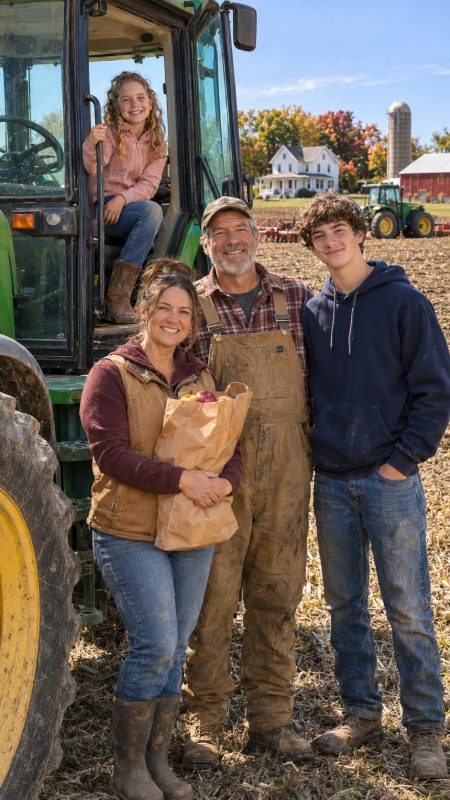
On the other side of a gravel road, Abby and I had turned an abandoned property into a working farm.
We had struggled, made mistakes, accepted help, and slowly found our footing.
More importantly, we’d discovered that our future didn’t have to depend on anyone else’s decisions.
One day, those eighty acres would belong to Abby.
She would decide what to grow, what to build, and what kind of life she wanted to create.
And every spring, when the first seeds went into the Nebraska soil, a little piece of Jeff’s dream would grow alongside them.
His brothers had handed me half a million dollars because they wanted us to leave.
They never imagined that the money would help us build something far more valuable.
A place where my daughter could grow up surrounded by her father’s memories.
A home we had chosen for ourselves.
And eighty acres of possibility that belonged to us alone.